
Grow polypody in shade and soil that drains. Polypody is Polypodium — a low fern that creeps by a scaly rhizome on the surface.

Give it shade, soil that drains, and keep the rhizome on the surface
| Factor | Recommended | Avoid |
|---|---|---|
| Light | Part shade to full shade; morning sun is fine | Do not put it in hot afternoon sun, which scorches the fronds |
| Soil | Humus-rich mix that drains; sandy loam, leaf mold, or a rocky crevice | Do not plant it in wet clay or a low pocket that holds rain |
| Water | Keep the soil moist through the first season, then water when the surface is dry | Do not soak a clump that is already wet, and do not flood a summer-dormant plant |
| Rhizome | Leave the scaly stem on the soil surface, with roots going down | Do not bury it under mulch or extra soil |
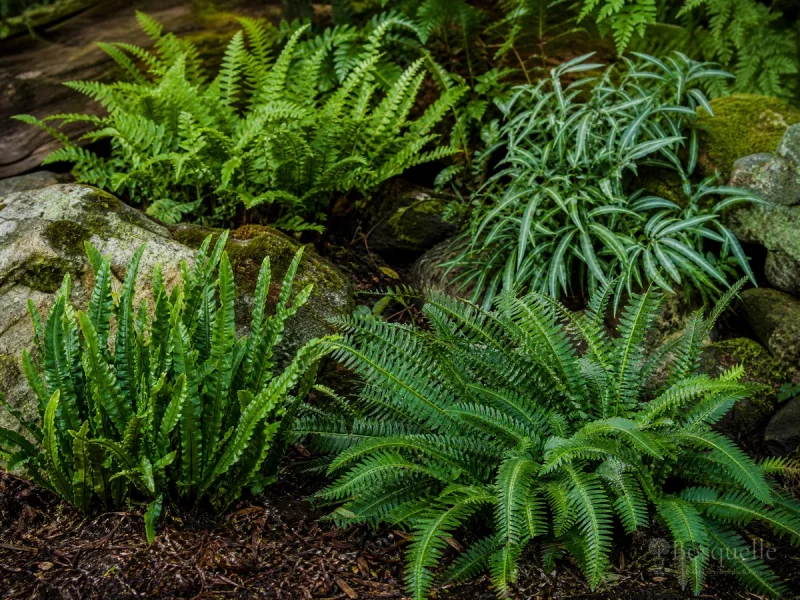
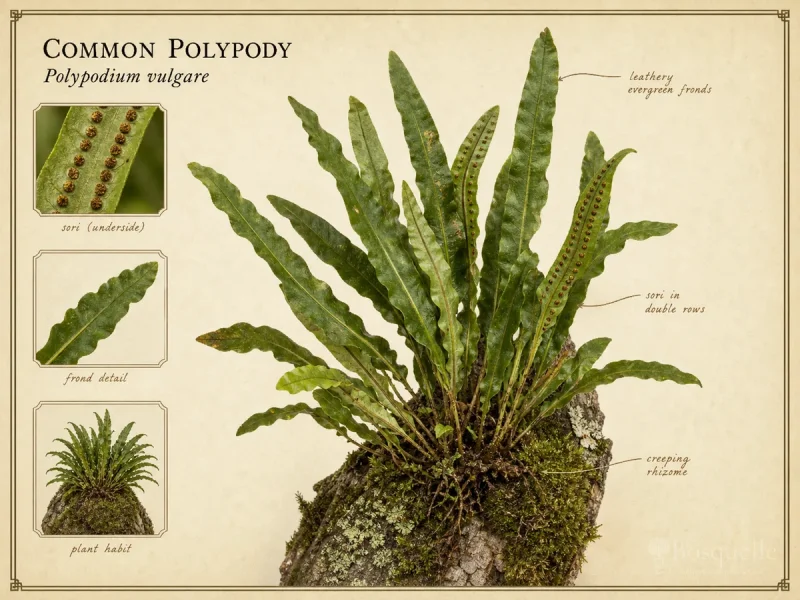
Polypody is an epiphyte in the wild. It lives on mossy rocks, old walls, and tree bases, where rain and leaf debris feed the rhizome, so a garden site has to drain the same way. [1] common polypody and rock polypody both want deep or part shade and soil that is moist but not soggy. [2] Most kinds in this catalog are left alone by deer. Keep the rhizome in the open; a buried stem rots. For which kind you bought, see Types of Polypody.
How much shade does polypody need?
Part shade to full shade. Deep shade — two or fewer hours of direct sun — works well. Afternoon sun dries and scorches the fronds.
Water the first season, then let the surface dry
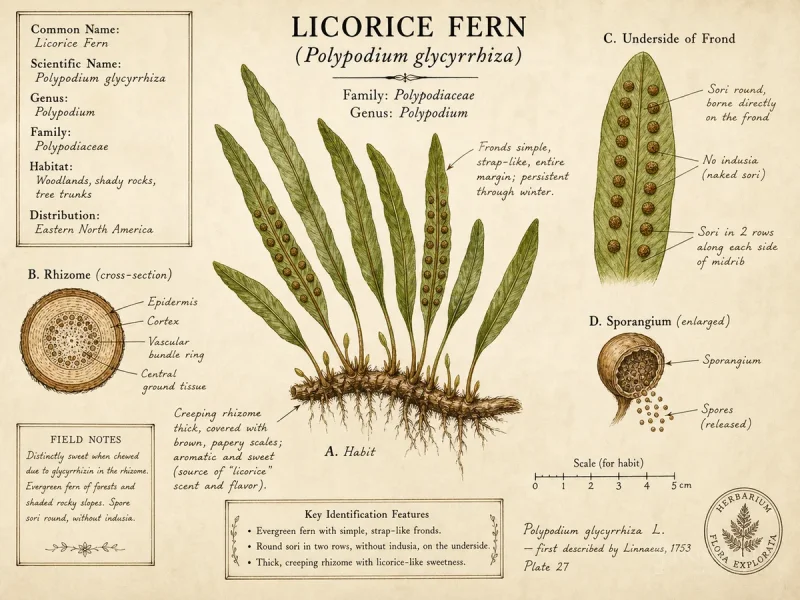
Keep the soil evenly moist until the plant is established. After that, water when the surface is dry. A short dry spell is easier on the rhizome than a wet pocket. licorice fern drops its fronds in hot, dry weather and greens up with cool rain — that rest is normal, so do not flood it to “rescue” brown leaves. [3] leatherleaf polypody wants the same shade and drainage, with shelter from drying wind on the coast.
How often should I water polypody?
Keep the soil moist through the first season. Once established, water when the surface is dry. Do not water on a fixed calendar if the soil is still wet.
Is my licorice fern dying in summer?
Licorice fern is winter-green and summer-dormant. It loses fronds in hot, dry weather and returns with fall rain. That is rest, not a reason to soak the rhizome.
Cut yellow fronds at the rhizome, and leave the green winter leaves
Polypody is not a shrub you shape. Snip yellow, brown, or broken fronds at the rhizome with clean scissors, and leave healthy green fronds in place. Winter-green kinds keep leaves through the cold months, so do not cut a green clump to the ground in late winter the way you would a deciduous fern.
- Wait until a frond is yellow or brown, or until summer-dormant kinds drop their leaves on their own.
- Cut that frond at the rhizome. Do not nick the creeping stem.
- Leave green winter fronds on rock-cap and leatherleaf kinds.
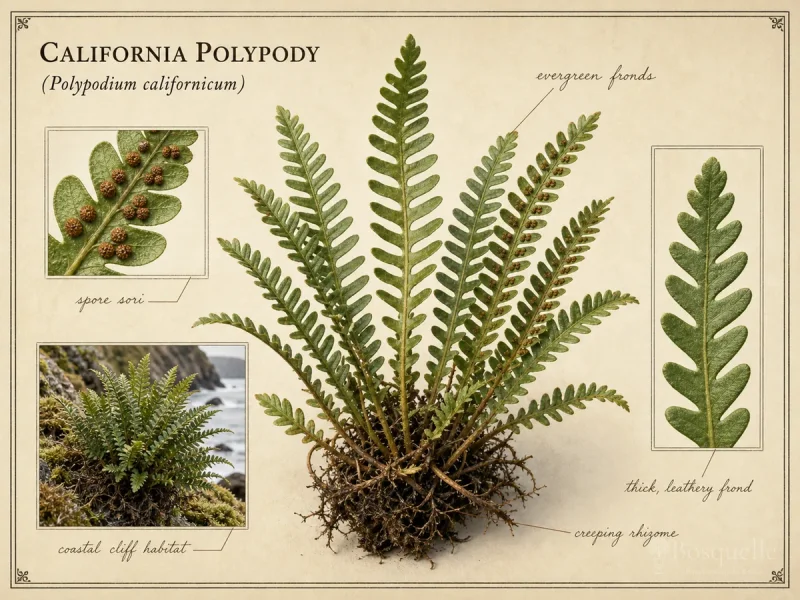
- Do not cut licorice fern or California polypody in late winter while the fronds are still green; they rest later, when the dry season hits.
When do I cut back polypody?
Cut yellow or brown fronds at the rhizome. Leave green winter leaves. Do not shear a green clump in late winter.
Grow it in a shallow pot if you need a container
A container works when you need polypody on a patio or a wall, but this is still a hardy outdoor fern, not a tropical houseplant. Use a shallow, wide pot with drainage holes so the rhizome can creep on the mix.
- Choose a wide pot with drainage holes, not a deep tub that stays wet at the bottom.
- Fill it with a loose mix of leaf mold, bark, and grit or perlite. Do not use a dense indoor potting soil that stays soggy.
- Set the rhizome on the mix, with roots going down. Do not bury the stem.
- Water when the surface is dry, and keep the pot in shade. Leatherleaf polypody can trail from a hanging basket outdoors in the same mix.
If the tag says blue star fern or golden polypody, that is a different plant — see the lookalike heading below, not this pot mix.
Can I grow polypody in a pot?
Yes. Use a shallow, wide pot with drainage and a mix of leaf mold, bark, and grit. Set the rhizome on the surface. Keep it in shade.
Not the blue star fern — and not resurrection fern
The houseplant sold as golden polypody or blue star fern is Phlebodium aureum, not Polypodium. Tags sometimes still say Polypodium aureum. [4] Phlebodium has blue-green, softly lobed fronds and fuzzy golden rhizomes. It is frost-tender and is grown indoors in bright indirect light. Polypody proper has narrower, darker, leathery fronds and lives outdoors in shade and rocky or gritty soil.
Resurrection fern is Pleopeltis, formerly listed as Polypodium polypodioides. It curls tight in drought, then opens after rain. Rock polypody does not do that trick. Rabbit-foot fern is usually Davallia, a different houseplant with furry rhizomes. If a search for those names sent you here, you wanted the houseplant, not this woodland mat.
Is Phlebodium the same as Polypodium?
They are in the same family. The indoor plant sold as golden polypody or blue star fern is Phlebodium aureum, formerly Polypodium aureum. Outdoor rock polypody and common polypody are true Polypodium.
If the fronds scorched, the site was too sunny or the rhizome sat wet — move it to shade that drains, and leave the stem on the surface.
FAQ
What pests hit polypody?
Serious insect trouble is uncommon. Brown fronds usually mean too much sun, a buried rhizome, or a wet pocket. Fix the site before you spray.
Related guides

Recommended plants


References
- [1] NC State Extension Gardener -
https://plants.ces.ncsu.edu/plants/polypodium-vulgare/ - [2] NC State Extension Gardener -
https://plants.ces.ncsu.edu/plants/polypodium-virginianum/ - [3] California Flora Nursery -
https://www.calfloranursery.com/plants/polypodium-glycyrrhiza/ - [4] NC State Extension Gardener -
https://plants.ces.ncsu.edu/plants/phlebodium-aureum/
This note is part of Polypodium Guides.
More first-season notes by plant are gathered in How to Grow Guides.
Updated: Reviewed by Bosquelle Editors