
Plant polka-dot plant outdoors after nights stay above about 50°F, in part shade, in moist soil that drains. Treat it as a warm-season annual, or pot it up before a frost.
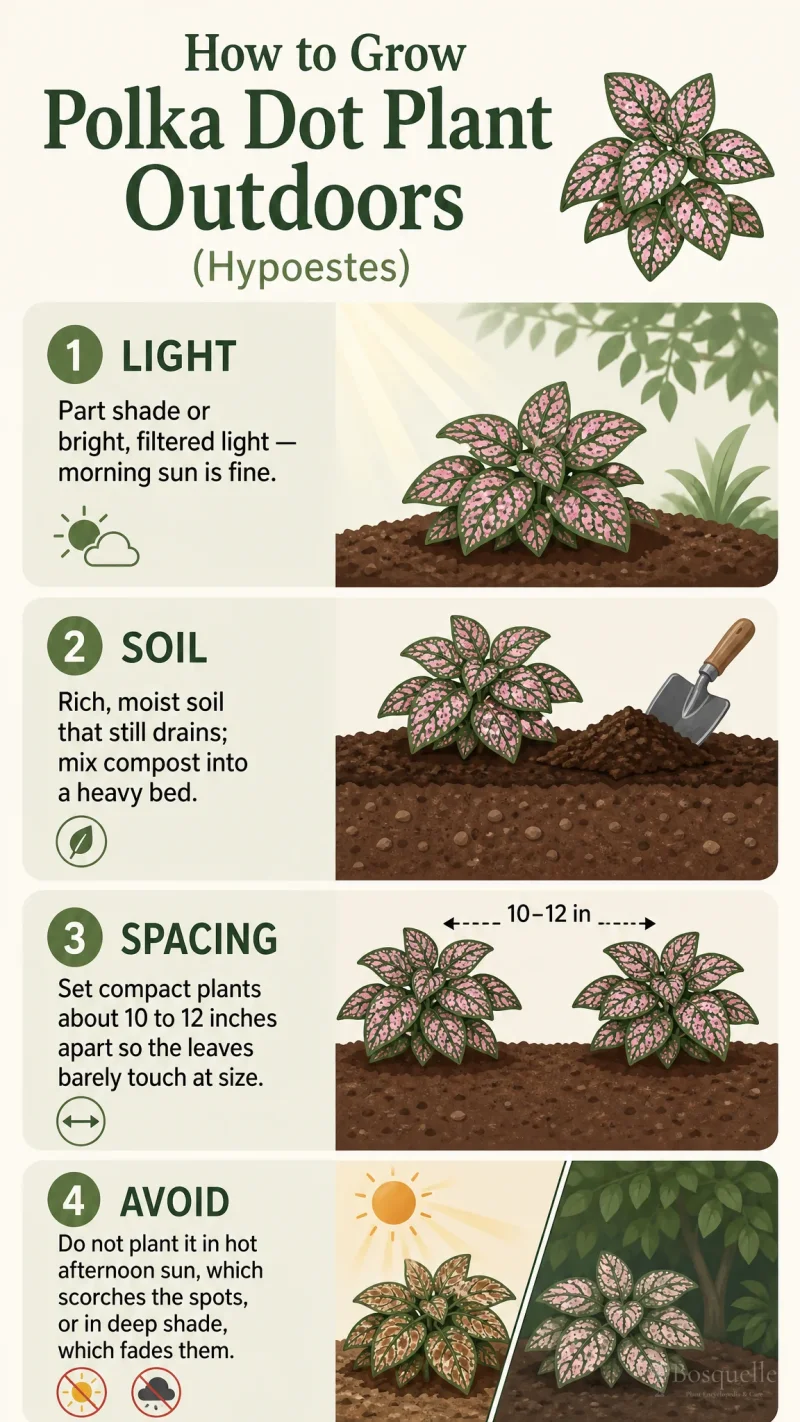
Plant it after nights stay above about 50°F, in part shade
| Factor | Recommended | Avoid |
|---|---|---|
| When | Wait until nights stay above about 50°F; it grows better once days are over 60°F | Do not set it out into a cold snap, which damages the foliage |
| Light | Part shade or bright, filtered light — morning sun is fine | Do not plant it in hot afternoon sun, which scorches the spots, or in deep shade, which fades them |
| Soil | Rich, moist soil that still drains; mix compost into a heavy bed | Do not plant it in a low, soggy pocket, which rots the roots |
| Spacing | Set compact plants about 10 to 12 inches apart so the leaves barely touch at size | Do not cram them stem to stem in still, wet air |
polka-dot plant started as a houseplant and is now a common warm-season annual in a border, a window box, or a patio pot. Wait until nights stay above about 50°F, and know that it does not grow well until the days are over 60°F. [1] Choose part shade or bright, filtered light. Hot midday sun crinkles the leaves; deep shade fades the spots and stretches the stems. [2]
Dig a hole slightly wider than the root ball, set the plant so the top of the roots sits level with the surrounding soil, firm the soil, and water it in. Compact kinds sit about 10 to 12 inches apart; give a larger plant a little more room. [3] [4]
- Wait until nights stay above about 50°F, and the soil has warmed.
- Choose part shade or bright, filtered light, out of hot afternoon sun.
- Dig a hole slightly wider than the root ball, and mix compost into heavy soil.
- Set the plant with the top of the roots at the soil line, space about 10 to 12 inches, and water it in.
When can I plant polka-dot plant outside?
Wait until nights stay above about 50°F. It grows better once days are over 60°F.
Keep the bed moist through summer, then bring it in before frost
Keep the soil evenly moist, not soggy, all summer. A dry week in heat fades the foliage and wilts the plant. Mulch around the stems helps the soil hold water. Pair it with other shade plants that like even moisture, such as How to Grow Impatiens or How to Grow Caladium — same damp shade, not a dry ridge.
A frost kills it. Before nights drop toward 50°F, either treat the bed as an annual and pull it, or pot a healthy plant and bring it to a bright indoor window. Indoor light, mix, and humidity after that move are on How to Grow Polka Dot Plant.
- Water so the soil stays evenly moist, and empty a patio saucer after a hard rain.
- Mulch the bed so the surface does not bake dry.
- Before nights drop toward 50°F, pot a plant you want to keep, or pull the rest as an annual.
Will it come back next year in the bed?
Only where winters stay above freezing. In most gardens it is an annual unless you pot it up and bring it in before frost.
Wait for warm nights, plant in part shade at the soil line, and keep the bed moist. Pot it up before frost if you want it indoors.
FAQ
Can I grow it in a patio pot outside?
Yes. Use mix that drains, keep it evenly moist, and set the pot in part shade. Bring the pot in before nights drop toward 50°F.
How far apart should I plant them?
About 10 to 12 inches for compact kinds, so the leaves barely touch at size. Give a larger plant a little more room.
Related guides

Recommended plants
References
- [1] NC State Extension -
https://plants.ces.ncsu.edu/plants/hypoestes-phyllostachya/ - [2] Wisconsin Horticulture -
https://hort.extension.wisc.edu/articles/polka-dot-plant-hypoestes-phyllostachya/ - [3] Almanac -
https://www.almanac.com/plant/polka-dot-plant - [4] Proven Winners -
https://www.provenwinners.com/learn/how-plant/polka-dot-plant
This note is part of Hypoestes Guides.
More first-season notes by plant are gathered in How to Grow Guides.
Updated: Reviewed by Bosquelle Editors