
Penstemons (beardtongue) want full sun and soil that drains fast. Wet, rich ground makes floppy stems and mushy winter crowns. Border digitalis types want a little more summer moisture than western xeric species. Do not treat every tag as a desert plant.
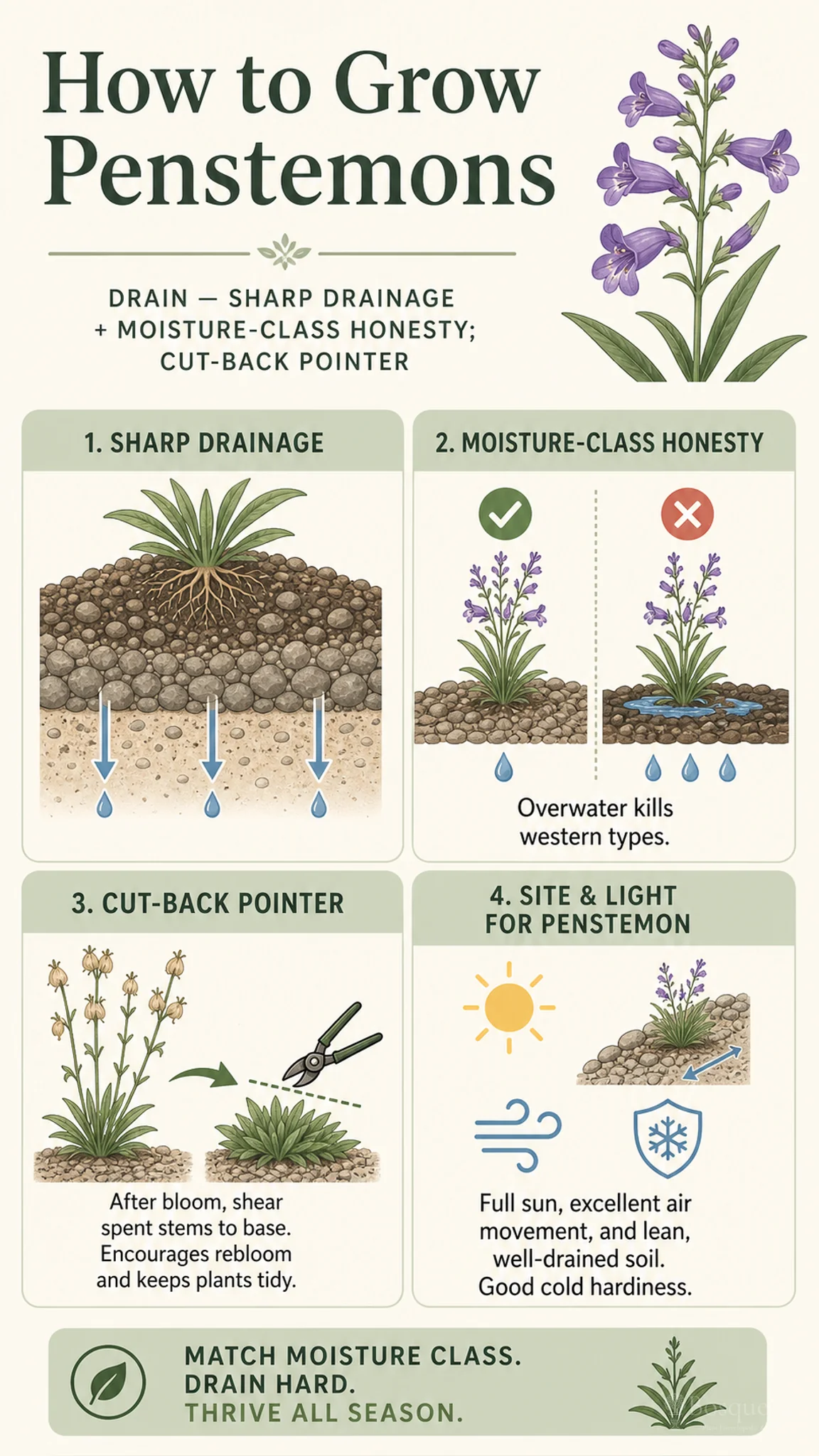
Cut back in spring when new shoots show at the base. Leave stems over winter unless wind rocks the clump. Sort types on Types of Penstemons.
Full sun, sharp drainage, and lean soil
| Factor | Recommended | Avoid |
|---|---|---|
| Light | Full sun, 6 or more hours | Deep shade that stretches stems and cuts bloom |
| Soil | Lean, gritty, well-drained; raised if clay | Rich wet loam; a winter puddle on the crown |
| Water | Establish new plants, then restrain on western types | Daily soak after bloom “to be safe” |
| Feed | Little or no nitrogen | Manure that keeps the crown wet |
Pick the sunniest, sharpest-draining strip. A gravel edge or a raised bed beats a manure-rich rose hole. Clay can work if you add grit and lift the crown so winter water leaves. Sand needs a light mulch around, not over, the growing point so new roots do not dry out the first summer.
Set the crown at soil level. Space about 18 inches. Plant in spring as the soil warms, or in early fall if the plant can root before hard frost. Midsummer transplant into heat is a poor start.
Average garden soil with no extra fertilizer is enough. Overfeeding flops stems. Keep mulch off the crown so ice water cannot sit on the growing point.
This is not foxglove (Digitalis the genus). Penstemon digitalis is a beardtongue species. Confirm Penstemon on the Latin.
Pets: do not encourage chewing. This is not a forage plant. Keep cut debris out of reach of animals that eat garden waste.
Many clumps last three to four years. Refresh with young plants or summer cuttings. Do not treat a tired woody center like a peony you can ignore for a decade.
Digitalis vs western types
Not every penstemon wants the same water. Digitalis and dark-foliage border types need more even moisture in summer than western xeric species. Shared rule: both still rot in a winter puddle.
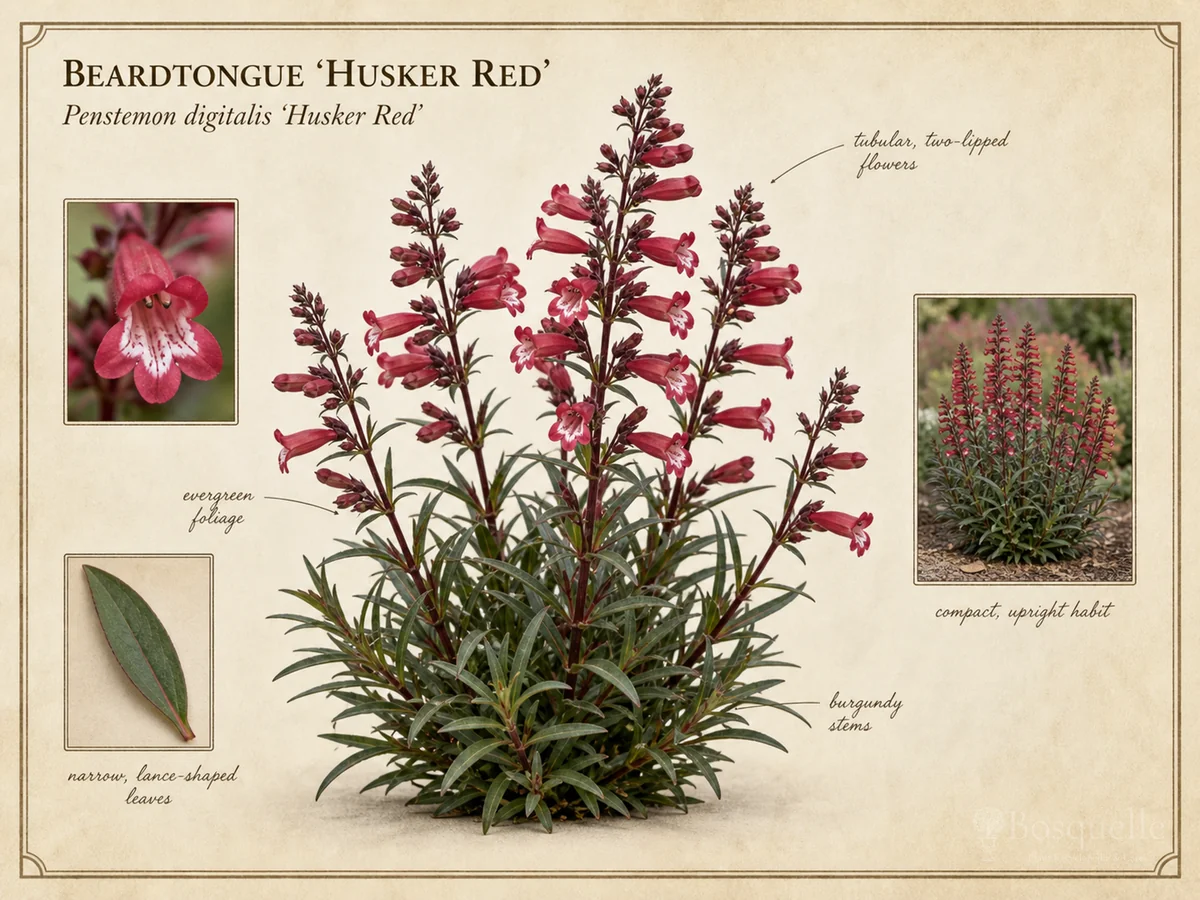
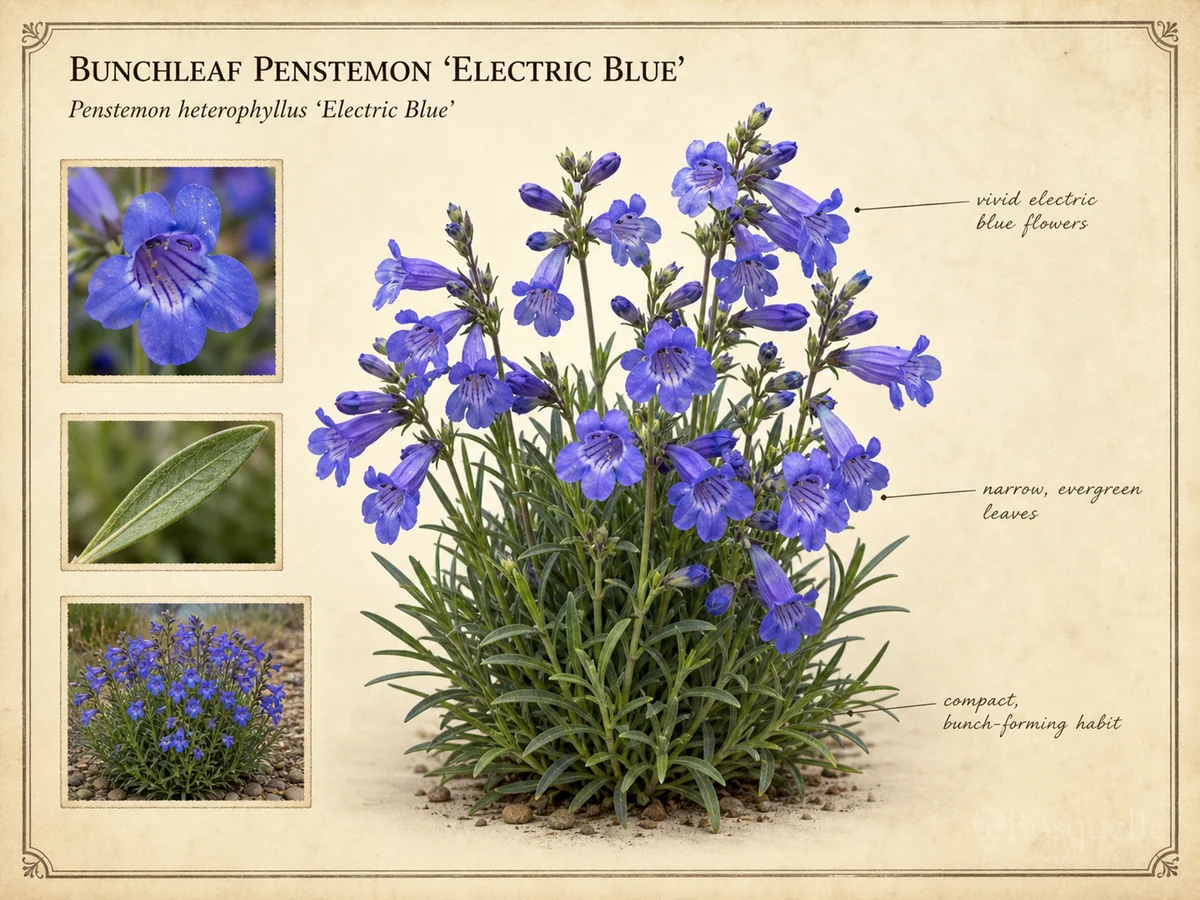
Husker Red and Blackbeard are digitalis-class border plants. Give them sun and drain, plus a soak in a long drought. Electric Blue is a western type. Once it is rooted, extra water is the usual kill.
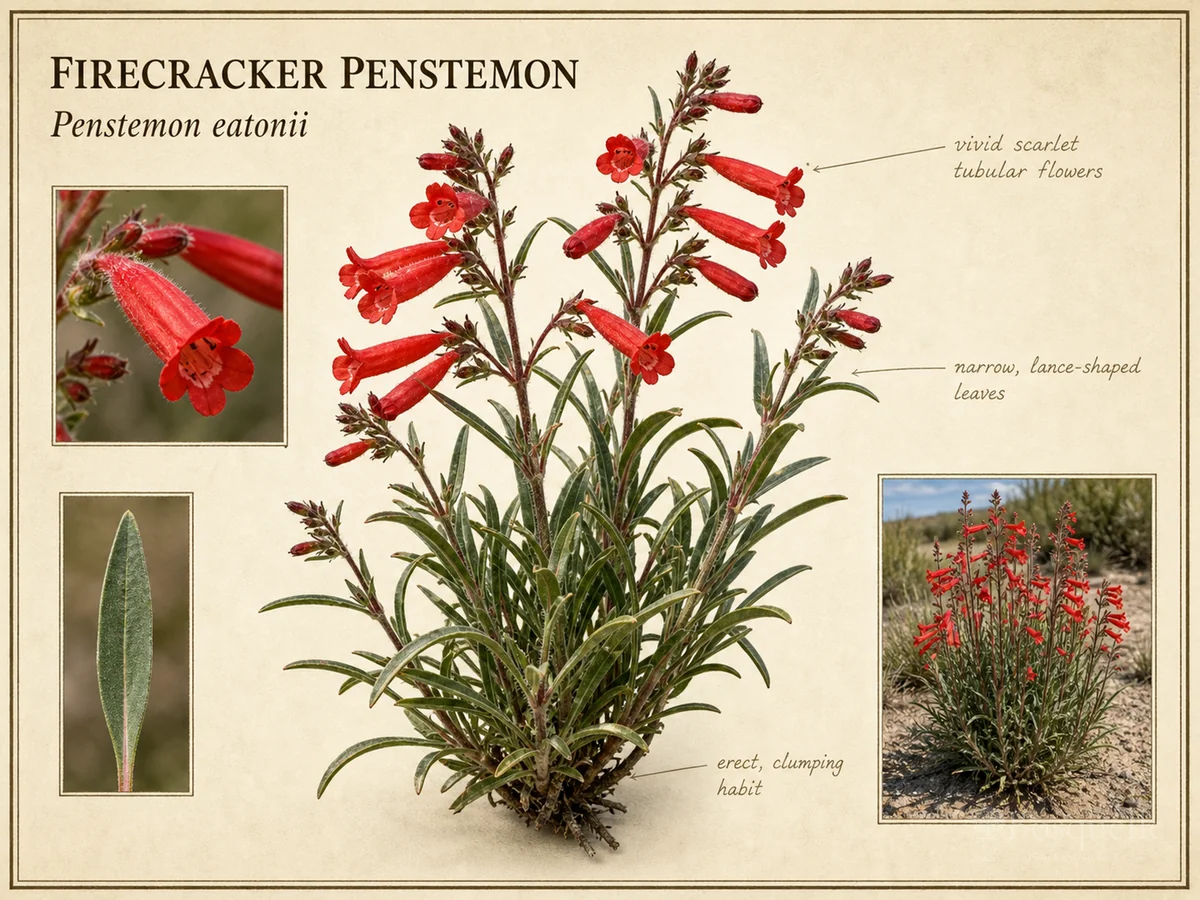
Margarita BOP, Penstemon pinifolius, and Penstemon eatonii sit at the lean end. Grit, sun, and restraint after establishment. Do not copy a Husker Red soak onto a pineleaf mat.
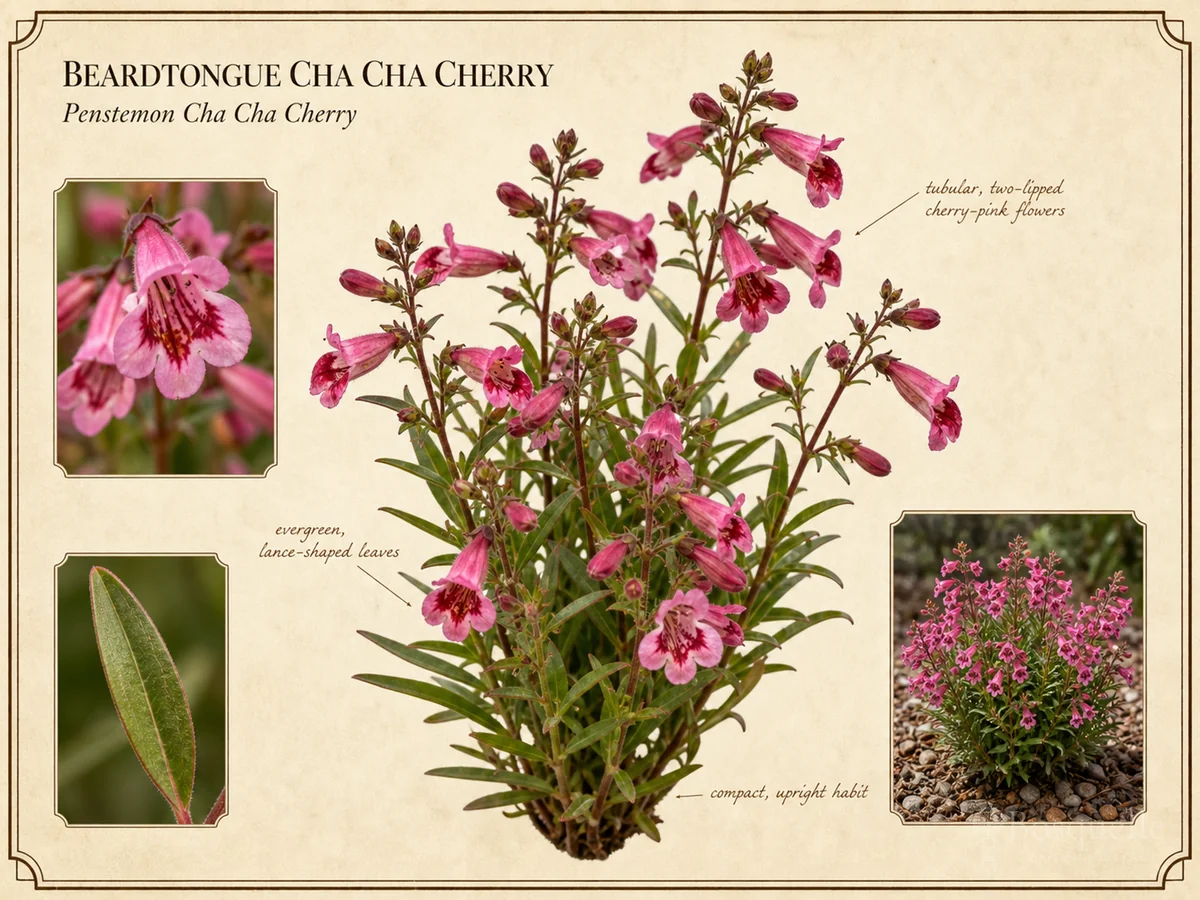
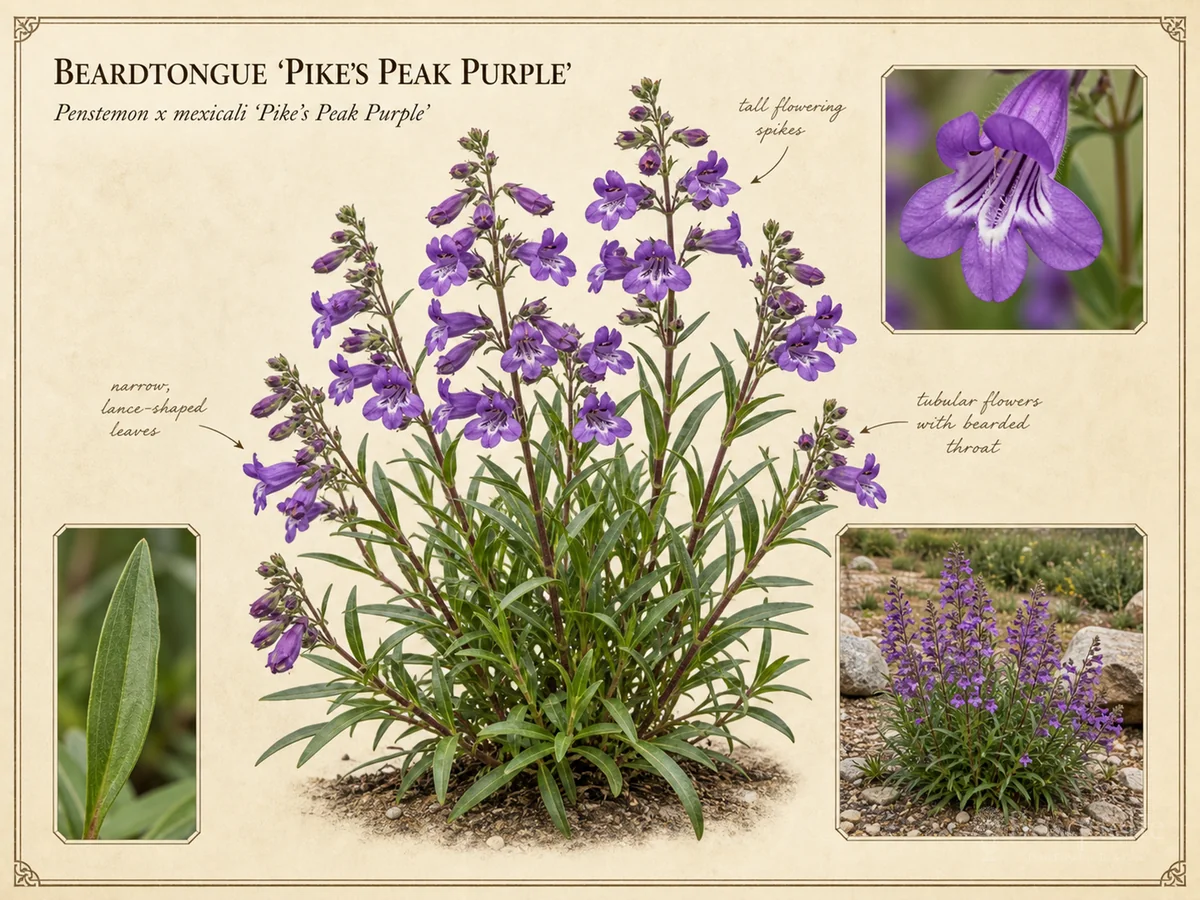
Hybrid series such as Cha Cha Cherry and Pike's Peak Purple want a sunny drained border, not a bog and not a true desert unless the tag says so. Browse class on Types of Penstemons before you copy a neighbor’s watering.
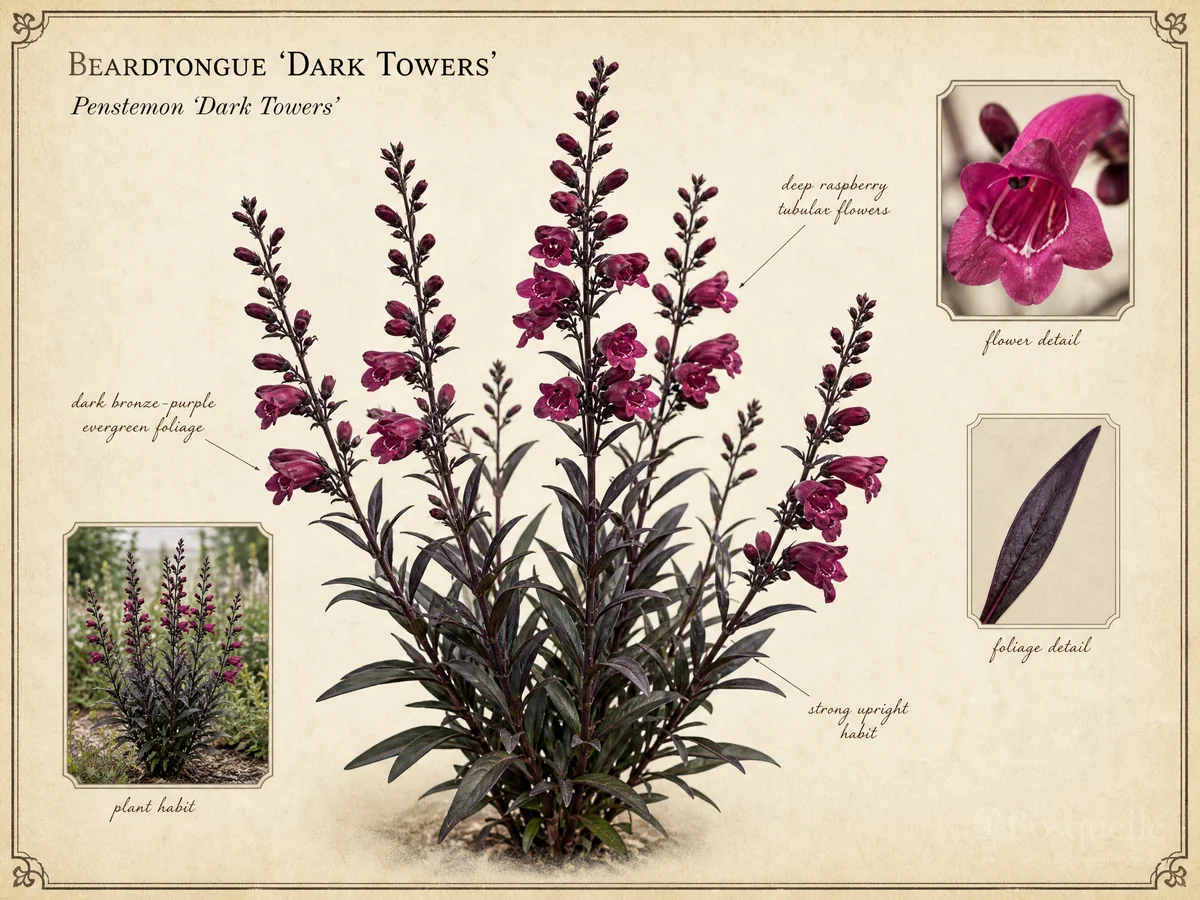
Dark Towers and Midnight Masquerade follow the digitalis moisture side: more summer water than pinifolius, still with a high, drained crown. Color of the leaf does not rewrite winter wet.
Water, winter wet, and mushy crowns
| Factor | Recommended | Avoid |
|---|---|---|
| New plants | Even moisture until roots leave the nursery mix | Letting a new western type dry out in week one |
| Established western | Deep soak only in a long drought | Keeping the crown wet every day |
| Winter | Drain; optional one-third cut if wind rocks stems | A hard autumn cut that leaves a wet stub |
A mushy black crown after a wet winter is rot, not a missed feed. Raise the bed or move the plant. No cultivar color fixes a puddle.
Deadhead spent spikes through summer for a longer show. Stop in fall if you want some seed. Birds may use the stems. That does not replace the spring cut.
If stems flop in rich soil, cut nitrogen, not the idea of penstemon. Lean and drain first. Then water by type.
Aster yellows and similar stunting are not fixed by more water. Destroy a plant that stays yellow and never blooms. Do not compost it next to healthy clumps.
Hybrids such as Cha Cha Cherry still need air around the stems. Crowding plus wet mulch is a winter fail. Thin partners so the crown dries after rain.
Cut-back, pots, and next jobs
Leave stems over winter to protect the crown from frost, unless wind rocks the plant. Then cut about one-third in fall. The hard cut is early spring, down to new basal shoots. Full steps live on Cutting Back Penstemons.
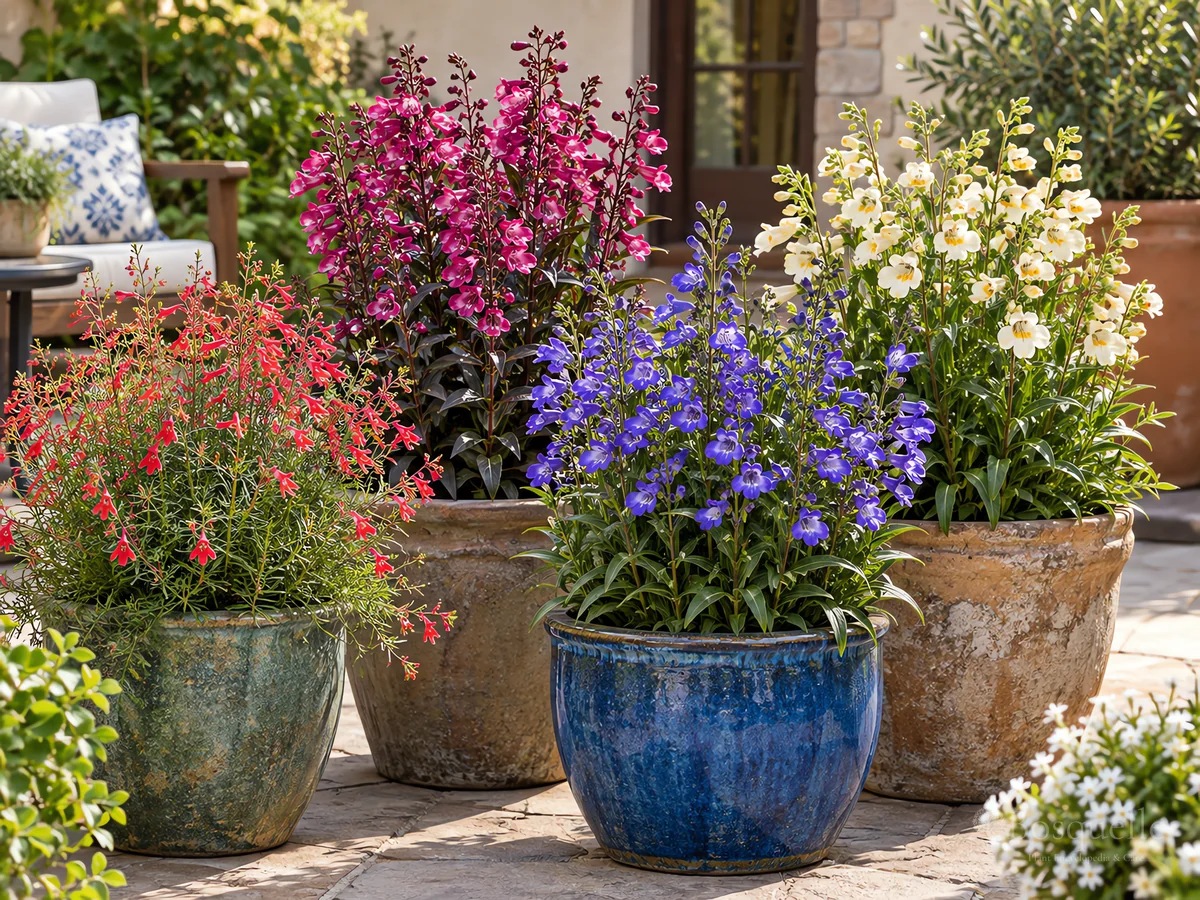
Patio pot size, grit mix, and wintering the container live on Penstemons in Containers. Beds with grit are still the better long-term home for tall clumps.
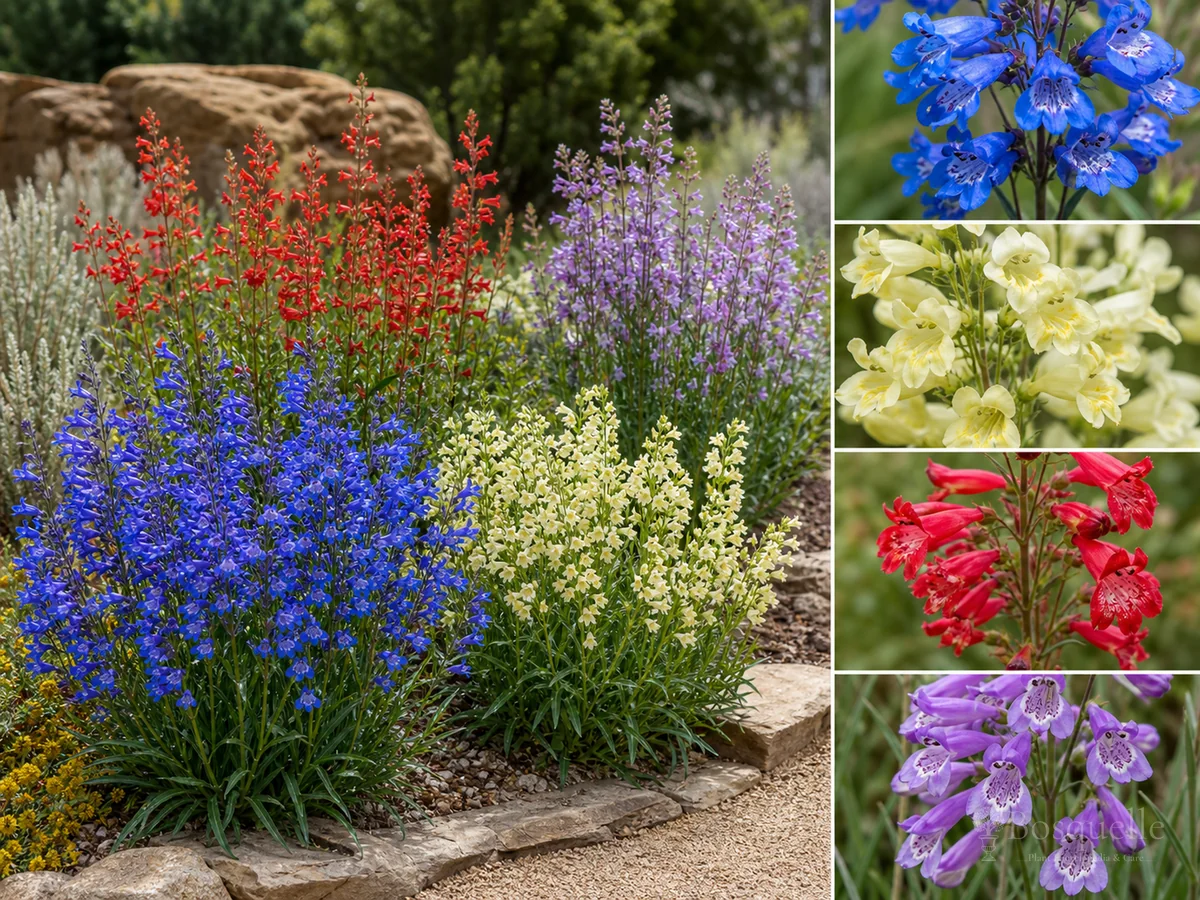
Partners that share sun and drain live on Penstemon Companion Plants. Western dry-border picks live on Best Penstemons for Dry Borders. Do not plant a digitalis type into a true desert shortlist hole without extra summer water.
If bloom was poor after a year you fed the bed like a vegetable patch, stop the nitrogen, keep drain, and judge again next summer. Replacing a flopped clump without changing soil repeats the same fail.
Store unplanted nursery pots in bright shade and keep the mix barely moist until the hole is ready. Do not leave them in a hot car.
When two instincts compete — chase every flower color versus master one sunny, draining hole — master the hole. Color is easy to swap next year. A mushy crown wastes the season.
Label the row with class (digitalis, hybrid, western, or pineleaf) and year the day you plant. Mixed purples look the same in leaf.
If neighbors ask why yours lived and theirs rotted, the answer is usually drain plus the right water for the class, not a secret feed.
A late spring freeze that nips new shoots is not a reason to flood the crown. Wait for green. Then keep the same drained hole.
Self-sown seedlings of species types can fill gaps. Named hybrids usually will not come true. Pull extras while they are small if you wanted a single cultivar row.
When heat arrives, resist panic fertilizer. Stem strength comes from sun and drain more often than from another soluble feed.
A nursery gallon that sat wet in a shop aisle needs a dry start. Knock off sour mix, then plant high. Shocked plants from a dim aisle color later than plants already hardening in sun.
If two instincts compete in fall — cut everything versus leave stems — leave most of the top. The spring cut is the main job. A hard autumn scalp is how wet stubs rot.
Test drain before you plant. Dig a hole, fill it with water, and watch. If it still stands an hour later, raise the bed or add grit. Penstemons fail more often from a sealed winter puddle than from a missed soluble feed in June.
First-year plants need even moisture until roots leave the nursery mix. After that, water by class. A western type that is rooted should dry between soaks. A digitalis-class border type still wants a soak in a long drought, then a chance to dry at the crown.
Space about 18 inches so rain can dry the neck. Crowding looks full in May and then holds wet in January. Thin a jammed row rather than adding more nitrogen to hide the flop.
A four-year clump that blooms poorly and goes woody at the center is often at the end of its useful life. Replace it with a young plant or take summer cuttings. Do not treat a tired beardtongue like a peony you can ignore for a decade.
Read the Latin on the tag, not only the color name. Penstemon digitalis is still a beardtongue. Foxglove is Digitalis the genus. If the pot says only “penstemon,” sort moisture class before you copy a neighbor’s hose schedule.
After a summer storm, lift flopped stems off the crown so they do not sit wet. Stake only if the bed is rich and the stems are tall. Lean soil and sun prevent more flop than a late cane.
Bark mulch that packs into a collar is a winter risk. A thin grit or gravel ring around, not over, the growing point sheds ice water. Keep organics off the neck so the crown can dry after rain.
Cuttings in summer are how many gardeners keep a favorite hybrid when the original woody center fails. This cluster has no propagate page. Take the tip as a refresh habit, then return to sun and drain on this page.
If the nursery plant sat in a dim aisle, harden it in bright shade for a few days. Then plant high in a draining hole. Shocked plants color later. That delay is not a reason to flood the crown.
Keep a simple record: class, plant date, and whether the hole drained. Next spring you will know whether to soak a drought or to move the plant. Guessing from flower color alone repeats last year’s rot.
If rabbits clip new shoots, protect the crown with a short ring, then keep drain. Browse is not a watering problem. Replace an eaten clump only after you confirm the hole still sheds winter water.
FAQ
Do penstemons need full sun?
Yes. Aim for six or more hours. Deep shade stretches stems and cuts bloom.
Why did my penstemon go mushy?
Usually winter wet on the crown. Improve drain. Do not treat every type as a desert plant, but none want a puddle.
Is Husker Red a desert penstemon?
No. It is a digitalis-class border type. It wants more summer moisture than western xeric species. See Types of Penstemons.
When should I cut penstemons back?
Early spring when new basal shoots show. See Cutting Back Penstemons.
Do penstemons spread?
Clumps widen slowly. Species may self-seed. They do not run like mint.
Can I grow penstemons in pots?
Yes. Compact types in a large drained pot. See Penstemons in Containers for pot size, mix, and winter.
Are penstemons short-lived?
Often three to four years. Refresh with young plants or cuttings.
Is penstemon the same as foxglove?
No. Foxglove is Digitalis. Penstemon digitalis is a beardtongue species.
Do I fertilize penstemons?
Usually no. Heavy nitrogen flops stems and holds wet at the crown.
Where are dry-border picks?
Best Penstemons for Dry Borders — linked above.
Related guides



Recommended plants




This note is part of Penstemon Guides.
More first-season notes by plant are gathered in How to Grow Guides.
Updated: Reviewed by Bosquelle Editors