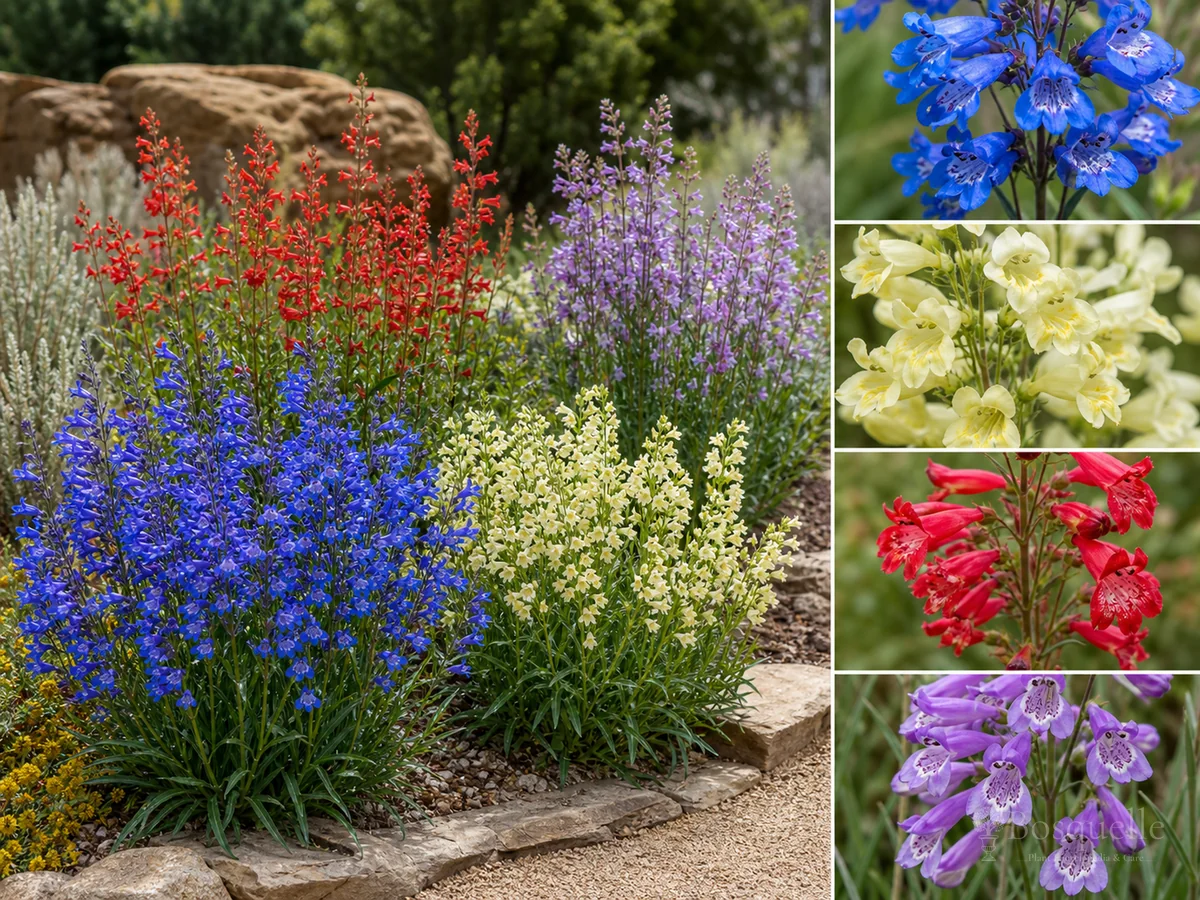
This is a dry-border shortlist, not a fragrance page. Western types such as Electric Blue and Margarita BOP, pineleaf Penstemon pinifolius, and some drained-bed hybrids earn a lean sunny strip. Digitalis foliage types such as Husker Red are not the default desert plant.
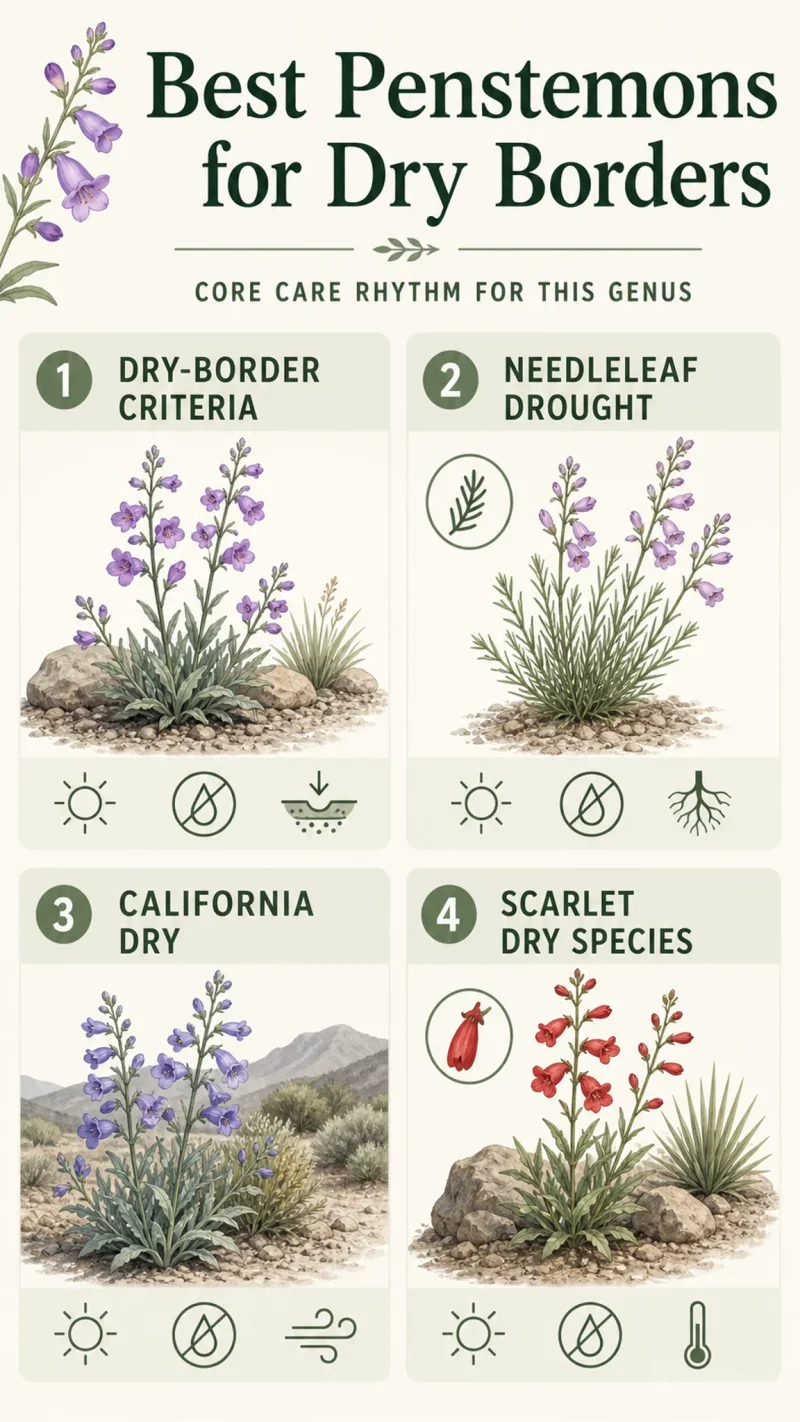
Sun and drain stay on How to Grow Penstemons.
How we picked these
| Factor | Recommended | Avoid |
|---|---|---|
| Filter | Sun, sharp drain, drought once established | Shopping by flower color alone |
| Class | Western xeric and pineleaf first | Using Husker Red as a desert default |
| Care | Same grit and spring cut as the grow page | Extra water “for more bloom” on western types |
Scent is not the filter. Almost none of the catalog is sold as fragrant. Drought performance in sun is the job. Smell is a bonus if it happens.
Electric Blue, Margarita BOP, and Penstemon eatonii are the western spine of this list. They want grit and restraint after they root. A wet clay bowl still kills them.
This is not every garden penstemon. It is a lean-sun shortlist. Height and moisture class still live on Types of Penstemons.
New plants still need water the first weeks. Drought performance assumes a rooted clump, not neglect of a nursery pot in a heat wave.
Dry-border shortlist — Electric Blue to pinifolius
Use the plants on this page as a starting set. Confirm drain on your site before you copy a western photo onto a wet border.
Penstemon pinifolius is the low needleleaf mat. Cha Cha Cherry and Pike's Peak Purple can take a sunny drained hybrid bed. They are not as xeric as eatonii. Do not pretend they are.
Husker Red may appear in a wide drought catalog. Treat it as a border digitalis type with more summer moisture, not as the lead plant in this dry strip.
If two packets share a similar blue, ignore the name and read class. Western vs hybrid is the filter. Color is second.
Leave some seed if you want species volunteers. Named hybrids usually will not come true.
Planting penstemon for dry borders
- Choose full sun and soil that drains. Raise the bed if clay holds water.
- Set the crown at soil level. Space about 18 inches for air.
- Water to establish. Then restrain on western and pineleaf types.
- Do not use heavy fertilizer. Lean soil is the match.
- Leave stems over winter. Cut in spring when basal shoots show.
- Pair lean-sun neighbors. See Penstemon Companion Plants.
Shared growing rules live on How to Grow Penstemons. Spring cut: Cutting Back Penstemons.
Do not enrich the hole for “better color.” Extra feed flops stems and holds wet. Grit and sun do more than a soluble feed in June.
A pot on a hot patio can hold a compact type if it drains. Empty the saucer. Full patio steps live on Penstemons in Containers.
Group three of the same class. A single western spike in a wet mixed border is a trial you will lose.
Wrong dry-border buys
A dark-leaf digitalis bought because the photo looked prairie is still a digitalis soak. Put it in the kinder strip, not the grit desert.
A hybrid color series in a winter-wet clay bowl is a one-season plant. Fix drain or skip the genus.
Foxglove (Digitalis) is the wrong Latin. Beardtongue is Penstemon.
A fragrance search is the wrong page. Almost none of these are scent shortlist plants. Buy them for drought and tubular spikes.
If last year’s western clump went mushy, move the hole, do not shop a darker blue. Drain first.
Do not crowd the crown with thirsty annuals. They hide wet and force the hose. Lean neighbors only.
Write class on the tag the day you plant. Next year’s you will not remember which blue was xeric.
If two instincts compete — collect every series versus master one gritty strip — master the strip. Color is easy to swap. A puddle is not.
A drought catalog that lists Husker Red is selling a drained border plant, not a desert default. Give that type more summer moisture than eatonii. Put the western and pineleaf plants on this page into the grit strip.
Prep the strip once. Raise clay. Add grit. Keep the crown high. Then plant. Enriching the hole for “better color” flops stems and holds wet. Lean soil is the match for the plants on this list.
Confirm local winter wet before you copy a western photo. A sunny slope that sheds ice water is the site. A low clay bowl that holds January rain is not. No cultivar blue fixes a puddle.
Mix pineleaf mats at the front with taller western spikes behind. Keep them in the same watering basin. Do not drag a digitalis soak across that edge because the foliage is dark.
Group three of the same class so pollinators find a block. A single western spike in a wet mixed border is a trial you will lose. Replace the hole, not only the packet, if last year’s clump went mushy.
After planting, water to establish. Then restrain. A new western type that dries out in week one is a different fail from an established plant you keep wet all summer. Watch the crown, not the calendar.
Label the strip with class the day you plant. Next year’s you will not remember which blue was the lean type. Color is easy to swap. Drain is not.
FAQ
Which penstemons are best for dry borders?
Western xeric types and pineleaf mats in full sun and sharp drain. Not every digitalis foliage type.
Is this a fragrant list?
No. This page is drought and sun. Fragrance is not the filter.
Can I plant Husker Red in a dry border?
It wants more summer moisture than western types. Use it in a drained border, not as a desert default.
Do dry-border types need different pruning?
Still cut in spring when basal shoots show. See Cutting Back Penstemons.
Where is full care?
How to Grow Penstemons.
Will they bloom the first year?
Often, from nursery plants. Seed-grown species may wait a season.
Can I grow them in a pot?
Compact types in a large drained pot. See Penstemons in Containers.
How do I choose among the blues?
Read western vs hybrid class, then color. See Types of Penstemons.
Related guides


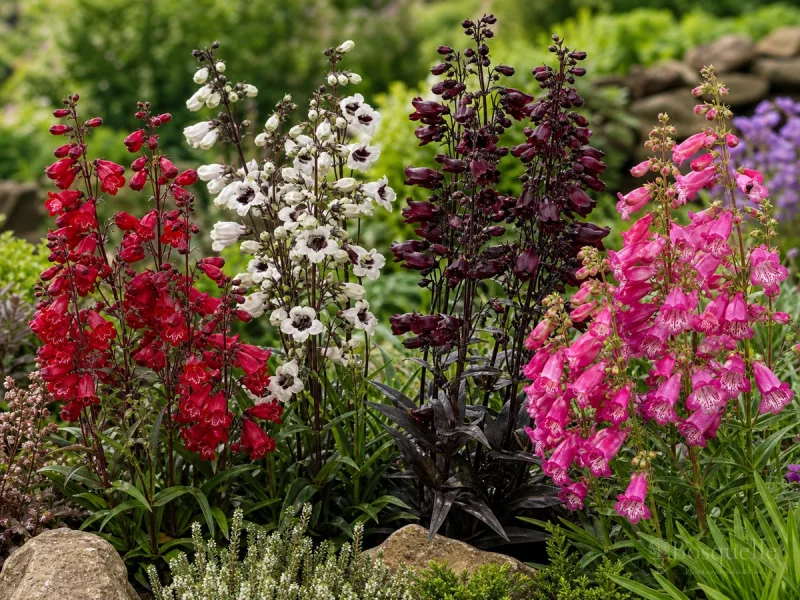


Recommended plants


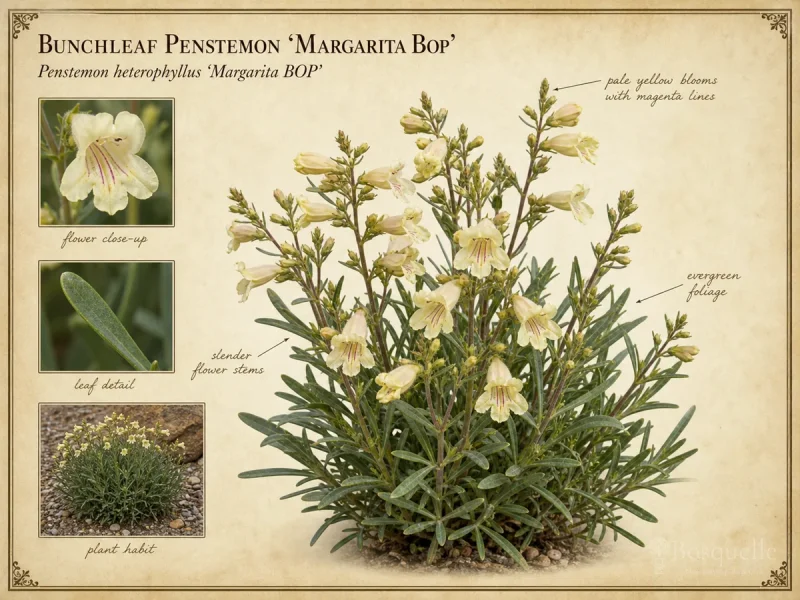


This note is part of Penstemon Guides.
More job shortlists live in Best Plant Picks Guides.
Updated: Reviewed by Bosquelle Editors