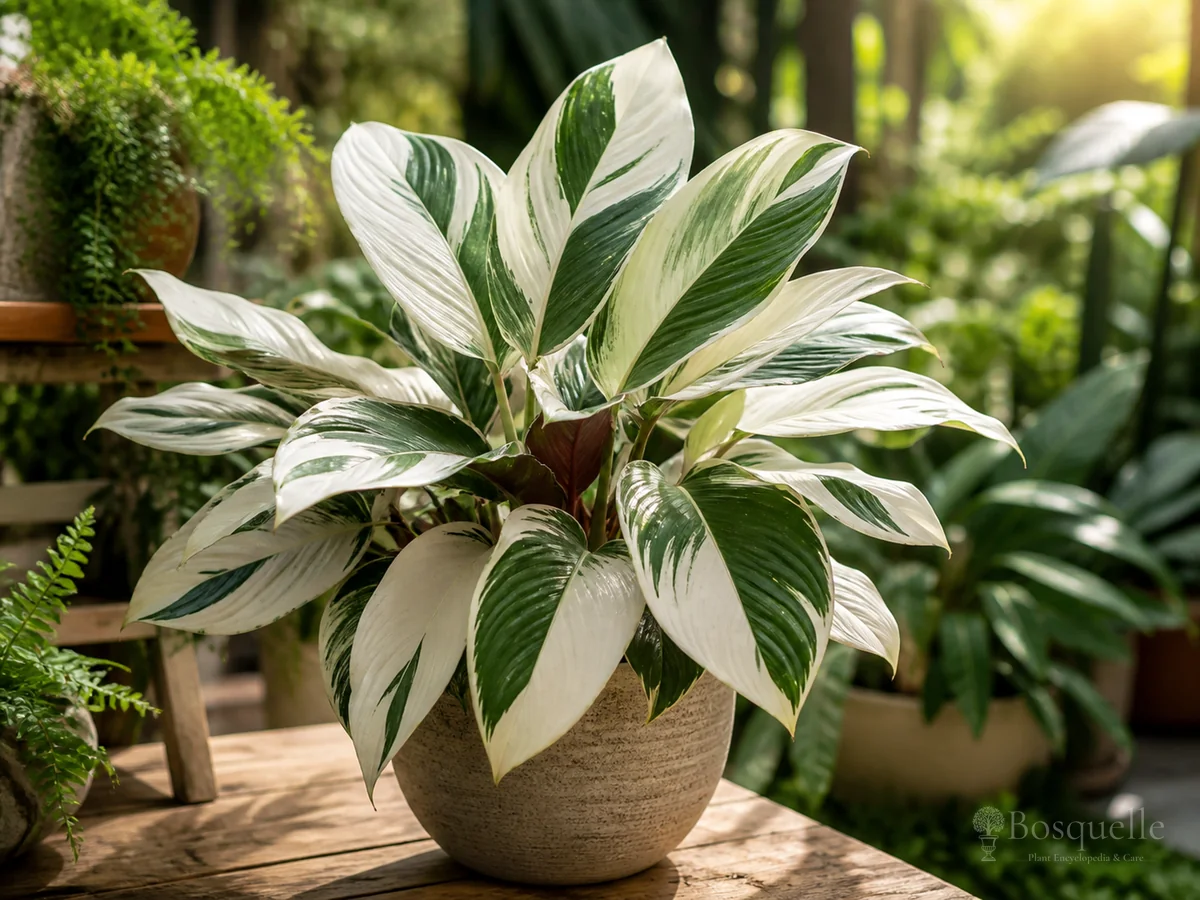
Grow peacock plant in bright indirect light with humidity around 60 percent and distilled or rain water. Tags often still say Calathea.

Give it bright indirect light, humidity around 60 percent, and distilled or rain water
| Factor | Recommended | Avoid |
|---|---|---|
| Light | Bright indirect light — an east window, or a sheer curtain on a brighter exposure | Noon sun that bleaches the pattern, or a dark corner that fades it |
| Humidity | Around 60 percent, with a humidifier or a pebble tray the pot sits above | Dry heater blast, or misting as the only humidity plan |
| Water | Distilled, rain, or filtered water when the top of the mix just begins to dry. Keep the root zone evenly moist | Hard or fluoridated tap that browns the tips, a swampy saucer, or a full dry-down |
| Mix and room | A draining pot of organic mix with perlite. Steady 65–75°F | Garden soil, cold drafts, or a pot with no drainage hole |
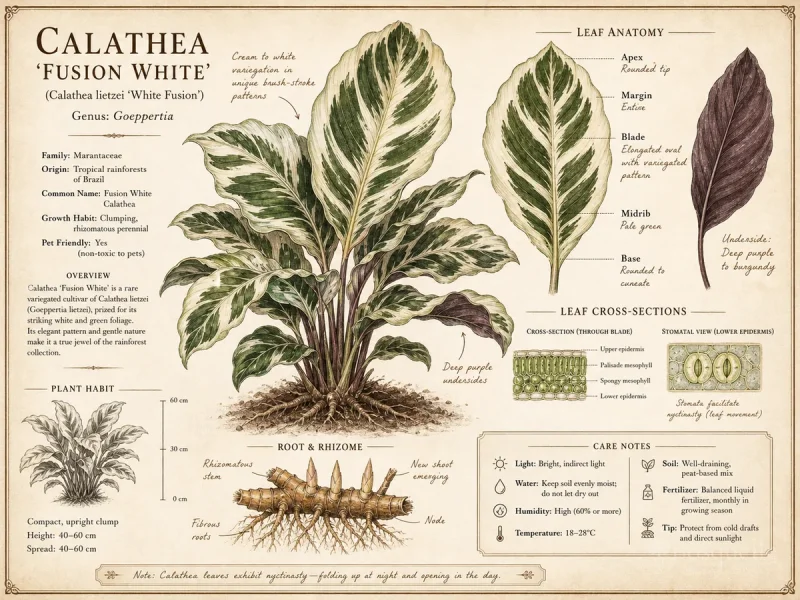
Humidity and water quality fail this plant faster than fertilizer. Raise humidity toward 60 percent, then water with distilled or rain water so fluoride does not brown the tips. Keep the mix evenly moist, not swampy and not bone-dry. Feed lightly every few weeks in spring and summer, then stop in dull winter light. Wipe dust off the leaves with a damp cloth. [1] [2] [3]
Leaves that fold up at night and open by morning are normal. Leaves that stay curled in the day, with crispy edges, point to dry air, dry mix, or a cold draft — not a broken prayer habit. [4]
Are peacock plants hard to take care of?
The hard part is dry winter air and harsh tap water, not a weekly mist. A bright humid room with distilled or rain water keeps the edges clean.
How to care for a peacock plant indoors?
Bright indirect light, humidity around 60 percent, and evenly moist mix. Use distilled or rain water if your tap browns the tips.
Where is the best place to put a peacock plant?
An east window or a sheer-filtered brighter window, away from heater vents. Skip a dark bathroom unless that room is still bright.
Why are my peacock plant leaves turning brown?
Usually low humidity or fluoridated tap water. Raise humidity and switch to distilled or rain water before you change fertilizer.
Do peacock plants need misting?
Misting wets the leaves; it does not hold humidity. Use a humidifier or a pebble tray, and keep air moving.
Why do peacock plant leaves fold at night?
That night fold is normal. Daytime curl with crispy edges is dry air, dry mix, or cold — not a missing night fold.
Put it in a bathroom only if the room is still bright
A steamy bathroom helps only when the plant still gets bright indirect light. Humidity without light fades the pattern.
- Check the light at midday. You should be able to read there without a lamp.
- Set the pot where it will not sit in a cold draft from the fan or a leaky window.
- If the room is dim, keep the plant in a brighter room and raise humidity with a humidifier instead.
Can I put my calathea in the bathroom?
Yes if the bathroom is bright enough. Humidity helps, but a dim room fades the leaves.
Ease water in winter
Growth slows in short days. Let the top of the mix dry a little more before you water, and stop regular feeding until spring.
- Keep the pot off heater vents and cold glass.
- Water when the top of the mix begins to dry — less often than in summer, but never let the whole pot go desert-dry.
- Skip fertilizer from late fall until new leaves start.
How often do you water a peacock plant in winter?
Less often than in summer. Wait until the top of the mix begins to dry, then water and drain. Do not stop watering altogether.
Set a patio pot in shade after nights stay warm
Peacock plant is a houseplant first. In frost-free shade it can spend warm months on a deck or patio, then come back indoors before nights turn cold.
- Wait until nights stay above about 60°F.
- Set the pot in filtered shade. Bright sun washes the pattern and raises mite pressure.
- Keep the mix evenly moist. Outdoor pots dry faster than a windowsill.
- Bring it indoors before cool nights and dry heat return.
Can you plant a peacock plant outside?
Not as a bed plant in most of the United States. In warm shade it can sit on a patio in a pot, then come indoors before nights cool.
Not a prayer plant — tags still say Calathea
Maranta is a cousin in the same family, sold as prayer plant, with overlapping humidity needs and different leaves. Many peacock plants were named Calathea and now sit in Goeppertia; the tag may still say Calathea. Rattlesnake plant and other Calathea shop names are different plants. Cathedral-window Haworthia is a succulent — wrong plant.
Is peacock plant the same as prayer plant?
No. Prayer plant is Maranta. Peacock plant is Goeppertia, often still tagged Calathea. They share humidity, not the same leaf.
Is peacock plant the same as Calathea?
Many tags still say Calathea. The plants in this group moved into Goeppertia. Grow them as Goeppertia: humidity, bright indirect light, and clean water.
White Fusion is this catalog's peacock plant
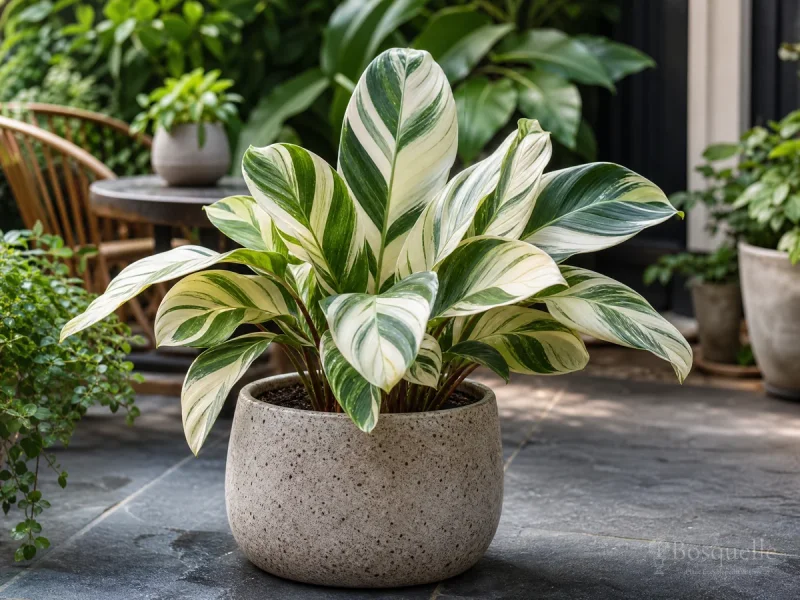
Goeppertia ‘White Fusion’ is the cream-and-green variegated face in this catalog. Care matches other peacock foliage: bright indirect light, real humidity, even moisture, and distilled or rain water. Shopping splits by leaf pattern more than by a second watering rule. Makoyana, insignis, and roseopicta shop names are other plants, not extra cards here.
How do I care for a white fusion Calathea plant?
The same bright-humidity program as other peacock foliage. Cream variegation does not change the water or humidity.
How big will a peacock plant get?
About one to two feet of clumping foliage in a pot, not a floor plant. White Fusion stays in that band.
If tips brown, switch to distilled or rain water and raise humidity before you change fertilizer.
FAQ
Does a peacock plant flower indoors?
Flowers are small and rare on houseplants. Grow it for the leaves.
Is cathedral windows a Haworthia?
Cathedral windows is also a nickname for peacock plant. Cathedral-window Haworthia is a different succulent.
Do you hold Calathea makoyana or rattlesnake plant?
This catalog's peacock plant is White Fusion. Makoyana and rattlesnake plant are other shop names, not extra cards here.
Related guides
Recommended plants
References
- [1] NC State Extension Gardener -
https://plants.ces.ncsu.edu/plants/goeppertia-makoyana/ - [2] University of Florida IFAS Extension -
https://ask.ifas.ufl.edu/publication/FP086 - [3] Royal Horticultural Society -
https://www.rhs.org.uk/plants/calathea/growing-guide - [4] Ohio Tropics -
https://www.ohiotropics.com/2019/08/30/calathea-care-brown-leaves/
This note is part of Goeppertia Guides.
More first-season notes by plant are gathered in How to Grow Guides.
Updated: Reviewed by Bosquelle Editors