
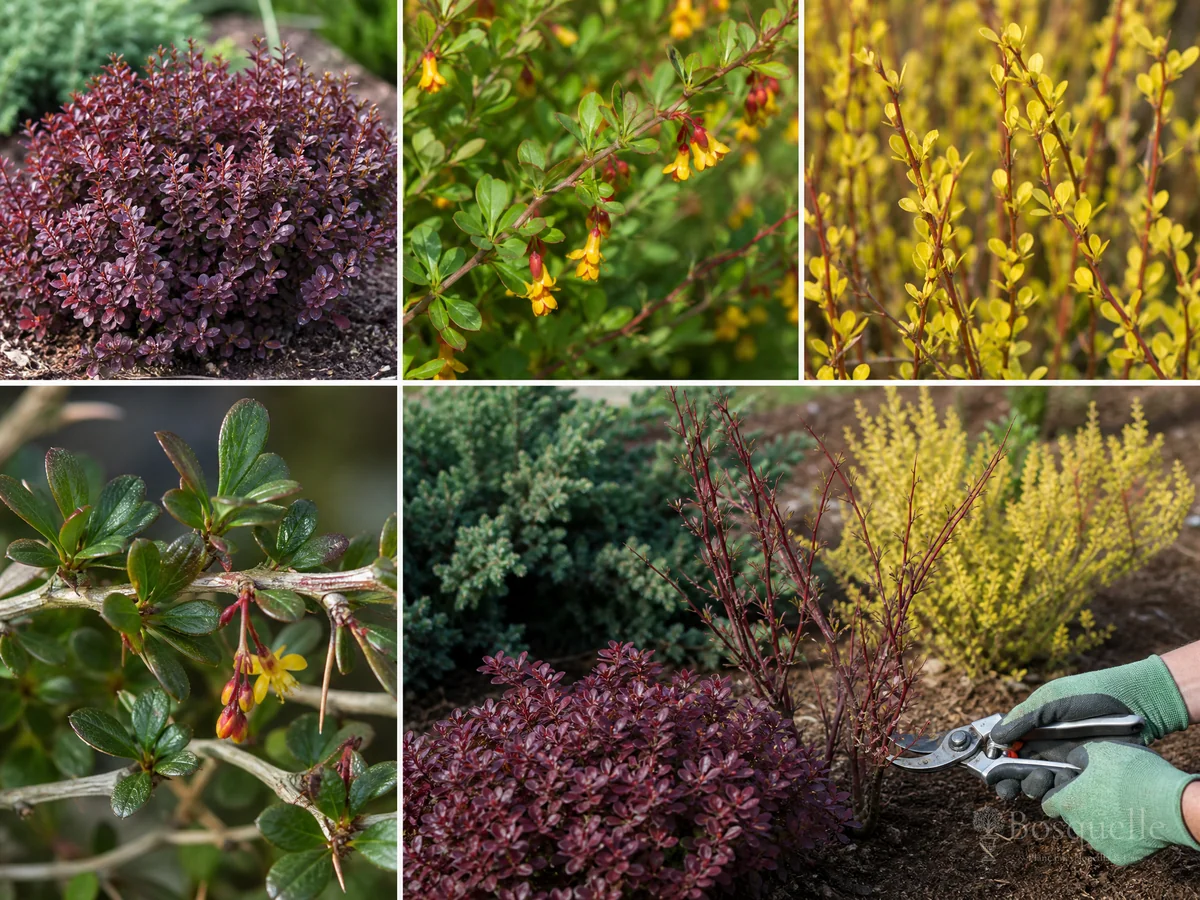
Grow barberry in well-drained soil, in sun to part shade. Japanese barberry is Berberis thunbergii — a woody shrub, not Oregon grape.

Give it well-drained soil and sun to part shade
| Factor | Recommended | Avoid |
|---|---|---|
| Sun | Full sun to part shade; foliage color and fruit are stronger in sun | Expecting burgundy or gold leaves in deep shade |
| Soil | Average, well-drained ground; most pH levels are fine | A waterlogged pocket or a clay cup that holds water |
| Gold leaves | A little afternoon shade in hot summers so gold foliage does not scorch | A reflected south wall for a gold-leaf plant |
| Deer | Spines; deer usually leave established plants alone | Planting Japanese barberry as a deer fix where sale is banned |
| Feed | Skip extra fertilizer until roots have taken | Heavy feed on a wet crown |
Barberry rots in wet ground. It takes sun or part shade, but deciduous kinds color better with a full morning of sun. [1] [2] A native such as Nevin's barberry and a compact Japanese shrub such as Crimson Pygmy share that same drain. Match kind on Types of Barberry.
Do not site any of them where water pools after rain. Golden-leaf plants can scorch on a hot, reflected wall — give those a little afternoon shade.
Check whether Japanese barberry is listed invasive
Japanese barberry escapes into woods by seed, by arching stems that root, and by suckers. Some states prohibit sale. Before you buy a new plant, check your extension list. If you already have one, keep the crown drained and water it through dry spells — replacement with a native is the long job. [3] [4]
Does barberry need full sun?
Sun to part shade. Foliage color is stronger in sun. Gold-leaf plants can scorch on a hot wall.
Is Japanese barberry invasive?
Berberis thunbergii is listed invasive in much of the East, and some states ban sale. Check your extension before you plant a new one.
Will deer eat barberry?
Deer usually leave it because of the spines. Do not plant Japanese barberry as a deer solution where sale is banned.
Set the root ball at grade in a wide hole
Plant in spring or fall while you can water. Wear gloves — the spines are thin and break under skin.
- Dig a hole twice as wide as the root ball and no deeper.
- Set the top of the ball even with the surrounding soil, or a little high on slow-drain ground.
- Tease circling roots. Backfill with the soil you removed. Water to settle.
- Mulch two inches over the root zone, kept off the stems.
How far apart should you plant barberry?
Leave the mature width on the tag. A dwarf mound is not a 6-foot Japanese shrub. Do not plant thunbergii where sale is banned.
Water until it is established, then soak in dry spells
A new plant needs water so roots leave the nursery ball. An established plant takes missed rain better than a soggy crown.
- Water thoroughly after planting. Keep the root ball moist — not soggy — through the first growing season.
- Check a few inches down. Water again when that soil is drying, not on a calendar splash.
- Once roots have taken, soak during dry spells. Mature shrubs tolerate drought better than a new ball.
- Water the soil. Wet foliage that never dries sets up mildew.
How often do I water barberry?
Keep a new plant moist for the first season. After that, soak during dry spells. Do not leave the crown in standing water.
Not Oregon grape, holly, or heavenly bamboo
Oregon grape is Mahonia, an evergreen with compound leaflets and no stem spines. See How to Grow Oregon Grape. Holly is Ilex. See How to Grow Holly. Heavenly bamboo is Nandina — same yellow inner wood, different plant. See How to Grow Nandina. Coast barberry in this catalog is still Berberis, not Oregon grape.
Is Oregon grape a barberry?
Oregon grape is Mahonia, often lumped into Berberis by botanists. In the nursery it is the holly-leaved evergreen with grape-like fruit, not Japanese barberry.
If the crown sits wet, lift the grade or move the plant — do not add more water.
FAQ
Can I grow barberry in a pot?
A compact kind can sit in a draining pot for a few years if you water it. Open ground is the usual home. Do not leave the pot in a saucer of water.
Does barberry need fertilizer?
Usually no until it is established. Skip extra feed unless a soil test shows a shortage. Wet, rich ground hurts more than lean drain.
Are the berries poisonous?
Ripe berries are sometimes eaten in other countries, but they can upset the stomach. Keep pets and children from chewing stems, roots, or fruit. This catalog is ornamental, not a food crop.
Does barberry spread wheat rust or ticks?
Common barberry is the classic wheat-rust host; Japanese barberry was planted as a replacement and then became invasive. Dense thickets can shelter ticks. Thin or replace listed Japanese plants so the thicket does not hold them.
Related guides

Recommended plants


References
- [1] Royal Horticultural Society -
https://www.rhs.org.uk/plants/berberis/growing-guide - [2] NC State Extension Gardener -
https://plants.ces.ncsu.edu/plants/berberis-thunbergii/ - [3] University of Maryland Extension -
https://extension.umd.edu/resource/japanese-barberry - [4] Ohio State University Extension -
https://ohioline.osu.edu/factsheet/anr-0106
This note is part of Berberis Guides.
More first-season notes by plant are gathered in How to Grow Guides.
Updated: Reviewed by Bosquelle Editors