
Grow omphalodes in part shade with moist, humus-rich soil. Omphalodes is also called navelwort.
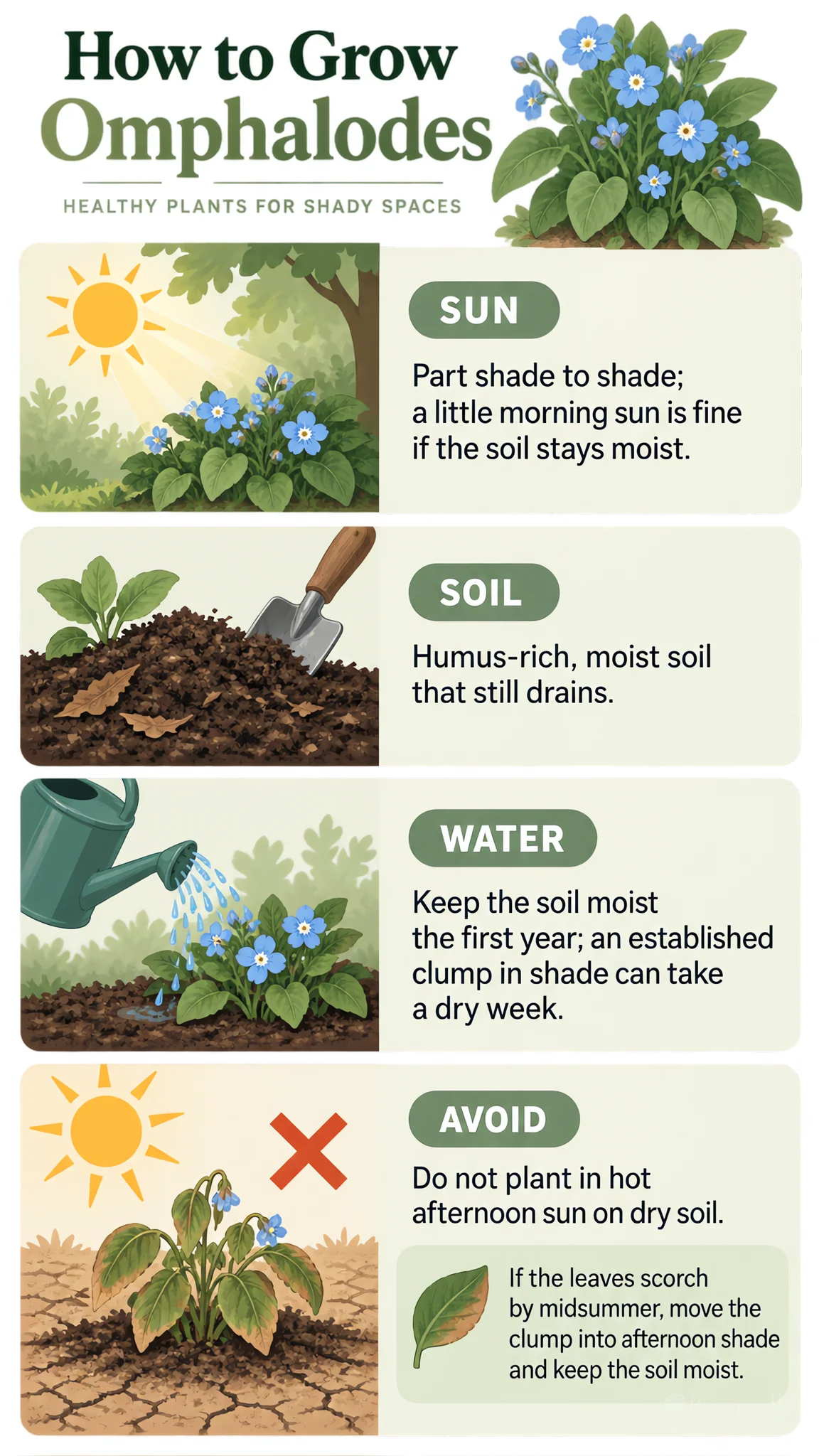
Give it part shade and moist, humus-rich soil
| Factor | Recommended | Avoid |
|---|---|---|
| Sun | Part shade to shade; a little morning sun is fine if the soil stays moist | Do not plant in hot afternoon sun on dry soil |
| Soil | Humus-rich, moist soil that still drains | Do not plant in dry, compacted ground |
| Water | Keep the soil moist the first year; an established clump in shade can take a dry week | Do not let a new planting dry out |
| Mulch | A light winter mulch in a cold garden, especially on a young plant | Do not pile mulch on the crown |
| Feed | A little compost in spring if growth is thin | Do not dump nitrogen on a new planting |
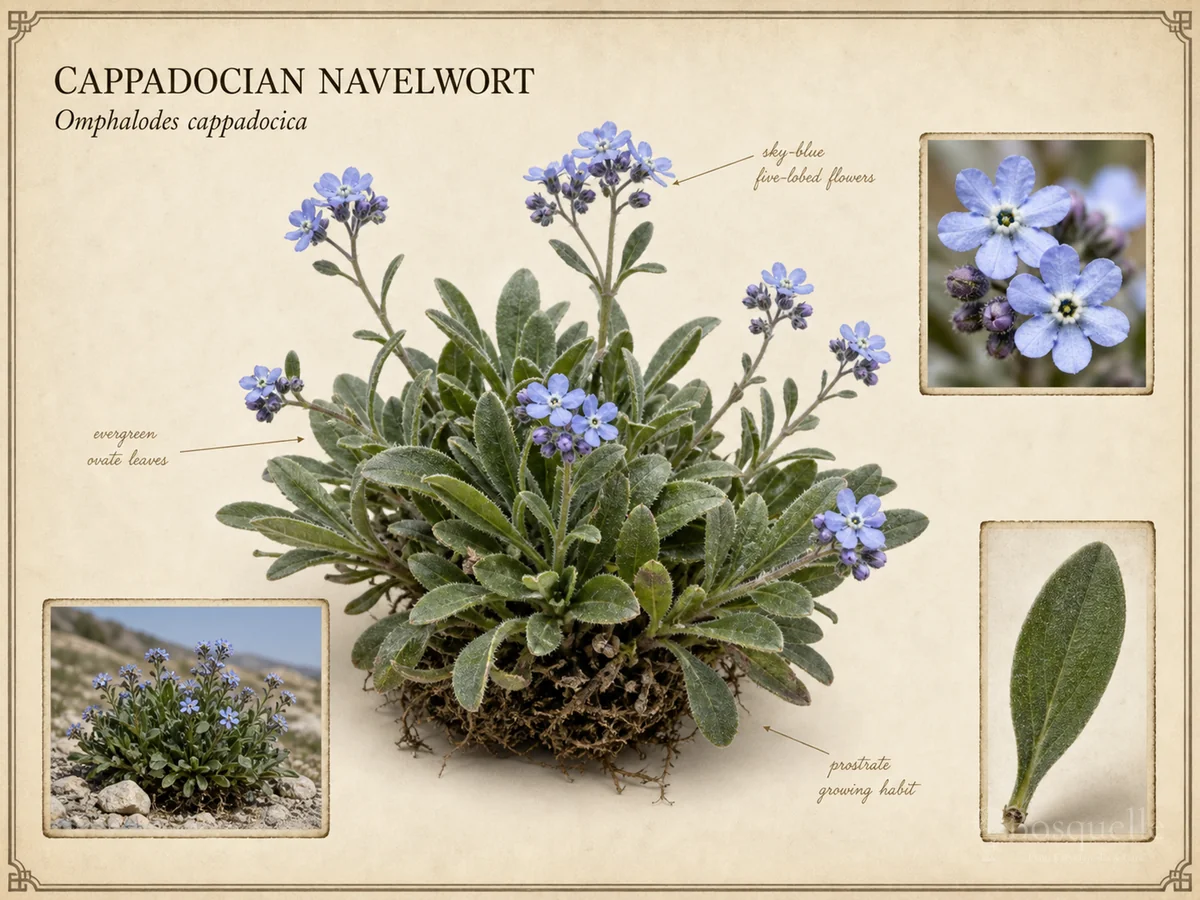
Omphalodes wants filtered light and soil that stays moist. A woodland edge, the north side of a shrub, or the shade of a tree is a good home. Full sun on dry soil is the usual reason a new clump fails. [1] [2] Keep the soil moist through the first year. An established clump in shade can take a dry week; that is not permission to skip water in a hot, open bed. [3] Cappadocian navelwort wants that same shade and moisture. Starry Eyes and blue-eyed Mary want the same care; pick the habit on Types of Omphalodes. If you are setting a nursery plant this season, the hole and spacing are on Planting Omphalodes.
Does omphalodes need full sun?
No. Part shade to shade is the usual home. A little morning sun is fine if the soil stays moist. Hot afternoon sun on dry soil burns the leaves.
How often should I water omphalodes?
Keep the soil moist, especially the first year. Water again in a hot, dry week. An established clump in shade can take a short dry spell; a new planting cannot.
Cut spent flowering stems after bloom
After the blue sprays fade, cut the spent flowering stems down on Cappadocian plants. Leave the leaves. Spreading blue-eyed Mary does not need pruning. [4]
- Wait until the flowers fade in late spring.
- Cut the spent flowering stems down. Leave the green leaves on Cappadocian plants.
- On spreading blue-eyed Mary, leave the mat alone unless a runner is in the path.
When do I cut omphalodes after bloom?
Cut the spent flowering stems after the sprays fade. Leave the leaves. Spreading blue-eyed Mary does not need that cut.
Not forget-me-not — and not wall navelwort
Forget-me-not is Myosotis, a different borage-family plant with smaller flowers and hooked seeds — see How to Grow Forget-me-not. Brunnera is the taller heart-leaf plant with airier sprays — see How to Grow Brunnera. Wall navelwort is Umbilicus, a succulent that sits on stone, not this woodland clump. Blue-eyed Mary is also a shop name for Collinsia verna, a native annual with bicolored flowers; if the tag says Omphalodes, you still have this perennial — see How to Grow Collinsia.
Is this a forget-me-not?
No. The flowers look similar, but this plant is Omphalodes. Forget-me-not is Myosotis, a different genus.
If the leaves scorch by midsummer, move the clump into afternoon shade and keep the soil moist.
FAQ
Can I grow omphalodes in a pot?
A wide pot with a drainage hole can hold a clump if you keep the mix moist. The usual plant is in the ground, where the roots stay cool.
Do slugs wreck it?
Slugs can chew young leaves in a wet spring. Pick them off, and keep mulch off the crown. Do not start a spray for cosmetic holes.
Does it come back after winter?
Yes. It is a hardy perennial. Cappadocian plants keep their leaves in a mild winter. Spreading blue-eyed Mary drops its leaves and grows them again in spring.
What else can I plant with it?
Spring bulbs and other shade plants that like moist humus share the bed. Do not crowd a new clump until it has settled.
Related guides

Recommended plants


References
- [1] Royal Horticultural Society -
https://www.rhs.org.uk/plants/11785/omphalodes-cappadocica/details - [2] Royal Horticultural Society -
https://www.rhs.org.uk/plants/omphalodes - [3] Harvest to Table -
https://harvesttotable.com/how-to-grow-blue-eyed-mary-omphalodes/ - [4] Royal Horticultural Society -
https://www.rhs.org.uk/plants/93193/omphalodes-verna/details
This note is part of Omphalodes Guides.
More first-season notes by plant are gathered in How to Grow Guides.
Updated: Reviewed by Bosquelle Editors