
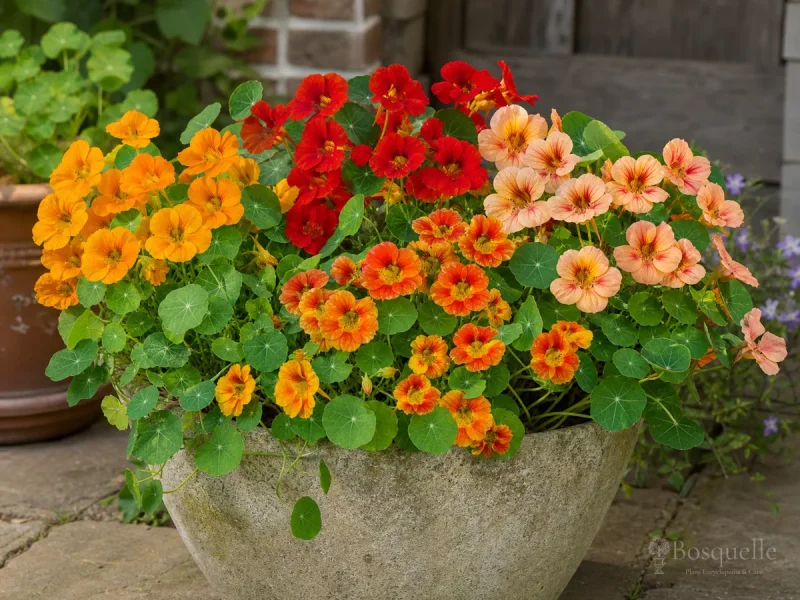
Nasturtium (Tropaeolum) is a tender annual with round leaves and peppery flowers. Give it full sun and lean, draining soil. Rich feed makes leaves and few blooms. Sow after frost. Flowers, young leaves, and green seed pods are edible only from unsprayed plants. Baby Orange is a bush mound. Spitfire trails. Habit on Types of Nasturtiums. Pots on Nasturtiums in Containers. Sow steps on Growing Nasturtiums from Seed. Frost ends the tops. Do not feed for a leaf flush this season.

Lean soil, sun, and water
| Factor | Recommended | Avoid |
|---|---|---|
| Light | Full sun, at least six hours | Part shade that makes a leafy vine and shy flowers |
| Soil | Average to poor, well-drained; skip rich compost | A newly manured vegetable trench or weekly nitrogen |
| Water | Even moisture to establish; then let the top inch dry | A swampy crown, or drought that stops bloom in a pot |
| Feed | None, or a light start on extremely poor ground | Tomato fertilizer that builds a leaf mattress |
| Season | After last frost until frost cuts the tops | Sowing into cold, wet soil, or treating it as a hardy perennial |
Old Farmer’s Almanac: plenty of sun, well-draining soil, and poor ground on purpose. Light feeders. Rich soil makes lush foliage at the expense of flowers. University of Wisconsin Horticulture: full sun; partial shade blooms poorly. Do not fertilize except on extremely poor soil. High fertilizer rates push leaf and cut bloom. Deadhead or pick flowers to keep them coming until frost.
Water newly sown seed and young plants so they settle. Then ease off. Established plants in the ground tolerate short dry spells better than wet feet. Pots dry faster — that job lives on Nasturtiums in Containers. Morning water at soil level beats an evening overhead spray that keeps leaves wet and aphids comfortable.
If the plant is already a green mattress, stop feeding. Add sun if you can. Wait for the next flush. Pinching soft tips helps a little; chemistry still wins if the bed is too kind. Next year, sow on a leaner strip, not beside a heavily fed tomato.
Heat can pause bloom. That is weather, not a cue to fertilize. Keep the plant alive with morning water. Color often returns as nights ease. Pale leaves in rich soil are still often too soft — do not answer that with more nitrogen.
Check drain the way you would for any annual: water should leave the hole, not sit overnight on the crown. In clay, plant a little high or add grit. In sand, water a bit more often once plants are up, still without a nitrogen feed. A path-edge strip that never gets the vegetable compost is the usual home.
Deadhead by snapping or cutting the spent stem down to a leaf. Picking flowers for the kitchen does the same job. If you let every head go to a fat seed, bloom slows. Leave a few pods only if you want volunteers next year. A weekly walk to pick flowers is enough maintenance for most beds.
- Full sun. Lean drain. Water to establish, then let the top inch dry.
- Do not feed for “health.” Feed is how you lose flowers.
- Deadhead or harvest blooms to keep them coming.
Edible flowers, leaves, and seed pods
Flowers, young leaves, and immature seed pods have a peppery bite. Eat them only from plants you grew without non-food sprays. Do not harvest from a roadside, a nursery bench of unknown spray history, or a bed you treated for aphids with ornamental chemicals.
- Start with petals and a few young leaves. The flavor is strong.
- Green seed pods can be pickled like a caper-style preserve — food, not medicine.
- If anyone in the house has plant allergies, try a small amount first.
A dark-leaf or pale-flower kind is not automatically “safer.” Spray history is the rule. Grow a clean kitchen-edge strip if salad use is the point. Keep trap-crop plants you intend to spray away from the bowl you eat.
This is culinary use. It is not a treatment. Households with children or pets should still treat the plant as a garden annual, not a snack bowl left on the path. Harvest in the morning when flowers are open, and rinse grit. Leave some blooms if you want seed.
Young leaves are milder than old ones. Flowers vary from mild to hot by kind and weather. Taste one petal before you fill a salad. Do not cook a whole bowl of unknown nursery plants. Grow your own from seed after frost if you want a clean harvest.
Green pods are firm and still closed. Skip black, dry seed if you are pickling. Rinse. Use a tested pickle recipe from a kitchen book. The garden job is unsprayed plants and a lean bed.
Aphids and the trap crop
Aphids love soft nasturtium growth. Many gardeners plant a strip near beans or roses as a trap crop, then rinse or sacrifice the tips. Expect colonies after mild, wet weather — especially if you already fed the bed.
- Blast colonies with water in the morning on sturdy plants.
- Leave room for lady beetles and other predators if you eat the flowers.
- Use only food-safe controls on a culinary patch — or accept a messy trap crop.
- Do not feed harder to “fix” aphids. Softer growth invites more.
If you want a clean cutting bed, site the trap strip away from it. Do not spray a trap crop with a non-food product and then eat the petals. Under fruit trees, the nasturtium still needs sun. Deep shade returns the leaf-without-flower story even on lean soil.
Partners in a vegetable path are a soft edge, not a second fertilizer program. Keep the same lean rule when beans get compost. A soaker at soil level beats wetting the round leaves every afternoon.
Check the undersides of young leaves after a warm rain. A small colony rinses off. A mattress of soft growth after a feed will not. If you need a food-safe soap, keep it off flowers you plan to eat that day, and rinse. Do not mix ornamental systemic sprays with a salad harvest.
A trap strip three feet from the crop is easier to manage than nasturtiums woven through every tomato. One dedicated edge does the insect job without hiding aphids in the fruit canopy.
Annual: trailing or bush
Garden nasturtium (T. majus and T. minus) is a tender annual. Frost ends the top. It is not Tagetes marigold and not pot marigold (Calendula). It is not watercress (Nasturtium officinale) — that is a different plant with a confusing common name. Match Tropaeolum on the tag.
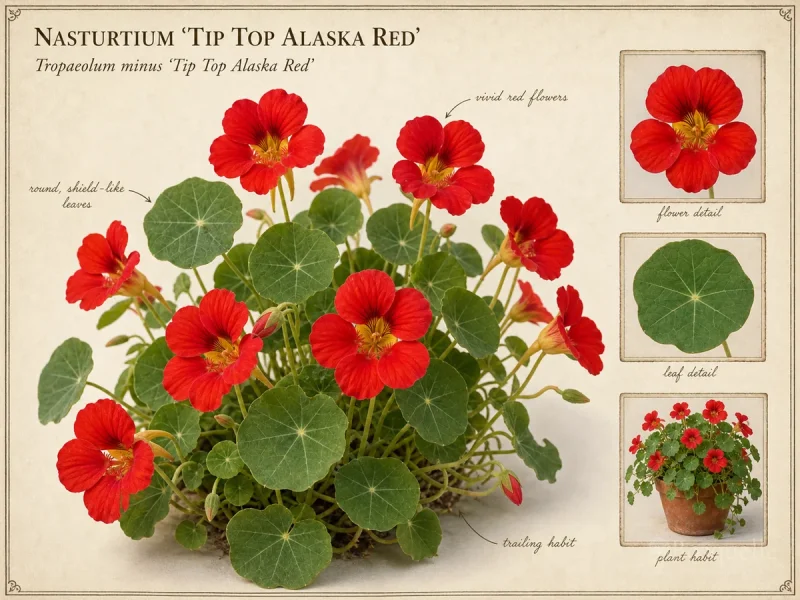
Trailing T. majus spills and rambles. Wisconsin Horticulture: those types lack tendrils and do not climb well alone; they cascade, cover ground, or need you to tuck stems on a trellis. Bush T. minus mounds for edges and pots. Mixing them without a plan means the trailer smothers the mound. Sort habit on Types of Nasturtiums before you promise a neat edging.
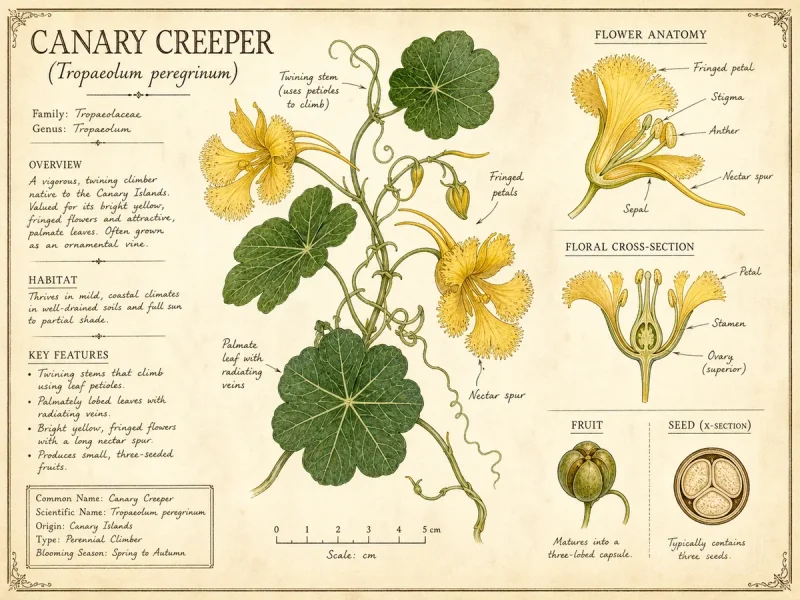
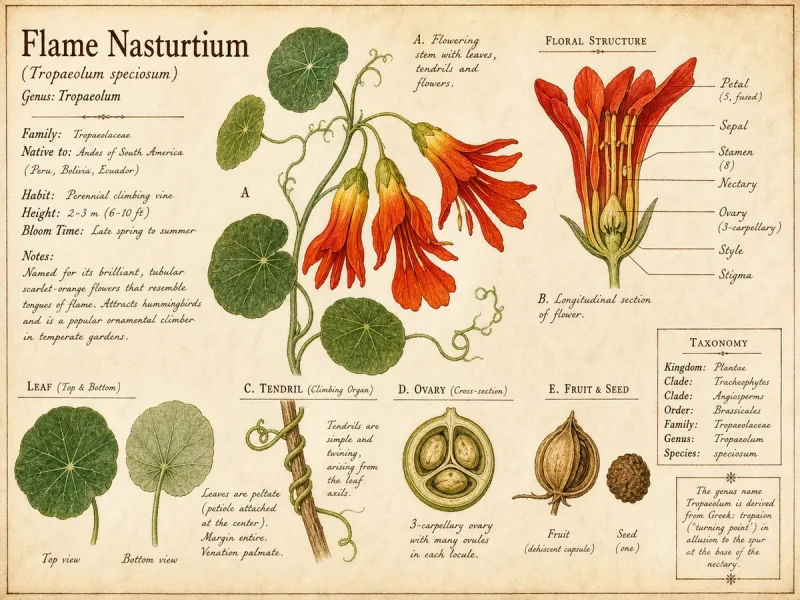
Canary creeper and flame nasturtium are other Tropaeolum species — climbers with their own notes, not proof that every packet is a hardy perennial. Sow after frost. Direct sow is the usual path; full depth and soak live on Growing Nasturtiums from Seed. Leave late pods if you want volunteers. Named color drifts in a mixed bed — buy fresh seed when a face must match.
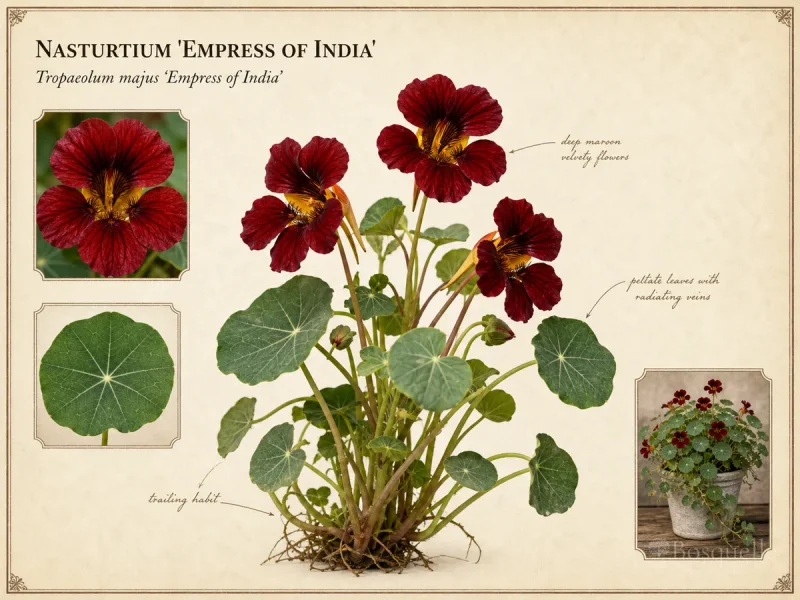
Some T. majus stay shorter (Empress of India is the usual example) and still belong with the majus ramblers on Types, not with minus. Do not buy “climbing nasturtium” expecting ivy tendrils. Tuck stems on a net or let them spill. Bush kinds do not need a trellis.
Self-sown seedlings in spring are a bonus. Thin them to spacing. They will not be a named packet. If last year’s bed was a mix, treat the volunteers as a cottage mix and buy fresh seed for a face you must match.
Frost blackens the tops overnight. Compost the plants. Do not wrap a bed in plastic and call it a perennial. In a frost-free winter a clump may linger; that is luck, not a promise on a northern packet. Sow again after frost.
- Tender annual. Sow after frost. Frost ends the show.
- Choose trailing majus or bush minus before you fill a path.
- Pots: lean mix, drain hole — on Nasturtiums in Containers.
FAQ
Are nasturtiums edible?
Yes — flowers, young leaves, and green seed pods from unsprayed plants. Culinary use only, not medicine.
Do nasturtiums need fertilizer?
Usually no. Lean soil flowers better. Rich feed makes leaves and few blooms.
When should you plant nasturtium seeds?
After the last frost, in warm, drained soil. See Growing Nasturtiums from Seed.
Are nasturtiums annual or perennial?
Garden T. majus and T. minus are tender annuals. Frost ends them. Flame nasturtium is a different species.
Why are my nasturtiums all leaves and no flowers?
Soil that is too rich, too much nitrogen, or not enough sun. Stop feeding and give six hours of light.
Why do nasturtiums have aphids?
Soft growth attracts them. Many gardeners use the plant as a trap crop. Blast with water; do not feed harder.
Do nasturtiums need full sun?
Yes for strong bloom. Light shade in heat is possible but usually means fewer flowers.
Can nasturtiums grow in pots?
Yes. Use a draining, not-too-rich mix. See Nasturtiums in Containers.
Do nasturtiums self-seed?
Often, if pods ripen. Volunteers may not match a named packet. Buy fresh seed when the face matters.
Are nasturtiums the same as marigolds?
No. Nasturtium is Tropaeolum. Garden marigolds are often Tagetes. Pot marigold is Calendula.
Related guides


Recommended plants




This note is part of Tropaeolum Guides.
More first-season notes by plant are gathered in How to Grow Guides.
Updated: Reviewed by Bosquelle Editors