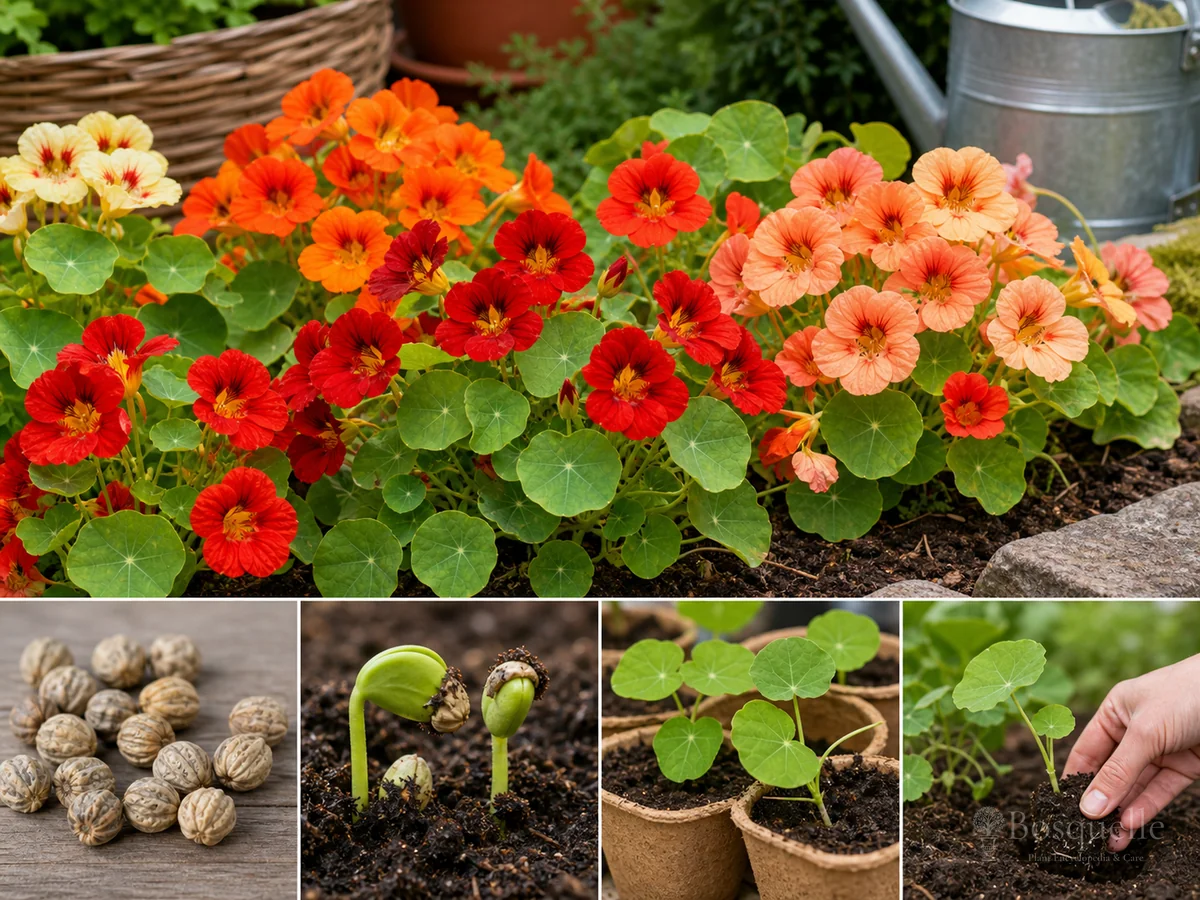
Sow nasturtium seed after the last frost ½ inch deep in lean, drained soil. The seed is large and likes darkness to sprout. Soak 8–24 hours if the coat is hard. Baby Orange and Spitfire share that timing, not the same spacing. Everyday care stays on How to Grow Nasturtiums. Do not feed the sow-in.
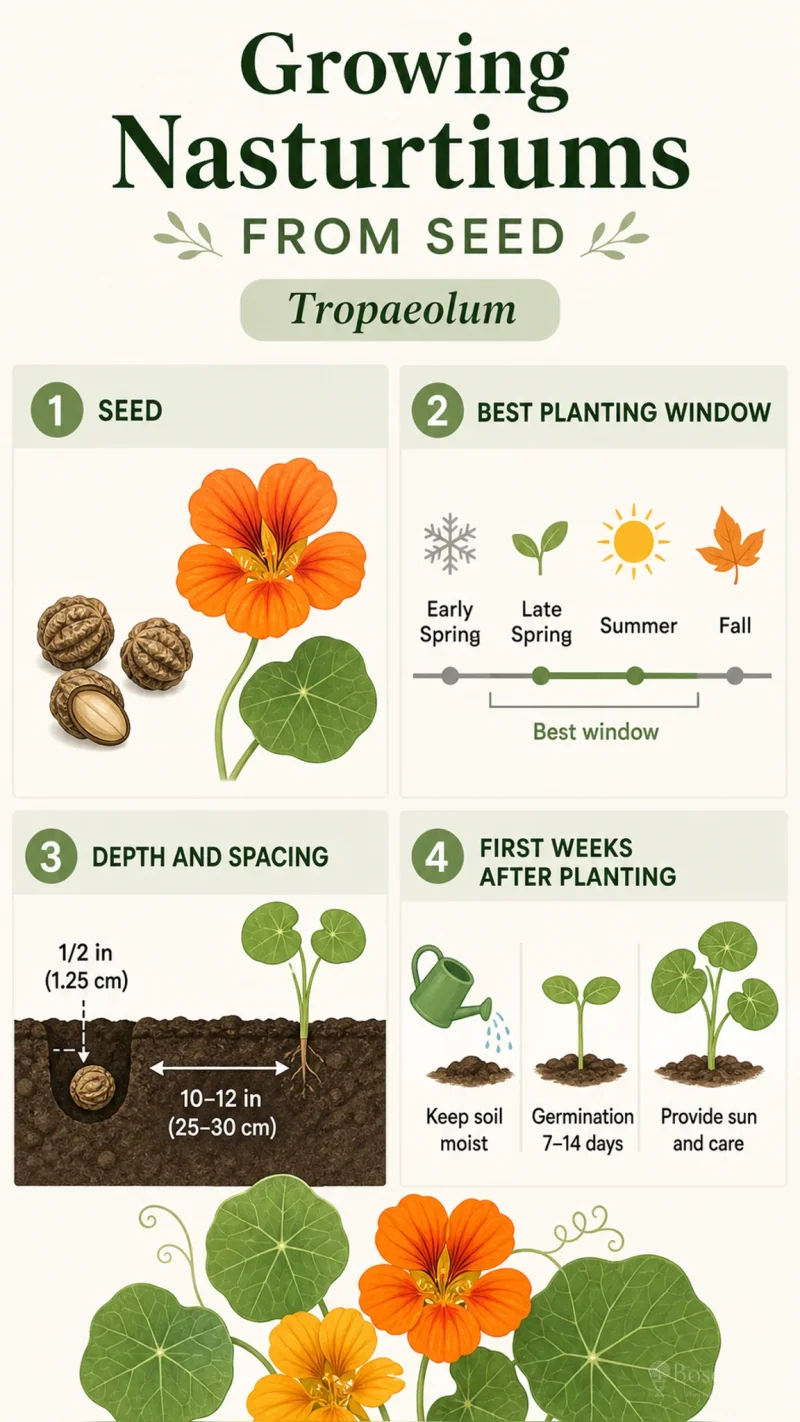
When and how deep to sow
| Factor | Recommended | Avoid |
|---|---|---|
| When | After last frost, when soil has warmed | A freeze week, or ice-cold mud |
| Depth | ½ inch; seed needs darkness to germinate | Surface sowing in the light, or a 3-inch burial |
| Soak | 8–24 hours in water if the coat is hard | Leaving seed in a bowl until it sours |
| Site | Full sun, lean drain | A rich, wet trench you just manured |
Old Farmer’s Almanac: sow ½ inch deep, 10–12 inches apart, after frost. Soak 8–24 hours to speed germination. University of Wisconsin Horticulture: late spring to early summer outdoors, or start indoors 4–6 weeks before last frost in peat pots. Germination often in 7–10 days in warm soil. Do not fertilize the sow-in.
Choose trailing vs bush before you space the row. Habit on Types of Nasturtiums. Pots can be sown in the finished mix — lean, draining — on Nasturtiums in Containers.
Set a still-potted trial where the row will live. Walk it at noon. If the slot is shade after lunch, move the flag, not a rooted plant later.
Warm soil matters more than the calendar date on a packet from a cold spring. If the ground is still sticky and cold, wait a week. Seed in cold mud rots. A raised, draining strip warms faster than a low puddle.
Mark both ends of the row. Large seed is easy to see the day you sow and easy to lose after you rake. A short label with the habit — bush or trailer — saves a mix-up at thin-out.
Soak, darkness, and spacing
The seed is pea-sized with a hard coat. Soak in room-temperature water 8–24 hours, then sow the same day. Do not soak until the seed splits and sits in slime. Press ½ inch down so light does not hit the seed. Firm the soil. Water gently so you do not wash it out.
Space about 10–12 inches. Trailers can use a little more room to sprawl. Bush kinds can sit nearer 8–10 inches in an edge. Do not sow a packet of mixed habit as a 4-inch grid — the trailer will bury the mound.
Rake a fine surface. Water the bed first so the first overhead pass does not float the seed. Label the row. Named color will not hold if last year’s volunteers mix in.
If you nick the coat instead of soaking, keep the nick tiny. A deep cut kills the seed. Soak is enough for most packets. Discard seed that stays hard and sinks as a sour mass after a day — sow fresh.
Space with the adult plant in mind, not the seed size. Two seeds in one hole means you will snip one. That is cheaper than a tangle of trailers in a 6-inch patch.
Direct sow or start indoors
- Direct sow after frost in the finished, lean bed. This is the usual path — nasturtiums dislike root disturbance.
- If you start indoors, use one seed per small pot. Wisconsin Horticulture: peat pots 4–6 weeks before last frost, then harden off.
- Do not tease a taproot out of a six-pack cell. Slip the whole plug. Plant at the same depth.
- Harden a week: shade, then sun, cover if a frost warning hits.
- Water to settle. Do not feed.
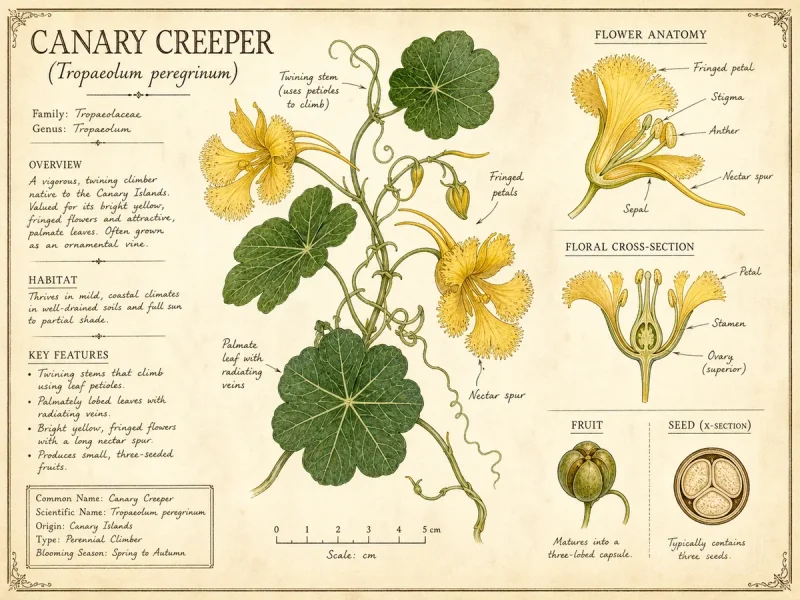
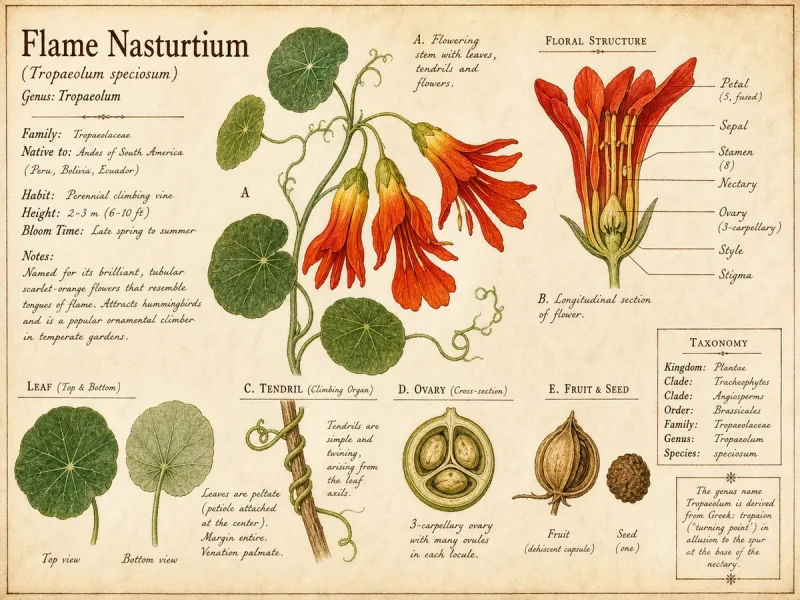
Indoor starts give earlier flowers. Direct sow is simpler and usually catches up. Canary creeper still sows as an annual climber after frost — give it a support once it runs. Flame nasturtium is a different species; do not assume the same ½-inch salad-annual drill without the profile.
A windowsill start wants a bright, cool room, not a dark cupboard after sprouting. Leggy indoor plants stretch and flop at plant-out. Give them sun as soon as they are up, and harden before the deck.
Do not start ten weeks early in a dim room. Four to six weeks is enough. Longer indoor time makes a tangled plug. Direct sow the rest of the packet in the bed the same week you plant out the pots.
After germination
- Keep the top inch evenly moist until plants are up and growing.
- Thin to spacing. Snip extras; pulling can loosen neighbors.
- Do not fertilize. First flowers are the sign the lean rule is working.
- Watch aphids on soft tips. Blast with water. Do not feed to “help.”
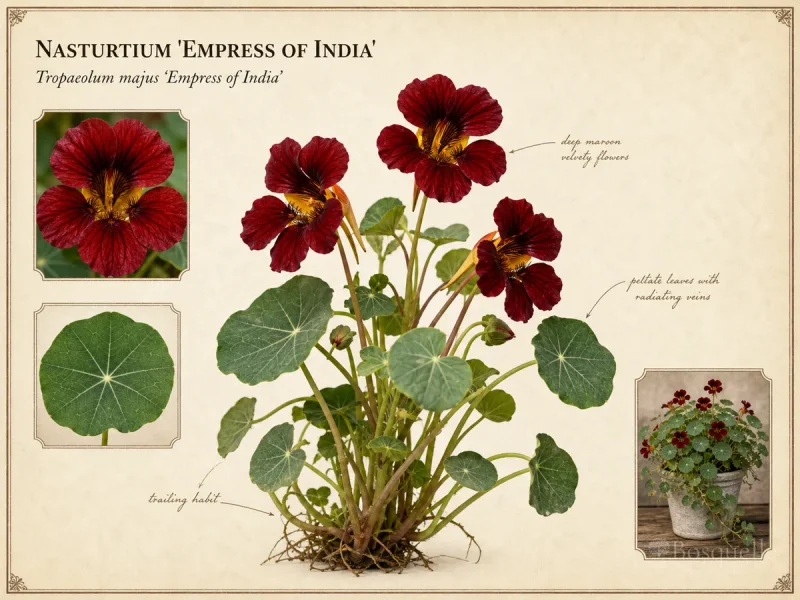
Leave some late pods if you want volunteers. Save mixed seed as a cottage mix, not as Empress of India. Everyday sun, lean soil, edible harvest, and frost live on How to Grow Nasturtiums.
What fails: sowing before frost; seed on the surface; a rich wet trench; indoor starts ripped from cells; feeding the seedlings. Success is ½ inch deep, dark, after frost, then leave them lean.
If nothing comes up in two weeks, check depth and rot. Sow a short second row rather than flooding the first. Birds sometimes pull large seed — a light cover of soil, not a board that cooks the bed, is enough. First true leaves mean you can ease water slightly, still without a feed.
FAQ
When should you plant nasturtium seeds?
After the last frost, in warm drained soil. Or start indoors 4–6 weeks before, in individual pots.
How deep do I sow nasturtium seed?
About ½ inch. The seed needs darkness to germinate.
Should I soak nasturtium seeds?
Optional, 8–24 hours, if the coat is hard. Sow the same day.
How far apart should I sow?
About 10–12 inches. Trailers need a little more room.
Can I start nasturtiums indoors?
Yes, one seed per pot, 4–6 weeks before last frost. They dislike root disturbance.
How long to germinate?
Often 7–10 days in warm soil. Cool mud is slower.
Should I fertilize seedlings?
No. Lean soil is the bloom rule.
Where is everyday care?
On How to Grow Nasturtiums.
Will they self-sow?
Often, if pods ripen. Volunteers may drift from named color.
Direct sow or transplant?
Direct sow is the usual path. If you transplant, move the whole pot, do not bare-root.
Related guides


Recommended plants




This note is part of Tropaeolum Guides.
More notes on making another plant live in Propagating Guides.
Updated: Reviewed by Bosquelle Editors