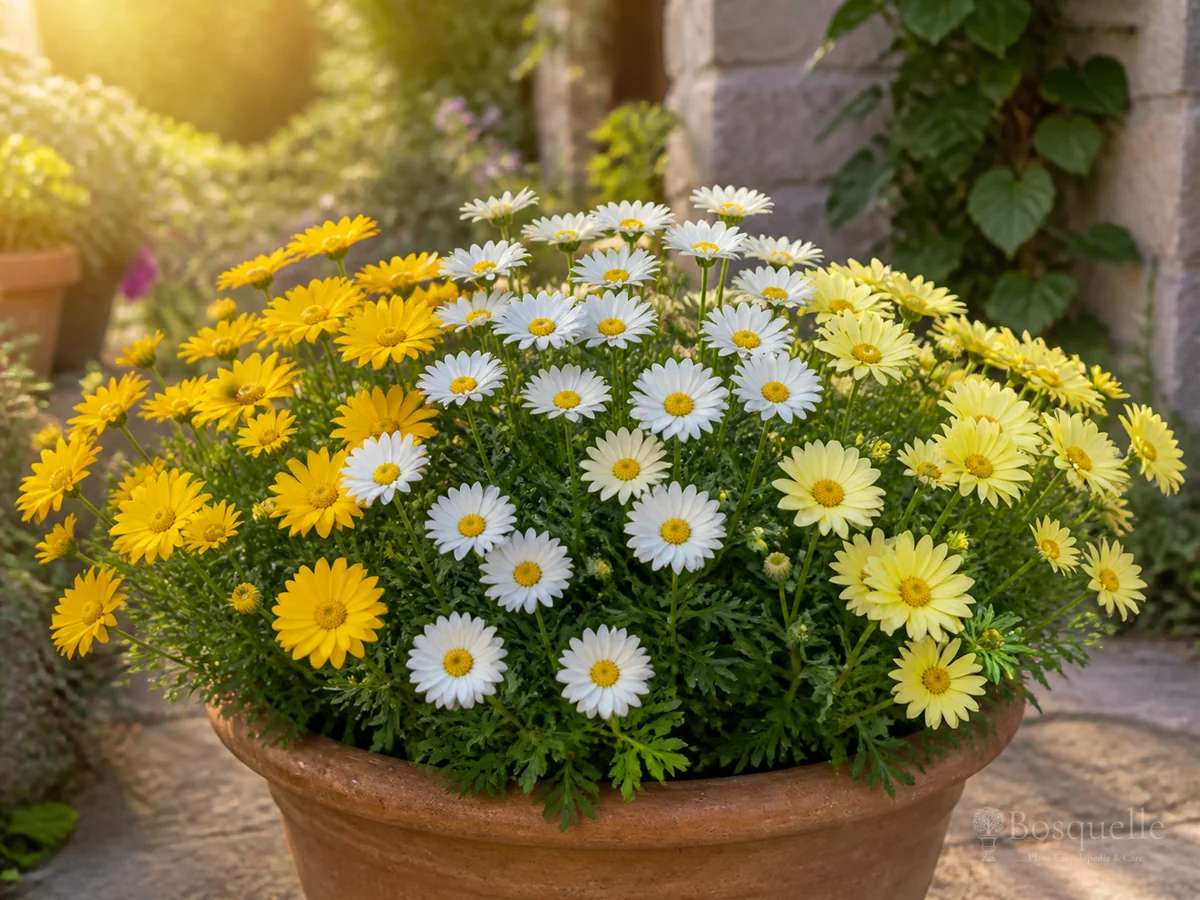
Grow marguerite daisy (Argyranthemum) in full sun and well-drained soil. Deadhead spent blooms through the season, and treat it as a warm-season annual wherever frost is routine.

Full sun, drainage, and annual vs tender
| Factor | Recommended | Avoid |
|---|---|---|
| Light | Full sun, at least six hours; morning sun with afternoon relief in extreme heat | Shade (leafy growth, few flowers) |
| Soil | Average, medium-moisture, well-drained loam or potting mix | Soggy clay and standing water |
| Water | Water to establish, then about an inch a week in average weather | A constantly wet saucer |
| Season | Warm-season annual where frost is routine; tender perennial only where winters stay nearly frost-free | Leaving plants outdoors through hard freezes |
Where winters freeze, grow it as an annual. In nearly frost-free gardens it can live as a tender subshrub, but a hard freeze kills outdoor plants. [1]
Is marguerite daisy a perennial?
Only where winters stay nearly frost-free. Most U.S. gardeners grow it as a warm-season annual.
How much sun does marguerite daisy need?
Full sun — at least six hours. In extreme heat, morning sun with light afternoon relief helps.
How to plant marguerite daisy
Plant after frost in fertile, well-drained ground, then water about an inch a week once the plant is established.
- Plant after the last frost, once the soil has warmed.
- Choose full sun. In extreme heat, pick a spot that gets its sun in the morning.
- Dig a hole as deep as the root ball and a little wider. Set the crown at the old nursery line.
- Backfill with the native soil plus a little compost if the ground is poor. Keep the mix free-draining.
- Space plants 12–18 inches apart so air moves between mounds. [2]
- Water until the hole settles. Then water about an inch a week in average weather, more in heat, and empty the saucer after rain.
Deadhead, heat pause, and cuttings
Bloom is fullest in cooler weather. Heat can pause flowers even when the plant is healthy, then bloom returns as nights cool. [3]
- Deadhead spent blooms back to a leafy joint. Regular snips keep the mound bushy.
- In midsummer, shear lightly if flowering slows, to push new branching. [4]
- Do not soak the plant to force flowers in a heat wave. Keep deadheading and wait for cooler nights.
- Named cultivars do not come true from seed. Take late-summer cuttings from non-flowering shoots if you want the same color next year.
- Before frost, move pots to a bright, frost-free place, or overwinter the cuttings under lights.
How do I deadhead marguerite daisy?
Snip or pinch spent blooms back to a leafy joint. Regular deadheading keeps plants bushy and blooming.
Why did my marguerite stop blooming in summer heat?
Heat can pause flowering even when the plant is healthy. Keep deadheading, water as usual, and expect a rebound when nights cool.
Can I grow marguerite daisy from seed?
Species seed may grow, but named cultivars usually do not come true. Take cuttings to keep Butterfly colors.
How do I overwinter marguerite daisy?
Move pots indoors before frost, or root late-summer cuttings under lights. Outdoor plants rarely survive hard freezes.
Kinds, pots, partners, and names
Kinds
- Yellow — Golden Butterfly®: bright yellow daisies on the same sun, drain, and deadhead as the rest. About two to three feet in a good season.
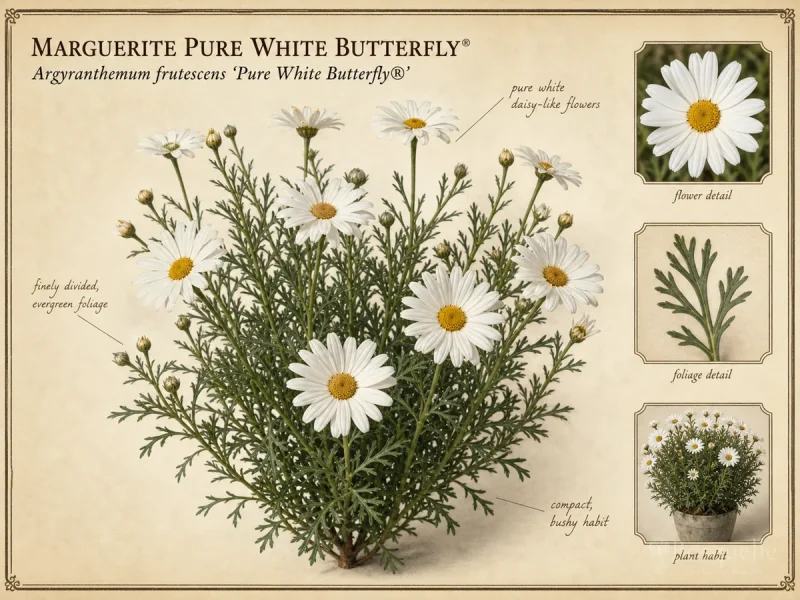
- White — Pure White Butterfly®: the classic Paris-daisy look. Same culture; treat as an annual where frost hits.
- Cream — Vanilla Butterfly®: softer cream blooms. Same culture; take cuttings, not seed, for this color.
Is marguerite daisy the same as Ipomoea ‘Marguerite’?
No. Ipomoea ‘Marguerite’ is a chartreuse vine. Argyranthemum is a daisy-flowered subshrub with different sun and water needs.
Pots
- Use a large pot with drainage holes and a quality potting mix, not heavy garden soil.
- Set the pot in full sun. Empty the saucer after rain.
- Move the pot indoors before a hard freeze if you want the plant back next year.
Can marguerite daisy grow in containers?
Yes — it is excellent in large pots with well-draining mix, full sun, and frequent deadheading. Shelter pots from hard frost.
Partners
Pair with other full-sun annuals and tender perennials that take medium water and deadheading. Give each plant airflow so mildew stays rare in humid spells.
What fails
- Shade.
- Soggy soil or a wet saucer.
- Skipped deadheading.
- Hard frost with no indoor or cutting plan.
- Forcing a woody two- or three-year plant in a mild climate — replace it rather than waiting for a thin mound to recover.
Plant after frost in full sun. Deadhead through the season. Before the first freeze, move pots indoors or take cuttings if you want the same color next year.
FAQ
Is golden marguerite the same as marguerite daisy?
Often no. Golden marguerite is usually Anthemis tinctoria, a different daisy. Check the botanical name on the tag.
Does marguerite daisy need fertilizer?
Modest feeding on poor soil helps. Excess nitrogen makes leafy growth and fewer flowers.
What pests bother marguerite daisy?
Aphids, mites, and thrips show up sometimes. Root rot follows overwatering — fix drainage first.
Recommended plants


References
- [1] Missouri Botanical Garden -
https://plantfinder.mobot.org/PlantFinderDetails.aspx?kempercode=a488 - [2] GardenersHQ -
https://www.gardenershq.com/Argyranthemum-frutescens.php - [3] Gardening Know How -
https://www.gardeningknowhow.com/ornamental/flowers/marguerite-daisies/marguerite-daisy-flowers.htm - [4] Garden Design -
https://www.gardendesign.com/perennials/marguerite-daisy.html
More first-season notes by plant are gathered in How to Grow Guides.
Updated: Reviewed by Bosquelle Editors