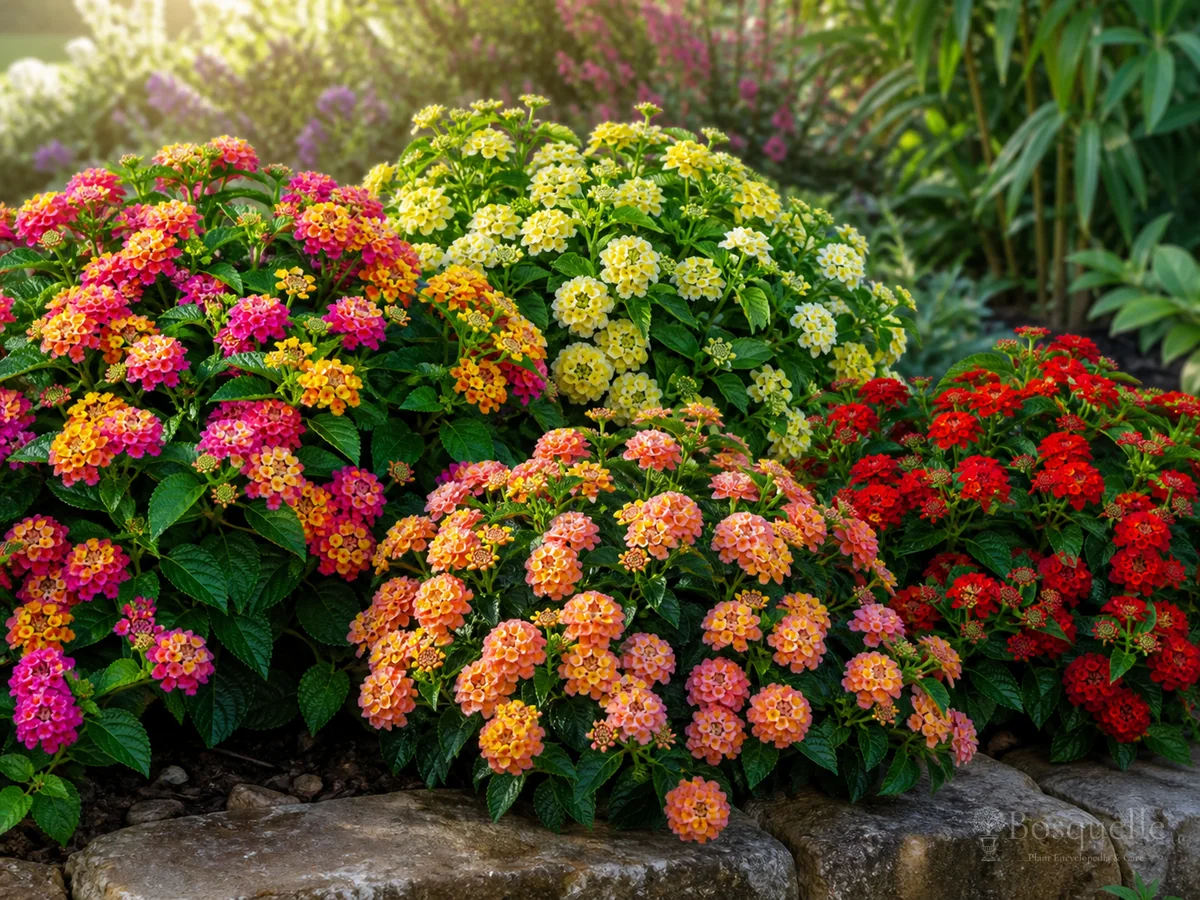
Lantana needs full sun and summer heat. Give it well-drained soil. Water when the top inch dries once plants are established. Berries and foliage are toxic if eaten. In frost-free warm climates many camara forms spread aggressively.

North of hard frost, treat it as a heat-season annual unless you overwinter pots indoors.
Heat, spread risk, and toxicity decide Lantana
| Factor | Recommended | Avoid |
|---|---|---|
| Light | Full sun, at least 6 hours | Cool shade (thin bloom, soft stems) |
| Soil | Free-draining, average to lean | Sealed wet clay; rich constantly wet beds |
| Water | Even moisture while new; then when the top inch dries | Daily soaking of established plants |
| Spread | Deadhead if seed is a local weed problem; check regional status | Uncontained camara on frost-free wildland edges |
| Safety | Pollinator colour away from grazing pets and toddlers | Ripe fruit where mouths graze leaves |
Three facts decide Lantana before you fertilise. It wants heat and full sun. In frost-free and subtropical regions many Lantana camara forms are weedy. The plant is toxic if eaten. Habit comes next: upright camara for mounds, trailing for baskets, Texas and Buttonsage when the tag names those species. Browse habits on Types of Lantana.
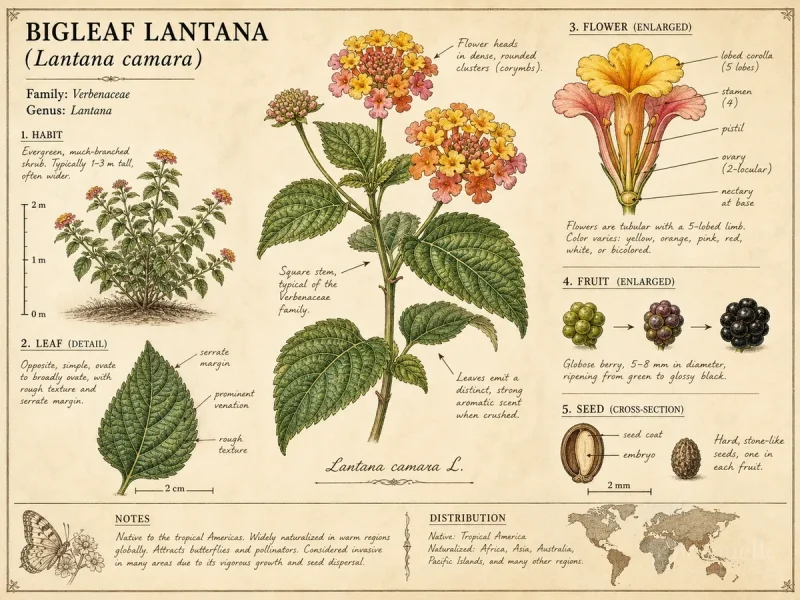
Bigleaf Lantana is the classic Bigleaf Lantana look many Landmark and Lucky series refine. Clustered florets often open one colour and age into another. Woody bases persist where winters stay mild. In cold gardens the same plant still works as a heat annual.
Light: full sun is the default for continuous colour. Light afternoon shade may help only in extreme desert glare. Deep shade is the wrong job.
Soil: average to lean, free-draining ground suits Lantana better than rich, constantly wet clay. Overfeeding makes soft growth, fewer flowers, and more pests. Raised beds and warm walls speed establishment.
Butterflies work the clusters in heat. That pollinator value does not cancel spread risk or toxicity. Site with both named.
Use Lantana in hot borders, parking strips, sunny patio pots, and trailing forms over walls. Skip it where you need a non-seeding perennial in a frost-free restoration strip, or where livestock browse freely.
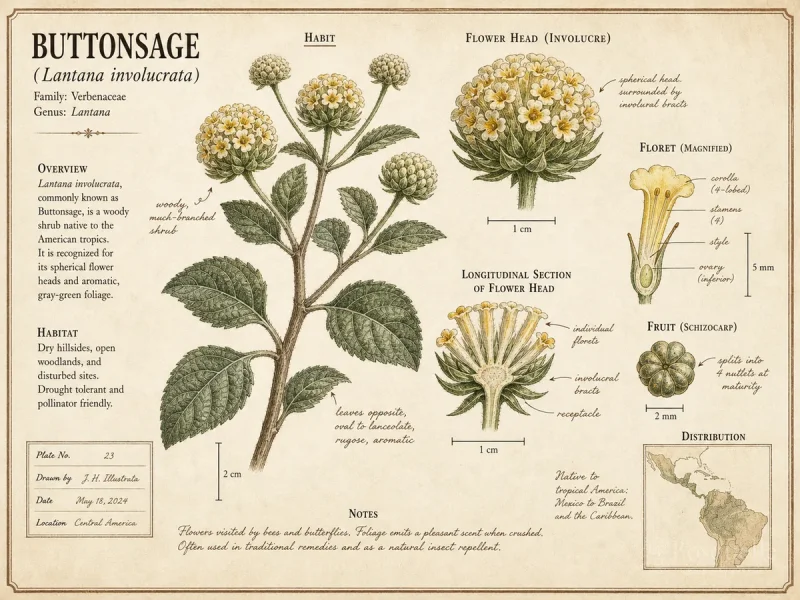
Confirm Latin on the tag. Camara upright series, montevidensis trailers, urticoides Texas, and involucrata Buttonsage are not interchangeable habits even when flower colour looks similar.
Plant after soil is warm and frost risk has passed. Peak colour runs through high summer. Hard frost ends top growth in cold gardens. Full spacing, first pinch, and northern finish live on Planting Lantana.
Some regions restrict Lantana camara sale or planting. If yours lists it as invasive, choose sterile cultivars where available, deadhead before fruit ripens, or pick a different heat annual. Do not expand a weedy patch into wildland edges.
Plant and prune Lantana for continuous colour
- Wait until nights are warm and soil has heated.
- Site in full sun with free-draining soil.
- Set the crown at the same depth as the nursery pot.
- Space upright mounds so air can move between plants.
- Give trailing forms room to spill without smothering keepers.
- Water once to settle, then when the top inch dries.
- Pinch young tips once or twice for denser branching.
- Deadhead spent clusters if seed set is a local problem.
- In frost-free gardens, cut woody plants hard in late winter.
- In cold gardens, pull spent annuals after frost or overwinter pots.
Lantana flowers on new growth. Hard renewal cuts in warm climates restart the flush. Timid tip-snips alone will not fix a lanky woody frame after a mild winter. Wear gloves if foliage irritates your skin.
In warm climates where seed fuels weeds, remove spent clusters before fruit ripens. In frost-north annual plantings, deadheading is mostly for continuous flush on patio plants you see every day.
Compact size is not sterility. A small mound can still set fruit. Ask the nursery whether the selection is sterile or low-seed before you plant it on a frost-free wild edge.
Full after-frost calendar and spacing live on Planting Lantana.
Containers need real drainage holes. Trailing forms excel in hanging baskets. Compact Lucky and Little Lucky series suit smaller patio pots. Empty saucers. Wet feet rot roots faster than heat in a free-draining mix.
Feed lightly. A dilute bloom-lean feed monthly in containers is enough. Heavy nitrogen pushes leaf at the expense of clusters. In ground, compost at planting often replaces midseason fertiliser.
Whiteflies, spider mites, and lace bugs appear in hot dry spells or on stressed plants. Hose undersides, improve airflow, and avoid soft overfed growth. Do not spray every leaf spot before you check watering and sun.
Powdery mildew shows up when plants are packed and air cannot move, even in sun. Space mounds, skip overhead watering at dusk, and thin a woody frame in frost-free gardens in late winter. Heat alone does not replace airflow.
Lantana can take salt spray on a sunny coastal strip if drainage stays sharp. It still fails in a sealed wet pocket behind a seawall. Confirm spread rules before you plant a weedy camara on a dune or wild edge.
Cuttings root easily in warm weather — which is also why escaped plants establish. Do not share cuttings into regions where Lantana is already invasive without checking rules.
If plants yellow in cold wet soil, wait for heat rather than drowning them. If bloom stalls in shade, move pots or accept a thinner show.
A plant that stays thin in a north courtyard will not catch up with extra fertiliser. Move it into sun, or treat it as the wrong job for that bed. Heat and light still do the work; extra feed cannot replace them.
Frost north turns Lantana into an annual finish
North of reliable frost-free winters, treat Lantana as a heat-season annual unless you plan to overwinter. Top growth blackens after hard frost. Woody bases rarely survive deep freezes outdoors. That is normal culture, not a failed cultivar.
Overwinter options: dig and pot before frost, cut back lightly, and hold in a bright cool frost-free room with sparing water. Or take cuttings in late summer and discard the mother plant. Do not leave saucers full of water in a dark garage and expect a spring return.
In mild-winter gardens, woody Lantana may persist as a short shrub. Cut back hard when frost risk passes to clear dead wood and restart bloom. Watch for seedlings and suckers — useful in a border, a problem at the wildland edge.
Mulch after soil cools can buffer light frost on roots in shoulder climates. It does not turn a tropical into a hard-freeze perennial. Lift or lose in regions where the ground freezes hard.
Buying for the north: choose compact series for containers you can move, trailing forms for seasonal baskets, and accept that the season ends with frost. Midsummer colour is the success metric, not January survival outdoors.
Group with other heat and sun plants that tolerate lean watering once established. Do not park Lantana in a constantly wet fern bed or a deep-shade hosta strip. Role weave: Lantana Companion Plants.
Sparse bloom usually means too little sun or too much nitrogen. Soft collapse in a cold wet spring means you planted before heat. Rampant spread in frost-free gardens means you ignored seed — deadhead and contain, or remove.
Browse upright, trailing, and Texas habits
This library holds upright camara series, trailing montevidensis, Texas Lantana, and Buttonsage. Use habit first, colour second. Open Types of Lantana for the choose-by-habit table and full catalog bands.
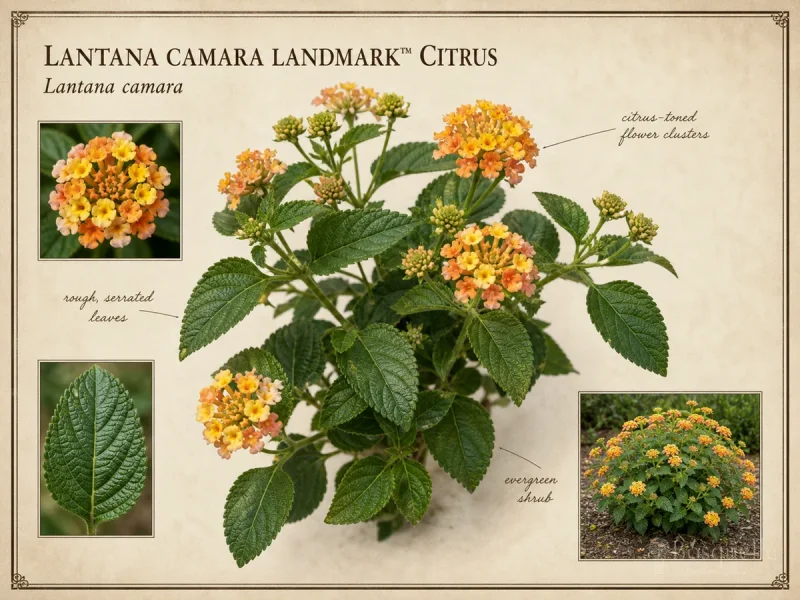
Landmark and Little Lucky lanes such as Landmark Citrus and Little Lucky Red keep the upright camara job in tighter mounds. Compact habit does not cancel toxicity or warm-climate spread risk. Landmark Peach Sunrise sits in the same upright band.
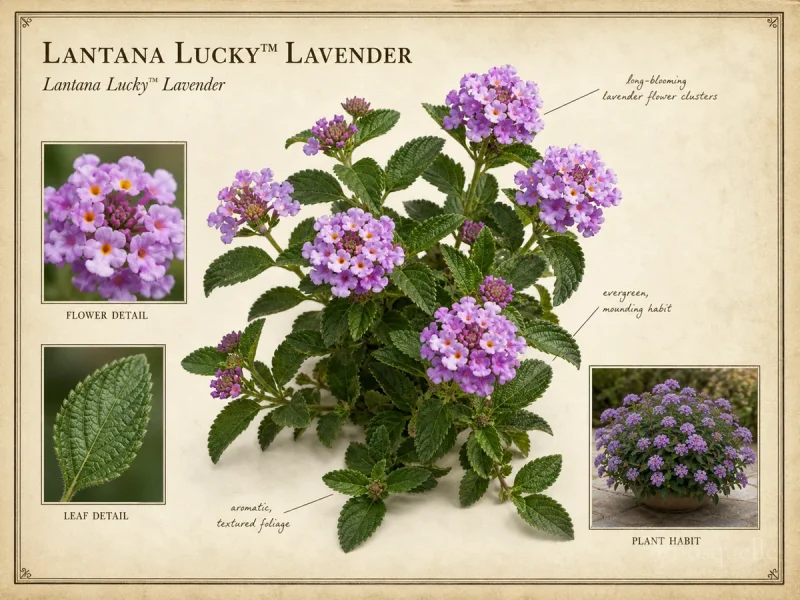
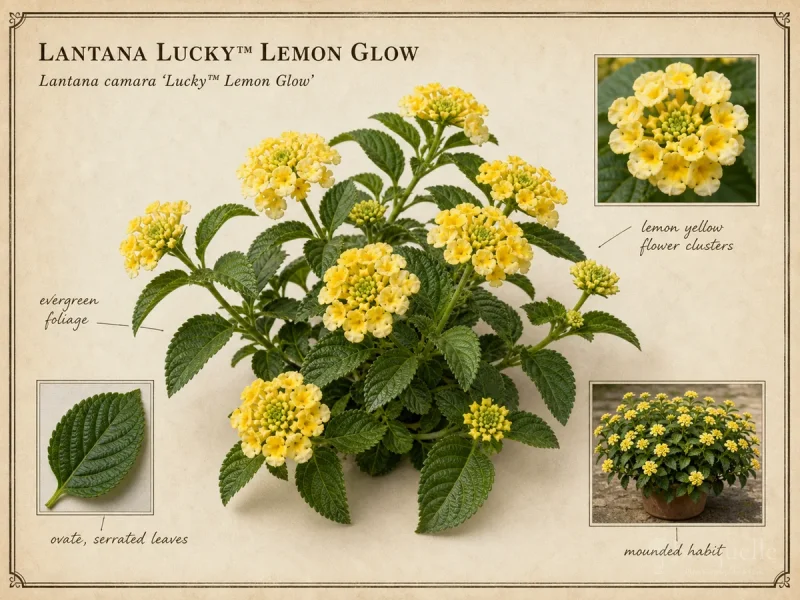
Little Lucky Peach Glow, Lucky Lavender, Lucky Lemon Glow, and Lucky White extend the Lucky colour range for patio pots and front-of-border heat. Deadhead if local seed pressure matters. Water pots when the mix dries, not on a wet schedule.
Trailing Lantana is the spill and groundcover lane. Texas Lantana and Buttonsage are distinct species: read the tag rather than assuming every Lantana is camara bedding stock. Same heat and sun; confirm Latin before you promise height.
- Upright mounds in a hot border → camara series such as Landmark or Lucky
- Spill from a basket or wall → Trailing Lantana
- Named Texas or Buttonsage look → buy those species
- Hard frost every winter → annual finish or indoor overwinter
What usually works: full sun, sharp drainage, and a plan for seed and frost. What usually fails: cool shade, ignored spread in warm climates, or expecting outdoor survival after hard freezes without a winter plan.
Buying checklist: Latin and habit on the tag, a hot sunny site, caution for toxic fruit, and a frost-north plan. Skip the plant if you cannot give sun or cannot manage spread where it is invasive.
After the season: in cold gardens compost frost-killed tops and store only pots or cuttings you intend to keep. In mild gardens renew with a hard spring cut and remove seedlings from wild edges.
FAQ
Can Lantana take afternoon shade?
Light afternoon shade may help only in extreme desert glare. Cool shade still thins bloom. Aim for at least 6 hours of sun.
Is Lantana invasive?
In many frost-free regions Lantana camara can spread aggressively. Check local status, deadhead if seed is a problem, and avoid wildland edges.
Is Lantana toxic?
Yes — foliage and berries are toxic if eaten. Site away from toddlers and pets that graze plants.
Will Lantana survive winter in cold climates?
Usually not outdoors after hard frost. Treat it as a heat annual, or overwinter pots and cuttings indoors.
Is lantana a perennial or an annual?
Both, depending on climate. Frost-free regions: woody perennial. Hard-freeze winters: heat-season annual unless you overwinter pots.
Should you deadhead lantana?
Yes where seed fuels weeds or you want a tidier flush. Remove spent clusters before berries ripen in warm climates.
How often should you water lantana?
Water to settle after planting, then when the top inch dries. Established in-ground plants prefer lean drought tolerance over daily soaking.
What is the difference between upright and trailing Lantana?
Upright camara forms mound for beds. Trailing Lantana (montevidensis) spills for baskets. Both want heat and sun. Types of Lantana sorts habits.
How do I prune Lantana?
It flowers on new growth. Pinch early for density. In frost-free gardens cut woody plants hard in late winter.
When should I plant Lantana?
After soil is warm and frost risk has passed. Full calendar and spacing: Planting Lantana.
Related guides
Recommended plants




This note is part of Lantana Guides.
More first-season notes by plant are gathered in How to Grow Guides.
Updated: Reviewed by Bosquelle Editors