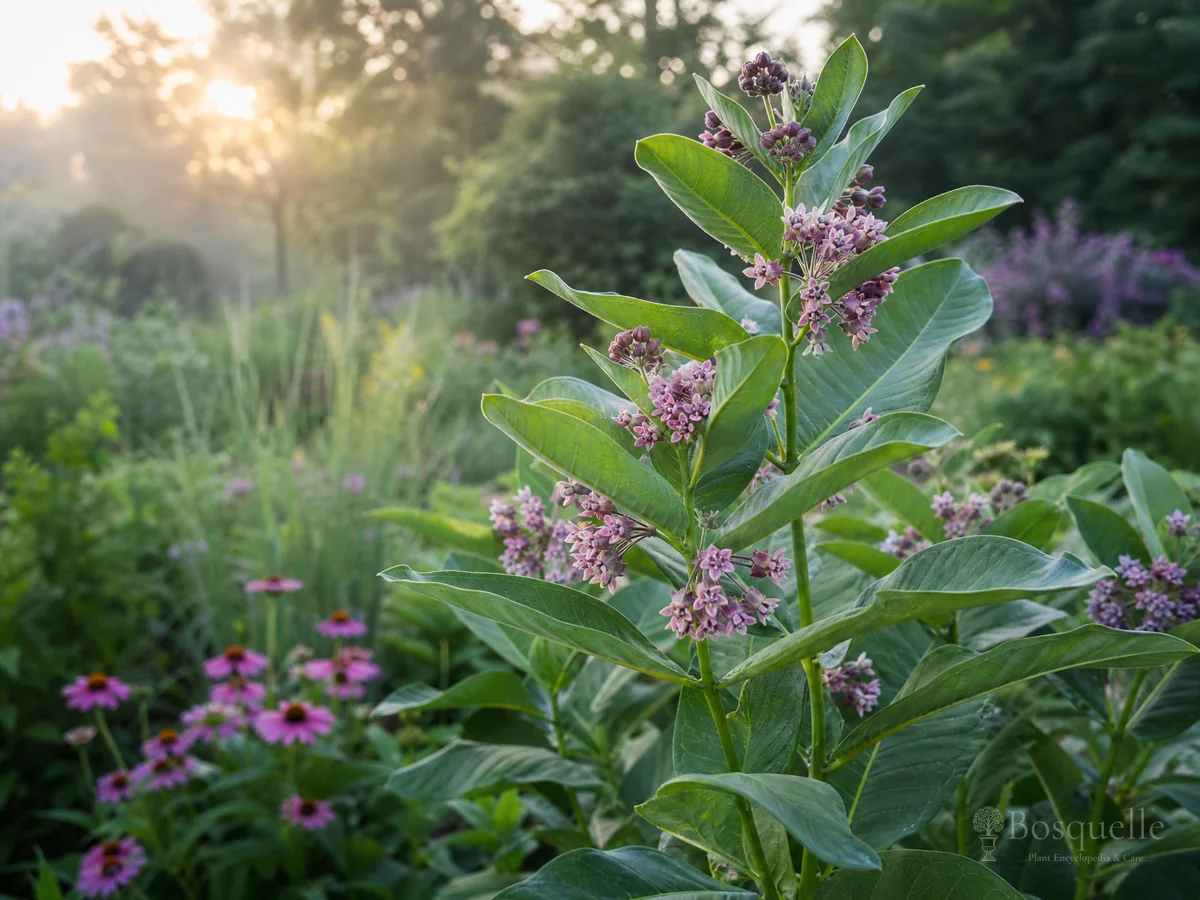
Grow Indian hemp in sun or part shade, in moist soil, with room for the rhizomes to run. Indian hemp is Apocynum. Shops also say dogbane or hemp dogbane. It is not cannabis.

Give it full sun or part shade, moist soil, and room to run
| Factor | Recommended | Avoid |
|---|---|---|
| Light | Full sun or part shade | Do not tuck it under a deep, dry canopy |
| Soil | Moist loam or sand that still drains | Do not drop it into a tiny mixed border it will fill |
| Water | Keep a new planting moist through the first summer; later it takes dry spells | Do not let a new patch bake dry the first year |
| Spread | A meadow, slope, or stream bank with room for rhizomes | Do not plant it next to a lawn you want to keep clean |
| Sap | Wear gloves; keep children, dogs, and livestock off the plants | Do not put it in a hay field or a play yard |
| Winter | Stems die after frost; the rhizomes stay in the ground | Do not mow every stem to the soil in fall |
Indian hemp is a native herbaceous perennial with opposite leaves, smooth red or purple stems that branch in summer, and clusters of small greenish-white flowers. Give it sun or part shade and soil that stays moist, then eases off once the roots are down. It takes a prairie, a ditch, or a stream bank, and the rhizomes will fill that space, so plant it only where a colony is welcome. [1] Use a large naturalized area, not a small mixed border you cannot spare. [2]
All parts are toxic if eaten, fresh or dry. The milky sap can blister skin. Wear gloves when you cut stems, and keep pets and livestock from grazing the patch.
How much sun does Indian hemp need?
Full sun or part shade. A deep, dry canopy is a poor site.
How wet should the soil stay?
Keep a new planting moist through the first summer. After that, it takes dry spells. A tiny mixed border it will fill is a poor site.
Is the sap dangerous?
Yes. Wear gloves. The sap can blister skin, and the plant is toxic if eaten. Keep children, dogs, and livestock off it.
Plant a division in fall after the stems brown
Start with a rooted piece, not a cutting of green stem. After the stems brown in fall, or just after the first fall rain, lift a section with healthy roots, keep those roots moist, and set it at the same depth in moist soil. Water through the first summer. After that, extra water is usually unnecessary. [3]
- Wait until the stems have browned in fall, or plant just after the first fall rain.
- Dig a piece with healthy roots, about 6 inches deep, and keep the roots moist until it goes back in the ground.
- Set it at the same depth, about a foot from the next plant, and water it in.
- Keep the new patch moist through the first summer. Do not let it bake dry that first year.
Sow seed on the soil in fall
You can also sow seed on the soil in fall, so winter cold can break dormancy. Collect pods in late summer before they split, or buy seed, and press it onto moist soil without burying it deep. Water the first summer. A seed-grown plant may take two or three years to bloom.
- Collect ripe pods in late summer before they split, or start from a seed packet.
- Sow on the soil surface in fall. Do not bury the seed deep.
- Keep the first summer watered so seedlings can root.
When do I plant a division?
After the stems brown in fall, or just after the first fall rain. Keep the roots moist, set the piece at the same depth, and water through the first summer.
Can I grow it from seed?
Yes. Sow on the soil in fall. Water the first summer. Bloom may wait until the second or third year.
Cut last year's stems to 12 to 24 inches in late winter
Leave last year's stems standing through winter. Native bees nest in the dead, hollow stalks. In late winter or early spring, cut those stems back to 12 to 24 inches and leave the stubs until they break down on their own. Do not mow the patch to the ground in fall.
- Leave the dead stems standing through winter so bees can nest in the hollow stalks.
- In late winter or early spring, cut the stems back to 12 to 24 inches.
- Leave those stubs in place until they break down. Do not cut every stem to the soil in fall.
When do I cut the stems?
Leave them through winter. In late winter or early spring, cut them to 12 to 24 inches and leave the stubs standing.
Not milkweed — and not cannabis hemp
Common milkweed is Asclepias. In spring the two look alike: opposite leaves and milky sap. Indian hemp branches as it grows, on thinner, smooth, red or purple stems, and it opens small white flowers, then long skinny pods in pairs. Milkweed stays thicker and greener, with fine hair on the leaves, pink ball-shaped clusters, and plump pods. [4] If you bought milkweed for monarchs, see How to Grow Milkweed. Indian hemp is a nectar plant. Monarch caterpillars do not mature on it.
The name hemp, and the epithet cannabinum, refer to the strong stem fiber, not to marijuana. Cannabis is a different plant. If a packet says hemp or cannabis, that is not this prairie perennial.
Spreading dogbane is a shorter cousin with pink, nodding flowers on drier, shadier ground. We do not hold that plant. Periwinkle is Vinca, a groundcover — see How to Grow Periwinkle. Oleander is a woody shrub — see How to Grow Oleander. Same family, different plants.
Is this milkweed?
No. Milkweed stays thicker and greener, with pink flower balls and plump pods. Indian hemp branches on red or purple stems and opens small white flowers, then long skinny pods.
Is this the same as cannabis hemp?
No. The name hemp refers to the stem fiber. This plant is not marijuana, and it is not edible.
Set a rooted piece in a moist meadow this fall, water it through the first summer, and leave last year's stems standing until late winter.
FAQ
Can I grow it in a pot?
It is a meadow plant with running rhizomes, not a patio plant. Give it ground in a large naturalized area.
What about spreading dogbane?
That is a shorter cousin with pink, nodding flowers on drier, shadier ground. The plant here is Indian hemp, which wants sunnier, moister soil.
Will monarch caterpillars live on it?
Adults visit the flowers for nectar and sometimes lay eggs, but the caterpillars do not mature on Indian hemp. Grow milkweed if you want a monarch host.
Recommended plants

References
- [1] NC State Extension -
https://plants.ces.ncsu.edu/plants/apocynum-cannabinum/ - [2] Lady Bird Johnson Wildflower Center -
https://www.wildflower.org/plants/result.php?id_plant=APCA - [3] USDA NRCS -
https://plants.sc.egov.usda.gov/DocumentLibrary/plantguide/pdf/pg_apca.pdf - [4] Ohio State University BYGL -
https://bygl.osu.edu/node/1992
More first-season notes by plant are gathered in How to Grow Guides.
Updated: Reviewed by Bosquelle Editors