
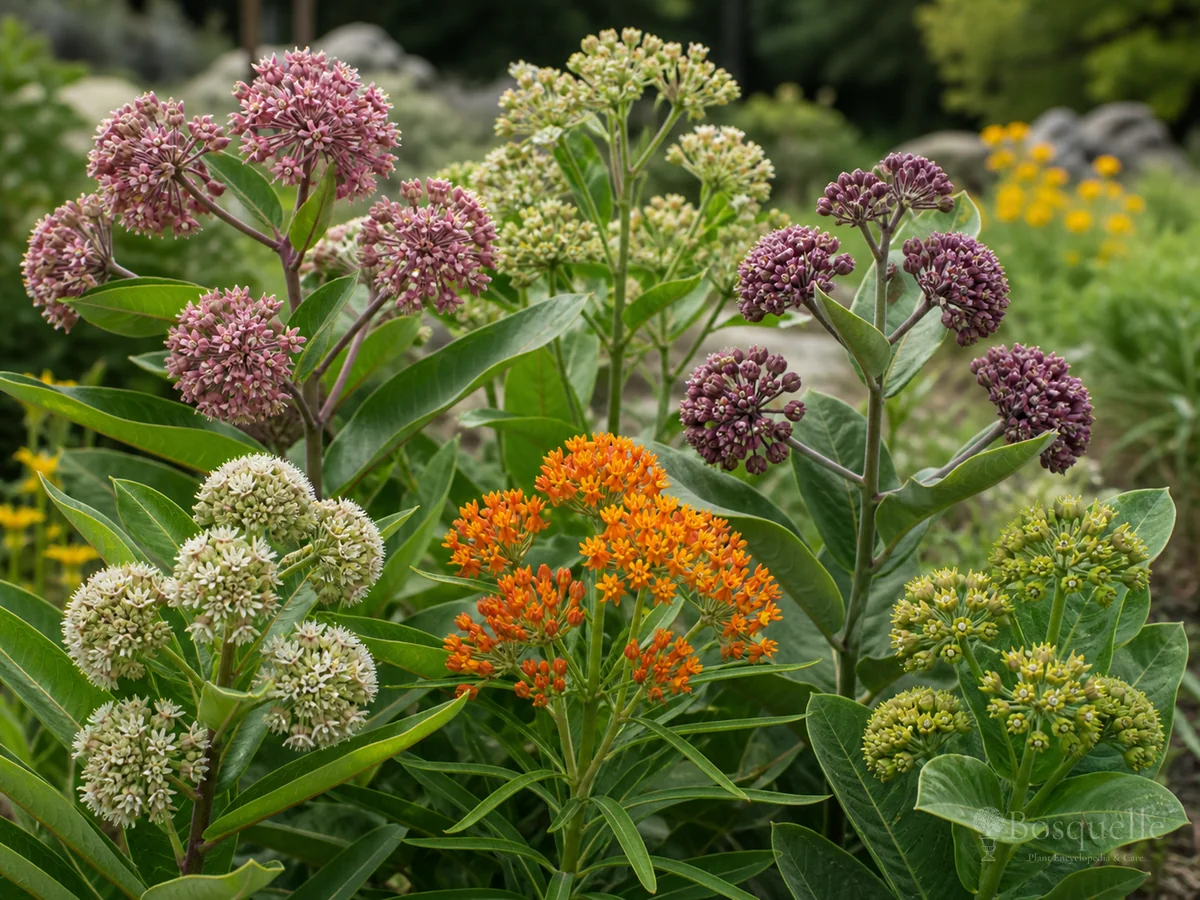
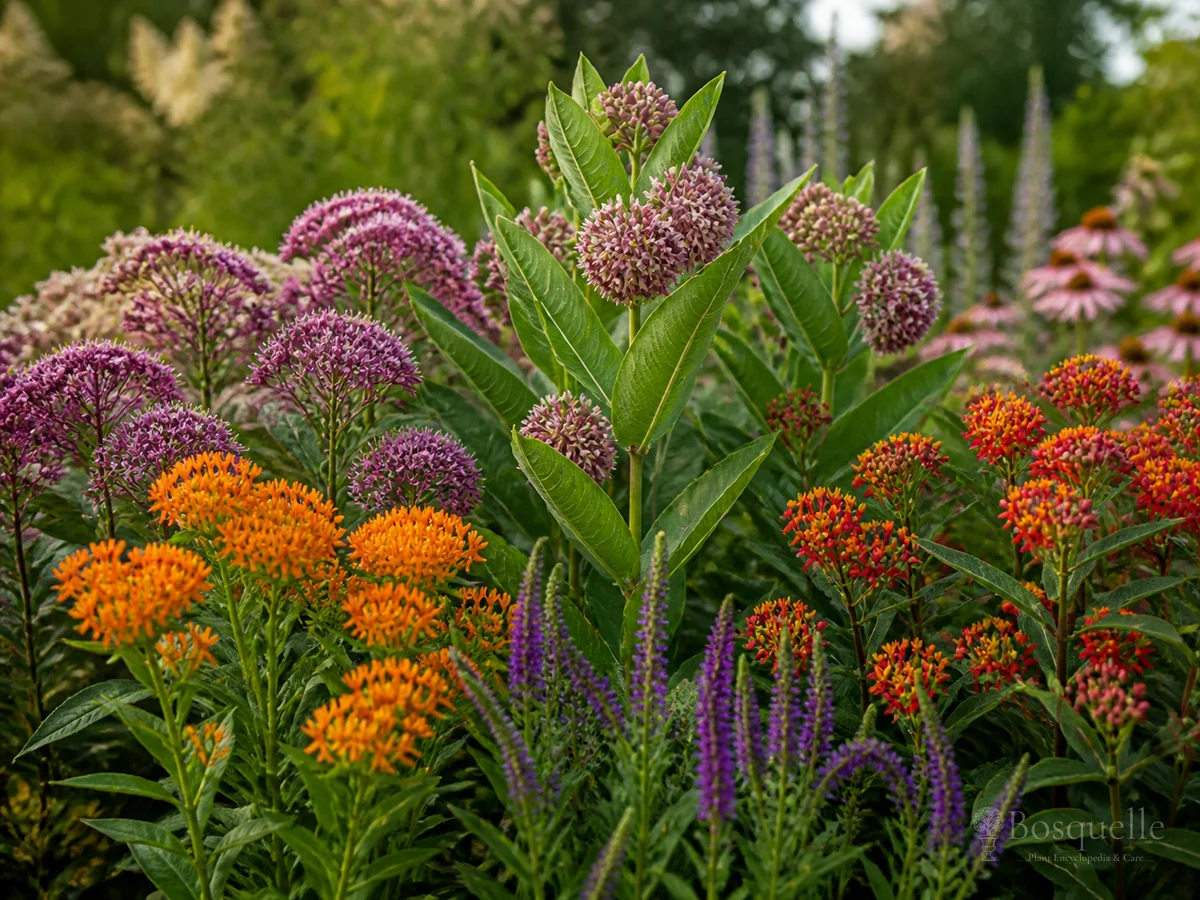
Milkweed (Asclepias) is the monarch caterpillar host. Give it full sun and match the species to the soil. A. tuberosa wants dry drain. A. incarnata wants moisture that does not vanish in July. A. syriaca runs by rhizomes. Do not spray the leaves. Sap irritates skin and eyes. A firm dormant crown in spring is late to wake, not dead.

Full sun and match moisture to the species
| Factor | Recommended | Avoid |
|---|---|---|
| Light | Full sun, 6–8 hours | A north wall that thins stems and cuts bloom |
| Dry kinds | Sandy or gravelly drain; butterfly weed | A rain-garden puddle on tuberosa |
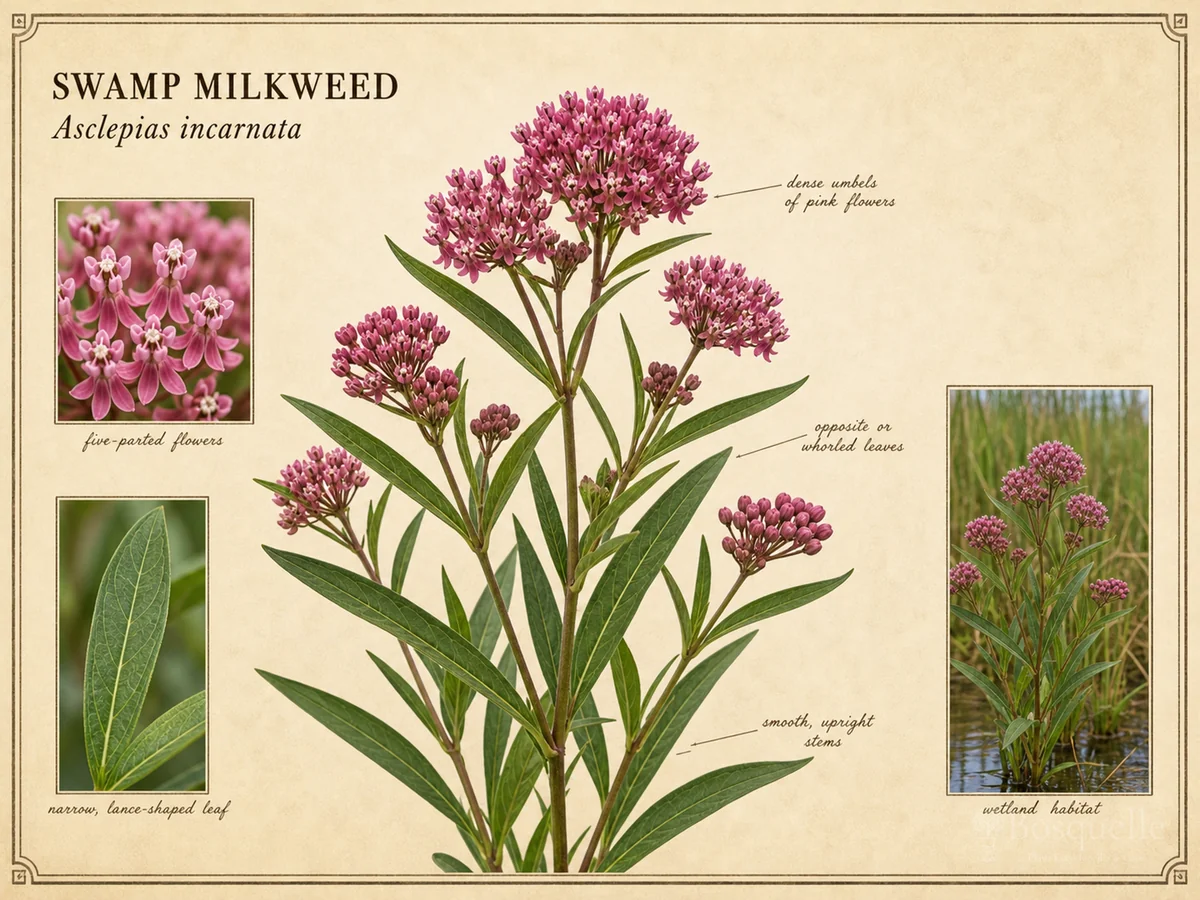
| Wet kinds | Evenly moist to wet; swamp milkweed | A hot dry berm on incarnata |
| Colony kinds | Room to run; common and showy milkweed | A tiny formal bed you cannot let spread |
Most milkweeds want open sky. Iowa State University Extension: butterfly weed wants full sun and well-drained soil, including dry poor ground. Swamp milkweed wants consistently moist or wet soil in full sun. Prairie types sit in between. Water new plants the first season. Do not flood a dry-prairie crown every week. Do not leave swamp milkweed to bake on a south berm.
- Walk the bed at noon. Six hours of sun carries bloom and sturdy stems. Shade makes a thin host patch.
- Name the moisture. Dry gravel or clay that drains → butterfly weed. A low spot that stays wet → swamp milkweed. Average soil with room to run → common or showy.
- Dig a test hole. If water stands overnight, skip tuberosa. If it dries to dust in two days, skip incarnata unless you can water.
- Plant in a permanent spot. Tuberosa makes a deep taproot and resents a later move. Common milkweed will send shoots a few feet away.
- Mulch lightly to steady moisture. Keep mulch off the crown on dry kinds. Soggy mulch on a wet edge feeds rot.
- Sort dry vs swamp vs tropical on Types of Milkweed before you copy one watering can onto every tag.
Dormant pots often look dead in April. White roots and a woody crown are waiting for warm soil. Plant them. Do not up-pot to “hold” until June. Depth and seed timing live on Planting Milkweed.
How to keep milkweed through the season
The first year is establishment. Old Farmer's Almanac: full sun, well-draining soil for most species, swamp kinds in moist ground. Because of deep taproots, pick a permanent site. Water new plants. Once butterfly weed is established, cut extra summer water. Leave chewed leaves for monarch caterpillars. That is the host job, not a pest.
- Water thoroughly after plant-out, then about once a week in a dry spell the first season. Established dry kinds want less.
- Skip fertilizer on poor dry ground for tuberosa. Extra nitrogen makes soft growth. Swamp kinds in a lean wet edge still do not need a heavy feed.
- Do not spray insecticides, including systemics, on host leaves. Caterpillars eat those leaves. Soap sprays on aphids can still kill larvae — pick aphids or leave them for predators.
- Leave chewed foliage. A stripped stem is often a successful brood, not a failed plant. New shoots can follow.
- Cut spent flower stems if you must tidy, but leave some pods if you want seed. Common milkweed pods spread far. Deadhead if you need a tighter patch.
- In fall, let native tops die back. That break matters more than a neat cut. Tropical kinds in a frost-free yard are a different cut-back job — see the next section.
Aphids cluster on stems. They rarely kill an established clump. Oleander aphids are common on swamp milkweed. Blast with water if you must. Do not reach for a systemic. Milkweed bugs and beetles eat seeds and sap; they are not a reason to spray the host patch.
Caterpillars, sap, and tropical cut-back
Gloves when you snap a stem. University of Illinois Extension: monarchs lay eggs only on milkweed; larvae eat only those leaves. Sap can irritate skin and eyes. That is placement, not a reason to skip the plant. Keep sap off a toddler’s mouth. Do not splice that warning onto a drainage fix in one sentence.
- Wear gloves and eye cover when you cut. Wash sap off skin with soap and water. Do not rub your eyes.
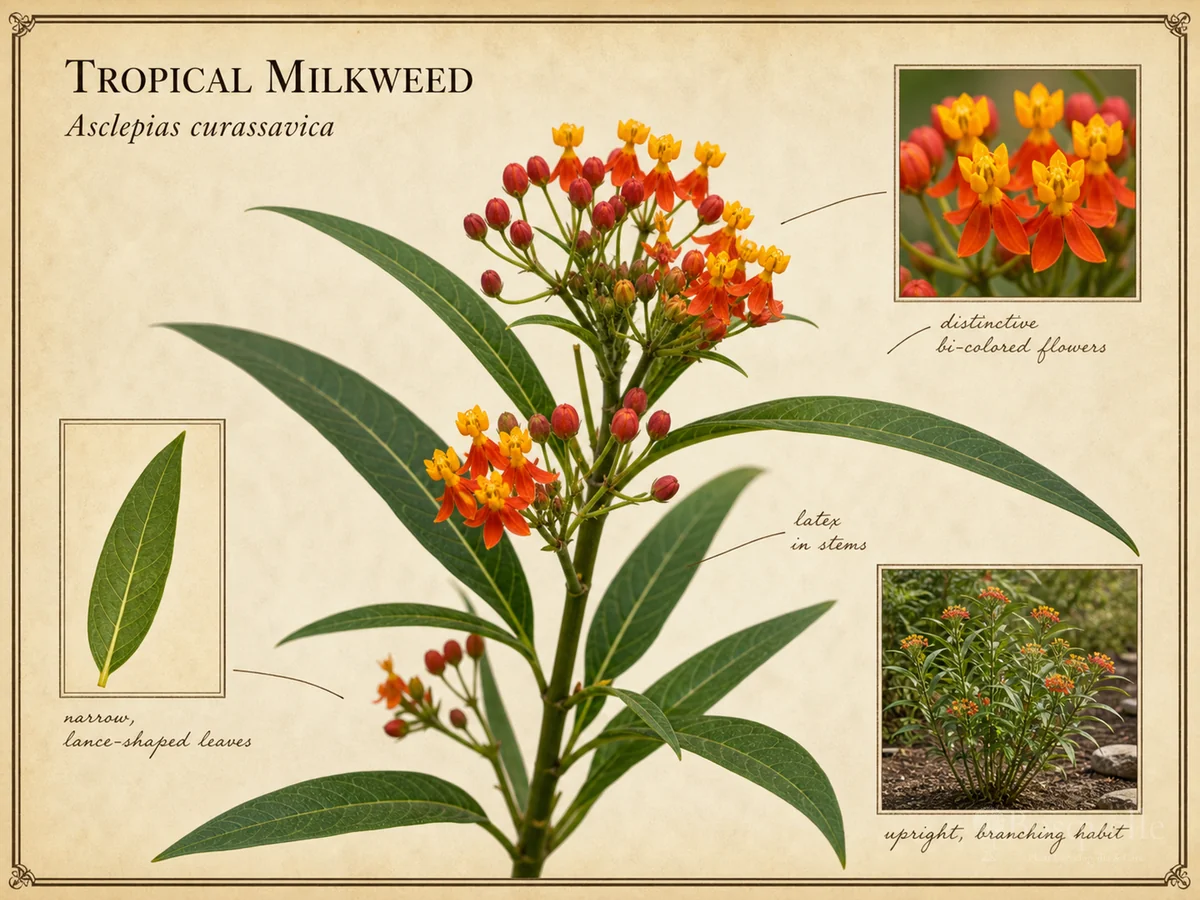
- If you grow tropical milkweed where winters stay mild, cut it to the ground in late fall so it cannot stay green all winter. A parasite of monarchs builds on plants that never die back.
- Prefer a native patch as the main host. Tropical milkweed is a managed extra, not a substitute for tuberosa or incarnata in most of the country.
- Where a hard freeze already kills tops, tropical milkweed is less of a year-round green trap. Still do not make it the only host you plant.
- Do not use butterfly bush as a “monarch plant.” It is nectar, not a host, and it is not this genus.
- Mark the clump so you do not pull late spring shoots. Native milkweed wakes late. A hole in May is often still alive.
Prefer a native species that matches your soil. Match moisture, skip spray, and do not treat tropical milkweed as the default patch. Names live on Types of Milkweed. Seed depth lives on Planting Milkweed.
Kinds, partners, and next jobs
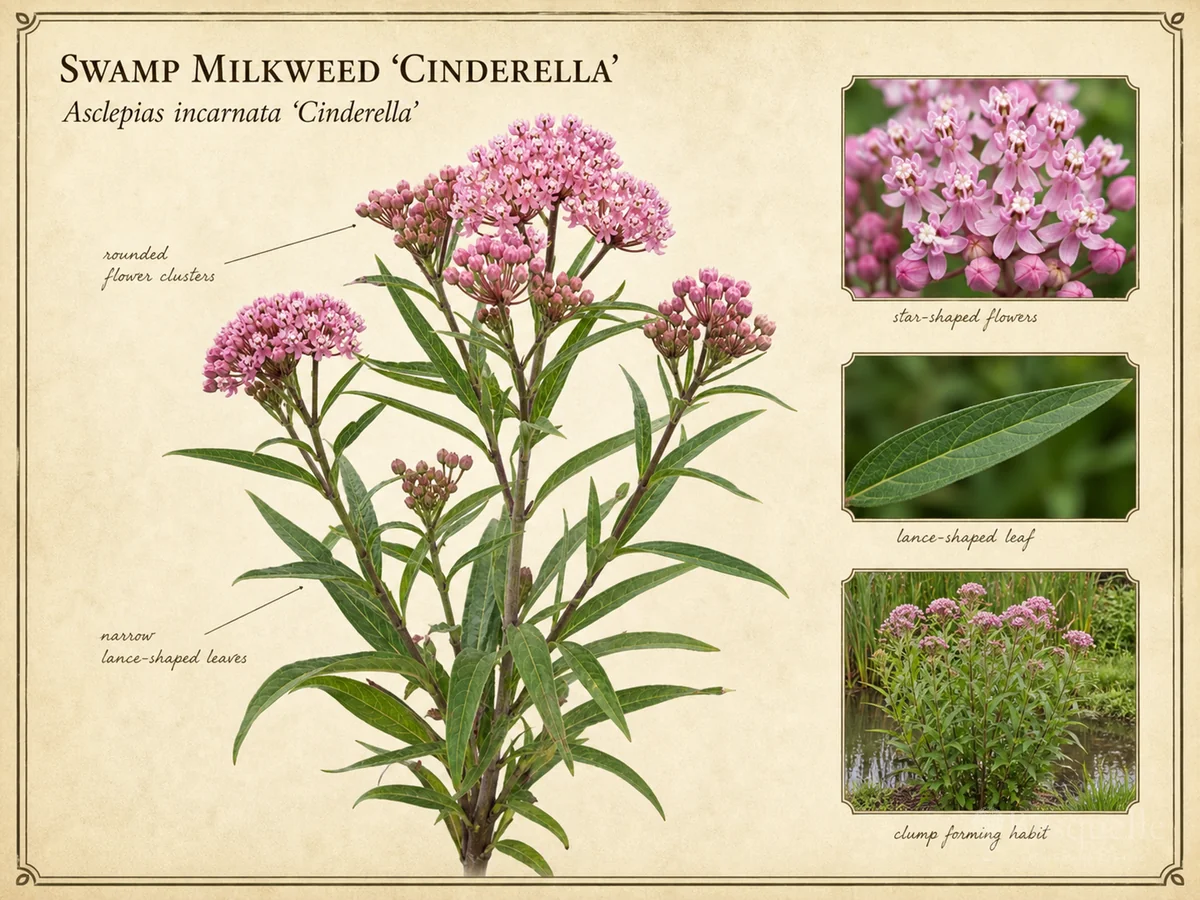
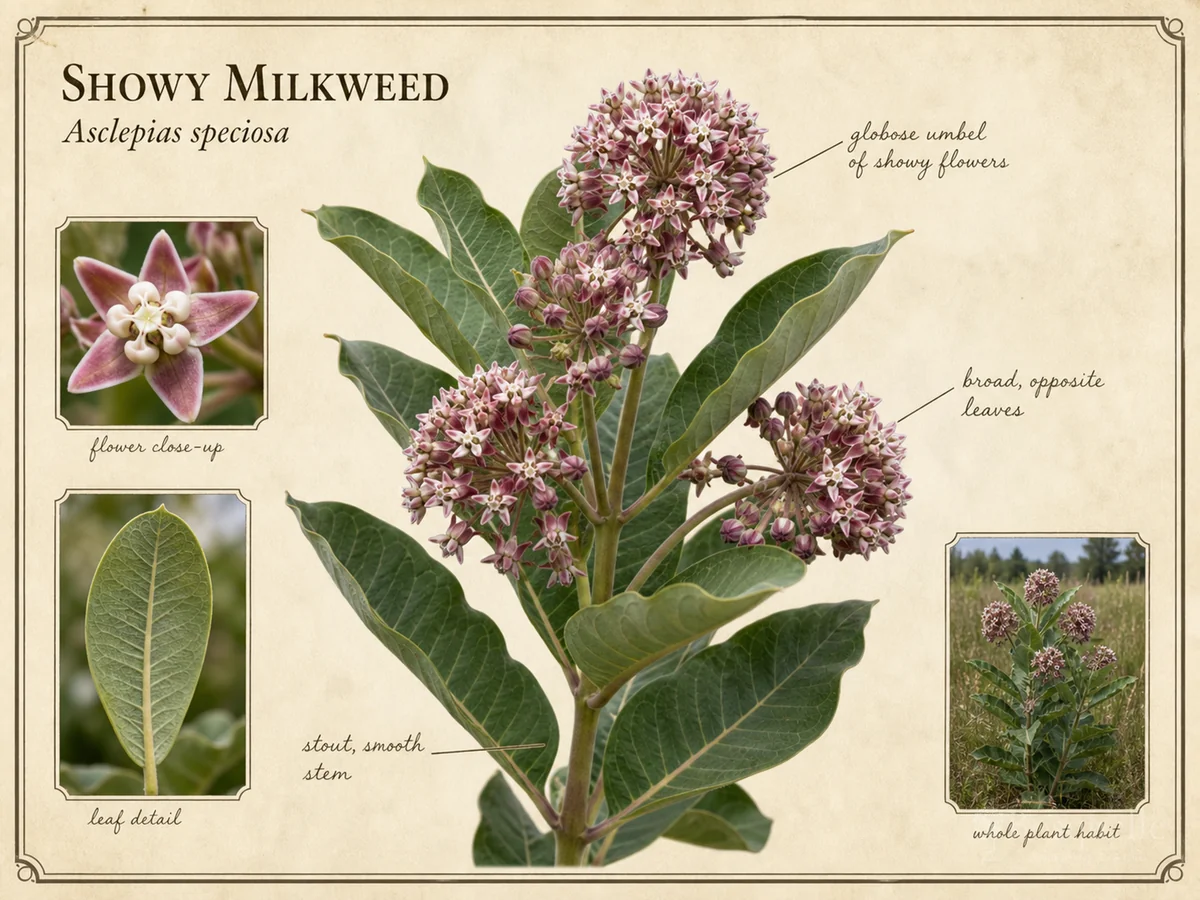
Hello Yellow is still tuberosa: dry drain, full sun, taproot. Cinderella is still incarnata: moist ground. Silky Deep Red is tropical: manage the winter cut in frost-free yards. Common and showy milkweed need room to run. Do not water them as one plant.
Partners that like the same sun and moisture — coneflower and blazing star on a dry bank, Joe-Pye and swamp milkweed on a wet edge — belong beside the patch, not in the same hole. Sequential bloom from summer into fall feeds adult monarchs after the host leaves are chewed. Pots need holes and a species that matches the mix. A patio tropical is still the cut-back job where winters stay green. Do not invent a bog in a saucer for tuberosa. Leave an aisle so you can see eggs without trampling stems. If last year’s plants never bloomed, they may still be in year one or two from seed — wait before you rip them out. Pair only with plants that share the sun. A fern that wants shade is in the wrong bed. A patio pot with holes can hold tropical milkweed for a balcony, but it is still the winter cut where the plant stays green. In the ground, give tuberosa a permanent dry bank. Give swamp milkweed a low moist edge. Give common milkweed a strip you can let run. Do not mix those three in one watering can. Deadhead common milkweed pods if the patch is already large enough. Leave some seed if you want more plants next year. Aphids on stems are not a reason to spray. Pick them or leave them for predators. Mark the clump in fall so a spring hoe does not take the late shoots.
Plant milkweed in full sun. Match the species to moisture: tuberosa dry, incarnata wet, syriaca with room to run. Water the first season. Skip spray on host leaves. Leave chewed foliage for caterpillars. Wear gloves in the sap. Native clumps wake late — do not pull a firm crown in May. Cut tropical milkweed to the ground in late fall where winters stay mild, or plant natives as the main patch. Names live on Types of Milkweed. Seed depth and stratification live on Planting Milkweed. Do not flood butterfly weed. Do not bake swamp milkweed. Do not treat tropical as the default host. Dormant stock in April is often still alive. Plant it. Mark the row so you do not hoe late shoots. Partners that share sun and moisture sit beside the patch, not in the same hole. Oleander aphids on swamp milkweed look worse than they are; a water blast is enough if you must tidy. Milkweed bugs eat seeds; they are not a reason to reach for a systemic. A stripped stem after a brood can still send new shoots. If the bed is shade, move the next plant to open sky rather than fertilizing a thin host. If the soil stays wet, skip tuberosa. If it dries to dust, skip incarnata unless you can water. Common milkweed will send shoots a few feet away — plan the aisle before you plant. Hello Yellow is still dry butterfly weed. Cinderella is still swamp milkweed. Silky Deep Red is still tropical. One native species matched to the site beats a mixed rack of orange photos. Wait two years from seed before you call a plant a failure. Empty a saucer on any pot. Keep sap out of eyes. Prefer natives as the main monarch nursery.
FAQ
Is milkweed poisonous?
Sap irritates skin and eyes and is toxic if chewed. Wear gloves when you cut. Keep it off pets and children that chew. Monarchs use those toxins; people do not eat the plant.
Which milkweed is best for monarchs?
A native species that matches your soil. Butterfly weed for dry sun, swamp milkweed for moist ground, common milkweed if you can let it run. Prefer natives over tropical as the main patch.
When should you plant milkweed?
Sow seed in fall, or stratify in a refrigerator and sow in spring. Set plants after frost. Steps live on Planting Milkweed.
Is tropical milkweed bad for monarchs?
It can stay green in mild winters and hold a monarch parasite. Cut it to the ground in late fall in frost-free yards, or plant natives instead.
Does swamp milkweed need wet soil?
It wants consistently moist or wet ground. It is not butterfly weed. Do not plant it on a dry gravel bank.
Why is my milkweed still dormant in spring?
Native clumps wake late. Check for a firm crown and white roots. Plant dormant stock; do not wait until June.
Should I spray aphids on milkweed?
No insecticides on host leaves. Blast with water or leave them. Systemics kill caterpillars too.
Does butterfly weed spread like common milkweed?
No. Tuberosa clumps. Common milkweed runs by rhizomes. Give common kinds a meadow, not a tiny knot garden.
Can I grow milkweed in a pot?
Yes with holes. Match the species to the mix. Empty the saucer. Tropical in a pot still needs a winter cut where it stays green.
How much sun does milkweed need?
Full sun, about 6–8 hours. Shade thins stems and cuts bloom.
Related guides

Recommended plants




This note is part of Asclepias Guides.
More first-season notes by plant are gathered in How to Grow Guides.
Updated: Reviewed by Bosquelle Editors