
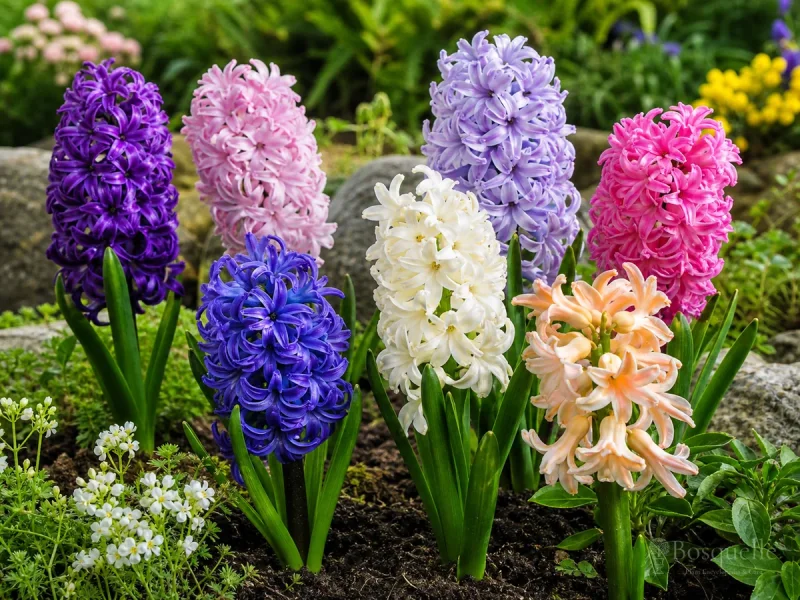
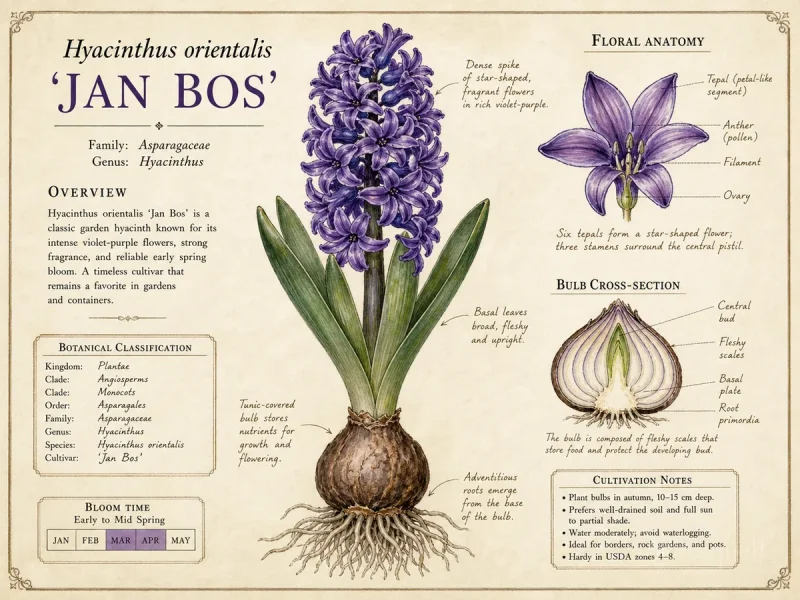
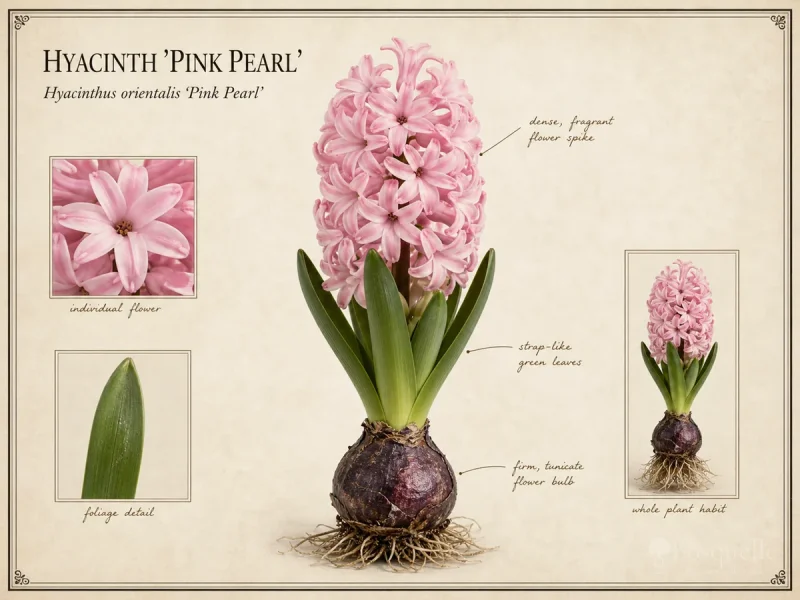
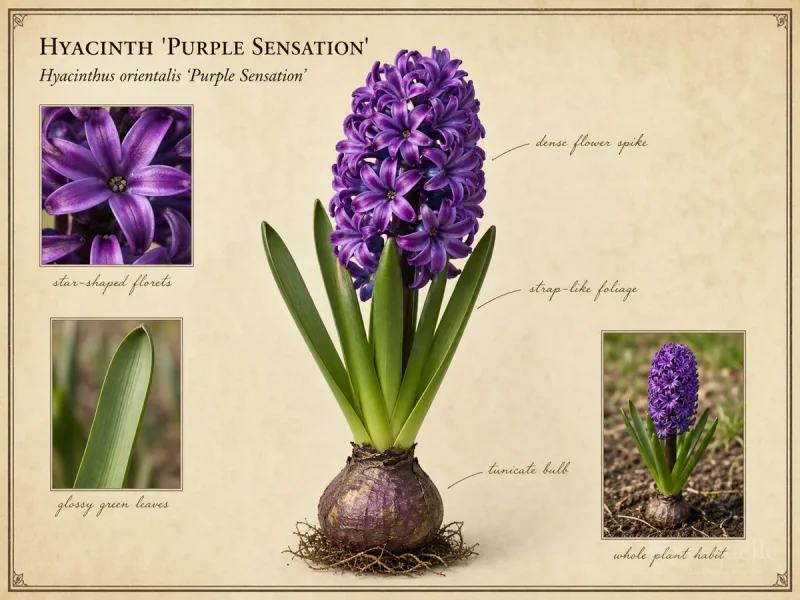
Dutch hyacinth (Hyacinthus orientalis) is a spring bulb: plant in fall, chill through winter, bloom once, then feed the bulb through the leaves. Delft Blue and Carnegie use that same calendar. Full sun and a bed that drains keep the bulb sound. Cut the spent spike. Leave the foliage until it yellows.

Full sun, drain, and a cold winter
| Factor | Recommended | Avoid |
|---|---|---|
| Light | Full sun in spring; light shade under deciduous trees is fine | A north wall that never dries the bed |
| Soil | Moderately fertile soil that drains; compost worked in | A low puddle or winter-wet clay |
| Chill | Weeks of cold so the bulb can bloom | A mild winter with no pre-chill and no cold garage |
| After bloom | Cut the spike; leave leaves until they yellow | Braiding or mowing green leaves the week the flowers fade |
Hyacinths want spring sun and a bed that never sits wet. Old Farmer's Almanac: choose full sun for the largest blooms and straightest stems; they tolerate partial shade. Loosen moderately fertile soil that drains. Do not plant a low spot that ponds. Work in compost before you plant.
- Walk the bed at noon in early spring, before trees leaf out. If the spot gets several hours of direct sun then, it will carry a hyacinth spike. A north wall that stays dim all day will not.
- Dig a test hole about a foot deep and fill it once. If water still stands the next morning, raise the bed or move the planting. Do not plant into a puddle and hope compost will save it.
- Work compost through the top 8 to 10 inches so roots can run. On sand, that compost holds moisture while leaves are still green. On clay, a raised row keeps the basal plate out of a sump.
- Keep the row off a downpipe, a grade that dumps storm water, and a west brick wall that scorches spikes in a late heat wave. Morning sun is the safer half of the day in that heat.
- Count on about 12 to 14 weeks near 40–45°F. Outdoor beds in a real winter supply that. If winters stay mild, pre-chill in a refrigerator away from ripening fruit, then plant. Keep loose bulbs in a paper bag in the crisper, not next to apples or pears, and plant as soon as the weeks are done. Depth and the fall calendar live on Planting Hyacinth Bulbs.
- Skip evergreen shade. A deciduous canopy that leafs out after bloom still gives spring sun. Last year’s long, weak leaves and a short spike usually mean too little sun or too much winter wet — move the row.
Grape hyacinth is Muscari, not this genus. Bluebells are Hyacinthoides. Sort those names on Types of Hyacinths before you copy a neighbor’s carpet of tiny bells onto a Dutch spike.
After bloom: cut the spike, leave the leaves
The flower is done. The bulb is not. National Garden Bureau: hyacinths look their best the first spring; later years the spike often opens and loosens. Cut the spent spike so the plant does not set seed. Leave the leaves until they yellow. That foliage fills the bulb for next spring.
- When florets brown, cut the flower stem down to the leaves. Do not strip the green blades with that cut. Seed set costs the bulb food it needs for next spring.
- Keep watering if spring is dry, while leaves are still green. Water the soil, not the fading spike. Stop extra water as the foliage yellows and the bulb goes dormant.
- A light feed after bloom is enough if the bed is poor. Scratch a bulb fertilizer or compost into the surface, then water it in. Do not dump nitrogen on yellowing leaves. The job is ripening, not a new flush of growth.
- Let foliage die back on its own. Do not braid, rubber-band, or mow it the week after bloom. Green leaves are still filling the bulb. Wait until they are yellow or straw-colored before you tidy the bed.
- Mark the clump so you do not dig it in summer. The bulb sits there dormant. Fall is when you add fresh bulbs or lift a crowded patch. Lift only after the leaves have died back, then replant at once or store cool and dry until fall.
- If the spike gets looser each year, plant fresh bulbs in fall. That is ordinary practice, not a failed bed. Many gardeners treat hyacinths as a two- or three-year display and replenish.
Deer and rabbits usually skip hyacinths. Squirrels still dig new plantings — chicken wire on the bed for a few weeks after plant-out helps. Do not flood the crown to chase pests. Soft rot starts in wet soil, not in a missed spray. If leaves yellow in April while the spike is still tight, the bulb was planted too shallow, sat wet, or never chilled. Fix the bed in fall. Fertilizer will not raise a rotten bulb. Come-back is real but not guaranteed. A well-drained sunny bed can rebloom for years. Shade and winter wet cut that short. Volunteers from seed are not how Dutch hyacinths are kept — buy bulbs.
Pets, skin, and what the bulb is
The bulb is the storage organ. Leaves, flowers, and the bulb itself are toxic if chewed. The sap can irritate skin and eyes. Wear gloves when you handle bulbs. Wash tools and hands after planting. Keep pets and children from digging a newly planted row or chewing a cut spike.
- Store spare bulbs cool, dry, and dark, in a paper bag, out of reach of pets. Do not leave a mesh bag on the kitchen floor.
- If sap gets on skin, wash with soap and water. Do not rub your eyes with gloved hands that just handled bulbs.
- A grocery bowl in bloom is still toxic. Set it where a dog cannot knock it over and chew the bulb.
- Do not toss spent florets where a pet will graze. Bag them. The same toxin is in the flower you cut for the table.
Hyacinth bean is Lablab, a summer vine, not a spring bulb. If a packet says bean, put it back. Indoor forcing uses a draining pot or a glass with water only at the basal plate, plus a cold stretch unless the pack is already pre-chilled. Do not set an unchilled garden bulb on a hot windowsill and expect a packed spike. A forced bowl can go into the garden once frost risk has passed, leaves still on. It may skip a year. Do not keep watering a dormant pot in a closed cachepot all summer. Empty the saucer. Dry rest is the summer job outdoors.
Pots, planting, and next jobs
A patio tub still wants drain holes and a cold stretch. Use fresh potting mix, not garden clay. About three bulbs fit in a 6-inch pot, noses up, close but not touching. Chill 10 to 14 weeks near 40–45°F unless the pack is already pre-chilled. Empty the saucer after every watering. A closed cachepot that holds runoff is rot. Bring a chilled pot into a cool bright room before a hot window so the stem stays upright.
Plant in fall, pointed end up, about 4 to 6 inches deep and 5 to 6 inches apart, in groups of five to nine. Water in. Do not plant in March expecting a May spike from an unchilled bulb. Buy firm, heavy bulbs; throw out soft, moldy, or lightweight stock before it goes in the ground. Partners in the same sun — daffodils, early tulips, a low grape hyacinth carpet in front — share the spring window if the hyacinth still has drain and space. Do not bury it under a summer perennial that never lets rain off the bulb. Cut spikes for a vase if you want scent indoors: take the stem, leave the leaves on the plant, and change the vase water. A whole row cut to the ground at peak bloom starves next year’s bulbs.
Plant Hyacinthus orientalis in fall in full sun that drains. Give the bulb a real winter chill — about 12 to 14 weeks near 40–45°F outdoors, or a fridge away from fruit if winters stay mild. Cut the spent spike. Leave the leaves until they yellow. Wear gloves when you handle bulbs, and wash your hands. Replenish bulbs when spikes loosen. Grape hyacinth is a different genus.
FAQ
When do you plant hyacinth bulbs?
In fall, after the first frost and before the ground freezes. Pointed end up, about 4 to 6 inches deep.
Can you force hyacinth bulbs indoors?
Yes. Use a draining pot or a glass with water only at the basal plate, and give a cold stretch unless the pack is already pre-chilled.
Do hyacinths come back every year?
They can, in full sun that drains. Spikes often loosen after the first year. Many gardeners plant fresh bulbs every year or two.
What do you do with hyacinths after they bloom?
Cut the spent spike. Leave the leaves until they yellow. Water if spring is dry. Then let the bulb rest.
Do hyacinths need full sun?
Full sun makes the best spikes. Light shade under deciduous trees in spring is acceptable.
Are hyacinths toxic to pets?
Yes if chewed. Sap can irritate skin. Wear gloves. Keep pets from digging new plantings.
Is grape hyacinth the same plant?
No. Grape hyacinth is Muscari. Dutch hyacinth is Hyacinthus orientalis.
Why did my hyacinth spike look sparse this year?
Later years often open up. Shade, wet soil, or cutting the leaves too soon also weakens the bulb. Plant fresh stock in fall.
Where are pots and planting depth?
Hyacinths in Containers for pots and indoor chill. Planting Hyacinth Bulbs for fall depth and spacing. Types of Hyacinths for Muscari and color packs.
Related guides


Recommended plants





This note is part of Hyacinthus Guides.
More first-season notes by plant are gathered in How to Grow Guides.
Updated: Reviewed by Bosquelle Editors