
Grow hopbush in full sun, in soil that drains. Hopseed bush is the shop name. Water a new shrub until the roots take hold, then ease off.
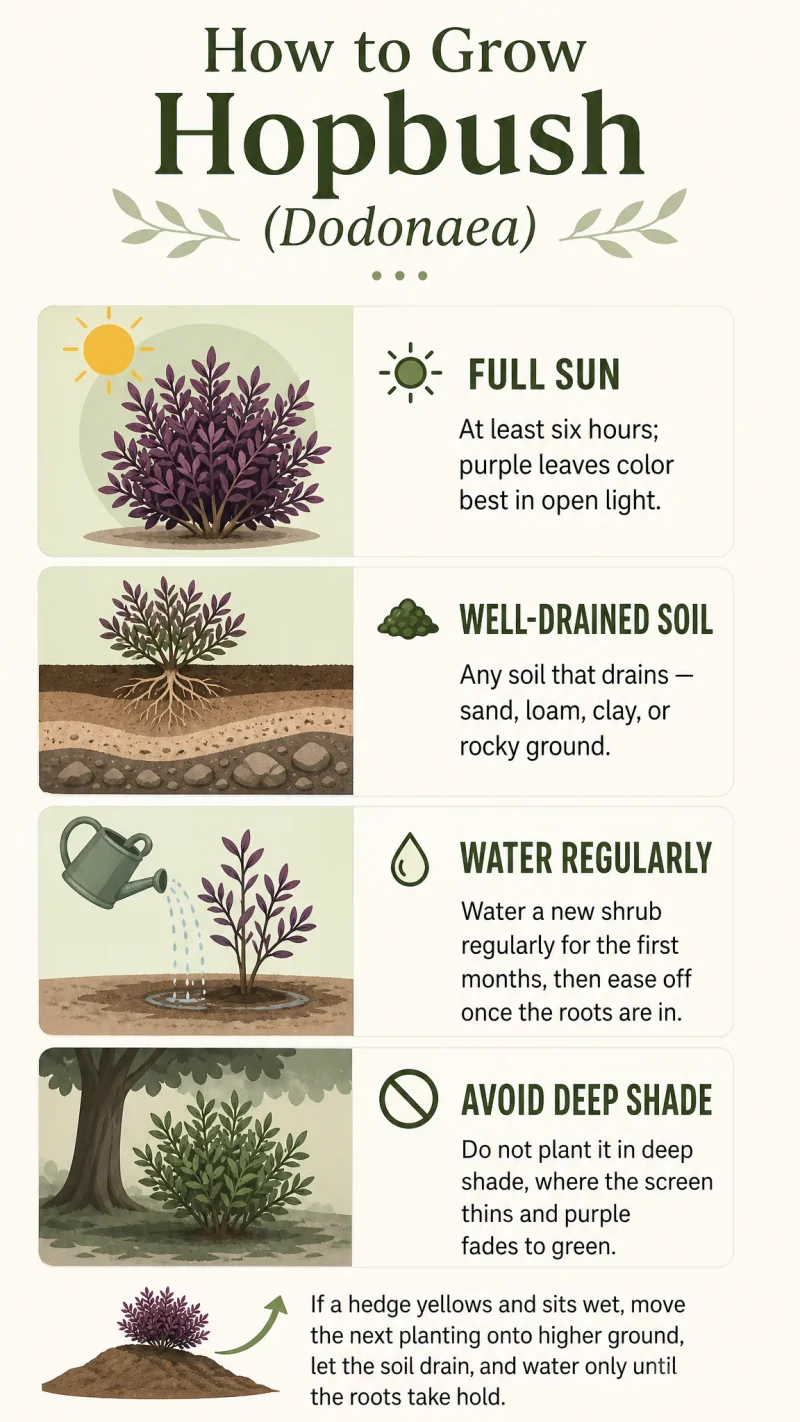
Give it full sun and soil that drains, then ease off the water
| Factor | Recommended | Avoid |
|---|---|---|
| Light | Full sun, at least six hours; purple leaves color best in open light | Do not plant it in deep shade, where the screen thins and purple fades to green |
| Water | Water a new shrub regularly for the first months, then ease off once the roots are in | Do not keep established roots in soggy soil |
| Soil | Any soil that drains — sand, loam, clay, or rocky ground | Do not plant it where water pools after rain |
| Wind and spray | Open sun, coastal wind, and salt spray | Do not tuck it against a hot west wall with no air |
| Feed | Little or none in open ground once it is growing | Do not keep a wet, rich bed that invites root rot |
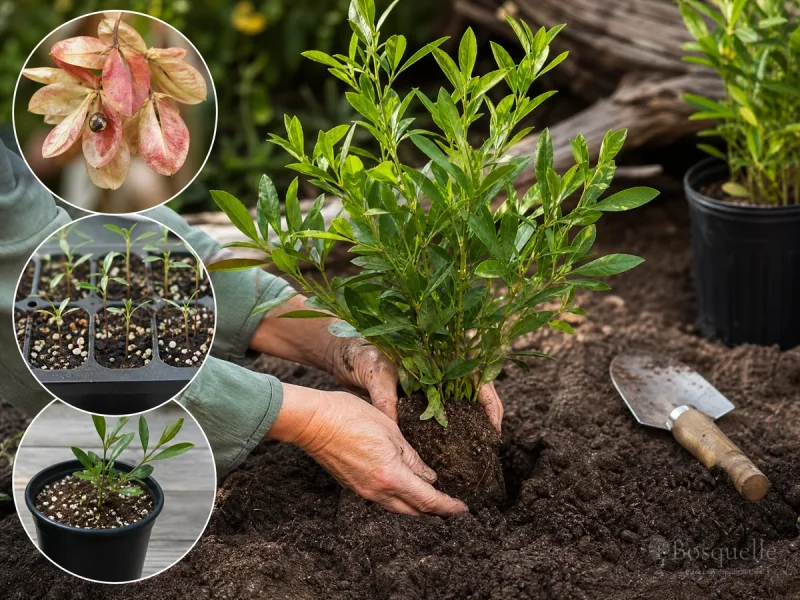
hopbush is Dodonaea viscosa, an evergreen shrub about 10 to 15 feet tall used as a hedge or screen. Give it an open, sunny spot and ground that sheds water. [1] The resinous leaves hold through drought and salt spray once the plant is established. Water enough for the first months, then ease off. [2] Standing water around the roots is the usual cause of yellow leaves and rot. Let the soil dry between waterings once the shrub is set. [3] Purple shop forms color best in full sun. [4] Set a nursery shrub on Planting Hopbush. Take cuttings on How to Propagate Hopbush.
How much sun does hopbush need?
Full sun, at least six hours. It will take light part shade, but a screen thins there and purple leaves fade toward green.
How often should I water hopbush?
Water a new shrub regularly until the roots take hold, then ease off. Established plants need little extra water if the soil drains. Do not leave the roots in standing water.
Does hopbush come back after a freeze?
A light frost may burn the tips. A hard freeze around 15 F can kill young wood, especially on a purple plant. Cut dead wood after you see green buds, and start a new shrub if the crown is gone.
Shear a hedge twice a year, or lift it into a small tree
Left alone, hopbush makes a dense, informal screen. It is one of the few dry-climate shrubs that still looks decent after a shear, if you do that job only once or twice a year. Spring after frost, or early fall, is the window. You can also lift a few trunks into a small patio tree by taking off the lower side branches over time.
- For a hedge, shear in spring after frost, and again in early fall if the face has gone ragged. Do not shear more than twice a year.
- Keep the base a little wider than the top so light reaches the lower leaves.
- Every two or three years, cut a few old woody stems at the base so new shoots can fill in.
- To train a small tree, remove lower side branches over several seasons and keep one or a few main trunks.
- On a purple plant, cut any green-reverting shoot back to the trunk as soon as you see it.
- A tired, woody shrub can be cut hard about every five years to start a fresh framework.
When do I prune hopbush?
Shear a hedge in spring after frost, and once more in early fall if you need a clean face. Do not shear it all season.
Can I train hopbush as a small tree?
Yes. Take off lower side branches over a few seasons and keep one or a few trunks. Give it room. A 10 to 15 foot shrub still needs space when you lift the trunks.
Not hops, and not a hop tree
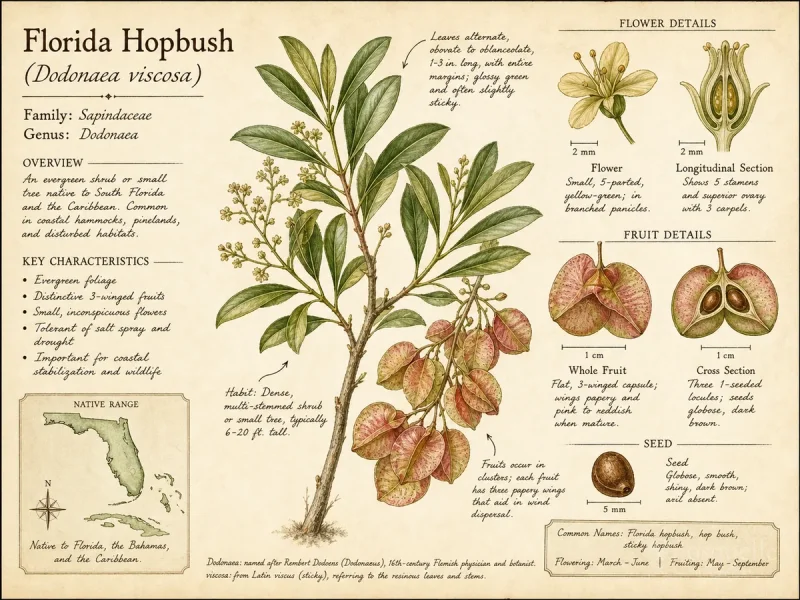
Hopbush is a woody evergreen shrub with papery, three-winged capsules. Brewing hops is Humulus, a bine you train on a tall frame for cones — see How to Grow Hops. A hop tree is Ptelea trifoliata, a deciduous tree with three leaflets and wafer-like disks. It is not this plant, and it is not a hopbush hedge. If the tag says hops, Humulus, or Ptelea, grow that plant on its own page. Confirm the Latin Dodonaea viscosa before you count on a dry evergreen screen.
Is hopbush the same as hops?
No. Hopbush is Dodonaea viscosa, a drought shrub. Hops is Humulus, a bine grown for cones. A hop tree is Ptelea, with three leaflets. Read the Latin on the tag.
If a hedge yellows and sits wet, move the next planting onto higher ground, let the soil drain, and water only until the roots take hold.
FAQ
Do you list purple hopseed or Emerald Ice?
Those names are extra shop forms of this species. This guide covers Dodonaea viscosa. Give every tag the same full sun and soil that drains. Purple leaves color best in sun; seed from a purple plant often comes mixed.
Can I grow hopbush in a pot?
A large tub with a drainage hole can hold a young plant for a season. The usual job is a hedge in open ground. A pot dries fast in sun, so water when the top of the mix is dry, and do not leave it in a saucer of water.
What should I plant with hopbush?
Give partners the same full sun and soil that drains. Low desert shrubs at the base of the screen work if you do not crowd the trunks or soak the bed.
Is hopbush poisonous?
Grow it as an ornamental. The leaves are mildly toxic if eaten. Keep pets from chewing the foliage.
Will it clog a pool or catch fire?
Papery capsules and leaves can litter a pool. The wood is considered flammable, so keep it off a fire pit and off the house wall in a fire-prone yard.
Are the roots invasive?
The roots are spreading and fibrous, not a pipe-cracking ficus mat. Give the shrub room, and do not plant it in a tiny strip against a foundation.
Is it a substitute for oleander?
Gardeners use it as a dry evergreen screen in the same slot. It is not oleander. For oleander care see How to Grow Oleander.
Related guides

Recommended plants
References
- [1] University of Florida IFAS -
https://ask.ifas.ufl.edu/publication/FP181 - [2] USDA NRCS -
https://plants.sc.egov.usda.gov/DocumentLibrary/factsheet/pdf/fs_dovi.pdf - [3] Southwest Gardener -
https://swgardener.com/hop-bush/ - [4] Harvest to Table -
https://harvesttotable.com/how-to-grow-hopseed-bush-dodonea/
This note is part of Dodonaea Guides.
More first-season notes by plant are gathered in How to Grow Guides.
Updated: Reviewed by Bosquelle Editors