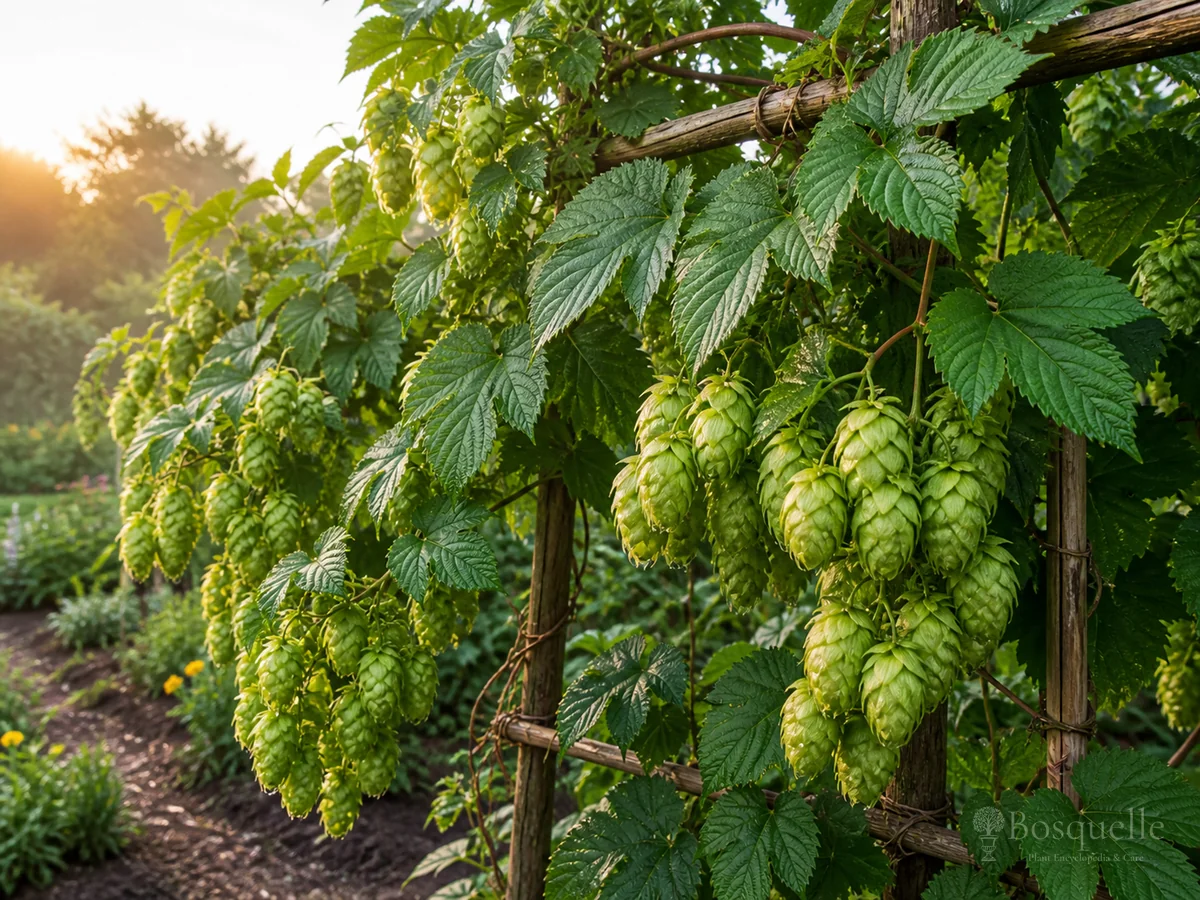
Grow hops in full sun on moist, well-drained soil, on a sturdy tall frame. Shops also list Humulus lupulus. Water to settle a new plant, then keep the crown from sitting in a puddle.
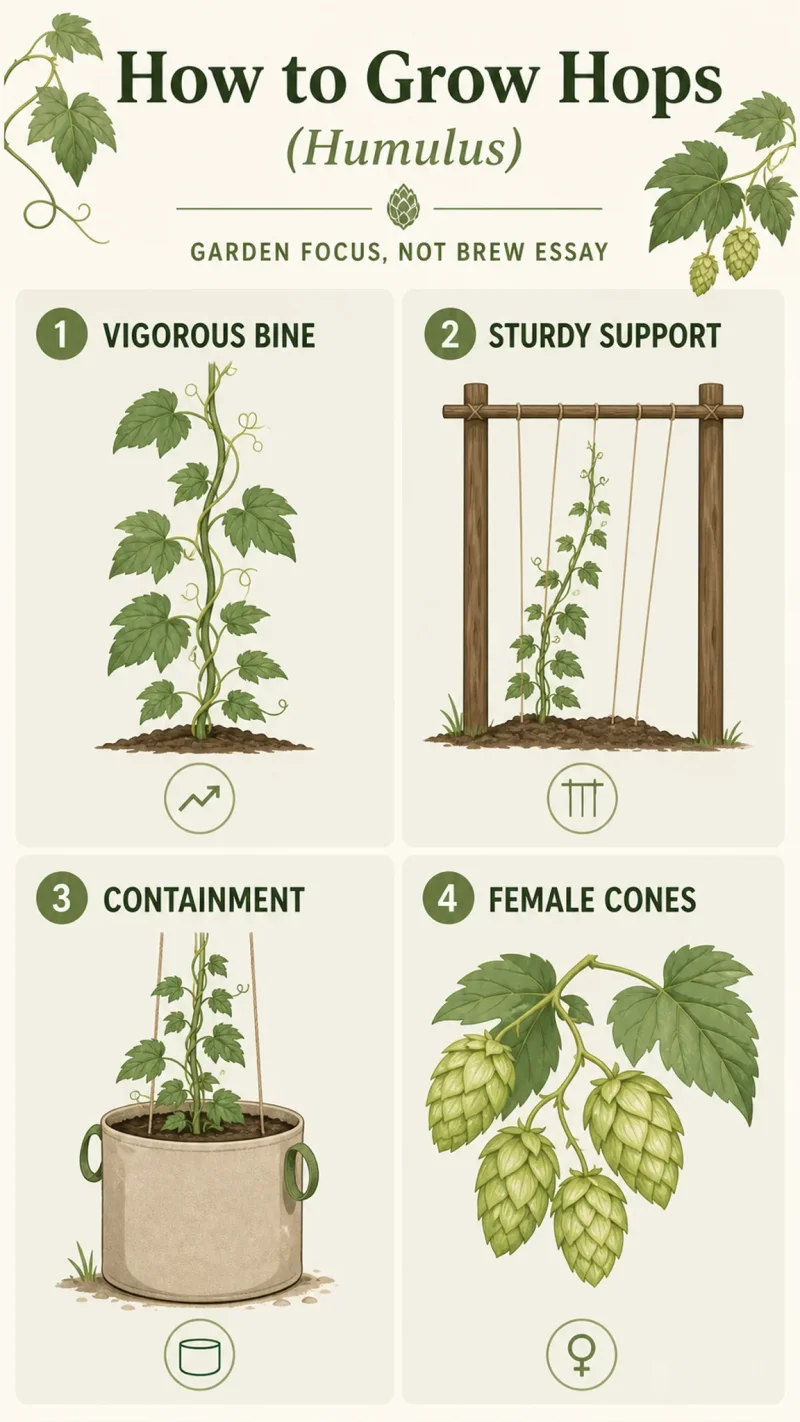
Full sun, well-drained soil, and a sturdy tall frame
| Factor | Recommended | Avoid |
|---|---|---|
| Light | Full sun for dense cover and cones | Deep shade that stalls the climb |
| Soil | Fertile, moist loam that drains | A soggy clay bowl around the crown |
| Support | A sturdy pole, cable, or pergola about 14 to 20 feet | Decorative string or a weak fan trellis that collapses |
| Water | Even moisture in heat, at the base | Constant wet feet, or drought in a small pot |
| Containment | Edging or a barrier; remove unwanted runners | Rhizomes wandering into the neighbor's bed |
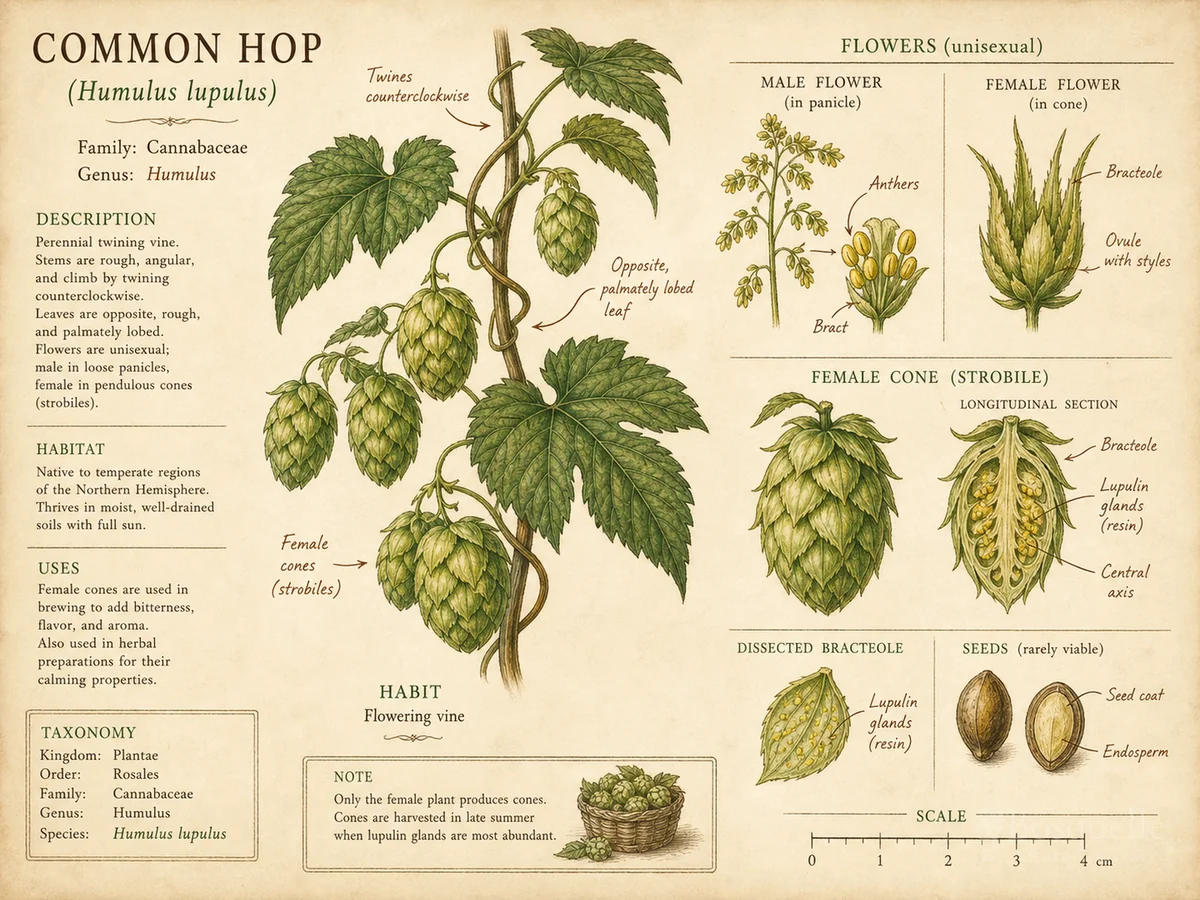
Hops climb as bines — the stem twines clockwise and clings with stiff hairs, not grape-style tendrils. [1] Give them full sun and soil that stays moist but drains. A home frame around 14 to 20 feet is enough; shorter is fine if a wall of cones is not the goal. [2] Install the frame before the shoots run. Contain the crown with edging so runners stay in the bed. [3]
Do hops need a trellis?
Yes — a sturdy pole, cable, or pergola. Decorative string and a weak fan trellis often fail under leaf weight. Home frames around 14 to 20 feet of climb are common.
Will hops take over my garden?
They can. Edge the bed or set a root barrier, train a few shoots, and cut spent stems after frost. Skip hops if you will not cut them back.
How much sun do hops need?
Full sun is best for dense cover and cones. Light shade slows the climb; it does not make hops a small plant.
Train a few bines clockwise, then cut back after frost
Year one is root establishment. Leave the foliage on so the crown can store energy. Cones improve in year two or three. [4]
- When shoots are about 1 to 3 feet long, keep 2 to 4 strong bines and remove the extras.
- Wrap those bines clockwise onto twine or the pole. Check weekly in peak spring.
- After they are trained, strip leaves on the lower 1 to 3 feet if the canopy stays wet — that airflow cuts mildew pressure.
- Pick cones when they feel dry and papery and smell resinous, usually late summer. Skip the pick if you only want the screen.
- After frost, cut spent bines to the crown. Mark the base so spring shoots are not weeded out.
Do hops come back every year?
Yes. The crown and rhizomes resprout each spring. Top growth dies back; cut spent bines after frost.
How fast do hops grow?
Very fast in sun with water — inches a day in peak growth once the crown is established. Plan the frame before you plant.
When do I cut hops back?
Select shoots in spring. Cut spent bines to the crown after frost. In year one, leave the foliage on so the roots can build.
When do you harvest hops?
Late summer, when cones feel dry and papery and smell resinous. Timing varies. Ornamental growers can skip the pick and still cut bines after frost.
If the frame sagged under leaf weight, rebuild it sturdier before next spring — do not add fertilizer to a bine on weak string.
FAQ
Can I grow hops in a pot?
A large, heavy pot with drainage and a strong stake can hold hops for a season if you water often. Open ground with a real frame is the long stay.
What else can I plant nearby?
Other full-sun plants that will not sit under a collapsing frame. Skip drought mats that share one dry hose zone with a thirsty hop run.
What pests hit hops?
Aphids and spider mites show up in hot, dry spells. Downy mildew follows wet foliage. See the aphids hub if sticky leaves need a control step. Train for air and strip the lower leaves first.
Are hops toxic to dogs?
Yes if chewed. Keep pets from eating cones or leaves. The rough bine can also irritate skin — wear sleeves when you train.
Can I brew with garden cones?
Female cones can go into a home brew, but this page stops at garden culture — not recipes or a kiln schedule. Buy female clones if cones matter.
Related guides


Recommended plants


References
- [1] Oregon State University Extension -
https://extension.oregonstate.edu/catalog/em-9115-growing-hops-home-garden - [2] NC State Extension Gardener -
https://plants.ces.ncsu.edu/plants/humulus-lupulus/ - [3] Penn State Extension -
https://extension.psu.edu/growing-hops-at-home - [4] Utah State University Extension -
https://extension.usu.edu/yardandgarden/research/hops-in-the-garden
This note is part of Humulus Guides.
More first-season notes by plant are gathered in How to Grow Guides.
Updated: Reviewed by Bosquelle Editors