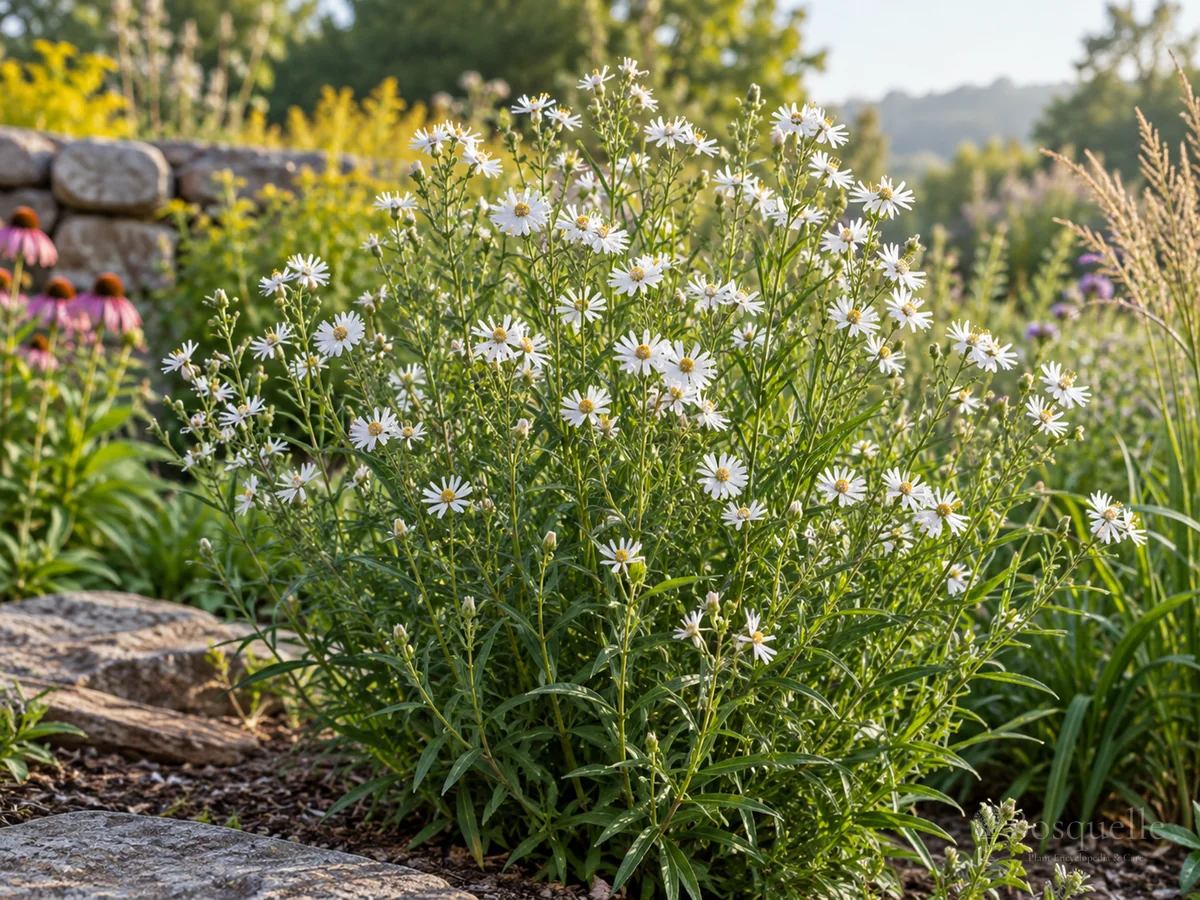
Grow flaxleaf whitetop aster in full sun and sandy, well-drained soil, and water it through the first year while the clump settles. Flaxleaf whitetop aster is Ionactis linariifolia, also called stiff aster — a short eastern daisy for dry ground, not a garden aster and not flax.
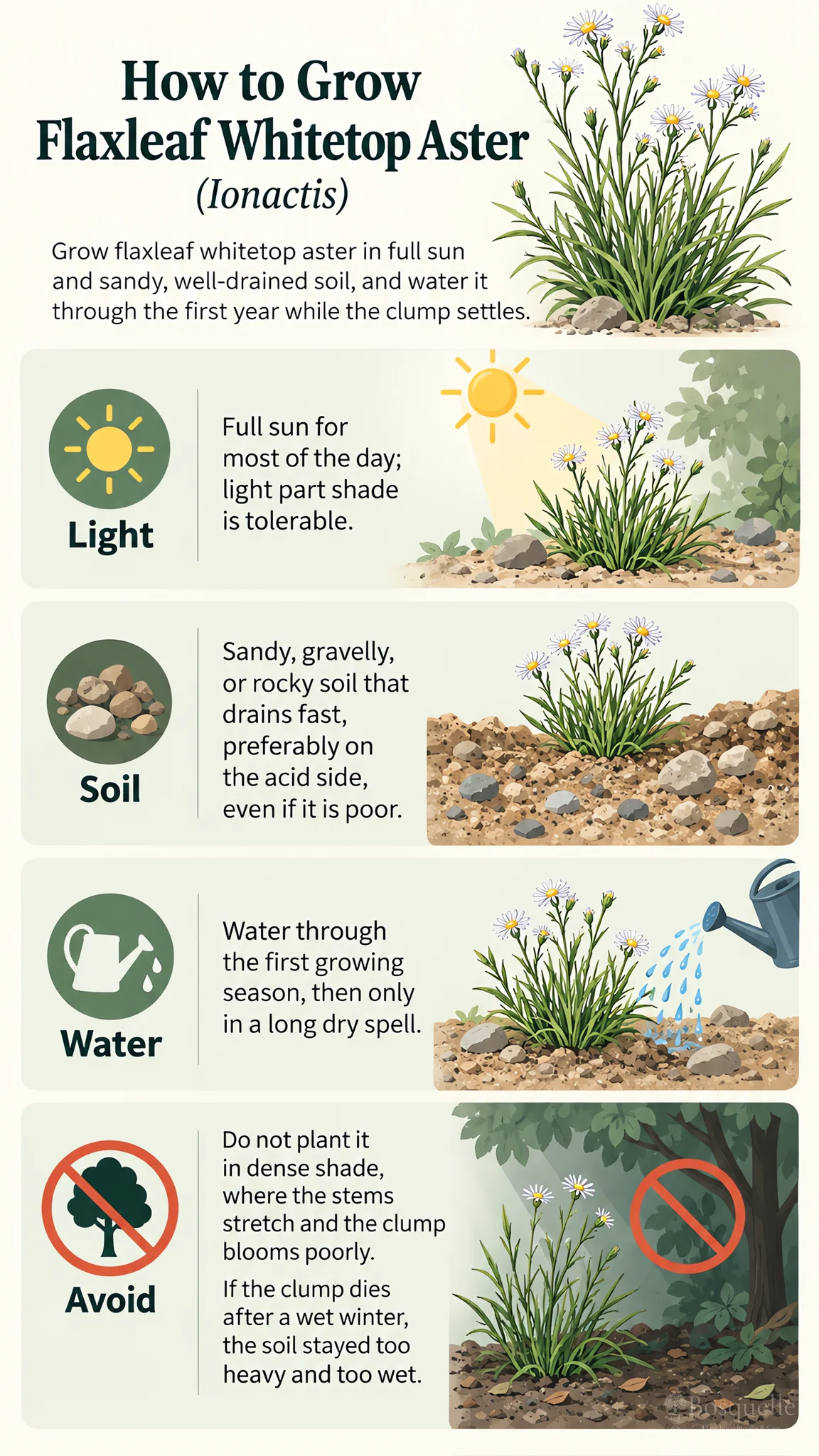
Give it full sun, sandy soil, and little water once it is established
| Factor | Recommended | Avoid |
|---|---|---|
| Light | Full sun for most of the day; light part shade is tolerable | Do not plant it in dense shade, where the stems stretch and the clump blooms poorly |
| Soil | Sandy, gravelly, or rocky soil that drains fast, preferably on the acid side, even if it is poor | Do not plant it in heavy clay, rich damp ground, or a wet low spot, which rots the roots |
| Water | Water through the first growing season, then only in a long dry spell | Do not keep the soil soggy after the plant is established |
| Feed | Little or none — lean ground keeps the clump compact | Do not feed it richly, because soft growth needs more water and then rots |
Flaxleaf whitetop aster is a compact clump of stiff stems from a thickened woody rootstock, native to dry sandy and rocky ground in the eastern and central United States. Give it open sun and soil that sheds water, the same kind of ground it grows on in pine barrens and dry clearings. [1] Sandy or rocky soil, even poor soil, is what it wants. A little afternoon shade is fine; deep shade is not. Once the clump is down, it gets by on very little water. [2] Heavy clay and rich, moist beds are the main reason plants die, especially through a wet winter. Lean ground is a help here, not a problem. [3]
Is flaxleaf whitetop aster drought tolerant?
Yes, once the clump is established. Water it through the first growing season, then it gets by on rainfall and needs water only in a long dry spell.
Plant plugs 10 to 12 inches apart in spring, and water the first year
Set nursery plants in spring, after the soil has warmed, in a full-sun bed that drains. Keep the crown at the same soil line it had in the pot, firm the backfill, and water it in the same day. Each young plant sends up only one or two stems at first, so space them about 10 to 12 inches apart and let the rootstock fill the gaps over time. [4] Water through that first growing season while the clump settles; after that, water only in a long dry spell.
- Pick a full-sun, fast-draining bed of sandy or rocky soil.
- Dig a hole the size of the pot and set the crown at the same soil line it had in the container.
- Space plants about 10 to 12 inches apart, then firm the soil so there are no air pockets around the roots.
- Water thoroughly the same day, and keep the soil just moist through the first growing season while the clump settles.
Why plant them so close?
A young plant makes only a few stems. Close spacing fills the gap while the rootstock sends up offshoots, so the patch looks like a low, even clump instead of scattered sticks.
Leave the seed heads standing, or cut the dead stems in late winter
Flaxleaf whitetop aster carries lavender-blue to purple, pink, or white daisy heads with yellow disks from late summer into fall, on stiff stems about 1 to 2 feet tall in most gardens. The needle-like leaves stay green through the season and often bronze or turn purple after the flowers fade. Leave the fluffy seed heads if you want birds and a few volunteers next year. To raise a batch on purpose, see Growing Flaxleaf Whitetop Aster From Seed. Snip spent heads if you want a tidier clump and fewer seedlings. When the stems are brittle, cut them down in late winter or early spring as new growth starts at the base. Pair it with other short, dry-ground natives so taller neighbors do not shade the clump — butterfly milkweed, spotted beebalm, and little bluestem share the same sun and sand.
- Leave some ripe, fluffy heads standing if you want seed for birds and a few volunteers.
- Snip spent heads through bloom only if you want a tidier clump and fewer seedlings.
- Cut the dead stems to the crown in late winter or early spring, as new growth starts.
When does flaxleaf whitetop aster bloom?
From late summer into fall, with lavender-blue to white daisy heads on a stiff, short clump. Leave some heads for seed, or snip them if you want a tidier plant.
Not a garden aster — and not flax
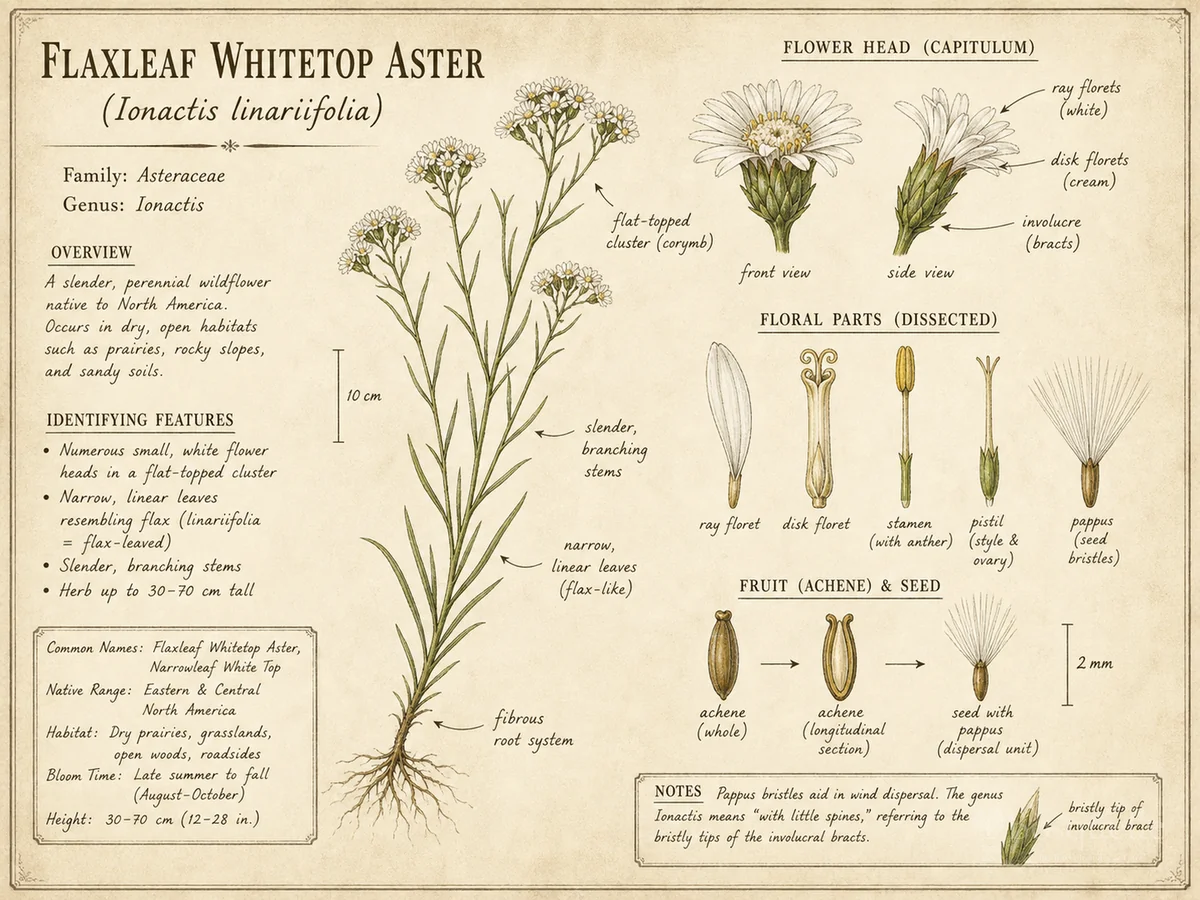
This plant is a short, unbranched clump with stiff, needle-like leaves, not a tall branching garden aster. Garden asters sold for fall borders are usually Symphyotrichum; if that is what you have, read How to Grow Asters instead. Aromatic aster is the common lookalike with many side branches; this plant stays mostly unbranched, with leaves packed so densely they can look whorled.
The flax in the name is only the leaf shape. True flax is Linum, a different plant — see How to Grow Flax. Older tags that say Aster linariifolius, or the spelling Ionactis linariifolius, are this same species, not a second kind.
Is flaxleaf whitetop aster the same as a garden aster?
No. Garden asters are usually Symphyotrichum, with branched stems. This is Ionactis, a short, stiff clump with needle-like leaves.
If the clump dies after a wet winter, the soil stayed too heavy and too wet. Put the next plants in full sun and sandy ground, and water only through the first year.
FAQ
Is there more than one kind of flaxleaf whitetop aster?
Ionactis linariifolia is the plant here, also listed as Ionactis linariifolius and, on older tags, Aster linariifolius — the same wildflower. Other Ionactis species grow in the West, but they are not in this catalog.
Can I grow it in a pot?
Yes, in a pot with gritty, fast-draining mix in full sun. Water when the top of the mix is dry, and do not let the pot sit in a saucer of water.
Will it come back after winter?
Yes, from the crown, as long as the soil drains. Wet, heavy ground through winter is what kills it, not ordinary cold.
Related guides

Recommended plants
References
- [1] NC State Extension -
https://plants.ces.ncsu.edu/plants/ionactis-linariifolia/ - [2] Lady Bird Johnson Wildflower Center -
https://www.wildflower.org/plants/result.php?id_plant=IOLI2 - [3] US Perennials -
https://www.usperennials.com/aster-linariifolia-ionactis-stiff-aster/ - [4] Izel Native Plants -
https://www.izelplants.com/ionactis-linariifolius-flaxleaf-whitetop-aster/
This note is part of Ionactis Guides.
More first-season notes by plant are gathered in How to Grow Guides.
Updated: Reviewed by Bosquelle Editors