
Indoor Ficus wants bright indirect light, one settled spot, and water after the mix dries slightly. It is a tropical indoor tree, not a shade fern and not a cactus. Overwatering in low light is the usual cause of rot. Fertilizer does not fix a dark corner or a full saucer. Wipe dust off large leaves. Decide whether you bought fiddle-leaf fig, rubber plant, or weeping fig — they share that room, not one leaf size. Leaf drop after a move is stress, not always a dead plant. It is not an edible fig tree and not a baby rubber plant (Peperomia). Compare kinds on Types of Ficus.
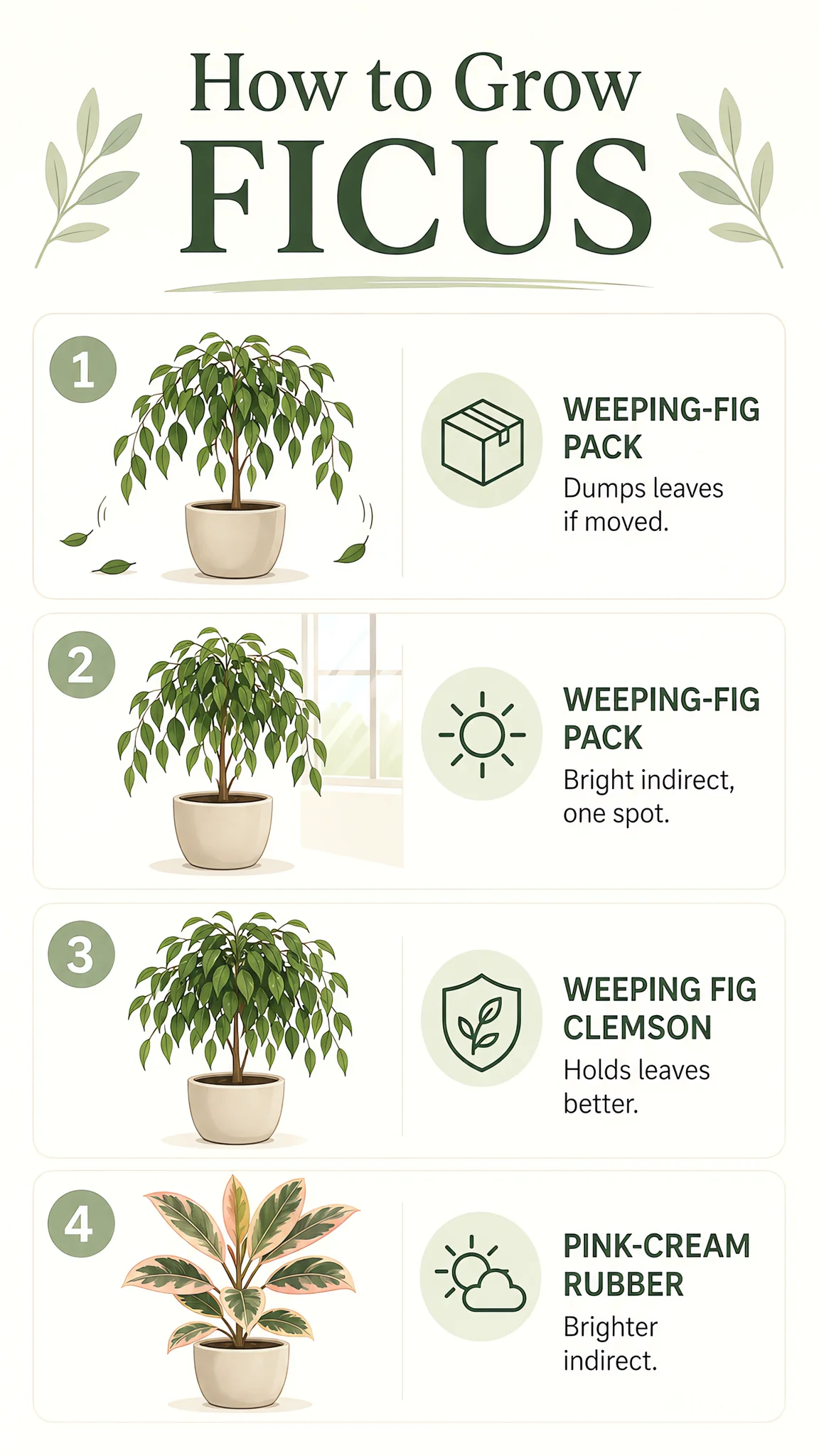
Bright indirect light, one spot, and dry-slightly water
| Factor | Recommended | Avoid |
|---|---|---|
| Light | Bright indirect; some morning sun on fiddle and rubber | A weekly room shuffle; hot afternoon glass; a dark stairwell |
| Site | One spot away from vents and cold drafts | Heat vents, AC blasts, a door that slams cold air |
| Water | When the top of the mix feels barely dry; empty the saucer | Standing water; flooding because three leaves dropped |
| Mix | A general houseplant mix that drains | Garden soil; a cachepot you never lift after watering |
| Winter | Same window; less water as growth slows | Cold drafts plus a wet pot |
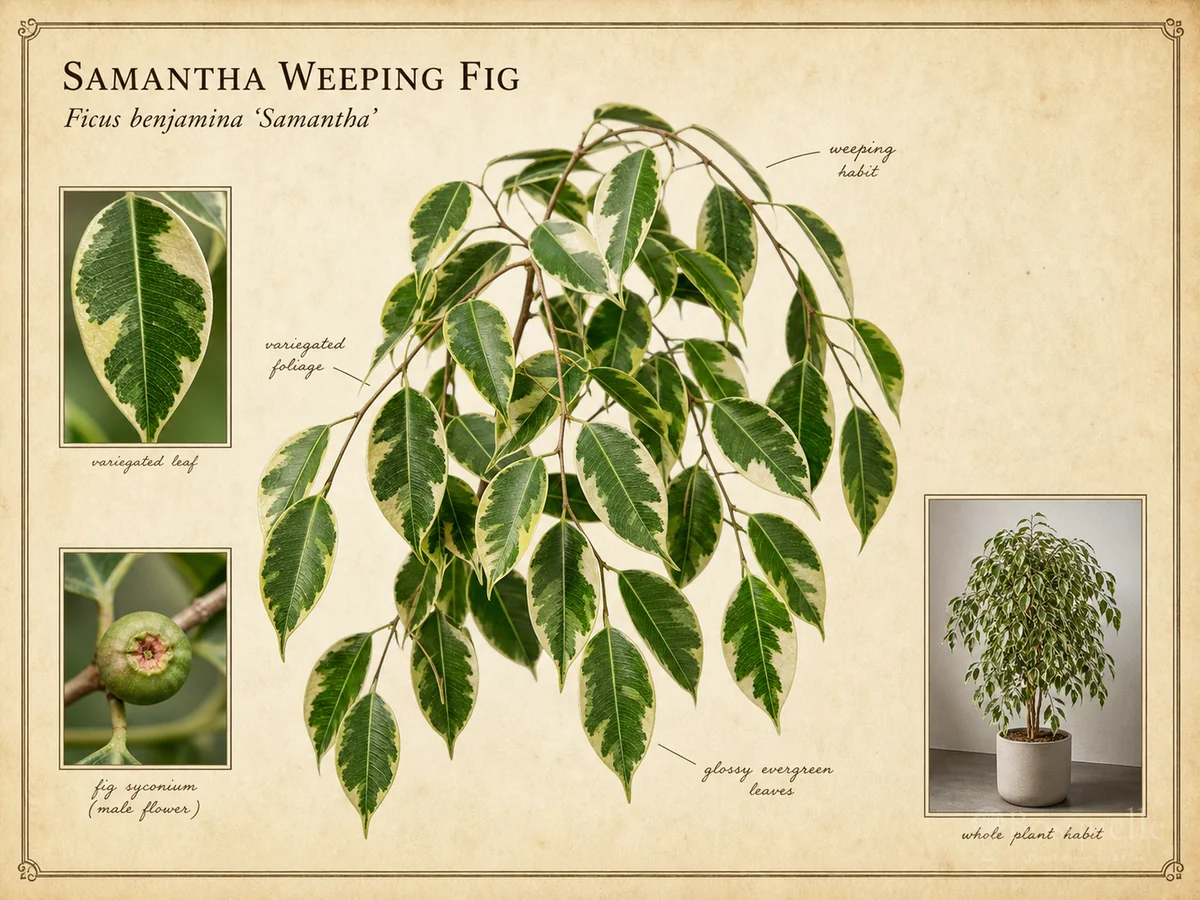
Clemson Extension wants weeping figs in bright indirect or curtain-filtered light, nights about 65–70°F and days about 75–85°F. Keep the mix evenly moist in growth, then let it dry slightly in winter. Never leave water in the saucer. Rubber plants take east-window morning light, dry slightly between waterings, and should stay above about 55°F without sudden drops. North Carolina Extension’s fiddle-leaf page wants bright indirect light, a moist well-drained mix, and protection from afternoon sun.
Pick a spot and leave it. Clemson’s weeping-fig rule is the one to keep: these plants shed when you move them, repot them, or park them on a draft. If light and water are steady, new growth returns. Do not chase the plant around the house every weekend to “find better light.” Weeping figs like a little more humidity than a rubber plant; group plants or use a pebble tray rather than a mist that never dries on the blade. Wipe dust off large fiddle leaves so light can reach the surface (Clemson Extension).
- Water when the top of the mix feels barely dry. Soak until it runs from the holes, then empty the tray.
- Wipe large fiddle leaves with plain water so light reaches the blade (Clemson Extension).
- Feed in spring and summer: monthly or every two months on a weeping fig; rubber plants every two weeks in active growth, less in low light. Skip heavy feed in winter and never fertilize a wet, cold pot.
- Raise humidity with a pebble tray or a group of plants. A daily mist that sits on the blade is weaker than even room moisture.
- In winter, keep the same window and give less water as growth slows. Rubber should stay above about 55°F.
- In summer, Clemson Extension will let a weeping fig sit outside in morning sun and afternoon shade, then come in before cool nights. That is a porch season, not an orchard.
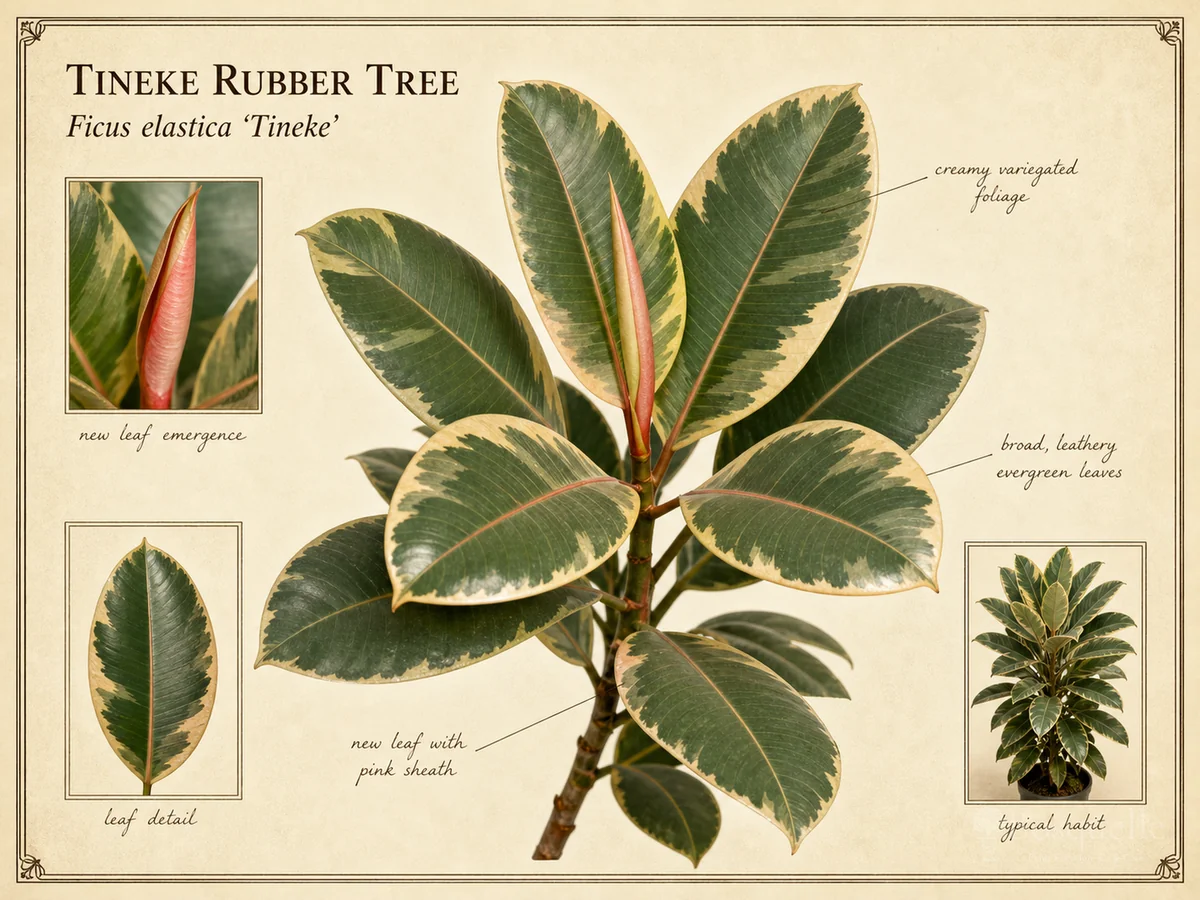
- Turn a one-sided rubber so the window face does not bleach. Cream margins fade first on a dim shelf — step toward brighter indirect, not into hot afternoon glass.
- Keep nights in the mid-60s °F and days in the mid-70s to mid-80s °F when you can (Clemson Extension on weeping fig). A cold tile floor plus a wet pot drops leaves even when the window looks bright.
How much light does a Ficus need?
Bright indirect light. Rubber plants forgive lower light better than a fiddle-leaf. Hot afternoon glass scorches. A dark stairwell drops leaves and stretches internodes.
Leaf drop, brown spots, and sap — what to check
The most common weeping-fig problem is leaf drop (Clemson Extension). Overwater, underwater, drafts, low light, and a new room all do it. A few leaves after a move, then new growth: wait. Many leaves plus a wet pot: dry the mix and drain. Many leaves plus a bone-dry brick: then water thoroughly.
- Move or draft — wait in one bright spot. New growth is the recovery, not a bigger pot the same week.
- Wet mix / full saucer — empty the tray, let the mix dry slightly, check drain holes.
- Bone-dry mix — water until it runs, then return to the dry-slightly rhythm. Do not water a splash every day after that.
- Brown spots on a fiddle-leaf — North Carolina Extension lists overwater, underwater, and temperature swings from heating or cooling vents. Leaf scorch is too much direct sun. Check the mix before you add a fungicide.
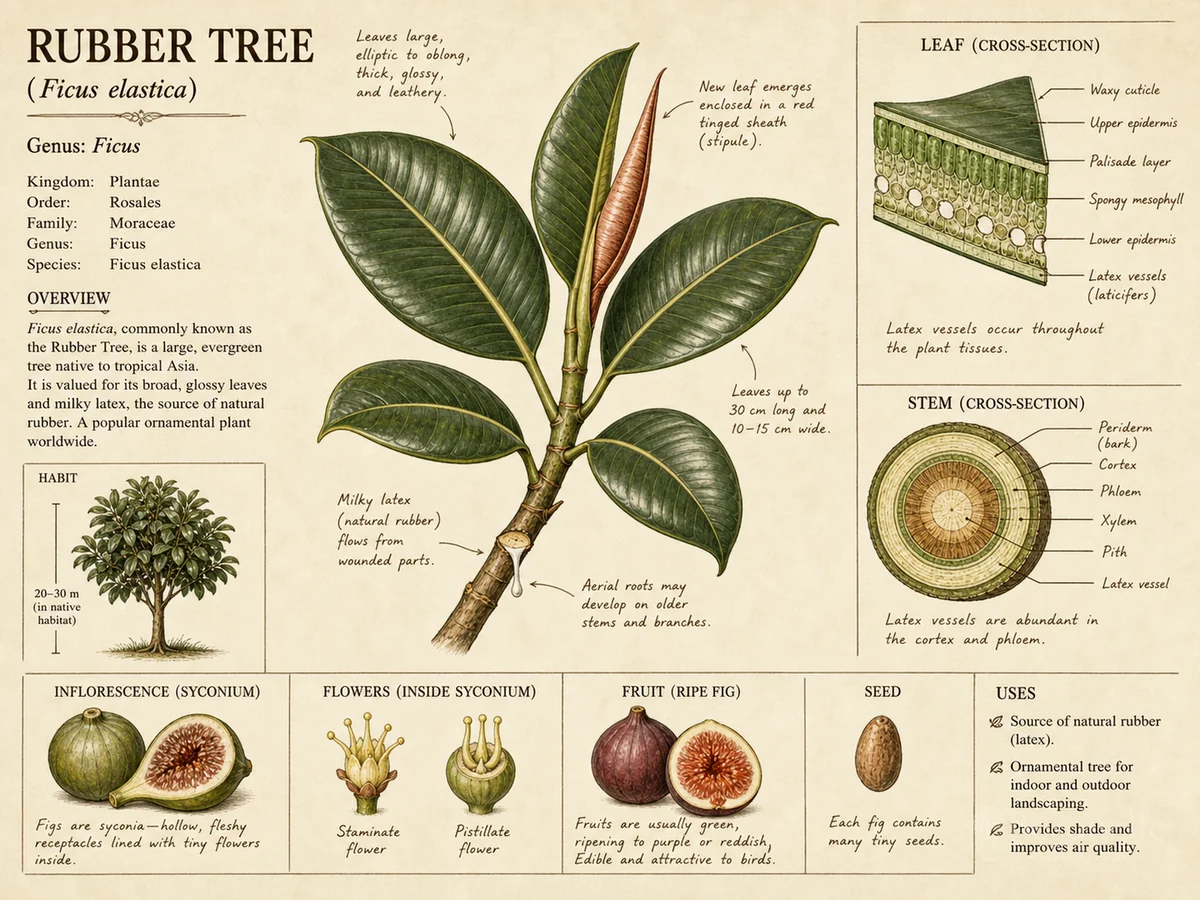
- Milky sap — irritates skin and is a problem if eaten (Clemson Extension rubber plant · North Carolina Extension — ficin). Gloves when you prune. Keep chew range clear for pets and kids.
- Spider mites, scale, mealybugs — wipe undersides, isolate, and fix wet mix or a draft before you shop a spray. Brown tips from a salt crust: flush the mix and ease off feed.
Why is my Ficus dropping leaves?
Often a move, a draft, or a wet-dry swing. Weeping figs are famous for it. If the mix and light are steady, wait for new growth. Do not trash the plant the week it came home.
Do not fertilize a yellow plant in wet mix, or a plant that just dropped leaves. Check drain and drafts first. A light feed only after you see a new leaf. Cut for height or a broken branch, not to force a fiddle to branch like a hedge in midwinter. Nearby plants should share a warm, bright-indirect room — do not pot a fiddle in the same dish as a fern that wants wet feet. Scale on the undersides looks like dirt; wipe and isolate. A bigger pot will not cure a pest.
Fiddle vs rubber vs weeping — three indoor jobs
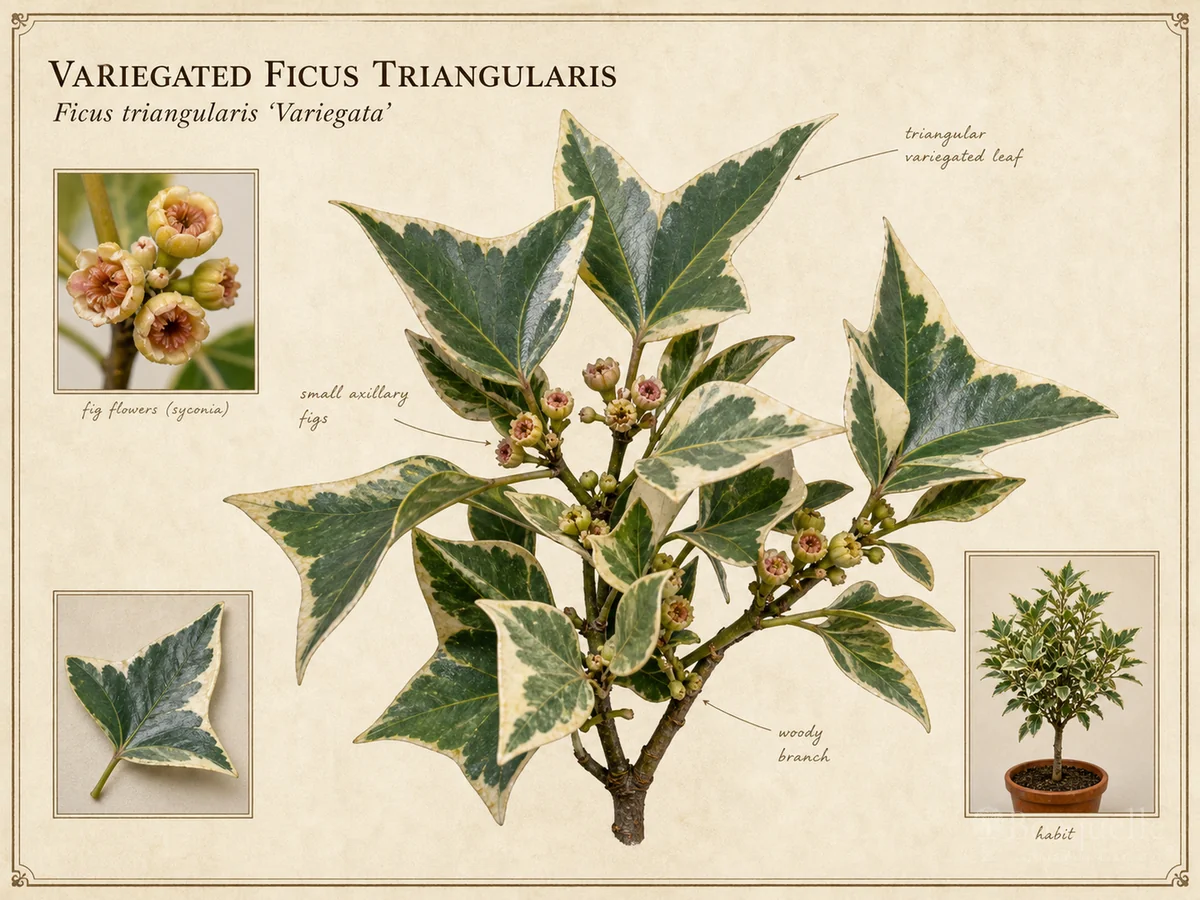
fiddle-leaf fig is the dramatic violin leaf: bright indirect, dust the blades, keep the mix draining. rubber plant is the beginner Clemson Extension names — leathery, more forgiving of lower light. weeping fig is the office tree that drops leaves when you rearrange the furniture. Creeping fig is a vine you train on a wall, not a floor tree. Edible figs want sun for fruit, not a dim hallway lyrata calendar.
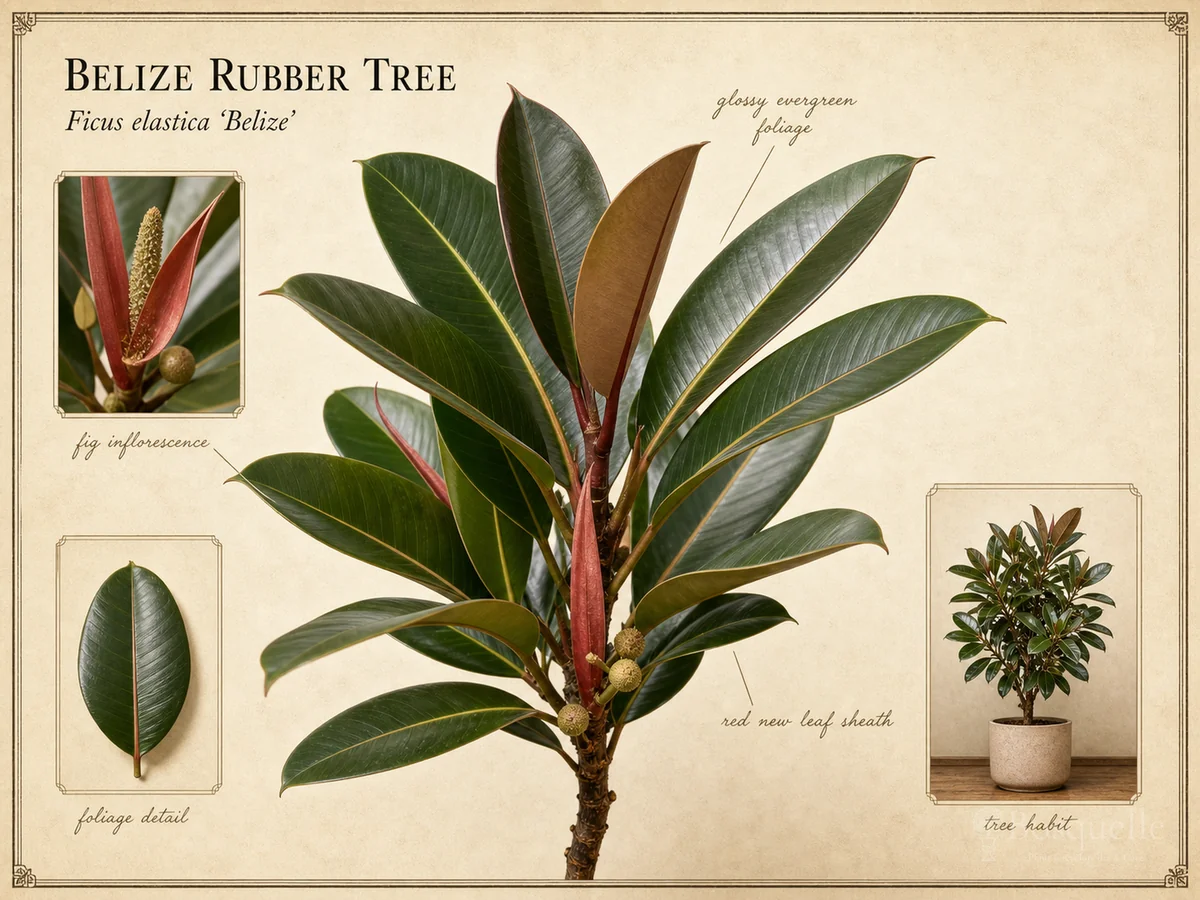
- Variegated rubber such as Tineke and Belize needs brighter indirect light than a dark green Abidjan or the cream fades.
- Weeping packs such as Danielle hold leaves better than a stressed species plant (Clemson Extension names Danielle as resistant to drop).
- A braided weeping-fig stem is a training style, not a different species. A six-foot fiddle needs a heavy floor pot.
- If new leaves are half the size of the old ones, add light before fertilizer, or repot if the pot is packed (Clemson Extension: small new leaves when crowded).
If you only have a cold, dark stairwell, skip the fiddle or accept drop and stretch. Rubber is the kinder indoor tree. Landscape stranglers and banyans are outdoor trees in frost-free climates — they are not a living-room fiddle you can force by watering more. A teacup on a dark desk will not grow a tree. Edible Brown Turkey wants sun and fruit, not this indoor hallway calendar. Finish the browse on Types of Ficus.
Pots, kinds, and next jobs
- Match indoor tree versus creeping vine versus edible fig on Types of Ficus before you expect fruit from a fiddle-leaf. Baby rubber plant is a Peperomia.
- Air-layer a woody stem, or take a summer cutting, on How to Propagate Ficus. A fiddle leaf with no node in a jar will not become a tree.
- Repot in late winter or early spring — not the same week you moved rooms — on How to Repot Ficus. One size up, slightly snug, draining mix.
- A general houseplant mix that drains is enough. Garden soil compacts and stays sour in a pot. A cachepot is fine if you lift the grower after you water.
- Weeping figs like a little more humidity than a rubber plant. A pebble tray or a kitchen helps more than a daily mist.
- A six-foot fiddle needs a heavy floor pot that will not tip. Do not pot a fiddle in the same dish as a fern that wants wet feet.
FAQ
How much light does a Ficus need?
Bright indirect light. Rubber plants forgive lower light better than a fiddle-leaf. Hot afternoon glass scorches.
Why is my Ficus dropping leaves?
Often a move, a draft, or a wet-dry swing. Weeping figs are famous for it. Wait for new growth if mix and light are steady.
How often should I water Ficus?
When the top of the mix feels barely dry. Empty the saucer. Water less in winter as growth slows.
Is Ficus sap toxic?
The milky sap irritates skin and is a problem if eaten. Wear gloves when you prune. Keep chew range clear for pets and kids.
Is a fiddle-leaf fig the same as an edible fig?
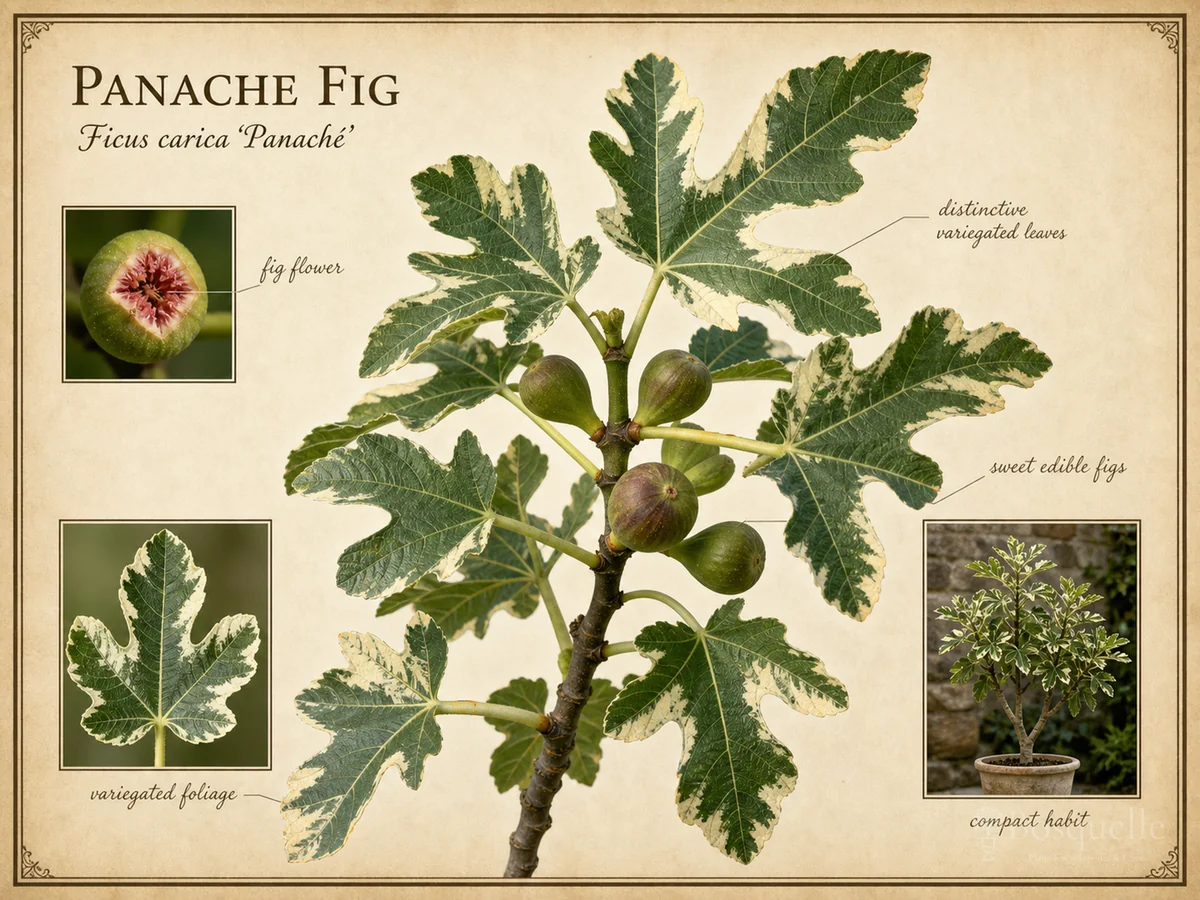
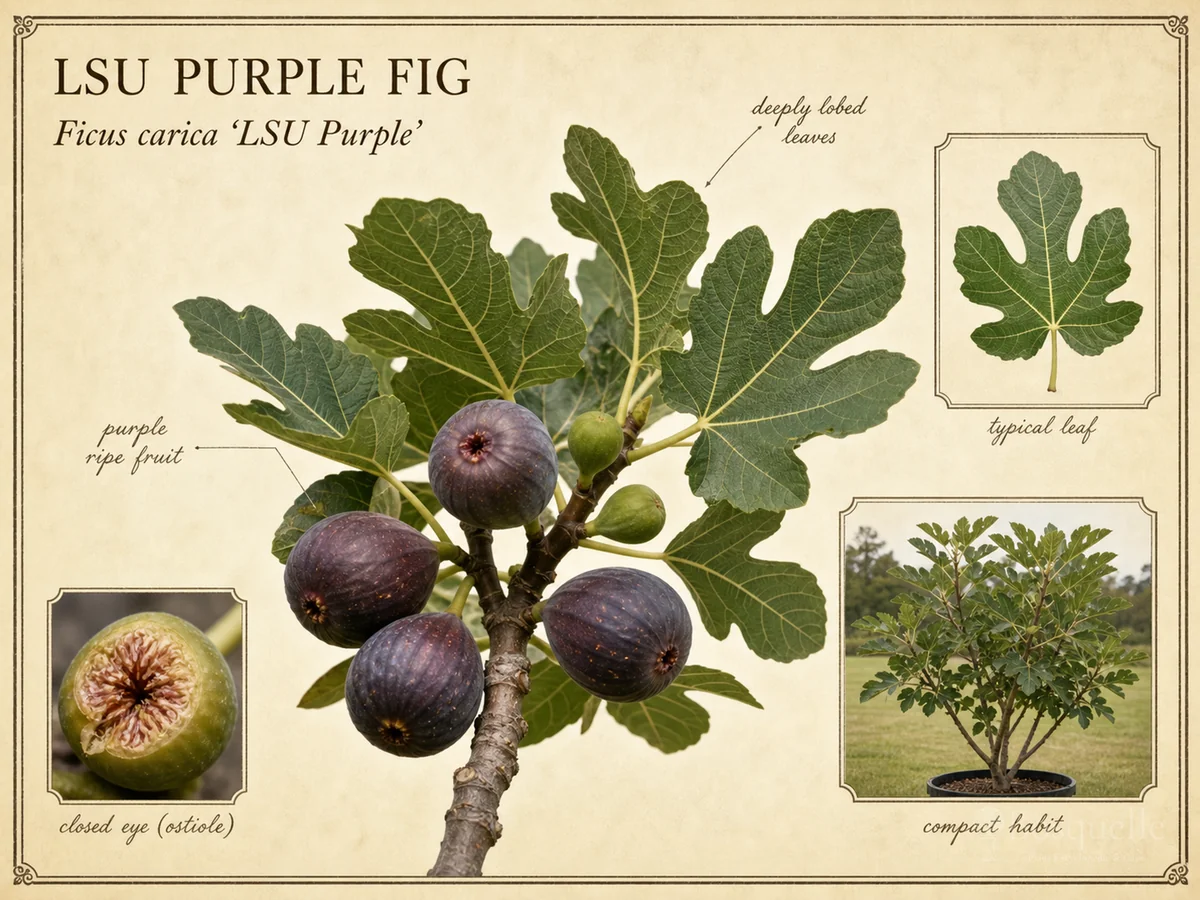
No. Fiddle-leaf is Ficus lyrata, grown for foliage. Edible figs are Ficus carica. Types of Ficus sorts the jobs.
Can I move my Ficus outdoors in summer?
Clemson Extension allows a weeping fig in morning sun and afternoon shade, then back inside before cool nights. Do not leave it in hot afternoon glass.
Should I mist Ficus?
Even room humidity helps more than a daily mist on the blade. A pebble tray or grouping plants is the usual indoor fix.
When should I repot?
Late winter or spring when roots circle or a tall plant tips — not the same week you moved rooms. How to Repot Ficus owns the hole.
How do I get more plants?
Air-layer a woody stem or take a summer cutting. How to Propagate Ficus owns those steps. Wear gloves for sap.
Is baby rubber plant a Ficus?
No. Baby rubber plant is a Peperomia. Rubber plant here means Ficus elastica.
Related guides


Recommended plants












This note is part of Ficus Guides.
More first-season notes by plant are gathered in How to Grow Guides.
Updated: Reviewed by Bosquelle Editors