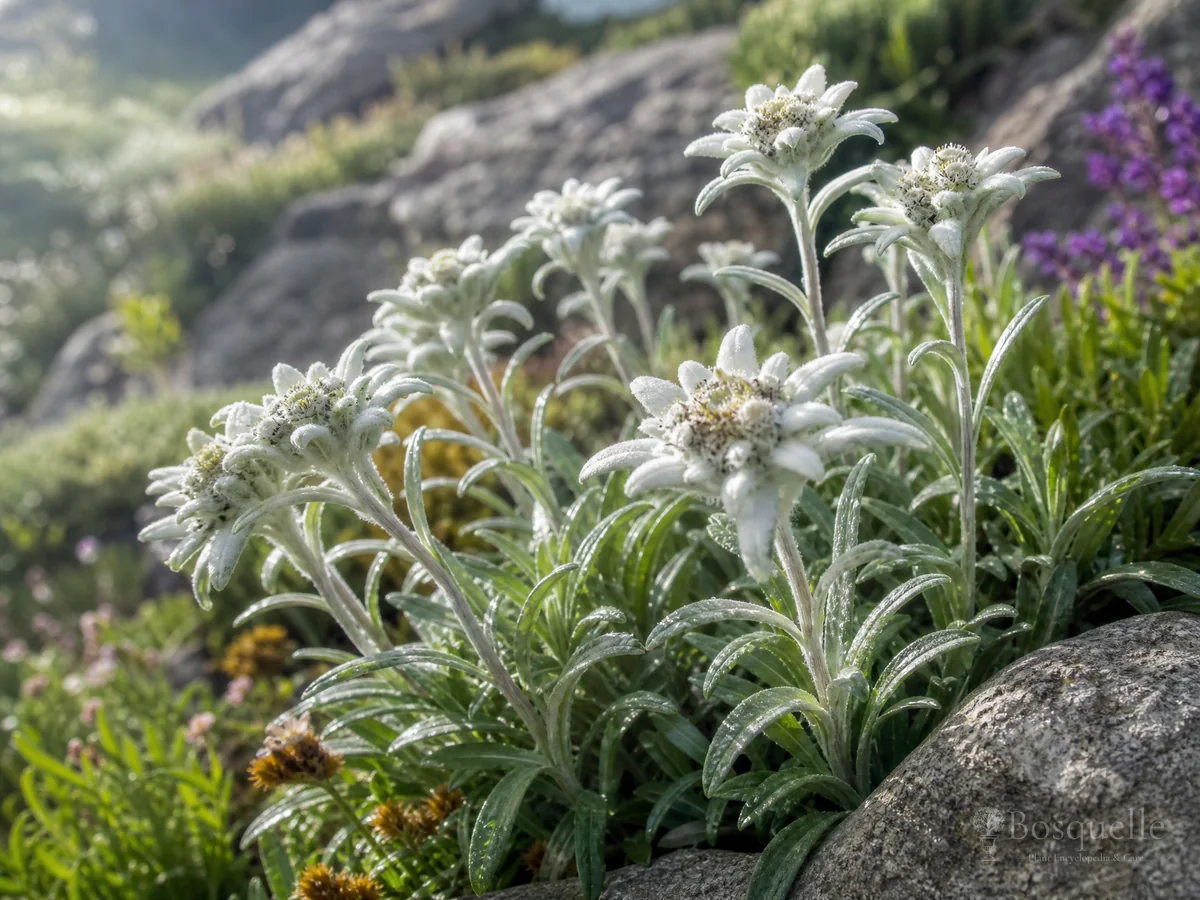
Grow edelweiss in full sun and gritty, well-drained soil, and water it little once the clump is set. Edelweiss is Leontopodium alpinum, also listed as Leontopodium nivale subsp. alpinum — a short alpine daisy, not pearl everlasting.

Give it full sun, gritty soil, and little water once it is set
| Factor | Recommended | Avoid |
|---|---|---|
| Light | Full sun for most of the day | Do not plant it in shade, where the clump stretches and the bracts stay dull |
| Soil | Gritty, lean, well-drained ground — chalk, sand, or a scree mix | Do not plant it in rich, heavy, or winter-wet soil, which rots the crown |
| Water | Water when the top inch is dry through the first season, then only in a long dry spell | Do not keep the crown soggy, and do not add extra water in winter |
| Feed | Little or none — lean ground keeps the clump compact | Do not feed it richly, because soft growth flops and then rots |
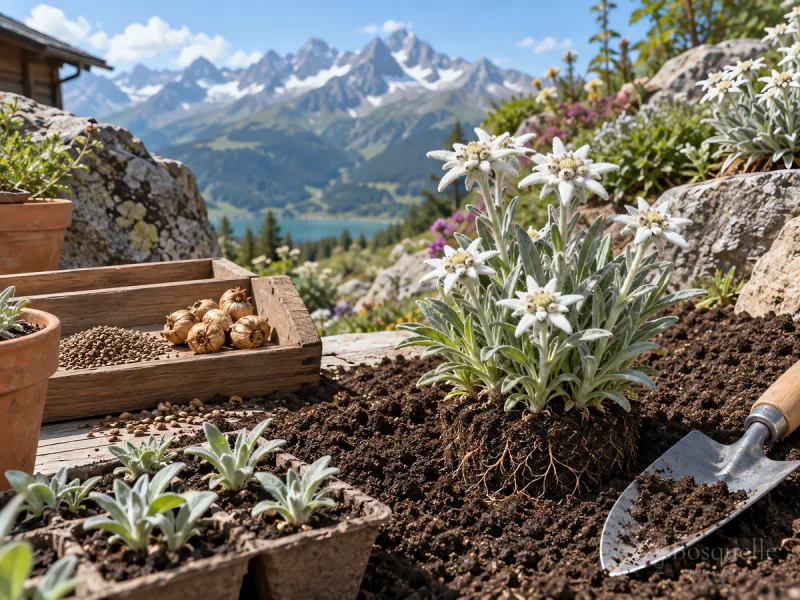
Edelweiss is a low alpine clump of narrow gray-green leaves, about 6 to 12 inches tall, native to rocky limestone mountains in south-central and southeastern Europe. Give it open sun and ground that sheds water, the same kind of scree it grows on in the wild. [1] Gritty, nutrient-poor soil is what it wants. Water when the top inch is dry through the first season; after that it gets by on very little. [2] Once the plant is established, extra moisture in winter is the usual reason the crown rots. Lean ground is a help here: a rich, damp bed grows a softer plant that fails in wet weather. [3] It does best where summers stay cool. In a hot, humid garden the woolly bracts often brown and the clump fades after a season. [4] When you have a nursery plant, set it in that grit in spring — see Planting Edelweiss.
Does edelweiss need much water once it is set?
No. Water it through the first season when the top inch is dry, then only in a long dry spell. Stop extra water in winter so the crown stays dry.
Divide the clump every few years so it keeps going
Edelweiss is a short-lived perennial in gardens. A clump that is happy may last a few seasons, then thin. Lift and split it in spring, every two or three years, so you always have a vigorous piece with its own roots. Replant the divisions in the same gritty sun. Water once to settle them, then return to the dry plan. To raise a new batch from seed instead, see Growing Edelweiss From Seed.
- In spring, when new leaves show, lift the clump with a hand fork so the fibrous roots come up intact.
- Pull or cut it into pieces that each have healthy roots and at least one strong shoot. Discard the old, woody center.
- Replant the pieces at once in gritty, well-drained ground, with the crown at or just above the soil.
- Water once to settle the grit, then let the surface dry before you water again.
Will edelweiss come back after winter?
Yes, from the crown, if the soil drains. Ordinary cold is not the problem. Wet, heavy ground through winter is what kills it.
Deadhead the woolly stars after they fade, or leave seed
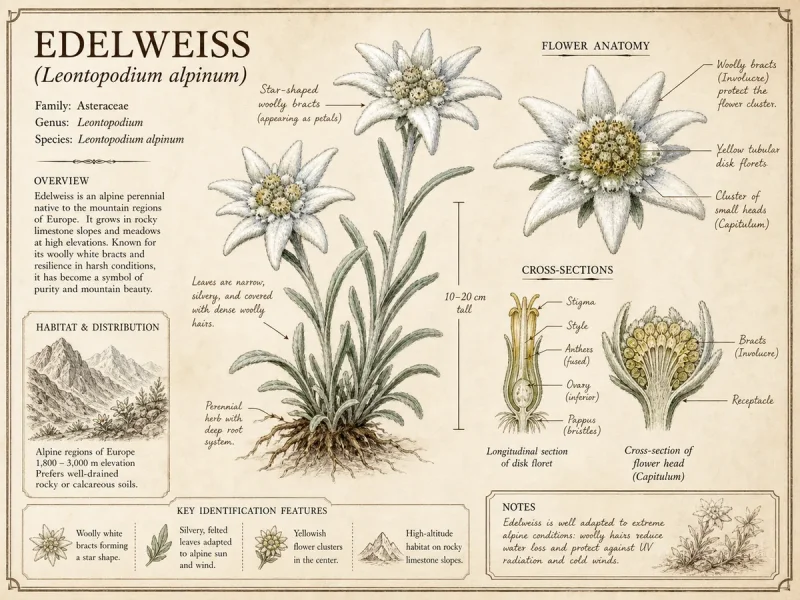
The showy white star is not a petal. It is a rosette of densely woolly bracts around small yellow disk florets, carried just above the leaves in late spring and early summer. You do not need to prune the plant. Snip spent stems back to the leaf rosette if you do not want volunteers. Leave some heads standing if you want it to self-sow in a cool, dry garden. Cut stems in their prime if you want a small dried bunch. Plant it with other short rock-garden plants that share the same sun and grit, so taller neighbors do not shade the crown — see How to Grow Hens and Chicks and How to Grow Saxifrage.
When does edelweiss bloom?
In late spring and early summer, as woolly white stars over gray-green leaves. Deadhead if you do not want seed; leave heads if you do.
Not pearl everlasting — and not pussytoes
Edelweiss is a short alpine clump with a star of woolly bracts. Pearl everlasting is Anaphalis, a taller plant with many small papery heads in a cluster. If that is the shop tag, read How to Grow Pearl Everlasting instead.
Pussytoes is Antennaria, a low silvery mat with smaller clustered heads. See How to Grow Pussytoes. Helichrysum is a different woolly daisy — see How to Grow Helichrysum. Lady's mantle is Alchemilla, a soft lime-green foliage plant; some lists reuse that name for edelweiss, but it is not this plant. Read How to Grow Lady's Mantle if that is what you bought. Older tags that say Gnaphalium leontopodium are this same edelweiss, not a second kind.
Is edelweiss the same as pearl everlasting?
No. Pearl everlasting is Anaphalis, taller, with papery clustered heads. Edelweiss is a short alpine clump with one woolly star per stem.
If the clump turns brown after a wet winter, the soil stayed too heavy and too wet. Put the next plants in full sun and grit, and stop extra water once they are set.
FAQ
Is there more than one kind of edelweiss?
Leontopodium alpinum is the plant here, also listed as Leontopodium nivale subsp. alpinum — the same wildflower. Named garden forms such as Matterhorn exist, but they are not in this catalog.
Can I pick edelweiss in the mountains?
Do not pick wild plants. Edelweiss is protected in several Alpine countries. Grow it from nursery stock or from seed.
Does it need a winter cover?
It does not need cover from cold. It needs the crown to stay dry. Gravel around the neck, and no extra water, are enough in a draining bed.
Related guides

Recommended plants
References
- [1] Royal Horticultural Society -
https://www.rhs.org.uk/plants/353775/leontopodium-nivale-subsp-alpinum/details - [2] Gardener's Path -
https://gardenerspath.com/plants/flowers/grow-edelweiss/ - [3] Gardening Know How -
https://www.gardeningknowhow.com/ornamental/flowers/edelweiss/edelweiss-in-the-garden.htm - [4] Perennials.com -
https://www.perennials.com/plants/leontopodium-alpinum.html
This note is part of Leontopodium Guides.
More first-season notes by plant are gathered in How to Grow Guides.
Updated: Reviewed by Bosquelle Editors