
Grow pussytoes in full sun, on lean ground that drains after rain. Pussytoes is the name most gardeners type.
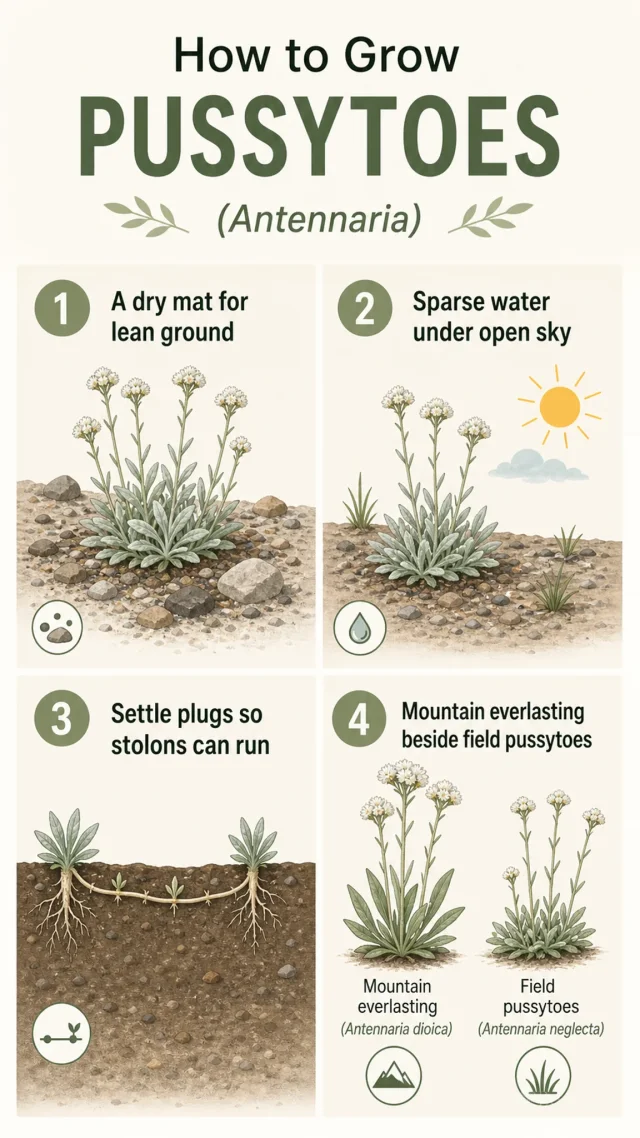
Full sun, lean soil, and drainage after rain
| Factor | Recommended | Avoid |
|---|---|---|
| Light | Full sun; light shade is tolerable on native mats | Deep wet shade under dense trees |
| Soil | Lean grit, sand, or rocky ground that dries between rains | Fertile humusy beds and clay that stays wet |
| Water | Settle new plugs, then sparse soaks in long drought | A weekly soak on soggy soil |
| Feed | None. Lean soil keeps the silver wool tight | Lawn fertilizer next to the mat |
Site for sun and sharp drainage first. Mountain everlasting (A. dioica) especially slumps in the hot, humid deep South. [1] Rich, poorly drained ground is the usual fail, not a missed watering. [2] Skip fertilizer — nitrogen softens the woolly silver look. [3]
How much sun do pussytoes need?
Full sun. Light shade is tolerable on native mats. Deep wet shade stretches the wool and invites rot.
Can pussytoes grow in wet soil?
No. Wet, poorly drained soil is the usual killer. Choose grit or a slope that sheds water, and let the surface dry.
Do pussytoes need fertilizer?
No. Lean soil keeps the compact woolly look. Lawn nitrogen softens growth.
Mountain, field, small-leaf, or plantain-leaf pussytoes
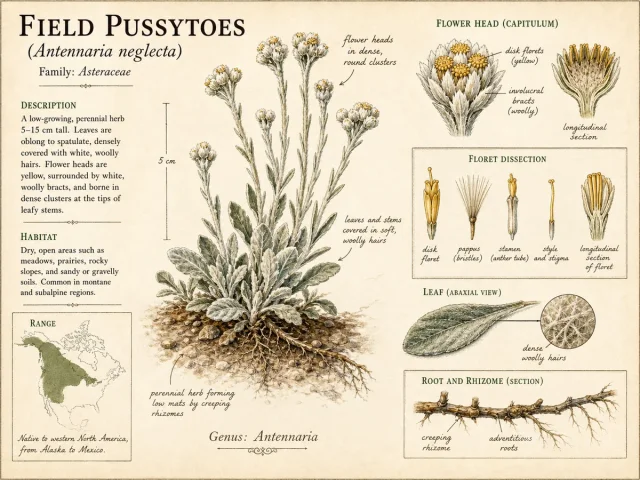
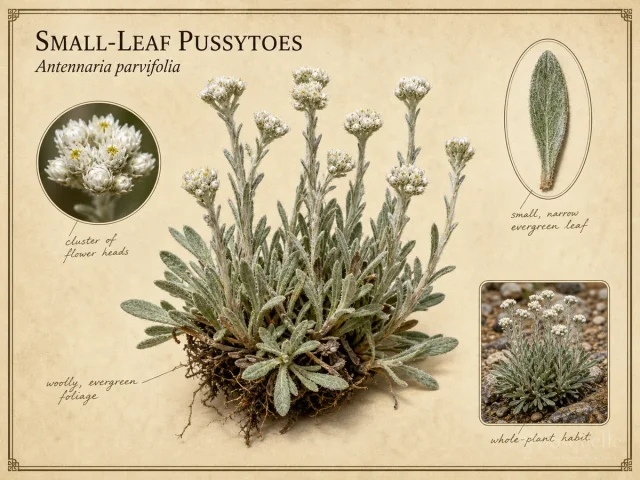
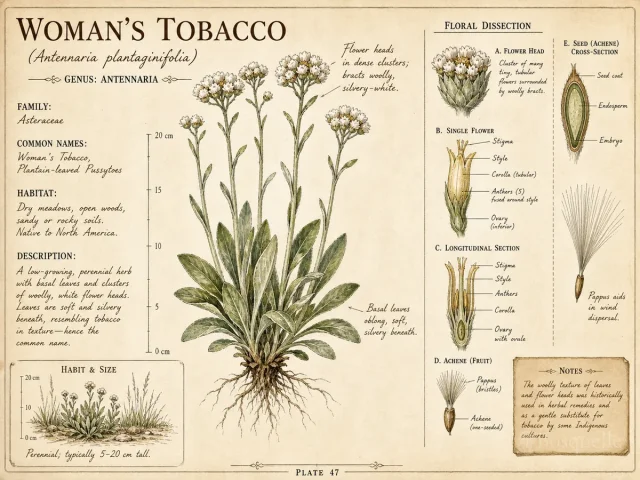
Mountain everlasting (A. dioica) stays lowest. Field pussytoes (A. neglecta) reads a bit taller, with a single leaf vein. Small-leaf (A. parvifolia) is the compact western mat. Plantain-leaf (A. plantaginifolia) has wider leaves with 3 to 5 veins. [4] Shop classes and the pussy-willow lookalike are on Types of Pussytoes.
Plant, divide, or grow in a trough
- Set plugs in spring or fall, crown at grade, 12 to 18 inches apart — Planting Pussytoes.
- Lift a rooted stolon in spring or early fall — Propagating Pussytoes.
- A small mat in a drained grit trough — Pussytoes in Containers.
If the mat browned after a wet week, raise the bed with grit next time — do not add nitrogen.
FAQ
Is pussytoes drought tolerant?
Yes once established on lean, well-drained ground. New plugs still need settling water.
Will pussytoes grow in the South?
Mountain everlasting slumps in hot, humid deep-South summers. Site on a grit slope with air movement, or choose a native field or plantain-leaf form.
What else can I plant with pussytoes?
Other dry-sun mats that share the same lean hose — prairie smoke is a classic rock-garden partner. Keep thirsty annuals and lawn feeders off the stolon plane.
Do I prune pussytoes?
No. You can snip spent flower stalks after bloom for a tidier mat. That is optional, not required.
What pests hit pussytoes?
Usually none that need a spray. Wet ground causes crown rot. Slugs graze in damp weather — see slugs. Fix drainage rather than treating rot as an insect job.
Related guides


Recommended plants

References
- [1] NC State Extension -
https://plants.ces.ncsu.edu/plants/antennaria-dioica/ - [2] Missouri Botanical Garden -
https://www.missouribotanicalgarden.org/PlantFinder/PlantFinderDetails.aspx?taxonid=291415 - [3] PlantNative -
https://plantnative.org/native-plants/pussys-toes-antennaria-plantaginifolia.htm - [4] NC State Extension -
https://plants.ces.ncsu.edu/plants/antennaria-neglecta/
This note is part of Antennaria Guides.
More first-season notes by plant are gathered in How to Grow Guides.
Updated: Reviewed by Bosquelle Editors