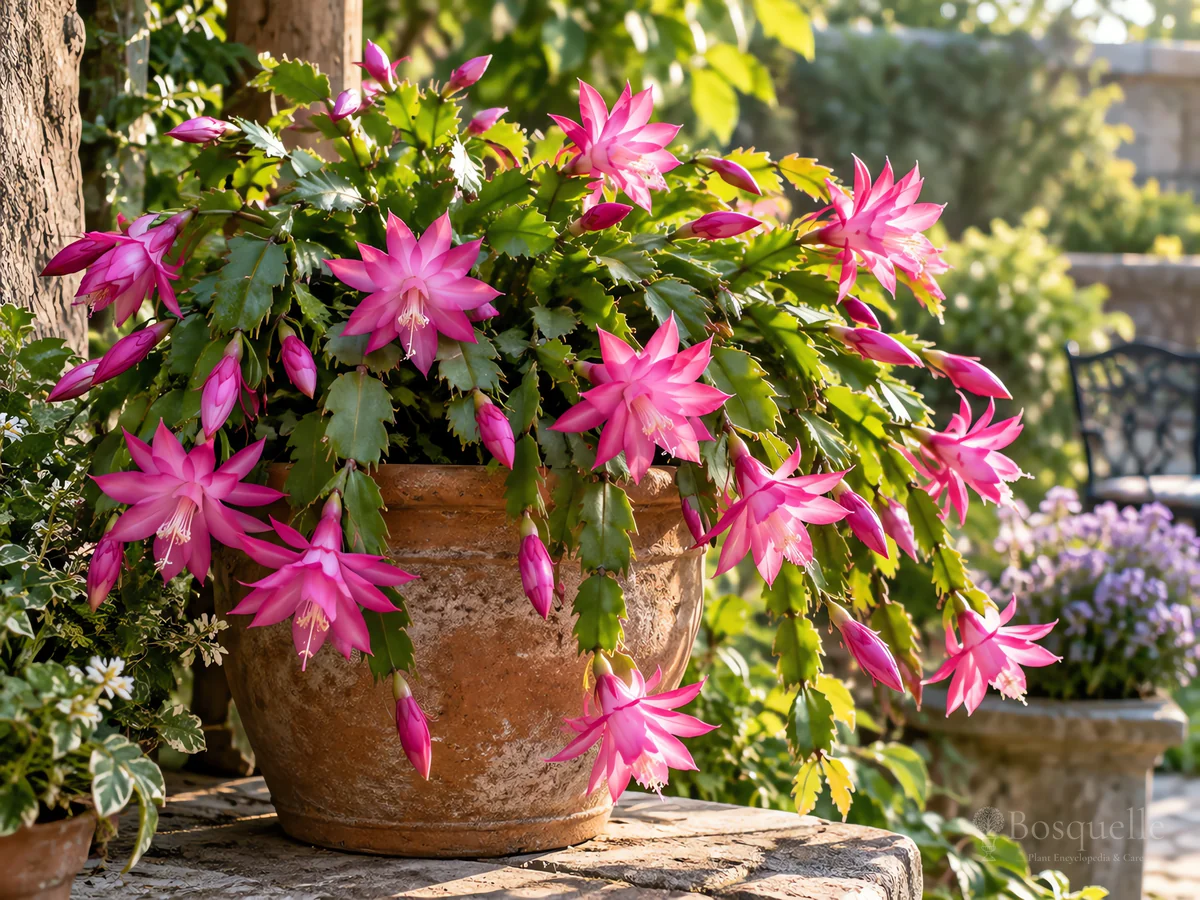
Grow Easter cactus in bright indirect light, and water when the top of the mix is dry. Easter cactus is Rhipsalidopsis gaertneri — not a Christmas cactus.

Give it bright indirect light, and water when the top of the mix is dry
| Factor | Recommended | Avoid |
|---|---|---|
| Light | Bright indirect light; an east window is fine | Do not bake the pads in hot afternoon sun |
| Water | Water until it runs out, then empty the saucer; wait until the top of the mix is dry | Do not leave the pot sitting in water, and do not treat it like a desert cactus that stays bone-dry |
| Mix | A cactus or epiphyte mix that drains, in a pot with a hole | Do not pack it in heavy mix that stays soggy around the roots |
| Size | Leave room for a 6 to 12 inch plant that can spread 18 to 24 inches | Do not crowd hanging stems against a hot pane |
| Pests | Watch for mealybugs and scale in the joints | Do not leave wet debris packed on the mix |
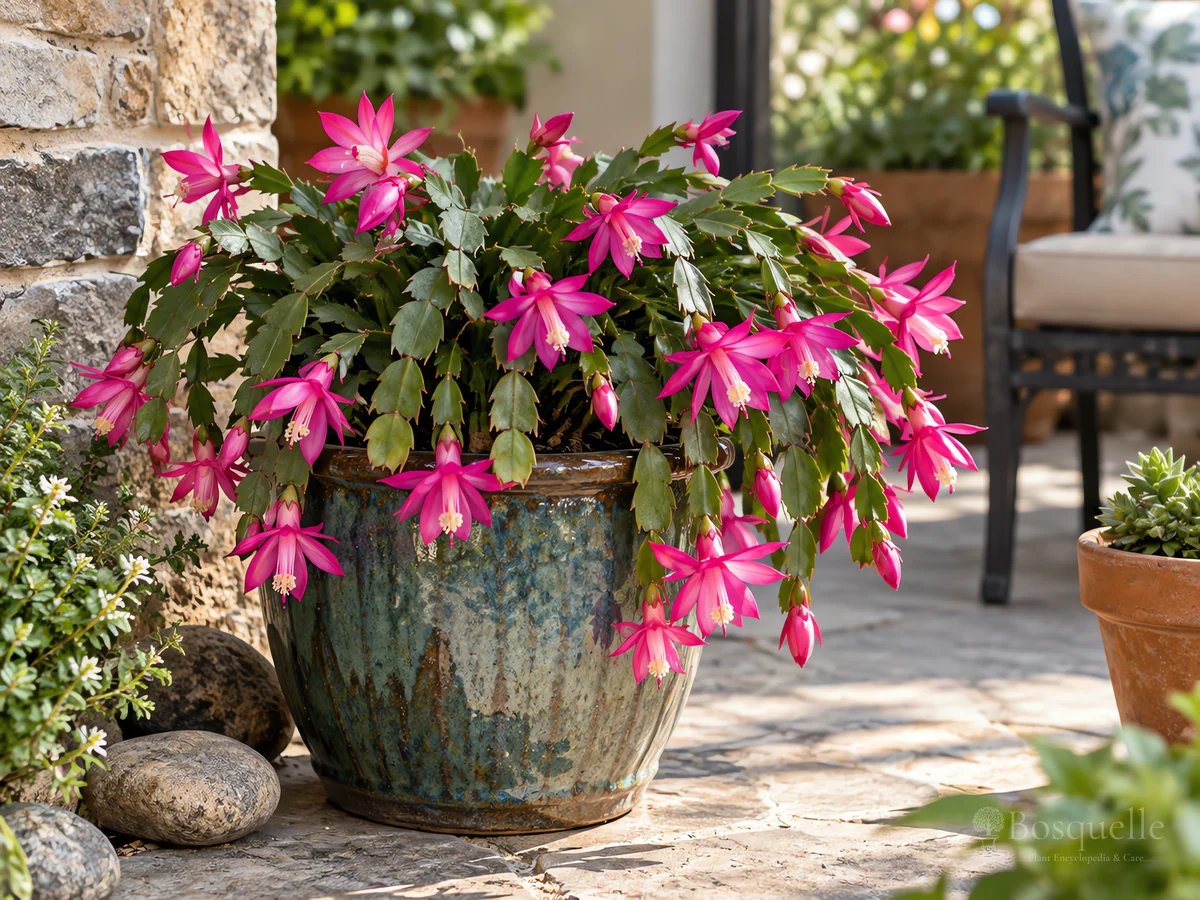
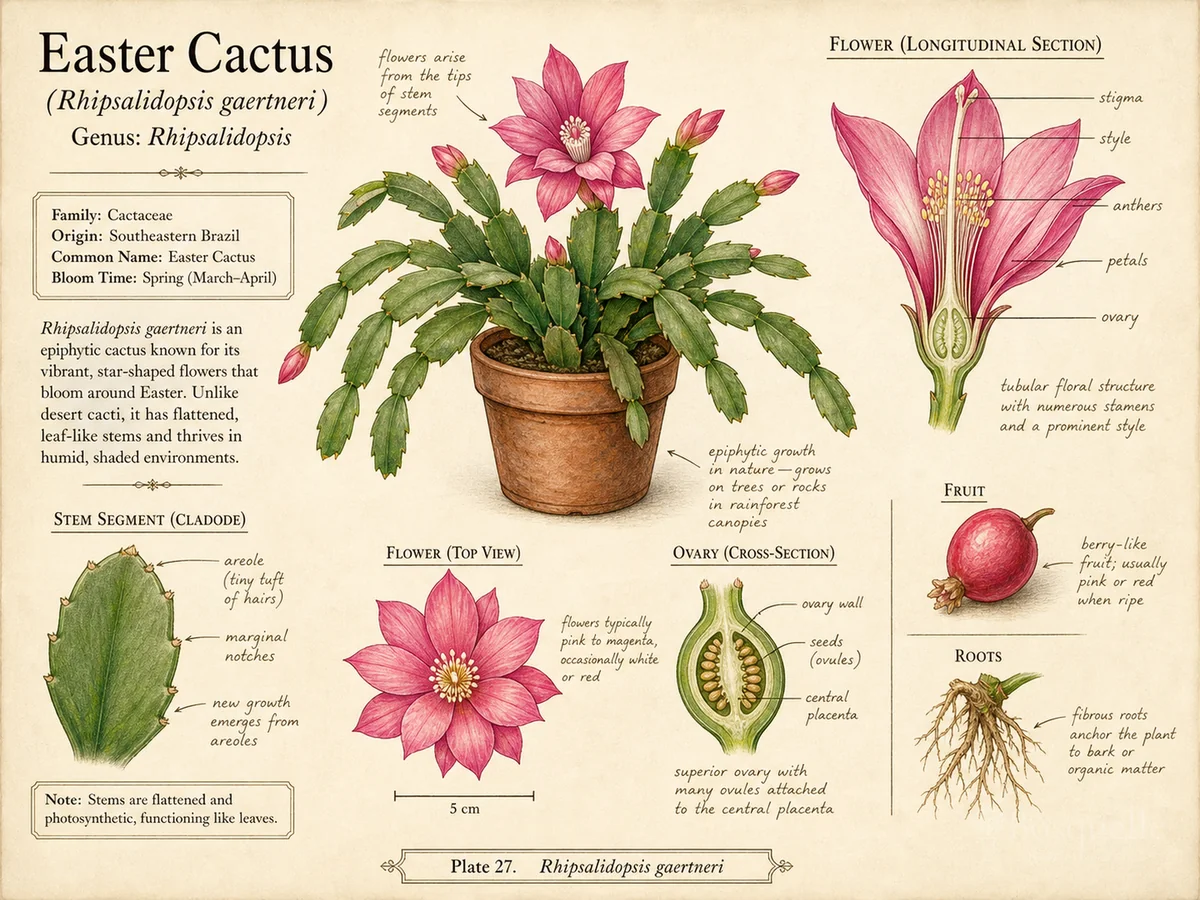
Easter cactus is Rhipsalidopsis gaertneri, a rainforest epiphyte from southern Brazil. It has flattened, spineless stem segments with rounded scallops and tiny bristles at the tips, and it opens star-shaped flowers in spring. Give it bright indirect light and a mix that drains. Water thoroughly when the top of the mix is dry, then empty the saucer. Keep growing temperatures around 60 to 75 F. [1]
If the pads wrinkle and the mix is still wet, the roots have likely rotted and can no longer take up water. If the pads shrivel and the mix is bone-dry, water more often. Either way, the plant may drop segments. [2]
- Set the pot in bright indirect light. An east window is a good default. Sheer the pane if afternoon sun hits the pads.
- Use a pot with a drainage hole and a cactus or epiphyte mix. All-purpose mix is fine if you add perlite so water can leave.
- Water until it runs out the hole, then empty the saucer. Wait until the top of the mix is dry before you water again.
- Keep the room around 60 to 75 F while the plant is growing. Raise humidity with a pebble tray if the air from heating is dry. Do not stand the pot in the tray water.
Where is the best place to put an Easter cactus to bloom?
Bright indirect light, away from a hot pane and away from a heater vent. An unused cool room in fall and winter is what sets the buds.
What are the common problems with Easter cactus?
Soggy mix rots the roots, and then the pads wrinkle or drop. Hot sun scorches the pads. Drafts and a sudden move drop buds once they have set.
Hang it in summer shade, then bring it in before frost
After the last frost, you can hang the pot outdoors in light shade. That hardens the new growth. Bring it back in before nights settle in the low 50s, and check the joints for pests first. [3]
- Wait until nights stay above frost, then hang the pot in shade or morning sun only.
- Keep watering when the top of the mix is dry. Rain must be able to run out the hole; dump a saucer after a storm.
- Bring it indoors before nights in the low 50s. Wipe the pot, pick off debris, and look for mealybugs or scale.
Give it cool nights and long dark nights for spring bloom
Easter cactus blooms in spring when it gets a cool rest and long uninterrupted nights. Iowa State University Extension asks for 14 to 16 hours of darkness at 60 to 70 F for three to four weeks, then nights of 47 to 55 F for four to six weeks. After that, grow it on longer days at 60 to 70 F. A spare room with no lamp at night often supplies the dark stretch on its own through winter. [4]
- In fall, put the plant where nights are dark for 14 to 16 hours. No kitchen lamp, no TV glow. Keep days around 60 to 70 F for three to four weeks.
- Then keep nights in the high 40s to mid 50s for four to six weeks. Do not freeze it.
- When buds show, return it to 60 to 70 F and longer days. Keep the mix evenly moist while it is in bud. Do not move the pot until the first flowers open.
- Once flowers open, you can display it. Keep it off heater vents and cold drafts, or the buds drop.
What triggers Easter cactus to bloom?
Cool nights and a stretch of long uninterrupted darkness, then warmer longer days. A lamp at night in fall is the usual reason it stays green.
After the flowers fade
Pick off spent flowers, or let them drop. Water less until new growth shows, then resume a regular watering and a monthly feed through summer. If you want a second plant, that job is How to Propagate Easter Cactus. If the mix has collapsed, dump it after bloom on How to Repot Easter Cactus.
Not Christmas cactus — and not Thanksgiving cactus
Most plants sold as Christmas cactus are Thanksgiving cactus, How to Grow Christmas Cactus. Thanksgiving cactus has pointed teeth on the pads and yellow anthers. True Christmas cactus has scalloped pads and purplish-brown anthers. Easter cactus has rounded pads with tiny bristles at the tips, and the flowers are star-shaped in spring, not tubular hanging bells in winter.
Orchid cactus is a different plant with long flattened stems; How to Grow Orchid Cactus owns that job. Mistletoe cactus (Rhipsalis) has thin pencil stems and small berries, not a star Easter flower. A desert cactus mix that stays bone-dry is the wrong start for all of these rainforest epiphytes.
Is it a Christmas cactus or an Easter cactus?
Read the pad edge. Rounded pads with bristles and a star flower in spring are Easter cactus. Pointed teeth and a fall bloom are Thanksgiving cactus.
Give it bright indirect light, water when the top of the mix is dry, and keep nights cool and dark in fall so it blooms in spring.
FAQ
What is Whitesun, or Holiday cactus?
Whitesun is another common name for Easter cactus. Holiday cactus is a group name that also covers Christmas cactus and Thanksgiving cactus. Grow this plant as Easter cactus: bright indirect light, and water when the top of the mix is dry.
Is Hatiora a different plant?
No. Hatiora gaertneri and Schlumbergera gaertneri are older names for this same Easter cactus, Rhipsalidopsis gaertneri. Grow it the same way.
Is there more than one kind of Easter cactus?
Flower color can be red, pink, or white. Rose Easter cactus (Rhipsalidopsis rosea) is a smaller related species. Rhipsalidopsis gaertneri is the common Easter cactus. Care does not change with flower color.
Is Easter cactus toxic to cats or dogs?
North Carolina Extension lists it as non-toxic for cats and dogs. Still keep pets from chewing the pads, because any plant material can upset a stomach.
Can I root a cutting in a glass of water?
A draining mix after a short callus is the usual start. A glass of water can rot the cut. Twist segments after bloom on How to Propagate Easter Cactus.
Related guides

Recommended plants
References
- [1] North Carolina Extension -
https://plants.ces.ncsu.edu/plants/rhipsalidopsis-gaertneri/ - [2] Illinois Extension -
https://extension.illinois.edu/blogs/good-growing/2022-12-09-how-identify-and-care-holiday-cacti-and-get-them-rebloom - [3] University of Minnesota Extension -
https://extension.umn.edu/houseplants/holiday-cacti - [4] Iowa State University Extension -
https://yardandgarden.extension.iastate.edu/how-to/all-about-holiday-cacti
This note is part of Rhipsalidopsis Guides.
More first-season notes by plant are gathered in How to Grow Guides.
Updated: Reviewed by Bosquelle Editors