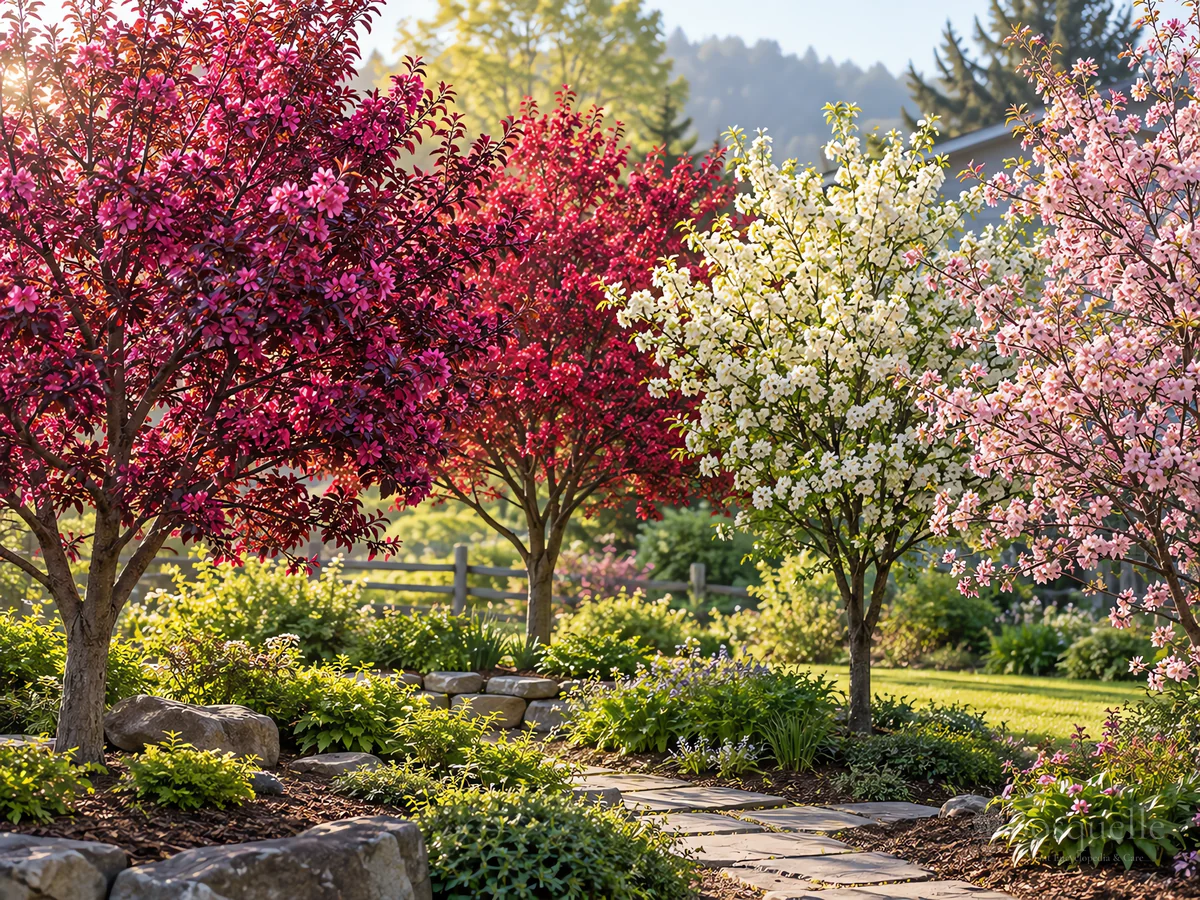
Grow crabapple in full sun, on soil that drains, and water a new tree until it is established. Crabapple is the ornamental Malus sold as flowering crabapple.

Give it full sun, soil that drains, and water until it is established
| Factor | Recommended | Avoid |
|---|---|---|
| Light | Full sun, at least six hours a day | Do not hide it in deep shade if you want a full bloom |
| Soil | Chalk, clay, loam, or sand that drains after rain | Do not plant it in a hole that stays wet |
| Water | Give a new tree about an inch of water every ten days through the first seasons, then only in a long dry spell | Do not keep an established tree on a weekly lawn-sprinkler calendar |
| Feed | A mulch ring over the roots, kept off the trunk | Do not pile on high nitrogen; extra growth invites fire blight |
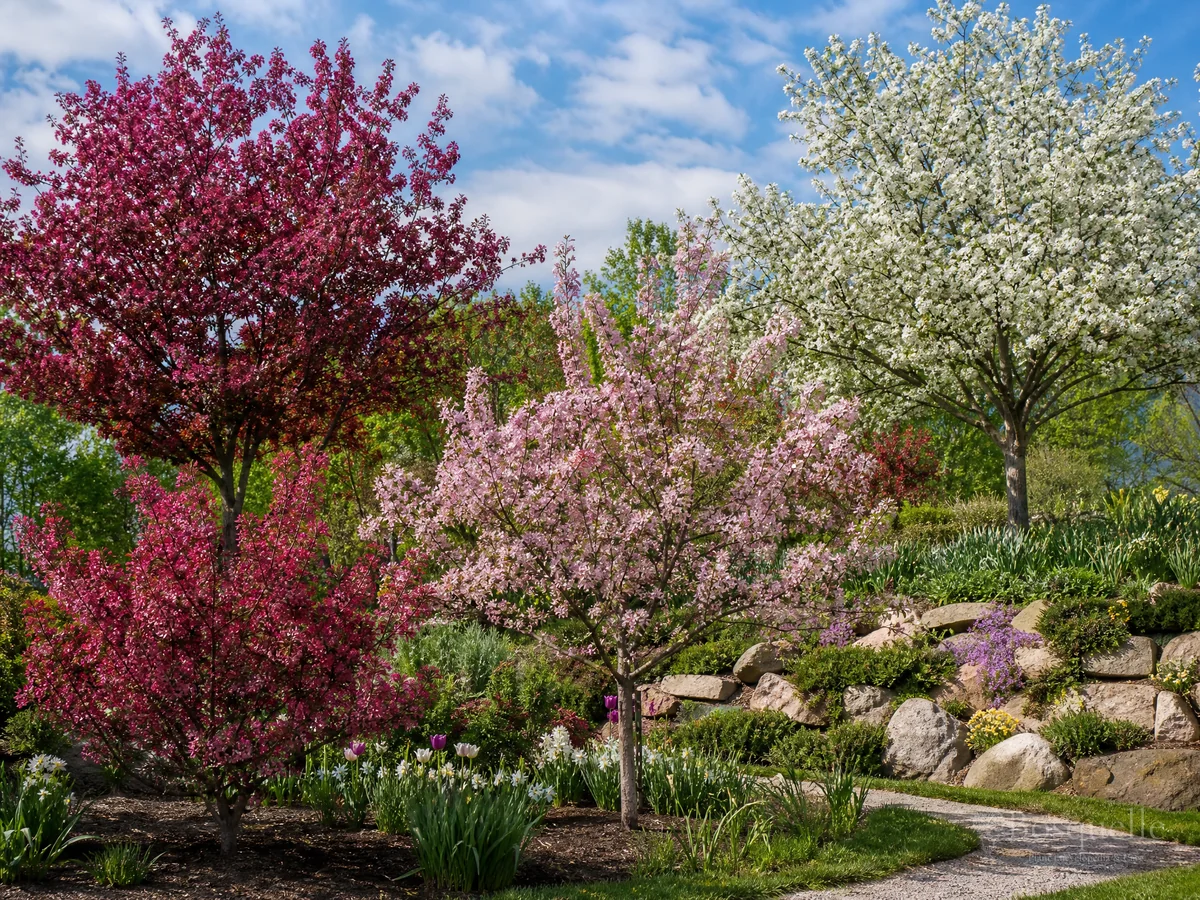
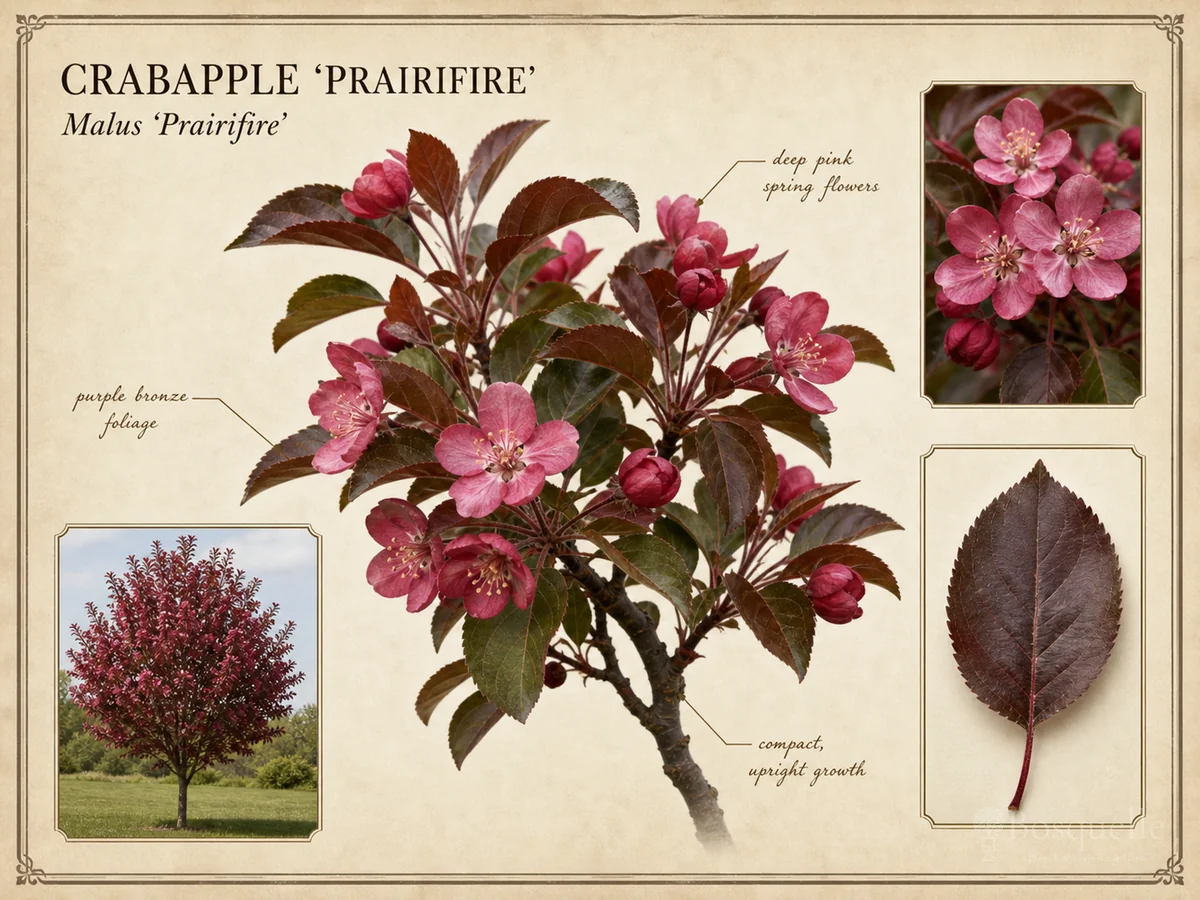
Prairifire and Donald Wyman want the same keep-alive: full sun and ground that drains after rain. [1] Sit the tree where nearby canopies will not close over it. Shade makes the bloom thin and powdery mildew more likely. [2] Water a new tree through the first growing seasons — about an inch every ten days from rain or a hose at the root zone, not a spray on the leaves. Once the tree is established, it takes a long dry spell better than a soggy lawn. [3] Keep mulch off the trunk. Heavy fertilizer is not a substitute for sun and drain. Choose the kind on Types of Crabapple. Plant it with the flare at grade on Planting Crabapple.
Does a crabapple need full sun?
Yes. Full sun gives the strongest bloom and the cleanest foliage. Deep shade opens the canopy and cuts the flower show.
How often do I water a new crabapple?
Give a new tree about an inch of water every ten days through the first seasons. After that, water only in a long dry spell.
How tall does a crabapple get?
Most landscape kinds land between 15 and 25 feet. Dwarf mounds stay much shorter. Read the tag for the habit you bought.
- Choose full sun and soil that drains. Skip a low pocket that holds water after rain.
- Water through the first growing seasons, then ease off. An established tree does not need a weekly sprinkler.
- Keep a mulch ring over the roots, and keep that mulch off the trunk.
- Skip heavy nitrogen. Soft, lush growth is where fire blight gets a start.
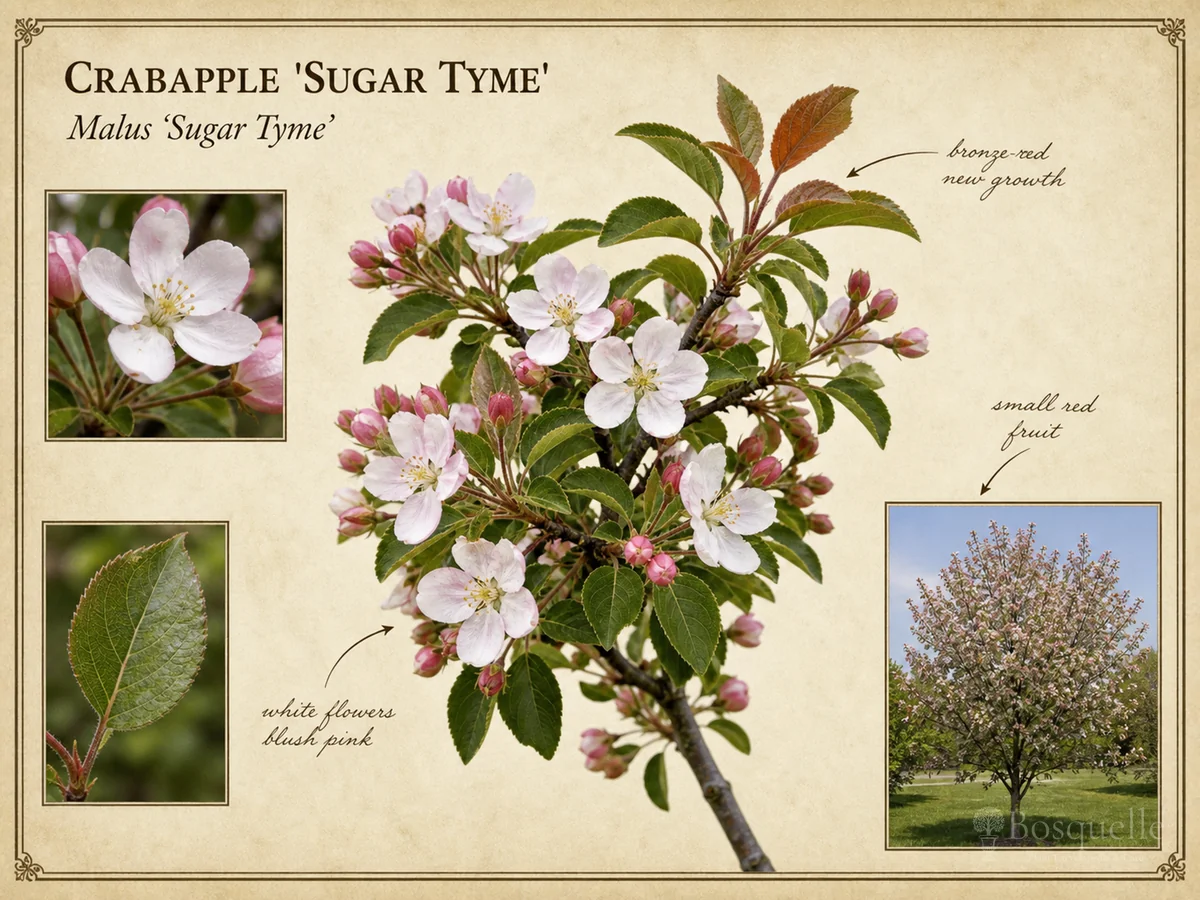
Not an eating apple — fruit two inches or smaller
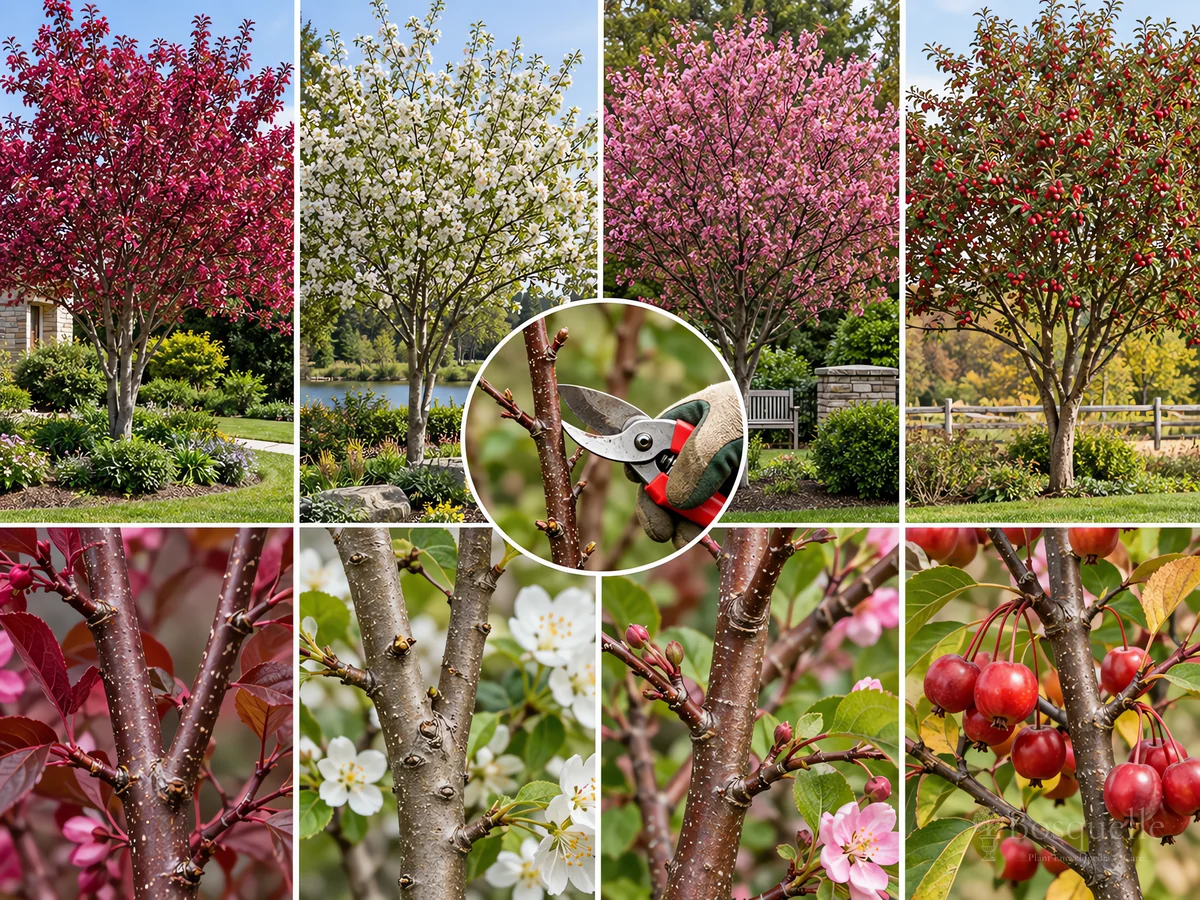
A crabapple is still Malus, but the fruit is two inches across or smaller. Larger fruit is an eating apple, a different landscape job with a different prune. [4] The spring bloom is the show. Small persistent fruit feeds birds and holds color into winter. Large, messy fruit near a walk is a reason to pick another kind, not a reason to treat this tree as an orchard crop. If olive spots speckle the leaves in a wet spring, see Apple Scab. Shepherd’s-crook tips belong on Fire Blight. Orange rust spots with a juniper nearby belong on Cedar-Apple Rust.
Is a crabapple the same as an apple tree?
No. Both are Malus, but crabapple fruit is two inches or smaller. Eating apples are a different crop and a different prune.
How to grow crabapple from seed
Named kinds are grafted, so seed will not match the parent. If you want a mixed seedling anyway, clean the pulp off ripe fruit in fall, keep the seed cold and moist through winter, and sow in spring.
- Pick ripe fruit in fall, and scrape the pulp off the seed. Pulp left on the seed slows germination.
- Mix the cleaned seed with damp sand, and keep it cold through winter.
- Sow in spring about a quarter inch deep, and keep the mix moist until the seedlings show.
Can I grow crabapple from seed?
Yes, but the seedling will not match a named kind. Clean the pulp off the seed, keep it cold and moist through winter, and sow in spring.
Give crabapple full sun and draining soil, water the new tree through the first seasons, and keep the tag on an ornamental kind, not an eating apple.
FAQ
Can I grow a crabapple in a pot?
A dwarf kind can sit in a large container with a drainage hole, but this is a landscape tree. Most kinds want open ground.
Can I grow it from a cutting?
Named kinds are bud-grafted on apple rootstock. A home cutting is a poor copy. Buy a grafted tree.
Can I eat the fruit?
The fruit is edible when cooked and sweetened. Most ornamental kinds are tart. This is not a jelly recipe.
Will a crabapple pollinate my apple tree?
An overlapping bloom can set fruit on a nearby eating apple. That is the apple crop’s job, not this tree’s keep-alive.
Related guides

Recommended plants



References
- [1] Colorado State University Extension -
https://extension.colostate.edu/resource/flowering-crabapple-trees/ - [2] The Morton Arboretum -
https://mortonarb.org/plant-and-protect/trees-and-plants/crabapple-cultivars/ - [3] University of Maine Cooperative Extension -
https://extension.umaine.edu/publications/2058e/ - [4] Clemson Cooperative Extension HGIC -
https://hgic.clemson.edu/factsheet/crabapple/
This note is part of Crabapple Guides.
More first-season notes by plant are gathered in How to Grow Guides.
Updated: Reviewed by Bosquelle Editors