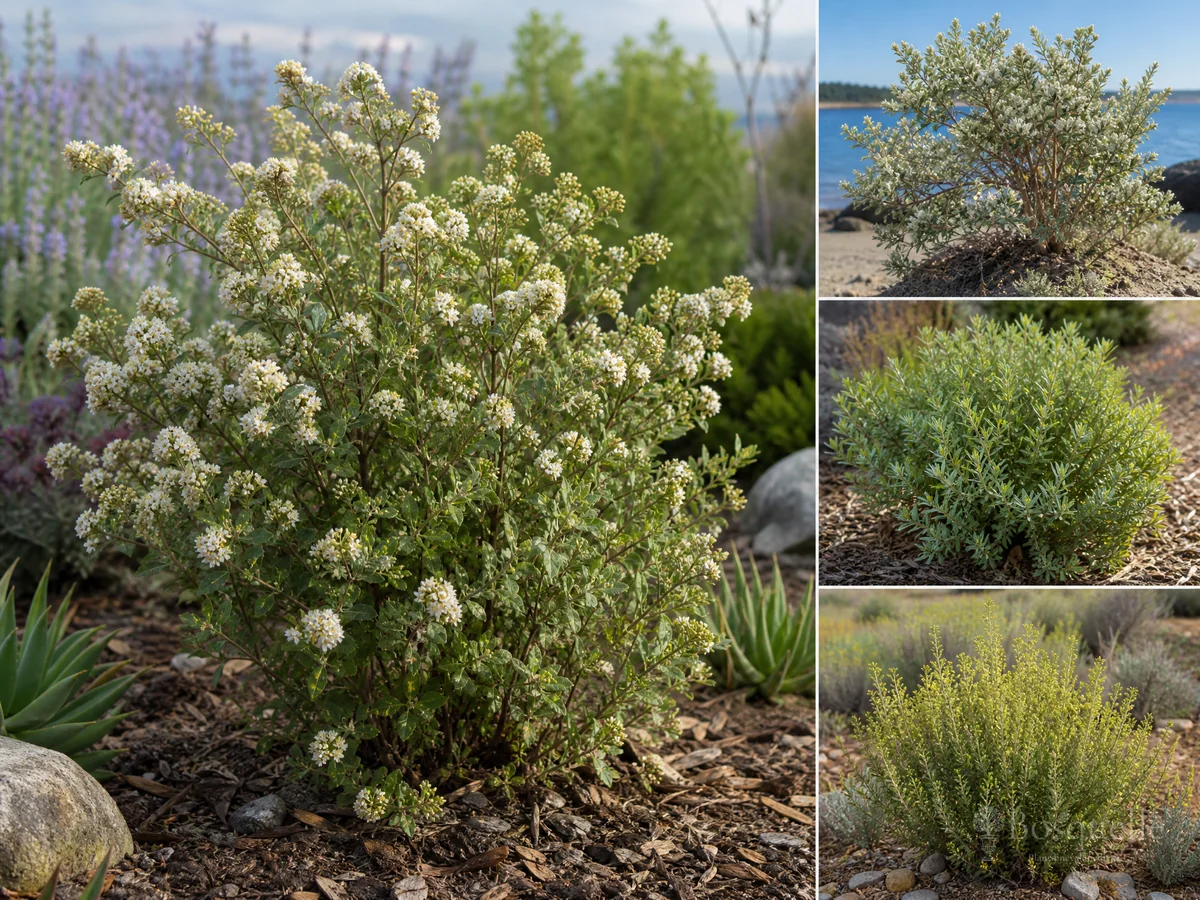
Grow coyote brush in full sun, and water it through the first dry season. After that, match later water to the kind you bought. Baccharis is the genus — evergreen shrubs with late cream flower heads, not a willow.

Give it full sun, and match water to the kind you bought
| Factor | Recommended | Avoid |
|---|---|---|
| Sun | Full sun all day | Do not plant it in shade that thins the stems and stops seedlings |
| Soil | Sand, clay, or alkaline ground that drains after rain | Do not leave the crown in a puddle that never dries |
| Water (year 1) | Weekly soak until the roots take, then monthly through the first summer | Do not skip water in week one and treat the plant as drought-proof |
| Water (established) | Coyote brush and desert broom: skip summer water near the coast; a monthly soak inland. Mule fat: keep a moist bank. Groundsel tree: moist to wet coastal ground | Do not run a weekly drip on established coyote brush. Do not site mule fat on a dry bank and expect a dense screen |
| Feed | None. Native soil is enough | Do not fertilize for extra flush — the shrub gets lanky |
| Salt | Coastal coyote brush and groundsel tree take salt spray | Do not assume desert broom wants a salt marsh |
| Drought | Missed waterings once coyote brush or desert broom is rooted | Do not skip water on a new plant, or on mule fat in a dry bed |
| Deer | Coyote brush is often left once established; cage a new plant for the first year | Do not assume every kind in this genus is ignored |
Give it full sun and soil that drains after a rain. [1] Water every week until the plant is rooted, then once a month through the first summer. After that, match water to the kind: skip summer drip on coastal coyote brush, keep mule fat on a moist bank, and give groundsel tree the wet coastal ground it takes. coyote brush is the usual California shrub. groundsel tree wants moisture and salt air. mule fat belongs beside a wash, not on a dry slope. Match the kind on Types of Coyote Brush before you pick the bed.
- Plant in full sun so the foliage stays dense.
- Use the native soil if water moves through it. Do not add a rich compost backfill.
- Water to settle a new plant, then soak weekly until it is established and monthly through the first summer. After that, follow the kind, not a weekly calendar.
Does coyote brush need full sun?
Yes. Full sun keeps the stems tight. Shade thins the shrub, and seedlings fail under a closed canopy.
How often should I water coyote brush?
Weekly until it is rooted, then monthly through the first summer. After that, skip summer water near the coast. Inland, a monthly soak is enough. Mule fat still wants a moist bank.
Plant in fall, at the same depth as the pot
Fall, winter, or early spring is the usual window. Roots settle in cool weather before the first dry summer. Set the crown at the same depth as in the pot.
- Dig a hole as deep as the pot and a little wider. Set the crown even with the soil. Do not bury the woody stems.
- Backfill with the soil you dug. Do not pack compost against the crown.
- Space low coyote brush 2 to 6 feet apart so a groundcover can fill. Give an upright hedge 4 to 6 feet. [2]
- Water once to settle. Then follow the first-year weekly soak, not a daily sprinkle.
When should I plant coyote brush?
In fall, winter, or early spring. Summer planting works only if you keep watering until the roots take.
How far apart do I plant it?
Set low groundcover 2 to 6 feet apart. Set an upright hedge 4 to 6 feet apart. Groundsel tree wants 6 to 8 feet if you want it as a specimen.
Shear in late winter, or cut a tired shrub back to the base
Coyote brush stays dense if you cut it. Leave it uncut and the stems get woody and sparse. Late winter, before spring growth, is the usual trim.
- Shear a hedge or a low groundcover in late winter. A light annual cut keeps the foliage tight.
- Every few years, cut a low form back by about half so new stems fill the center.
- If an upright shrub is leggy, cut it to about 6 inches. It resprouts from the base. Do the same on desert broom or mule fat when the stems look tired.
When do I prune coyote brush?
Late winter, before new growth. A yearly shear keeps a hedge or a groundcover dense.
Can I cut it to the ground?
Yes. A tired shrub can be cut to about 6 inches. It resprouts from the base. That is how you renew it, not a light tip-pinch.
Not a willow — and not saltbush or Scotch broom
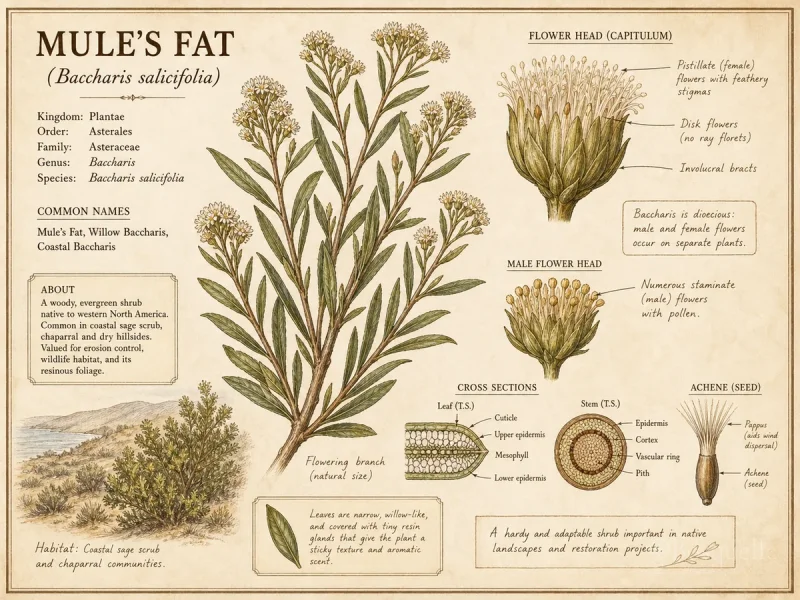
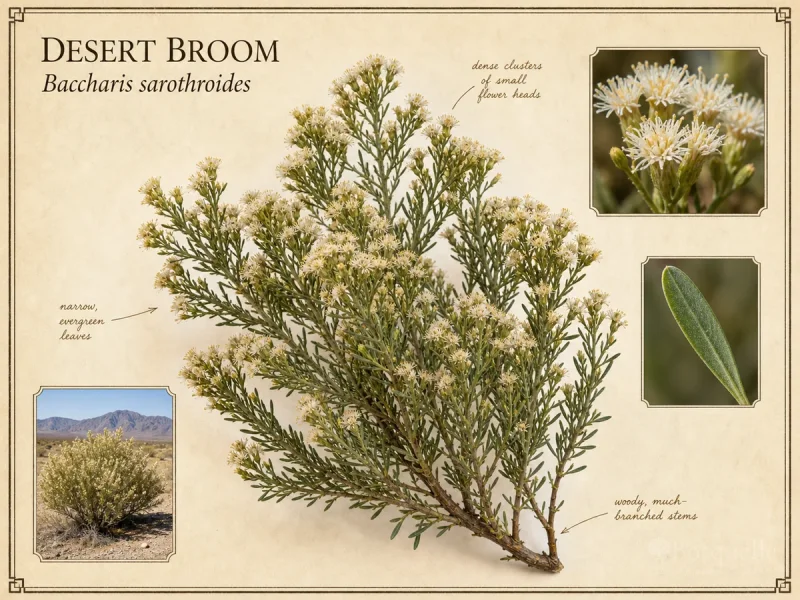
Saltbush in the dry-garden trade is usually Atriplex — see How to Grow Saltbush if that is the shrub on the tag. Groundsel tree is sometimes sold as saltbush or coyote bush, but it is still this genus, not Atriplex. [3] Mule fat is also called seep willow, but it is not a true willow. [4] True willows are Salix — see How to Grow Willow if that is the tree on the tag. Scotch broom is Cytisus, a different shrub with pea flowers — see How to Grow Scotch Broom. Common groundsel is Senecio, a short weed, not this woody plant. desert broom looks broom-like, but it is still Baccharis.
Is coyote brush a willow?
No. Coyote brush and mule fat are Baccharis. A true willow is Salix. Mule fat has willow-like leaves and belongs on a wet bank, but it is not a willow.
Grow more from a cutting or from seed
Nurseries often sell male plants so the white seed fluff does not blow around. Female plants make the showy pappus, and they sow themselves. Take cuttings if you want a copy of a male hedge. Sow seed if you want a mix.
- Take a two-node cutting in late summer or fall. Stick it in a mix of perlite and vermiculite, and keep it humid until roots form.
- Collect dry seed from female plants in late fall. Rub off the pappus. Sow on the surface of sand or a gritty mix in fall or early spring. Do not bury the seed.
- Keep the mix moist until it germinates, usually in two to four weeks. Then pot on and set the young plants out in fall.
Can I grow coyote brush from seed?
Yes. Sow on the surface in fall or early spring. Keep it moist until it sprouts. Female plants are the seed source.
Should I buy a male plant?
Buy a male if you do not want wind-blown fluff and seedlings. Buy both sexes if you want the white seed heads on the females.
If an established coyote brush yellows or collapses, check a weekly drip and a puddled crown first. Soggy soil, not a skipped soak, is the usual cause on the dry kinds.
FAQ
Can I grow coyote brush in a pot?
A draining pot can hold a young plant for a season. Empty the saucer after you water. The open bed is the lasting home.
Does coyote brush need fertilizer?
No. Native soil is enough. Fertilizer makes lanky growth that needs more water.
Is coyote brush toxic to livestock?
Do not feed the foliage to cattle. Grow it as a hedge or a habitat shrub, not as forage.
Does coyote brush get pests?
Serious insect damage is uncommon. Small galls on the stems are usual and not a reason to spray. Soggy soil around the roots is the primary cause of root rot on the dry kinds.
Related guides
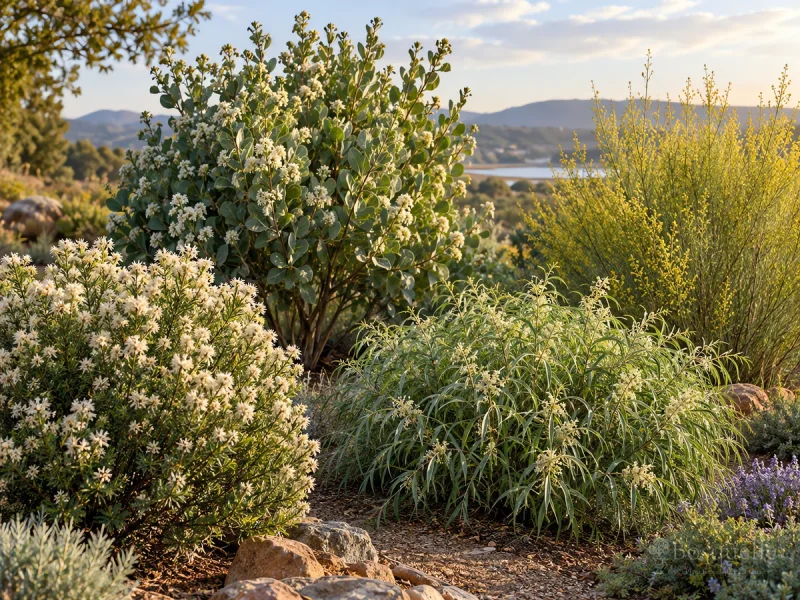
Recommended plants


References
- [1] UC Master Gardeners of Sonoma County -
https://ucanr.edu/site/mg-sonoma/baccharis-pilularis-coyote-brush - [2] USDA NRCS -
https://plants.sc.egov.usda.gov/DocumentLibrary/plantguide/pdf/pg_bapi.pdf - [3] NC State Extension Gardener -
https://plants.ces.ncsu.edu/plants/baccharis-halimifolia/ - [4] Arizona-Sonora Desert Museum -
https://desertmuseum.org/visit/sheets/Bacsal.pdf
This note is part of Baccharis Guides.
More first-season notes by plant are gathered in How to Grow Guides.
Updated: Reviewed by Bosquelle Editors