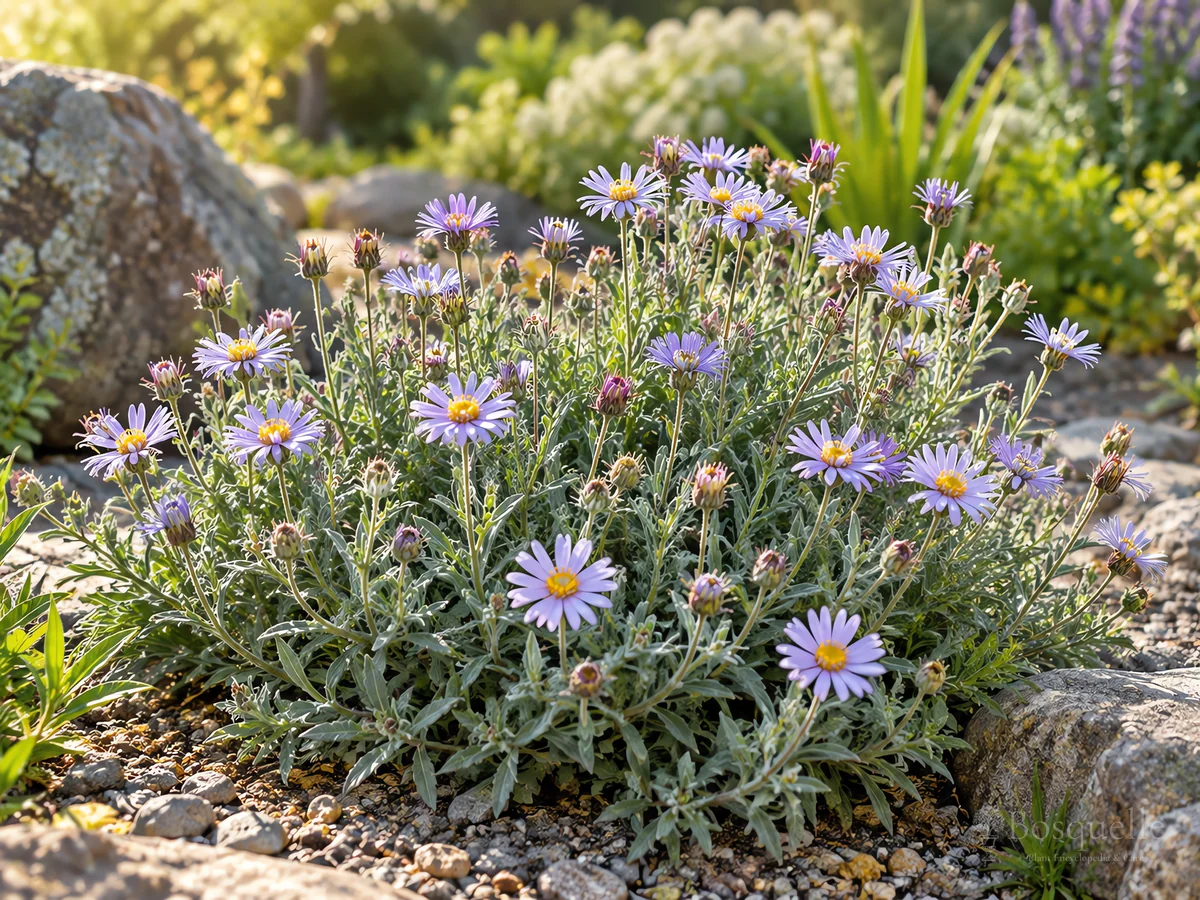
Grow common sandaster in full sun and soil that drains. California aster is Corethrogyne. It is not Pacific aster.
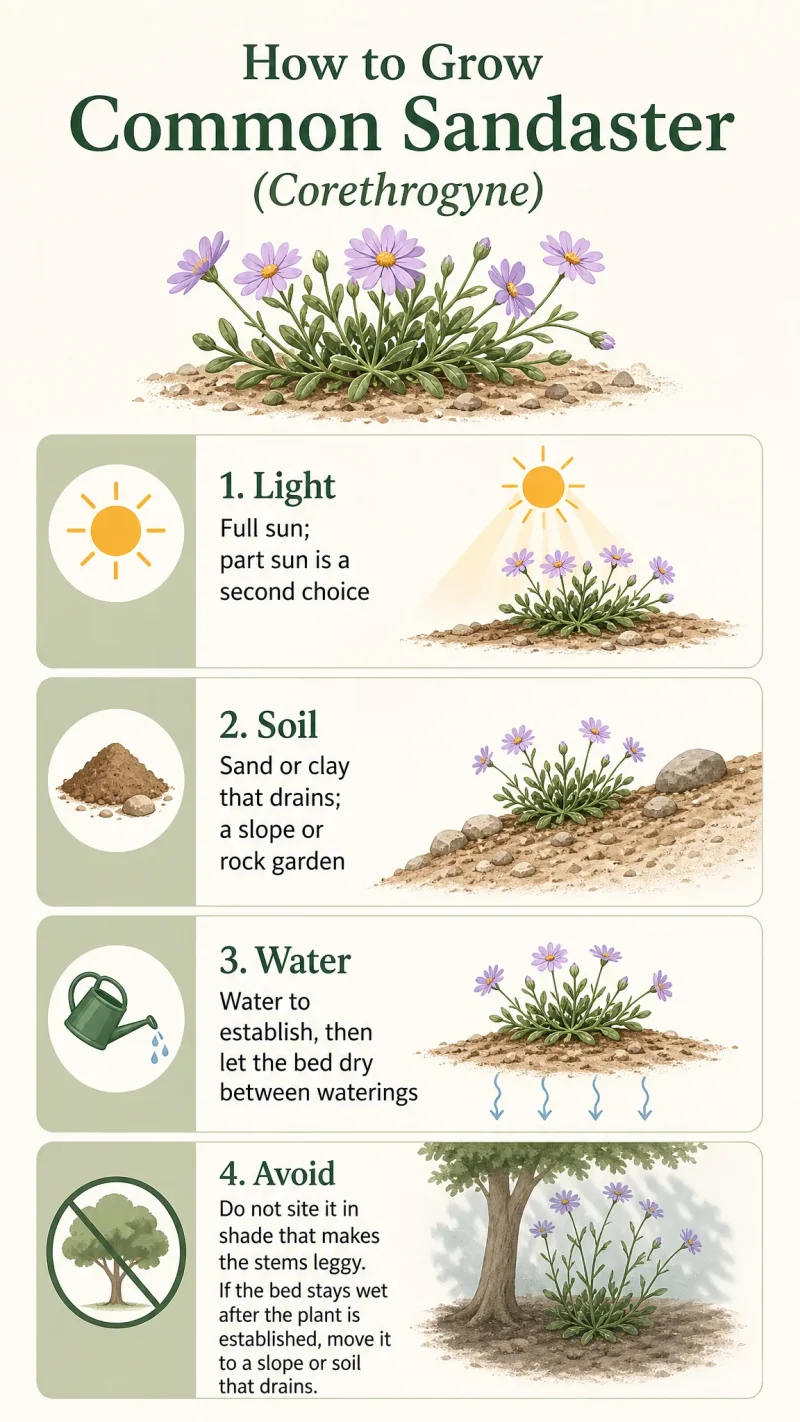
Give it full sun and soil that drains
| Factor | Recommended | Avoid |
|---|---|---|
| Light | Full sun; part sun is a second choice | Do not site it in shade that makes the stems leggy |
| Water | Water to establish, then let the bed dry between waterings | Do not keep the bed wet after it is established |
| Soil | Sand or clay that drains; a slope or rock garden | Do not plant it in a low wet spot |
| Salt | Coastal spray is fine once the roots take | Do not treat salt spray as a reason to keep the bed wet |
| Size | About 1 to 3 feet tall when it blooms; the low shop form stays a few inches high and can spread several feet | Do not treat a summer-dry mound as a dead plant |
| After bloom | Cut ragged stems after the heads are spent if you want a tighter mound | Do not shear stems that still hold buds |
Common sandaster is a California native daisy with woolly gray leaves and pink-lavender heads in late summer. Give it full sun and soil that drains, because a wet bed after establishment is the primary cause of a clump that dies after the first year. [1] Once the roots take, let the soil dry between waterings. On the coast, skip most summer water. Inland, a deep watering every few weeks can keep the foliage fuller, but do not flood a mound that has gone summer-dry, because that rest is not a cue to water more. [2] Common Sandaster is Corethrogyne filaginifolia, the common sandaster in this catalog.
The mound can look thin in a dry summer and still be alive. Place it where a scraggly midsummer look is acceptable, then wait for new leaves after the weather cools. [3]
Does common sandaster need full sun?
Yes. Plant it in full sun for the densest mound and the most heads. Shade makes the stems stretch.
Should I water it in summer?
Water to settle a new plant, then let the bed dry. Do not flood a mound that has gone summer-dry.
Pair it with other dry coastal plants
Plant it among other dry coastal plants so the stems can thread through their bases. Buckwheat and sage share the same sun and drain.
Plant a nursery plant at the soil line on a slope
The usual start is a nursery plant. Set it at the soil line, on a slope or in soil that drains, and leave a few feet for the mound to spread. Water to settle the mix, not to keep the bed wet. You can plant in fall or spring while the soil still works.
- Set the nursery plant at the soil line, not buried in a deep hole.
- Choose a slope or a bed that drains, then leave a few feet between plants.
- Water to settle, then let the bed dry.
When do I plant common sandaster?
Plant a nursery plant in fall or spring at the soil line, on a slope or in soil that drains. Water to settle it, then let the bed dry.
Sow seed in fall or winter
You can also sow seed in fall or winter on well-drained mix, with a light cover or on the surface. Keep the surface barely moist until seedlings show, then ease off. A nursery plant blooms sooner than a seedling. [4]
- Sow in fall or winter on well-drained mix, with a light cover or on the surface.
- Keep the surface barely moist until seedlings show, then ease off water.
Can I grow common sandaster from seed?
Yes. Sow in fall or winter with a light cover. A nursery plant is the faster start if you want bloom the first year.
Start more plants from cuttings
You can also take stem cuttings. Take a few inches of non-flowering stem, strip the lower leaves, and set them in a mix that drains. Keep the mix barely moist until roots show. A nursery plant is still the faster start.
- Take a few inches of non-flowering stem and strip the lower leaves.
- Set the cutting in a mix that drains, and keep it barely moist until roots show.
Cut the mound back after it blooms
After the heads are spent, cut ragged stems if you want a tighter mound. Cut back part-way in early fall, then let new leaves fill in. Do not shear stems that still hold buds.
- Wait until the heads are spent.
- Cut the mound back part-way, then let new leaves fill in.
When do I cut common sandaster back?
After the heads are spent, cut the mound back part-way in early fall. Do not shear stems that still hold buds.
Not a garden aster — and not lamb's ear Silver Carpet
Pacific aster is Symphyotrichum chilense, also sold as California aster, with greener leaves and longer rays — see How to Grow Asters. Confirm the Latin on the tag is Corethrogyne filaginifolia. Garden asters are usually taller clumps with green leaves, not this woolly gray mat. Seaside daisy is Erigeron — see How to Grow Fleabane. Silver Carpet as a shop name is also lamb's ear and a Dymondia groundcover — see How to Grow Lamb's Ear. Confirm the tag is Corethrogyne, not Stachys or Dymondia. Old labels said Lessingia filaginifolia; that is this same plant.
Is California aster the same as Pacific aster?
No. Common sandaster is Corethrogyne. Pacific aster is Symphyotrichum chilense, also sold as California aster.
Is Silver Carpet the same as lamb's ear?
No. Silver Carpet on this plant is a compact sandaster. Lamb's ear Silver Carpet is Stachys. Dymondia is a different groundcover.
If the bed stays wet after the plant is established, move it to a slope or soil that drains. That wet is why a clump dies after the first year.
FAQ
Can I grow common sandaster in a pot?
A draining pot can hold a plant through the first season. Let the mix dry between waterings, and skip a rich mix that keeps the stems lanky. A slope that drains is the simpler long-term home.
Are there other kinds of sandaster?
This catalog holds Corethrogyne filaginifolia. Compact shop forms such as Silver Carpet are the same species, not extra cards here.
Is Lessingia filaginifolia a different plant?
Lessingia filaginifolia is an old name for this same common sandaster. Annual Lessingia species are different plants.
Is common sandaster poisonous to pets?
This plant has no known toxicity. Still keep pets from chewing garden plants you have not meant as food.
Recommended plants

References
- [1] San Marcos Growers -
https://www.smgrowers.com/products/plants/plantdisplay.asp?plant_id=975 - [2] Las Pilitas Nursery -
https://www.laspilitas.com/nature-of-california/plants/1142--corethrogyne-filaginifolia - [3] Waterwise Garden Planner -
https://waterwisegardenplanner.org/plants/lessingia-filaginifolia/ - [4] Theodore Payne Foundation -
https://store.theodorepayne.org/products/corethrogyne-filaginifolia-california-aster-seed
More first-season notes by plant are gathered in How to Grow Guides.
Updated: Reviewed by Bosquelle Editors