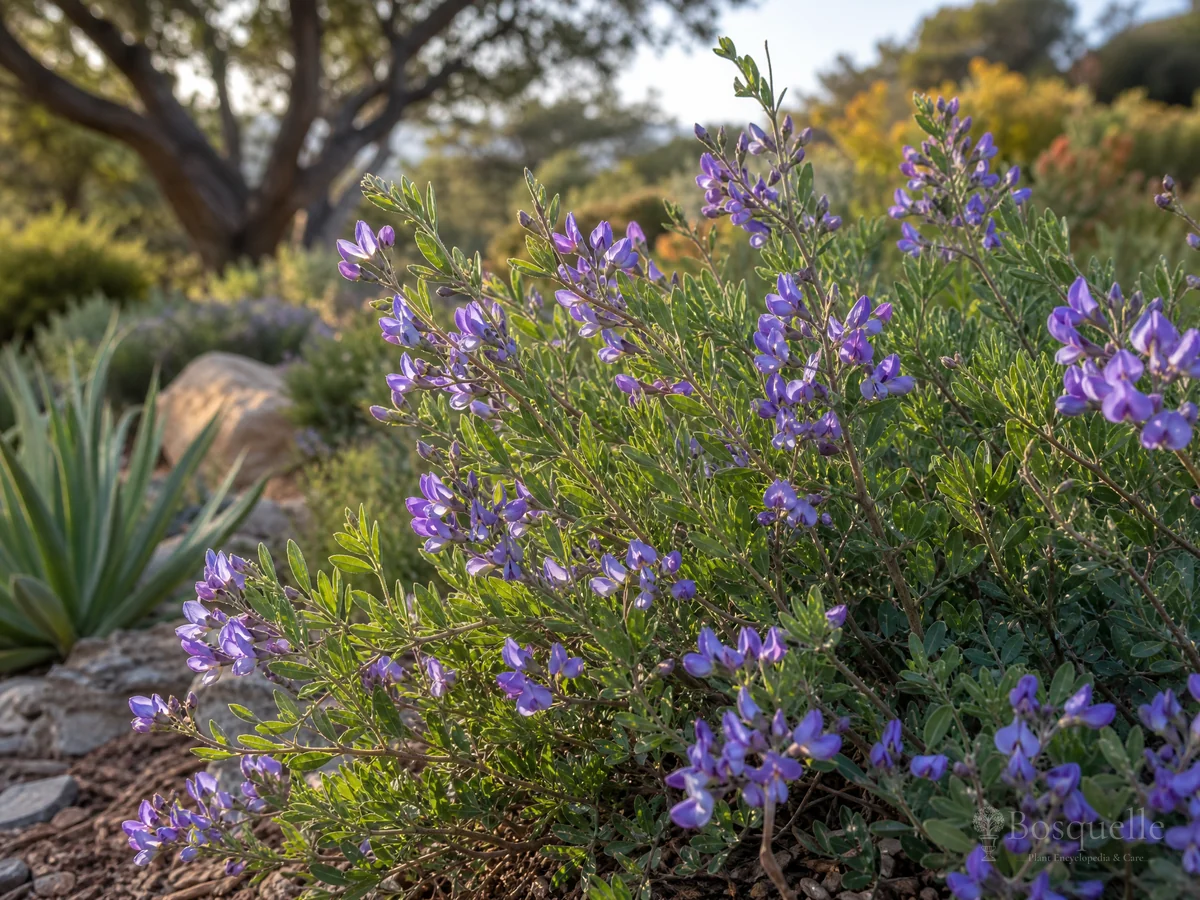
Grow chaparral pea in full sun on ground that drains, then skip extra summer water once the shrub takes. Chaparral pea is Pickeringia, also sold as Montana chaparral pea. It is not a garden pea, and it is not the chaparral plant community.
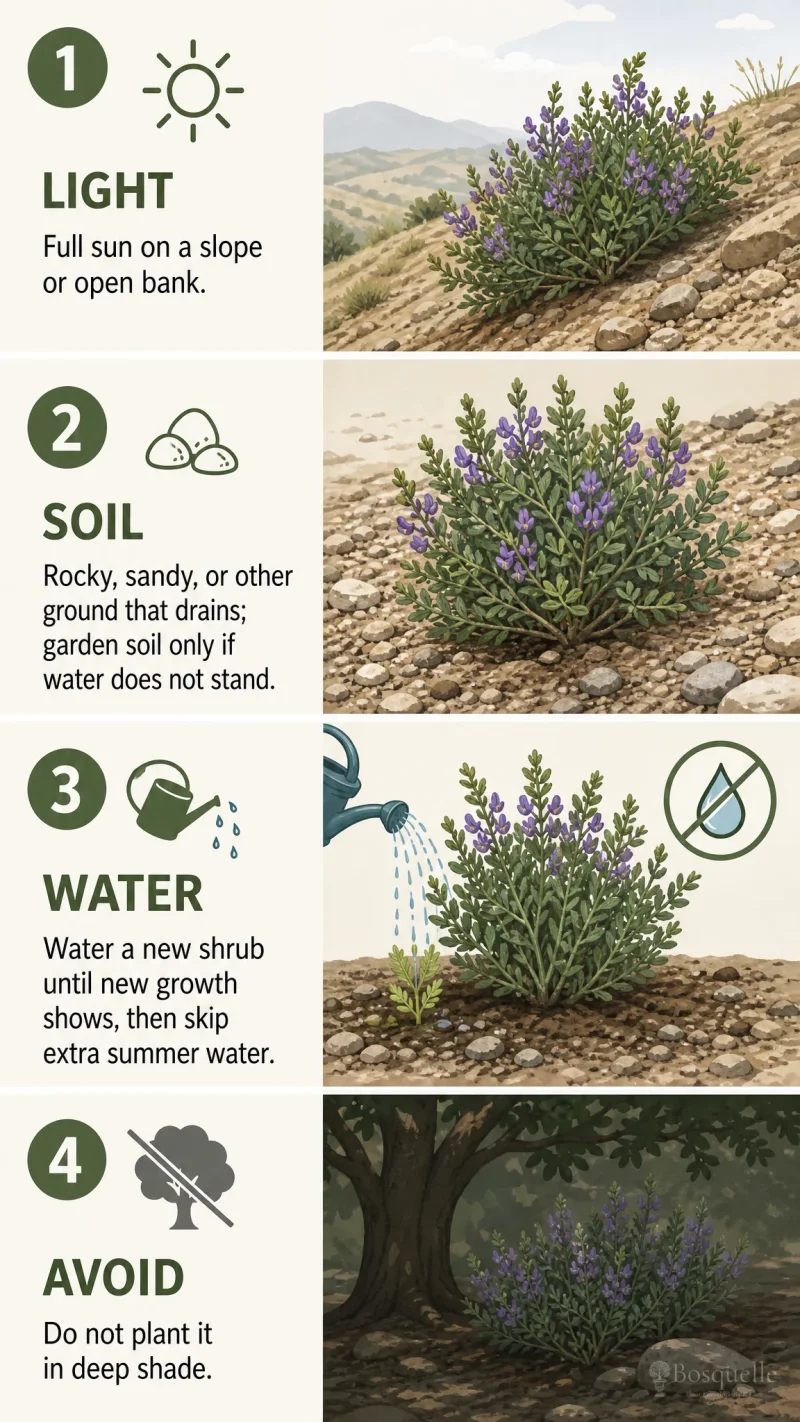
Give it full sun and soil that drains, then skip extra summer water
| Factor | Recommended | Avoid |
|---|---|---|
| Light | Full sun on a slope or open bank | Do not plant it in deep shade |
| Water | Water a new shrub until new growth shows, then skip extra summer water | Do not keep summer irrigation on an established plant |
| Soil | Rocky, sandy, or other ground that drains; garden soil only if water does not stand | Do not plant it in a soggy, low spot |
| Drought | Once the roots take, let rain and winter wet do the work | Do not soak the bed in summer to hold a green color |
| Size | About 1 to 6 feet tall and 6 to 8 feet wide as a dense thicket | Do not crowd it against a path you will brush in shorts |
| Thorns | Leave room to walk past the thicket; wear gloves when you cut | Do not plant a dense thicket against the house |
chaparral pea wants full sun and ground that drains. Water a new shrub until you see new growth, then ease off. An established plant on a dry bank takes missed summer water better than a wet hole. [1] Native nurseries keep it summer-dry on a hot hillside, because regular summer irrigation is what fails it. [2] The shrub is stiff and intricately branched, with shiny dark-green leaves that usually split into two or three leaflets, and with thorns at the branch tips. It is a pea-family shrub, not a vine and not a vegetable. In a long dry spell the leaves may thin or drop, then new growth returns when rain comes back.
Plant a nursery shrub on a dry slope
Buy a nursery can if you can find one, because this shrub is hard to start and hard to move. Plant it in fall or early spring on a dry, draining slope, at the same depth it sat in the can. Water until new growth shows, then skip extra summer water. Do not dig a plant from wild chaparral.
- Choose a nursery can. Wild plants resent a move, and seed is rarely the home method.
- Plant in fall or early spring, on a hot dry hillside or other ground that drains.
- Set the crown at the same depth it sat in the can. Backfill with the native soil. Do not bury the stem in a rich, wet mix.
- Water until new growth shows, then stop extra summer water.
- Leave 6 to 8 feet for the thicket to widen, and keep it off a path you will brush in shorts.
How do I plant chaparral pea?
Set a nursery can at the same depth on a dry, draining slope in fall or early spring. Water until new growth shows, then skip extra summer water.
Is chaparral pea hard to grow?
It is hard to establish if you water it like a wet border plant. On a dry bank in full sun, with extra summer water skipped once it takes, it is a low-care shrub.
Do not count on seed — new stems come from the roots
Pods are rare, and many of the seeds that do form fail, so most gardeners never start from a packet. Once a shrub is in, new stems come from spreading roots, especially after the top is damaged. [3] Do not dig a wild thicket to get those roots. If a native nursery has the plant, that can is the start.
- Look for a nursery plant first.
- Do not dig a shrub from wild chaparral.
- If you have seed, expect many not to sprout. Fruiting is rare in the garden.
- After the shrub is in, let new stems come from the roots. Stem cuttings are not the home method.
Can I grow chaparral pea from seed?
Usually no. Pods are rare, and the shrub spreads from roots. Buy a nursery can if you can find one.
Magenta pea flowers in late spring — then a light cut
From late spring into summer the new wood carries reddish-lavender pea flowers near the branch tips, about half the size of a sweet-pea bloom. Leave the thicket alone while it flowers. After that flush fades, cut dead or crossing wood and stop. Do not shear it into a hedge. Wear gloves, because the branch tips are thorns.
- Wait until the magenta flush fades before you cut.
- Remove dead or crossing wood. Leave the natural shape.
- Wear gloves. The branch tips are sharp.
- Do not shear the shrub into a hedge, and do not cut it to the ground unless fire or breakage already took the top. New stems can return from the roots, but that is recovery, not routine care.
When does chaparral pea bloom?
Late spring into summer. The flowers are magenta pea blossoms on new wood, not a climbing sweet pea.
Do I prune chaparral pea?
A light cut after bloom is enough. Take dead wood, wear gloves, and leave the shape. Do not shear it.
Not a sweet pea — and not the chaparral plant community
A tag that says sweet pea is usually Lathyrus, a climbing vine with tendrils and many leaflets, not this thorny shrub — see How to Grow Sweet Peas. A packet of garden peas, field peas, or Little Marvel is Pisum, a vegetable you trellis for pods. Chaparral pea does not give you a crop.
Lupine is a softer pea-family plant with palmate leaves and tall spikes, not a woody thicket — see How to Grow Lupines. When the shrub is out of bloom, people mix it with buckbrush. Buckbrush is Ceanothus: opposite, simple leaves and no thorn at the branch tip. Chaparral pea has alternate leaves that split into leaflets, and a thorn at the tip — see How to Grow California Lilac. [4]
Chaparral, on a search, is often the plant community of California shrubs, or a tea name for creosote bush, not this one species — see How to Grow Creosote Bush. Montana in the shop name means of the mountains. The plant is a California endemic, not a Montana wildflower.
What kind of plant is chaparral?
Chaparral is a shrubland of many species. Chaparral pea is one thorny pea-family shrub in that mix, not the whole community and not creosote tea.
How many peas will I get from one plant?
None as a crop. This is an ornamental shrub. Pods are rare, and they are not garden peas.
What month to plant field peas?
That question is for garden or field peas, not this shrub. Plant a chaparral pea can in fall or early spring on a dry slope.
Do little Marvel peas need to be trellised?
Little Marvel is a garden pea. Chaparral pea is a self-supporting shrub. Do not trellis it.
Set chaparral pea in full sun on a dry slope, water until it takes, then skip extra summer water so the thicket can hold.
FAQ
Can I grow chaparral pea in a pot?
A large, draining pot can hold a young plant for a short time. The shrub wants a dry bank and room for spreading roots. Set it in the ground if you want a thicket.
Can I grow it indoors?
No. It is a full-sun chaparral shrub. Keep it outdoors on draining ground.
Is woolly chaparral pea a different plant?
It is a southern botanical variety of this species, with hairier young leaves. Give it the same sun, drain, and summer-dry care. It is not a second shop plant.
Can I eat the pods?
Grow it as a shrub, not as food. Pods are rare. Do not cook them or take the plant as medicine.
What else likes a dry bank?
California lilac, flannel bush, and bush poppy share sun and drain on a summer-dry slope. Give each shrub room, because chaparral pea spreads from the roots.
Recommended plants

References
- [1] Las Pilitas Nursery -
https://www.laspilitas.com/nature-of-california/plants/497--pickeringia-montana - [2] Yerba Buena Nursery -
https://www.yerbabuenanursery.com/plant/0143 - [3] USDA Forest Service FEIS -
https://www.fs.usda.gov/database/feis/plants/shrub/picmon/all.html - [4] Friends of Edgewood -
https://friendsofedgewood.org/chaparral-pea
More first-season notes by plant are gathered in How to Grow Guides.
Updated: Reviewed by Bosquelle Editors