
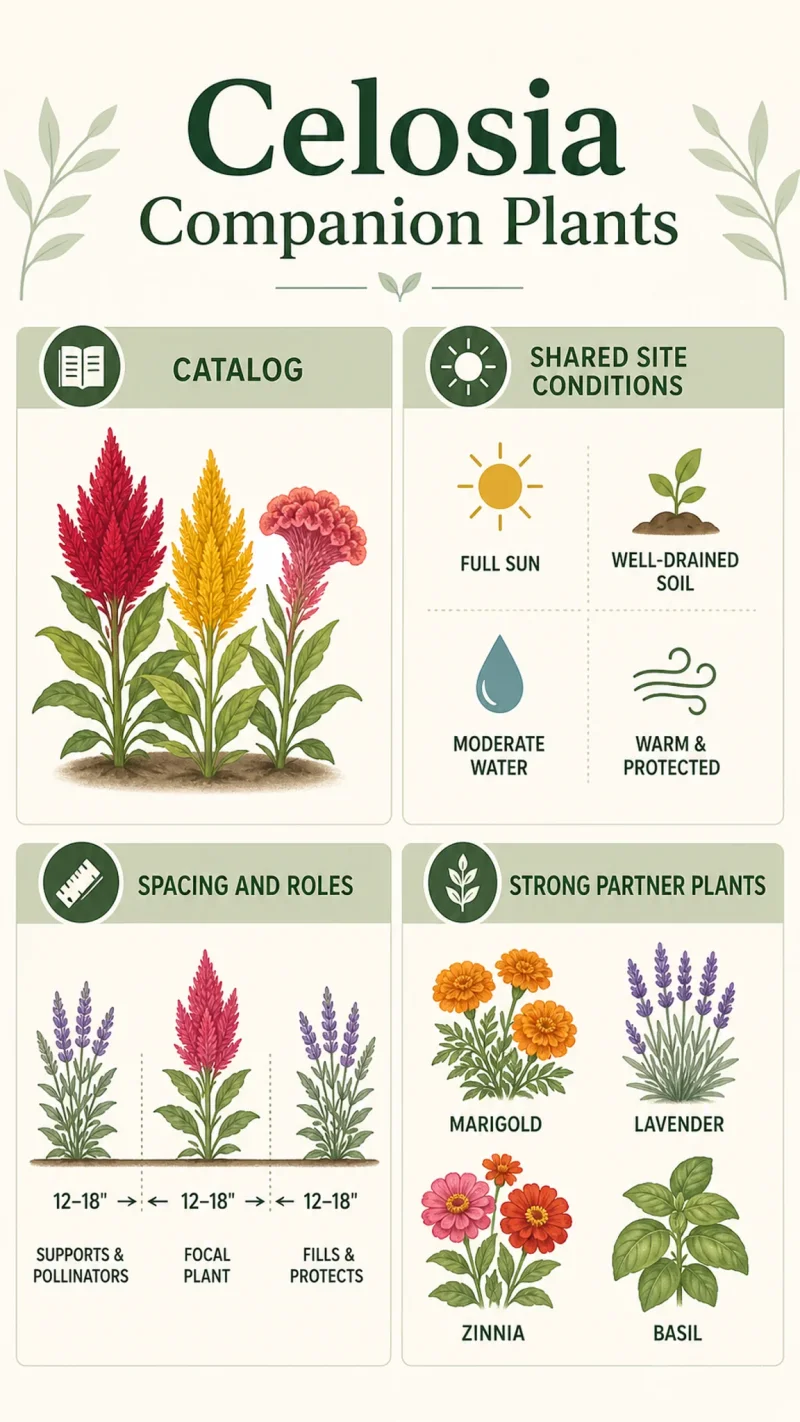
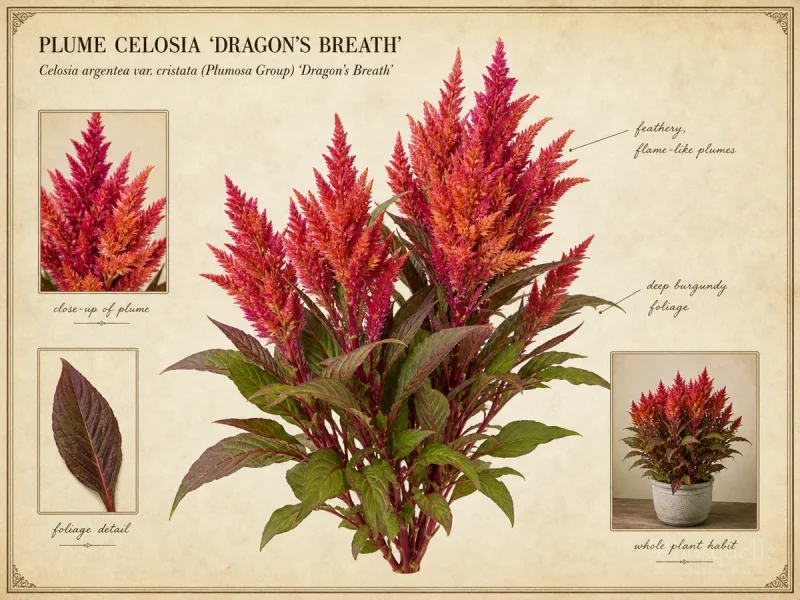
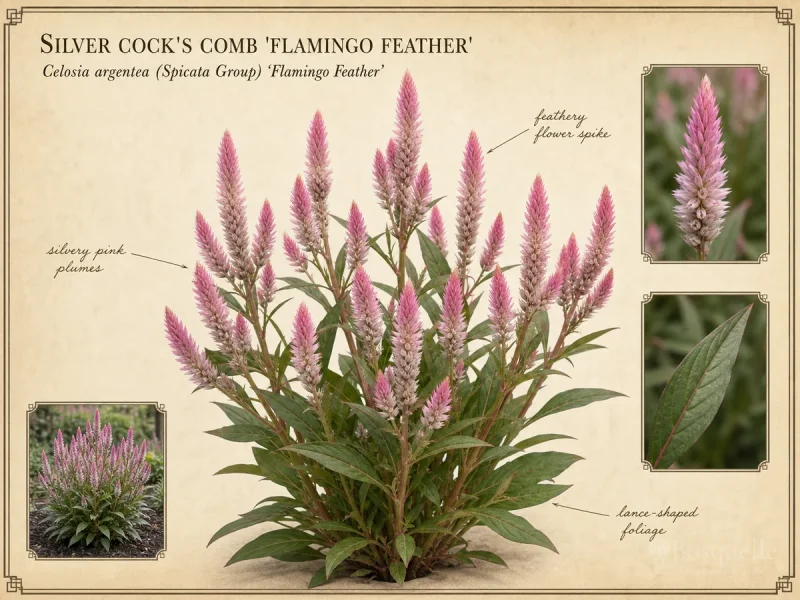
Partners must share full sun, heat, and even moisture. Celosia is the bright summer annual in that bed, not a plant you tuck under a shrub. Dragon's Breath as a plume mass, Tornado Red as a crest, and Flamingo Feather as a wheat line each need air and a job.
Water and frost timing stay on How to Grow Celosia.
Partners that share sun and heat
| Factor | Recommended | Avoid |
|---|---|---|
| Site | Same full sun and drained summer bed | Shade shrubs and wet, cool feet |
| Season | Heat annuals and sun perennials that take summer | Spring-only plants that need the bed cool and moist later |
| Height | Spikes behind, low plants in front | A tall neighbor that shades the celosia crown |
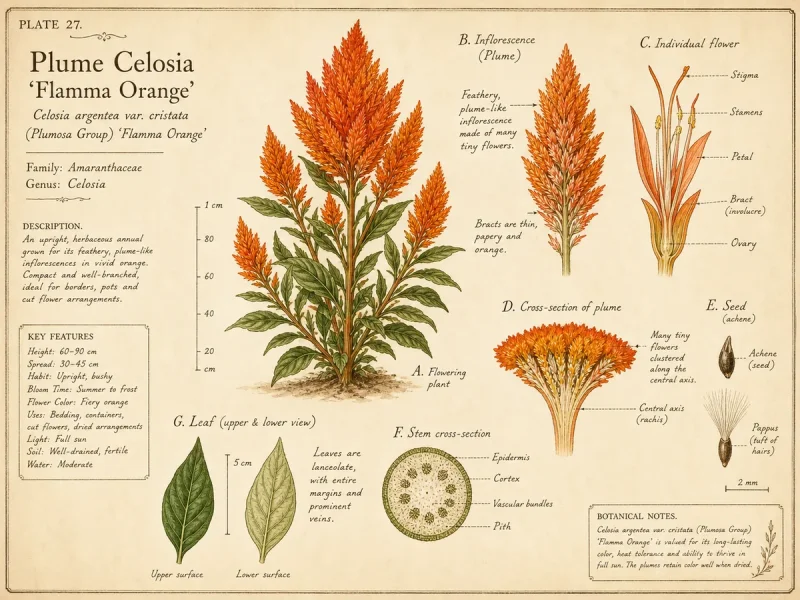
Zinnias, marigolds, pentas, and sun-grown salvias match the heat budget. Keep forms readable. A plume block such as Dragon's Breath or Fresh Look Orange is easier to read if the neighbors are simpler petals, not another heavy comb.
Vegetable beds can host a row of celosia if sun and water match. A tomato jungle that closes over the annuals by July is a poor partner. Basil can edge the bed if it does not shade the crowns.
Form still matters. Mass one plume color for a block. Give crests their own clearing. Thread wheat types such as Flamingo Feather along an edge. Mixing all three in one square meter hides the shortlist.
Cool foils and low skirts
White flowers, silver foliage, or dusty miller calm a hot red or orange block. Grey leaves next to Tornado Red stop the crest from reading as noise. Keep the foil as low as the celosia needs light.
A low sun annual in front — alyssum in heat that holds, or a compact marigold — is a skirt. It must not climb the stems. A trailing ipomoea can spill from a pot if it stays a skirt, not a smother.
Purple salvia spikes behind orange plumes are a classic height match. They still need the same watering. A moisture-loving shade coleus is the wrong foil even if the leaf color looks good in a photo.
Lime crests such as Cramer's Lemon Lime sit well beside deep burgundy foliage if that foliage also takes full sun. Shade-bred coleus will cook or force you to water in a way that rots the crest.
Give crests air and keep forms in blocks
Dense heads need space after rain. Do not pack another heavy head — a second cockscomb, a large dahlia, or a wet hydrangea — against Tornado Red. Simpler petals and a gap you can reach for cutting are enough.
Plume masses can sit closer for a color block if air still moves. Wheat lines can run along the front without the bulk of a crest. Keep a path or a stepping gap for deadheading day.
In a pot, one celosia as the tall plant, one foil, one low trailer — same sun and water. Do not pair a desert succulent skirt with a thirsty celosia unless you like failing both.
Photograph the block at noon. Neon reads hotter then than at dusk. Adjust foil brightness, not the annual calendar.
Repeat one color temperature in a block. A mass of orange plumes with one white foil reads stronger than five neons in one square. Crests still want a gap you can reach. Wheat types can take the front without stealing the comb’s job.
A mixed border that is irrigated all summer for thirsty annuals is fine if the celosia strip also drains. If the bed never dries at the crown, move celosia to a raised strip and keep the wetter plants elsewhere.
Leave a stepping gap for cutting day. Density looks fine until you cannot reach a spent crest without crushing the skirt. Two partner notes are enough: one foil or spike behind, one low plant in front.
Wrong partners for celosia
Shade shrubs, hostas, and ferns force celosia into green delay. Chronic wet partners rot the crown. Aggressive vines climb soft stems. A cool-season pansy bed that you keep misted is the wrong season.
Do not shear celosia to “tidy” for a partner. Deadhead spent heads. Leave the plant in sun. Partners never rewrite the heat and drainage rule on the care page.
If a partner needs staking cages, weekly deep soak in heavy clay, or afternoon shade forever, put it elsewhere. The celosia strip should stay a simple summer job: sun, drain, even water, hide nothing.
Groundcovers that root into the annual row make next year’s plant-out a mess. Keep a collar. Ivy and vinca that swallow the strip are a slow fail. Pull them back before you set transplants, not after shoots are already trapped.
A rose bed you feed and water all summer is a poor celosia home in heavy soil if the roses keep the ground wet at the annual crowns. Put celosia in a drained strip at the front.
Confirm form before you plant a tall crest against a slow, low carpet that will hide the show. Browse Types of Celosia if height is still a guess. Plant-out timing stays on Planting Celosia.
Forget-me-not and other cool spring carpets finish before celosia wants the bed. That succession can work. A spring carpet you keep watering into a cold wet June under new transplants is the fail. Let the soil warm, then set the annuals.
Types: Types of Celosia. Plant-out: Planting Celosia.
FAQ
What grows well with celosia?
Other full-sun heat annuals and sun salvias — zinnia, marigold, pentas — plus a low skirt that does not shade the crown.
Can I plant celosia with zinnias?
Yes in full sun with matched water. Keep forms in separate readable blocks.
Should companions shade celosia?
No. Shade kills color intensity.
Can I mix crest and plume?
Yes as distinct zones — crest in a clearing, plume as a mass — not a muddle.
Can coleus sit with celosia?
Only sun-grown types with matched water. Many coleus want more shade than celosia will take.
What about marigolds nearby?
Compatible heat-sun annuals when colors do not cancel and neither plant shades the other.
Can I use dusty miller as a foil?
Yes — silver foliage beside neon celosia in full sun with drainage.
Where is planting detail?
See Planting Celosia — not duplicated here.
Related guides


Recommended plants




This note is part of Celosia Guides.
More neighbour shortlists by plant live in Companion Plant Guides.
Updated: Reviewed by Bosquelle Editors