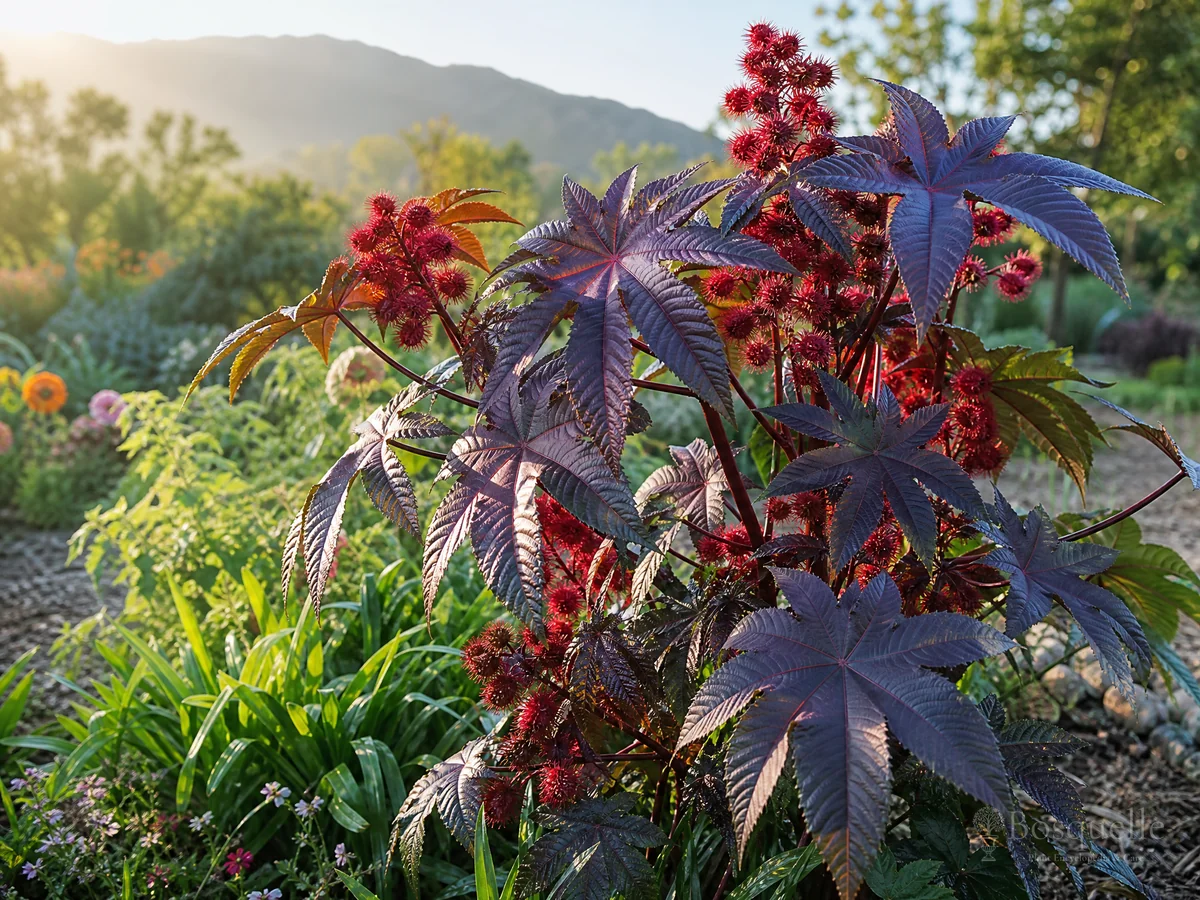
Grow castor bean in full sun, in soil that drains, and water it until the plant is established. Castor bean is Ricinus. Shops also say castor oil plant or mole bean.

Give it full sun and soil that drains — and water until it is established
| Factor | Recommended | Avoid |
|---|---|---|
| Light | Full sun, at least six hours a day | Do not site it in shade, where the plant stays thin and the leaves stay small |
| Soil | Deep, rich ground that stays moist but drains | Do not plant it in a wet pocket that never dries |
| Water | Water regularly until the plant is established. After that, it can handle a dry spell | Do not leave the roots in standing water |
| Wind | A spot with some shelter, and a stake if a tall plant gets top-heavy | Do not put it in an open gale that shreds the palmate leaves |
| Deer | Deer usually leave the leaves | Do not count on that where deer browse every plant |
| Kind | Compact Carmencita for a large pot or a smaller bed; the tall species for a back-of-border screen | Do not expect the tall screen from a compact red-leaf plant |
Castor bean wants full sun and deep soil that drains. Water it through the first weeks so the roots take, then you can ease off. Wind shreds the big palmate leaves, so pick a spot with some shelter, and stake a tall plant if it gets top-heavy. [1] Carmencita stays about four to five feet, with bronze-red foliage that suits a large, heavy pot. African Wonder Tree is the taller screen, often six to ten feet in one warm season. [2]
Keep watering until the roots take. Sow after frost on Planting Castor Bean.
Does castor bean need full sun?
Yes. Give it at least six hours of direct sun. Shade keeps the plant thin and the leaves small.
Can I grow it in a pot?
Yes, in a large, heavy pot that drains, in full sun. Carmencita is the compact kind for a patio. It is still an outdoor summer plant, not a windowsill plant.
Not a food bean — keep it away from children and pets
Castor bean is not a snap bean or a dry cooking bean. Those food beans are Phaseolus — see How to Grow Beans. The mottled seeds look a little like a swollen tick, and they are not edible. Every part of the plant can poison a person or an animal if it is eaten, and the seeds are the worst. A few chewed seeds can kill. Do not plant it where children or pets play. Wear gloves when you handle foliage, because the sap can inflame skin. [3] [4]
Is this a food bean?
No. Castor bean is Ricinus, not Phaseolus. Do not cook the seeds or treat them as a garden bean crop.
Are the seeds poisonous?
Yes. The seeds are the most poisonous part. Keep the plant out of a play yard, wear gloves, and pinch off the pods before they ripen if you need to keep seed out of reach.
Pinch off the seed pods before they ripen
The usual way to keep the poisonous seeds off the plant is to pinch the spiny capsules while they are still small, before they brown and split. Bag the pods and put them in the trash. Do not compost them, and do not press them for oil at home.
- Wear gloves, and pinch the clusters while the capsules are still small and green or red.
- Bag the pods and put them in the trash. Do not add them to the compost.
- If a capsule has already split, sweep up every seed you can see and throw those away too.
Do I have to remove the pods?
Yes if children or pets can reach the bed. Pinch the capsules while they are small so the plant never drops a seed.
Keep the bed in full sun, water until the roots take, and keep the plants out of a play yard. If pods form, pinch them off before they ripen.
FAQ
Will castor bean come back after frost?
A freeze kills the top. In a frost-free winter the plant can live more than one year and get much taller. In a cold-winter garden, sow again after the last frost.
Can I press the seeds for oil?
Do not press the seeds or make oil at home. The seeds are poisonous. Castor oil is a factory product, not a backyard harvest.
Do I need to prune it?
You do not have to. You can cut it back if it outgrows the bed, and a tall plant may need a stake in wind. Removing the flower spikes is the same job as pinching the pods.
What is the difference between Carmencita and the tall plant?
Carmencita is a compact red-leaf form of the same species, about four to five feet. The tall plant, sold as African Wonder Tree, is the larger screen. Both want full sun, and both have poisonous seeds.
Related guides
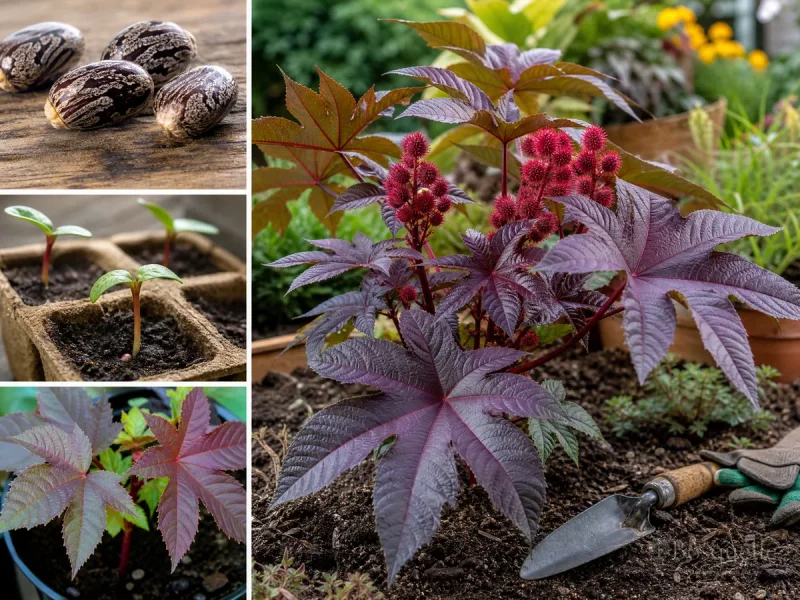
Recommended plants

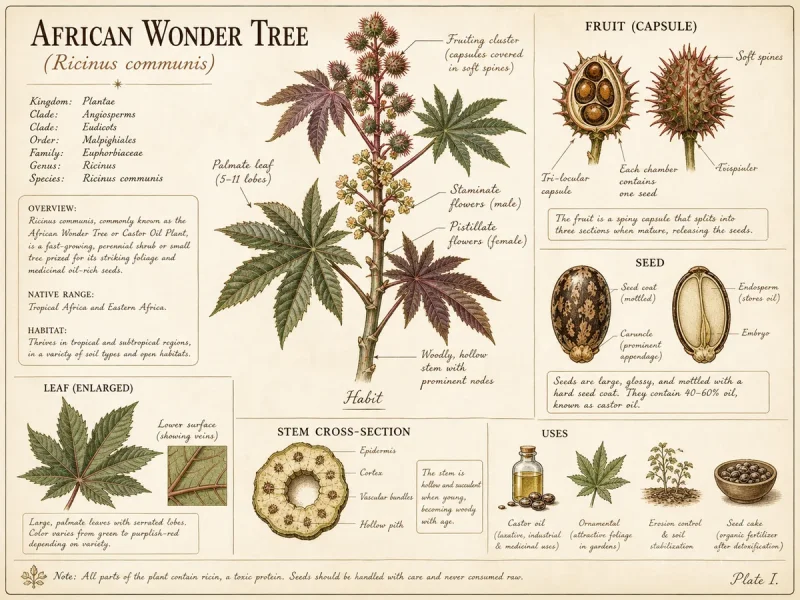
References
- [1] Wisconsin Horticulture -
https://hort.extension.wisc.edu/articles/castor-bean-ricinus-communis/ - [2] Cornell Home Gardening -
http://www.gardening.cornell.edu/homegardening/scene229f.html - [3] University of Arkansas Division of Agriculture -
https://www.uaex.uada.edu/yard-garden/resource-library/plant-week/castor-bean.aspx - [4] North Carolina Extension Gardener Plant Toolbox -
https://plants.ces.ncsu.edu/plants/ricinus-communis/
This note is part of Ricinus Guides.
More first-season notes by plant are gathered in How to Grow Guides.
Updated: Reviewed by Bosquelle Editors