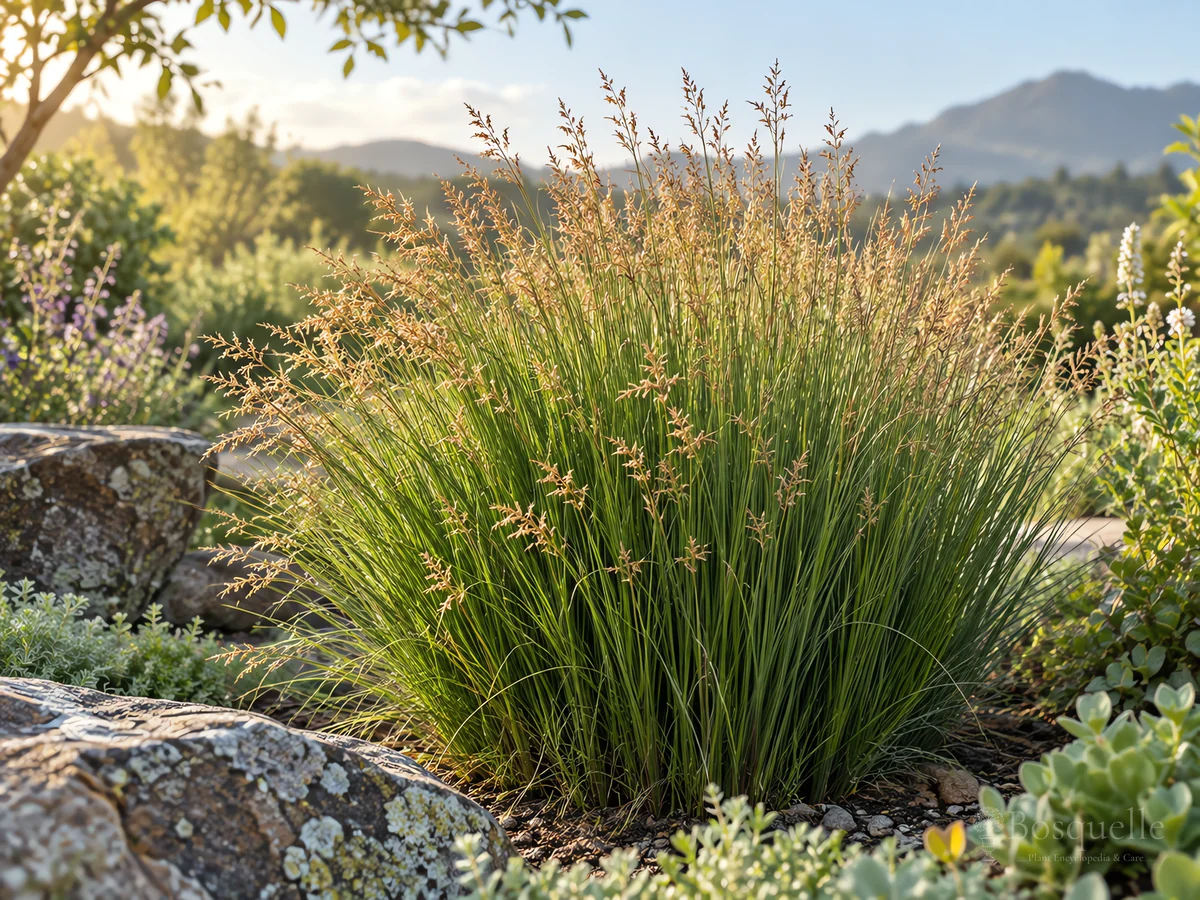
Grow cape thatching reed in full sun on soil that drains. Cape thatching reed is Elegia tectorum. It is not a true rush.

Give it full sun and soil that drains
| Factor | Recommended | Avoid |
|---|---|---|
| Light | Full sun | Do not hide it in deep shade |
| Water | Water for six to eight weeks after planting; then skip extra water except a long dry spell | Do not leave the crown in standing water, especially in winter |
| Soil | Moist soil that drains after rain; loam or sand is fine | Do not plant it in a winter bog |
| Feed | Lean ground is enough | Do not pile on rich fertilizer |
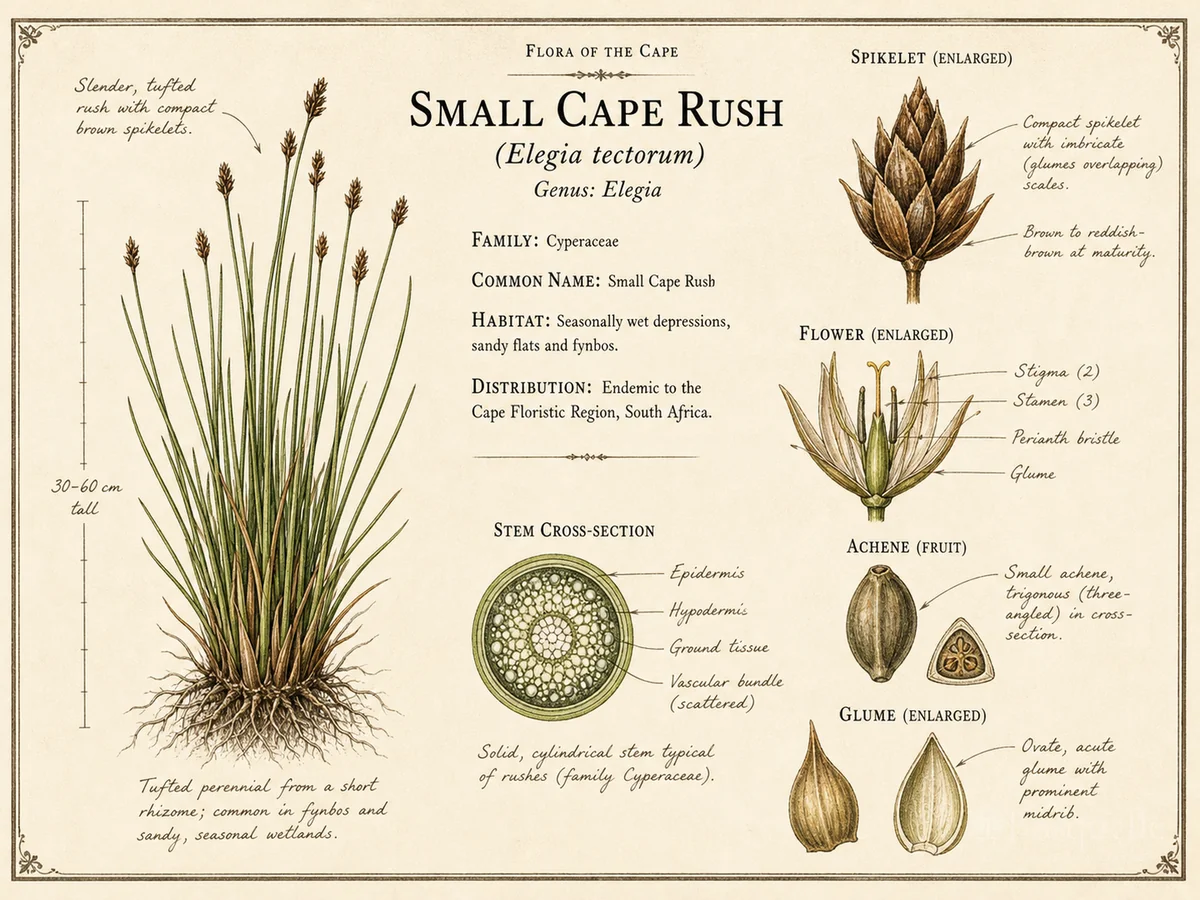
Cape thatching reed is an evergreen Cape reed, a restio, with dark green unbranched stems and brown sheaths at the joints. Give it full sun, soil that drains, and room for air to move through the clump. Water through the first six to eight weeks after you plant. Once the roots take, skip extra water except during a long dry spell. [1] Moist soil that drains after rain is the right mix. In a hard freeze, grow it in a pot you can move under glass or onto a sheltered porch, and water sparingly while it sits there. [2] Standing water around the crown in winter is the usual cause of rot. Cape Thatching Reed is about 2 to 3 feet tall and 3 to 4 feet wide, with brown flower heads late in the season. [3] Tags may still say Small Cape Rush or Chondropetalum tectorum.
How much sun does cape thatching reed need?
Full sun makes the strongest stems. Light shade is tolerated, but the clump opens and weakens in deep shade.
How often should I water cape thatching reed?
Water for six to eight weeks after planting. Once the clump is set, skip extra water unless a long dry spell dulls the stems. Do not leave the crown in a puddle.
Does cape thatching reed come back every year?
Yes. It is evergreen, so the clump stays. Pull brown outer stems at the base rather than waiting for a bare crown in spring.
Plant in spring or fall, at the same depth as the pot
Set a nursery clump in spring or fall, when you can keep the soil moist for six to eight weeks. On a winter-rain coast, plant as the rains start. Dig a hole twice as wide as the root ball, not deeper, and set the crown at the same depth it sat in the pot. In heavy clay, plant on a raised mound so winter water runs off. Do not disturb the roots later.
- Plant in spring or fall, when you can keep the soil moist for six to eight weeks.
- Dig a hole twice as wide as the root ball. Set the crown at soil level; do not bury it.
- In clay, plant on a raised mound so water does not sit on the crown in winter.
- Water it in, and keep those first weeks moist while the roots take.
- Keep mulch off the crown, and leave the roots alone after you plant.
When do I plant cape thatching reed?
Plant in spring or fall, when you can water for six to eight weeks. Set the crown at soil level.
Grow it in a large pot that drains
A large pot with a drainage hole works on a patio, or if you need to move the plant before a hard freeze. Use potting mix, not garden soil, and empty the saucer after you water. Keep the pot outdoors in full sun. This is not a windowsill plant. In summer, water whenever the top of the mix is dry. [4]
- Choose a large pot with a drainage hole, and fill it with potting mix.
- Set the crown at mix level, water it in, and do not leave the pot in a saucer of water.
- In a hard freeze, move the pot under glass or onto a sheltered porch, and water less while it sits there.
Can I grow cape thatching reed in a pot?
Yes, in a large pot that drains. Use potting mix, keep it outdoors, and water more often in summer. Do not grow it as a houseplant.
Pull the dead outer stems — do not shear the clump
This clump stays evergreen, so do not shear it to a shorter height the way you would a deciduous grass. New stems push from the center. If you cut the green stems down, they die back and the plant rarely recovers. Pull or cut only the brown, dead stems on the outside, at the base.
- Pull or cut brown, dead outer stems at the base, working from the outside in.
- Leave the living green stems in place. New shoots come from the center of the clump.
- Do not shear the whole clump to shorten it. A cut-back restio rarely looks good again.
Can I cut cape thatching reed back?
Pull brown outer stems at the base. Do not shear the clump to a shorter height. Cut green stems die back, and the plant rarely recovers.
Divide in early spring, or sow soaked seed
A crowded clump can be lifted and split in early spring. Each piece needs roots and green shoots. Replant at once and water it in. Seed is slower: soak it for 24 hours in warm water, then sow it in pots at about 61 to 64 F and keep the mix just moist until seedlings show.
- Lift a mature clump in early spring.
- Split it so each piece has roots and shoots, then replant at the same depth and water it in.
- To start from seed, soak the seed for 24 hours in warm water, sow it in pots, and keep the mix moist. Seedlings grow slowly the first year.
How do I divide cape thatching reed?
Lift the clump in early spring. Split it so each piece has roots and shoots, then replant at the same depth and water it in.
Not a rush — and not horsetail
A true rush is a Juncus, often with pithy stems and a wetter job — see How to Grow Rush. Cape thatching reed is a restio: the leaves are reduced to brown sheaths, and the clump wants soil that drains. Horsetail is Equisetum, a spreading plant with jointed stems that can run through a bed — see How to Grow Horsetail. This Cape reed is not that invasive scouring rush. Papyrus is a Cyperus with umbels over wet soil — see How to Grow Papyrus. Horsetail restio on a tag is usually Elegia capensis, a taller plant with whorls of fine side shoots, not this 2 to 3 foot unbranched clump. A 6 to 8 foot Cape rush sold as Chondropetalum tectorum is often the large form, not this small plant. Confirm the Latin on the tag is Elegia tectorum.
Is cape thatching reed the same as a rush?
No. A rush is Juncus. Cape thatching reed is a restio, Elegia tectorum. Read the Latin on the tag.
If the clump is packed with brown outer stems, pull those at the base and leave the green ones standing.
FAQ
Do you list horsetail restio or the large Cape rush?
No. This catalog holds cape thatching reed, Elegia tectorum, about 2 to 3 feet tall. Horsetail restio is usually Elegia capensis. A 6 to 8 foot Cape rush on a US tag is often another Elegia. Give a shop restio the same sun and drain, and confirm the Latin.
Can I grow cape thatching reed on a windowsill?
No. Keep it outdoors in sun. A large draining patio pot is fine; a warm indoor sill is not.
What should I plant with cape thatching reed?
Give it room to clump, then pair it with other sun plants that like soil that drains. Do not crowd it against a wet, shady hedge.
Recommended plants
References
- [1] South African National Biodiversity Institute -
https://pza.sanbi.org/elegia-tectorum - [2] Royal Horticultural Society -
https://www.rhs.org.uk/plants/305893/elegia-tectorum/details - [3] San Marcos Growers -
https://www.smgrowers.com/products/plants/plantdisplay.asp?plant_id=2820 - [4] The Gardener -
https://www.thegardener.co.za/the-gardener/cc/elegia-tectorum/
More first-season notes by plant are gathered in How to Grow Guides.
Updated: Reviewed by Bosquelle Editors