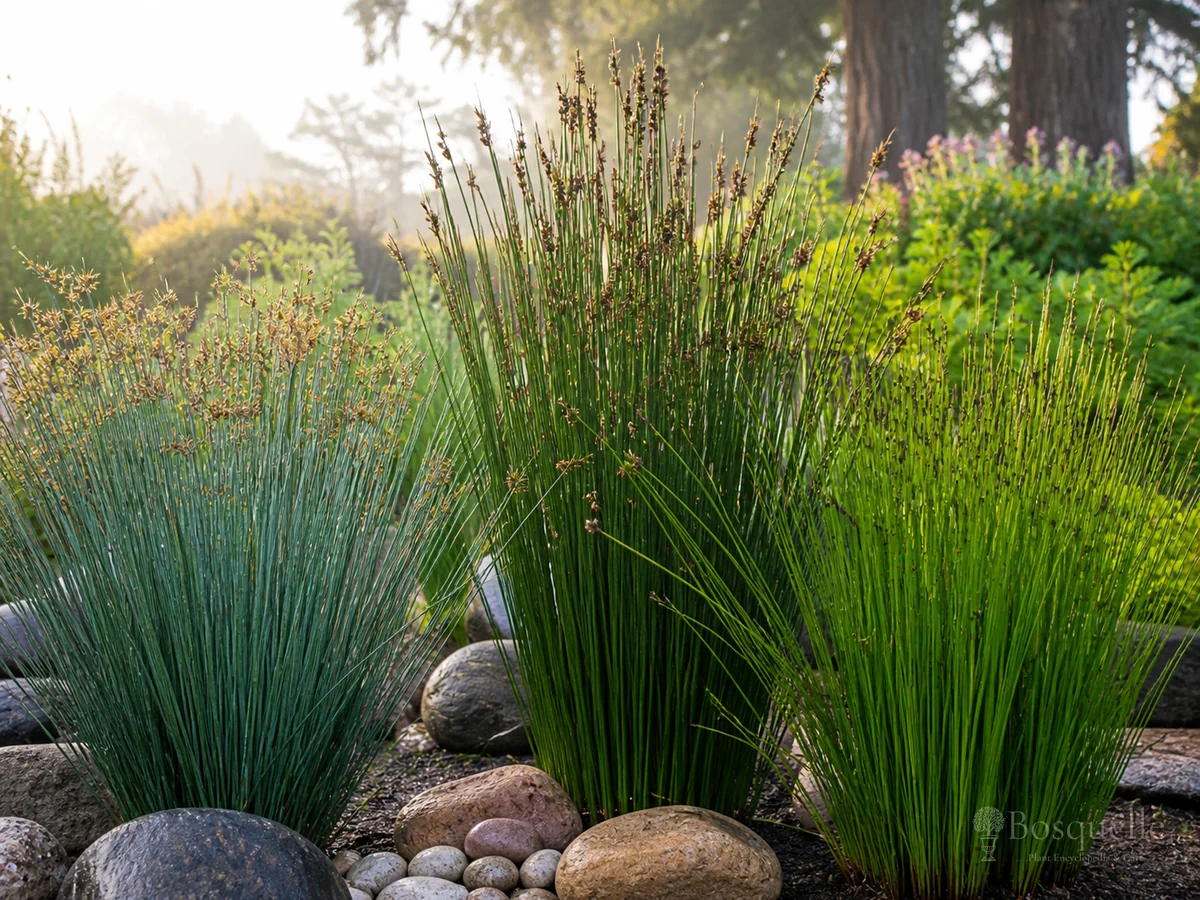
Grow rush in full sun with the moisture that matches the plant you bought. The tag may also say Juncus. Corkscrew forms need soil that stays wet; California gray rush can take a rain garden that dries in summer.

Keep corkscrew rush wet, and site gray rush in a rain garden
| Factor | Recommended | Avoid |
|---|---|---|
| Light | Full sun; light shade is tolerated | Deep shade that flops stems and thins the clump |
| Moisture | Corkscrew and common rush: soil that stays wet, or shallow water over the crown. Gray rush: a rain garden that can dry in summer | Dust-dry soil on corkscrew; assuming every rush needs a pond |
| Site | Pond edge, bog, rain garden, or a pot you can keep wet | A baked mixed border with plants that want dry gravel |
| Spread | A sunk pot with the rim above the soil, or a container on paving | Open ground if you cannot pull seedlings |
| Size | Corkscrew about 12 to 18 inches; gray rush about 2 feet; hard rush to about 3 feet | Treating it as a lawn grass |
Rush fails fastest when the water does not match the plant. Corkscrew and common rush want soil that never dries, and they can sit with about 1 to 6 inches of water over the crown. [1] California gray rush takes that same wet winter, then handles a summer-dry rain garden — it does not need a pond. [2] Full sun keeps the stems upright. Deep shade thins the clump.
- Site the plant in full sun. Light shade is a fallback, not the first choice.
- Keep corkscrew and common rush wet. Use a pond edge, a bog, or a pot that never dries.
- Site California gray rush in a rain garden or other ground that swings from winter wet to summer dry. Water it in the first summer; after that it can take dry spells.
- Do not plant rush in deep shade, and do not put a corkscrew clump in a bed that dries hard in August.
How wet does rush need to be?
Corkscrew and common rush want soil that stays wet, or shallow water over the crown. California gray rush takes wet winters and can dry in summer once it is established.
Does Juncus patens need a pond?
No. Gray rush works in a rain garden and can handle summer-dry spells. It also accepts moist ground.
Full sun or shade?
Full sun is best. Light shade is tolerated. Deep shade flops stems and weakens the clump.
Can rush grow in standing water?
Corkscrew and common rush can sit with about 1 to 6 inches of water over the crown. Gray rush accepts standing water too, but it does not require it.
Pair it with other wet-edge plants
Pair wet corkscrew clumps with other pond-margin plants that share the same water. Pair gray rush with rain-garden plants that can dry down in summer. Keep aggressive spreaders in their own pots so the edge stays tidy.
Plant at the same depth as the pot, and sink a pot to stop the spread
Plant at the same depth the rush grew in the nursery pot. For a pond edge, a group of several clumps reads better than one thin stem. Rhizomes and seed can push into the margin. Sink the pot with the rim above the soil, or grow the plant in a container on paving, if you need a hard stop. [3] Pull volunteers. A 2-gallon pot or larger holds a patio clump more steadily than a tiny cup.
- Water the nursery pot, then slide the root ball out.
- Dig a hole no deeper than the pot. Set the crown at the same depth it grew in the container.
- Backfill and water so the mix stays wet around corkscrew and common rush.
- If spread must stop, sink the pot with the rim proud of the soil, or keep the plant in a container.
- Deadhead spent clusters, or pull seedlings, if you want a tidy edge.
How do I stop rush from spreading?
Grow it in a container, or sink the pot with the rim above the soil. Watch for seedlings and pull them.
Grow corkscrew rush indoors in a pot that never dries
Corkscrew rush is a fair houseplant when the mix stays evenly wet and the light is bright. Do not let the pot go dust-dry — stems yellow, then brown. A saucer of water under the pot is fine. Move a patio pot indoors before a hard freeze if you want green stems through winter.
Can corkscrew rush grow indoors?
Yes. Keep the mix wet in bright light. It can stay green indoors when winters are cold outside.
Divide a crowded clump in spring
When the pot is packed, or the center thins, lift the clump in spring. Split the rhizomes so each piece has stems and roots, and replant at the same depth in wet mix. Do not count on seed if you bought a corkscrew form — seedlings often grow straight.
Cut browned stems in early spring
In a cold winter the stems yellow, then brown, then die back. Cut that thatch in early spring before new growth pushes. In a mild winter the clump may stay green; comb out dead stems and skip a hard cut. Indoor plants in a bright room often stay green and need only light grooming.
- Wait until late winter or early spring, after the worst cold has passed.
- Cut browned outdoor stems close to the crown.
- Leave a green clump uncut except for dead stems.
When should I cut back rush?
In cold climates, cut browned stems in early spring. Evergreen clumps in mild winters need only light grooming.
Not a grass, not a sedge, and not papyrus
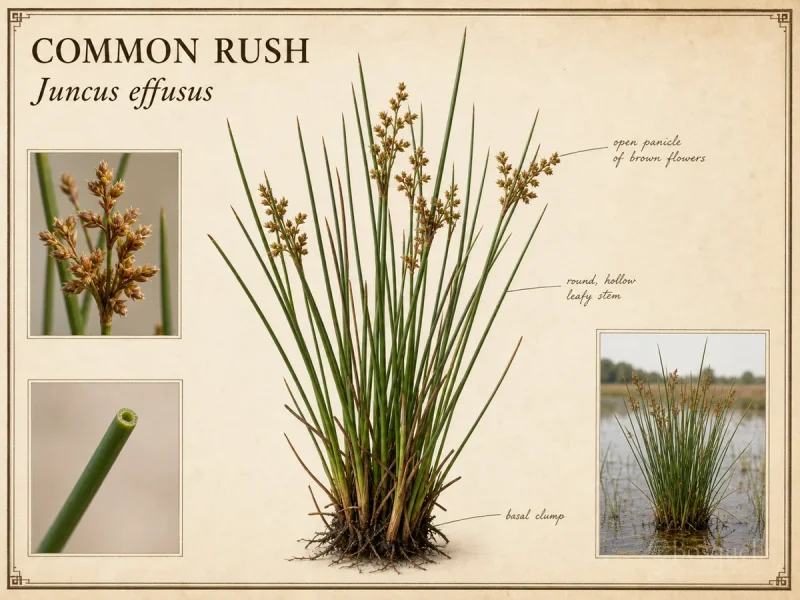
Rush is in its own family. The stems are round and solid, without the joints of a grass. [4] Sedges such as Carex have triangular stems you can feel when you roll them. Papyrus is Cyperus, a different wet plant with umbrella sprays. Cattail is Typha, with flat blades and a sausage spike. Bottlebrush is a woody shrub with red spikes — the name collides with “brush,” not with this plant. The search “juncus grass” is a nickname. Grow this as a rush.
Is rush a grass?
No. Rushes have round, solid stems. Grasses have hollow stems with joints. Sedges have triangular stems.
Corkscrew rush, California gray rush, or hard rush
Sun is shared. Water is not. Read the tag before you mix three clumps in one basin.
J. effusus is common rush, also sold as soft rush. Corkscrew selections on this line want wet soil or shallow water and stay about 12 to 18 inches in a tangled clump. J. patens is California gray rush — stiff gray-green stems about 2 feet tall that take a rain garden and summer-dry spells. J. inflexus is hard rush, an upright blue-green clump to about 3 feet; keep it moist, and do not treat it as a dry border grass.
Corkscrew vs straight rush?
Corkscrew forms twist. Straight species stay upright and wiry. Moisture still depends on the species — a twisted stem is not drought-proof.
Match the rush to moisture, sink a pot if spread must stop, keep an indoor corkscrew wet, and cut browned stems in early spring.
FAQ
Are extra shop names extra plants?
No. Names such as Big Twister, Twisted Arrows, Unicorn, Elk Blue, or Blue Medusa use the same sun and a moisture match. This page covers the three catalog plants.
Why do some tags say sugar grass or wire grass?
Those are nicknames. The plant is still a rush. Grow it for wet soil or a rain garden, not as a lawn grass.
Is rush used as medicine?
Some wild rushes show up in herbal notes. Garden culture here is wet stems and a rain garden, not a remedy.
Recommended plants


References
- [1] NC State Extension -
https://plants.ces.ncsu.edu/plants/juncus-effusus-spiralis/ - [2] Sonoma-Marin Saving Water Partnership -
https://www.savingwaterpartnership.org/plants/juncus-patens/ - [3] Theodore Payne Foundation -
https://theodorepayne.org/nativeplantdatabase/index.php?title=Juncus_patens - [4] University of Illinois Extension -
https://extension.illinois.edu/blogs/grasses-glance/2023-04-17-telling-apart-grasses-sedges-rushes
More first-season notes by plant are gathered in How to Grow Guides.
Updated: Reviewed by Bosquelle Editors