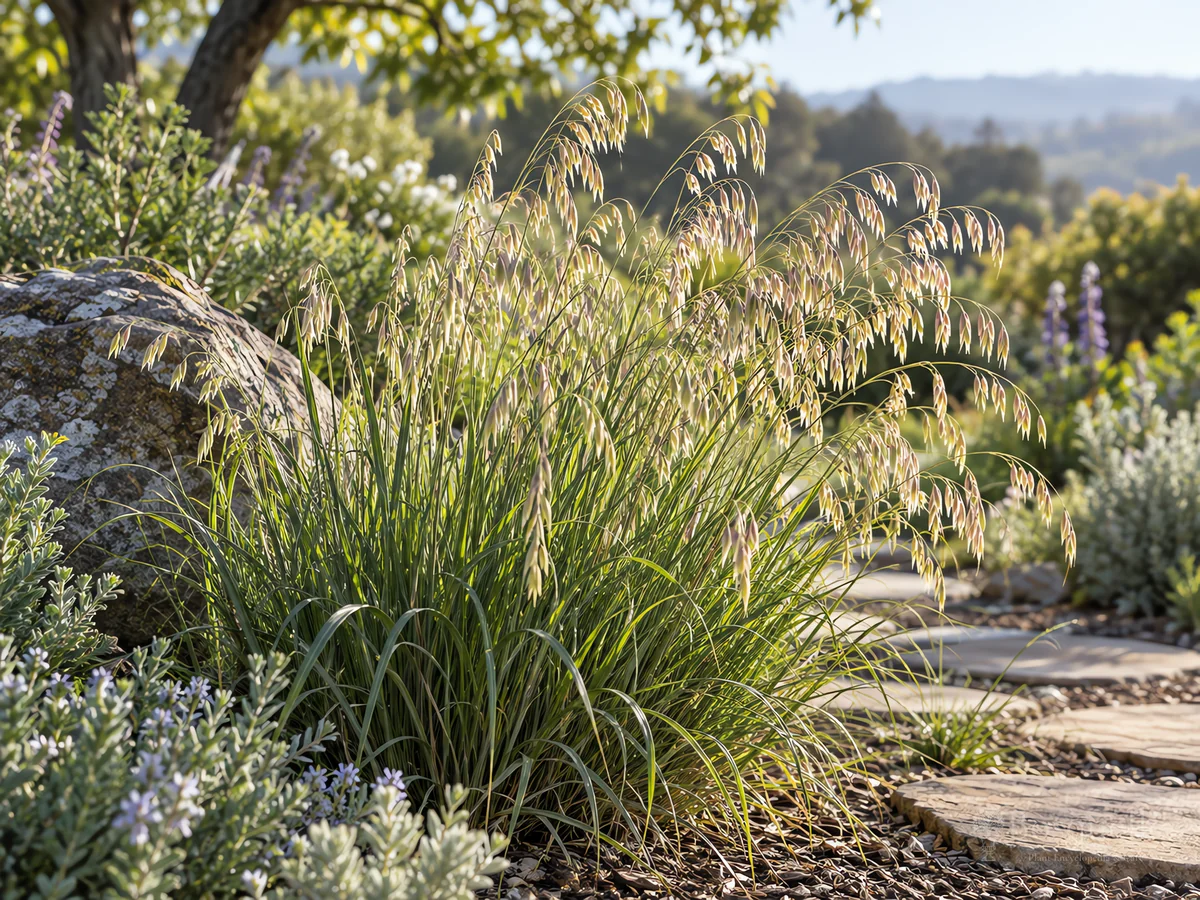
Grow California melic grass in sun or light shade, in soil that drains, and ease off the water once the clump is established. California melic grass is Melica californica, a cool-season bunchgrass that turns gold in summer, not oniongrass and not a lawn.

Give it sun or light shade, and let it go dry in summer
| Factor | Recommended | Avoid |
|---|---|---|
| Light | Full sun to light shade; in a hot, dry site, light shade keeps the clump greener | Do not plant it in deep shade, where the tuft stays thin |
| Soil | Well-drained ground — clay, loam, sand, or serpentine is fine if water does not sit | Do not plant it in a soggy low spot |
| Water | Water a new plant until the roots take, then little or no extra water in summer | Do not keep the soil wet through summer once the clump is established |
| Feed | Little or none — lean ground is enough | Do not bury the crown in rich compost |
California melic grass is a loosely tufted cool-season bunchgrass native to open hillsides, oak woodland, and rocky slopes in California and Oregon. It greens in winter and spring, then turns gold and rests through summer and fall. [1] Give it open light, or the light shade of an oak canopy in a hot, dry garden. The soil can be clay, loam, sand, or serpentine, as long as it drains. [2] Water a new plant until the roots take. After that, the clump gets by on little extra water. In a dry spell you can soak it every few weeks when the top few inches of soil are dry, then stop. Pair it under oaks or with California poppy in a meadow, and leave space between clumps so neighbors do not shade it out. [3]
How much sun does California melic grass need?
Full sun to light shade. In a hot, dry site, light shade keeps the clump greener than a west wall in full afternoon sun.
Is California melic grass drought tolerant?
Yes, once the roots take. Water a new plant until it is established, then give little or no extra water in summer. The gold color in summer is rest, not a sign it needs a weekly soaking.
Do deer eat California melic grass?
Deer usually leave it alone.
Plant in fall, with the crown at soil level
Set a nursery plant in fall, so the roots settle with the rains before summer heat. Dig a hole about twice as wide as the pot and no deeper, and set the crown at the same soil line it had in the container. Space clumps about 2 feet apart so each tuft can fill. Water it in the same day, and keep the soil just moist until new roots take. Then ease off, and let the summer rest begin.
- Plant in fall, in sun or light shade, on ground that drains.
- Dig a hole about twice as wide as the pot and no deeper. Set the crown at the same soil line it had in the container.
- Space plants about 2 feet apart, then firm the soil so there are no air pockets around the roots.
- Water thoroughly the same day, and keep the soil just moist until the roots take. Then give little or no extra water in summer.
When do I plant California melic grass?
Plant in fall if you can, with the crown at the same soil line it had in the pot, and about 2 feet apart. Water until the roots take, then ease off.
Comb or cut the old leaves after it goes dormant
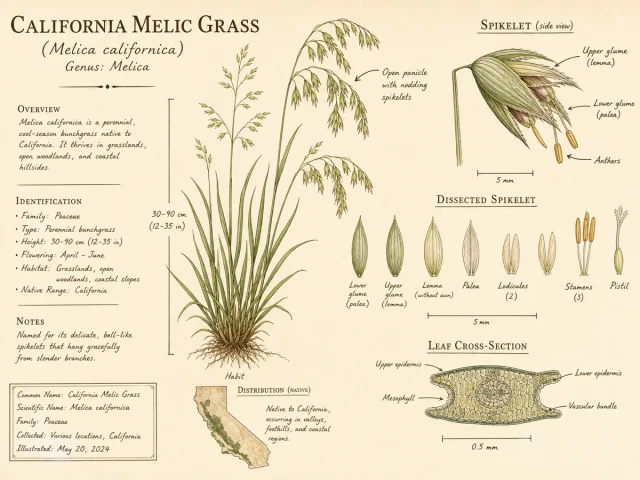
Flower stems rise above a low tuft in spring, often to about 2 to 4 feet, with a narrow panicle of papery spikelets. The stems stay useful in the garden after they dry. When the clump has gone gold in late summer or fall, comb out dead blades with your hands, or cut the old leaves and spent stalks before new green returns. [4] Do not shear it to the ground in spring while it is still growing. That is when it is doing its work.
- Leave the dry stems standing through summer if you like the look, or if birds are working the heads.
- After the clump has gone gold, comb out dead blades, or cut the old leaves and spent stalks.
- Do that in late summer or fall, or just before new green shows. Do not cut a still-green spring clump to the ground just to tidy it.
When do I cut California melic grass back?
After it goes gold. Comb or cut the old leaves in late summer or fall, or just before new green returns. Do not shear a still-green spring clump to the ground.
Divide a clump in fall
A young clump can be split in fall, the same window you plant. Dig it, keep a good root ball on each piece, reset the crowns at the old soil line, and water until new growth shows. Do not tear a small tuft into scraps that have almost no root.
- In fall, lift a crowded clump and split it into pieces that each have shoots and a solid root ball.
- Replant at the same soil line, about 2 feet apart, and water until new growth shows.
Sow seed in fall
Fall is also the time to sow. Scatter seed on a firm, weed-free, well-drained bed in sun or light shade, press it in, and barely cover it. Keep the surface just moist until seedlings show, then grow them on the dry side, the same way you grow the parent clump. Do not bury the seed deep, and do not sow it in midsummer heat and expect a quick stand.
- Sow in fall, on a firm, well-drained bed in sun or light shade.
- Press the seed onto the surface and barely cover it. Do not bury it deep.
- Keep the surface just moist until seedlings appear, then ease off the water.
- Thin the young plants to about 2 feet apart so each clump can fill.
Can I grow it from seed?
Yes. Sow in fall, barely cover the seed, and keep the surface just moist until it sprouts. Then grow it dry, the same way you grow the parent clump.
Not oniongrass — and not purple needlegrass
Oniongrass is a different Melica, Melica bulbosa, with small corms at the base. California melic grass is a tufted bunchgrass without that onion-like base. If a list calls this plant oniongrass, check the Latin name before you copy a bulb-planting recipe.
Purple needlegrass, also called Nassella or Stipa pulchra, is the California state grass. It has long awns on the seed. California melic grass does not. Mexican feather grass is a Stipa with long hair-like awns — see How to Grow Feather Grass if that is the shop tag, and skip it where nurseries warn that it spreads. California fescue is a Festuca with coarser, often blue-green leaves — see How to Grow Blue Fescue if the tag is a fescue, not this grass. Lemon balm is Melissa, a mint, not a grass. Tags that say California melicgrass are this same Melica californica.
Is this oniongrass?
No. Oniongrass is Melica bulbosa, which has small corms at the base. This plant is a tufted bunchgrass. Purple needlegrass has long awns; this one does not.
If the clump dies after a wet summer, the soil stayed too wet. Put the next plants in sun or light shade on ground that drains, water only until the roots take, and let the gold summer rest happen.
FAQ
Is there more than one kind of California melic grass?
Melica californica is the plant here. California melicgrass is the same wildflower. Other Melica names such as oniongrass or Torrey's melic are different species, not extra types of this clump.
Can I grow it in a pot?
It lasts longer in the ground. A large outdoor pot with drainage holes and a gritty mix can hold a clump for a season, in sun or light shade. Water when the top of the mix is dry, empty the saucer, and do not treat it as a houseplant.
Will it come back after it turns gold?
Yes. Gold in summer is rest, not death. Leave the crown in drained ground, ease off the water, and wait for green in the cool season. Wet, heavy soil through summer is what kills it.
Can I cut the stems for a vase?
Yes. The dry stems hold their shape. Cut a few for a vase if you like, and leave the rest on the clump. This is not a food plant, and there is no kitchen or medicine use here.
Recommended plants
References
- [1] Theodore Payne Foundation -
https://www.theodorepayne.org/nativeplantdatabase/index.php?title=Melica_californica - [2] Las Pilitas Nursery -
https://www.laspilitas.com/nature-of-california/plants/1378--melica-californica - [3] CNPS Milo Baker Chapter -
https://chapters.cnps.org/milobaker/wp-content/uploads/sites/9/2023/10/Melica-californica.pdf - [4] Grassroots Ecology -
https://www.grassrootsecology.org/from-the-field/2023/8/14/native-plant-of-the-month-bunchgrasses
More first-season notes by plant are gathered in How to Grow Guides.
Updated: Reviewed by Bosquelle Editors