
Grow feather grass in full sun and soil that drains. Water less once the roots take hold. In U.S. nurseries that usually means Mexican feather grass. Karl Foerster feather reed grass is a different plant.

Give it full sun and soil that drains
| Factor | Recommended | Avoid |
|---|---|---|
| Sun | Full sun, at least 6 hours. A little afternoon shade is fine in hot inland heat | Do not site it in deep shade that flops the clump |
| Soil | Lean or ordinary ground that drains, including sand or grit | Do not plant in a low wet pocket, and do not pile wet mulch on the crown |
| Water | Water until new roots take hold, then water less. Established clumps take drought | Do not keep the soil wet after the first season |
| Use | A 1–2 ft fine fountain for a dry border. Giant oats is a low mound with 6–8 ft oat stems | Do not use Mexican feather grass as a 6 ft vertical screen |
| Deer | Usually left alone on Mexican feather grass | Hungry deer can still browse new growth |
Feather grass fails in wet clay, not in a dry, draining bed. [1] Once the roots leave the nursery ball, water only in a long dry spell. Mexican feather grass is the shop plant — a 1–2 ft hair-fine clump that self-seeds freely. golden oats wants the same sun and drain, but it is a much taller flower stem, not a second Mexican clump.
How often should I water it?
Water to settle a new plant, then let the soil dry. An established clump in draining ground needs water only in a long dry spell. Weekly irrigation after the first season is the usual cause of rot.
Is Mexican feather grass invasive?
It self-seeds by the thousand, and it is a do-not-plant ornamental in California. Check your county extension before you plant. In Texas and New Mexico it is native in the mountains; elsewhere, comb off seed heads if you do not want seedlings. [2]
Plant in spring, with the crown at grade
Plant in spring, or in early fall where winters stay mild, while you can still water. Set the crown at soil level. Space a Mexican clump about 18–24 inches from its neighbor so the fountains can move without rotting in the middle.
- Choose full sun on ground that drains after rain. If the spot stays wet, use a slope or a raised bed.
- Dig a hole no deeper than the nursery pot and a little wider. Mix grit into heavy clay. Do not bury the crown.
- Set the plant so the top of the root ball sits at grade. Backfill, firm, and keep mulch off the crown.
- Water once to settle. Then water less often as new blades appear. Do not flood an established clump.
When should I plant it?
Spring is the reliable window. In mild-winter gardens you can also plant in early fall if you can water through the first dry spell. Keep the crown at grade.
Grow it in a pot that drains
A pot works when the bed stays wet, or when a hard freeze will kill an in-ground clump. Use a container with a drain hole and a gritty mix. Treat the plant as an annual in a hard freeze, or move the pot to shelter.
- Choose a pot about 10–12 inches wide with a drain hole. Do not leave it sitting in a saucer of water.
- Fill with a gritty, low-fertility mix. Rich, wet mix makes the fountain flop and the crown rot.
- Set the pot in full sun. Water when the top inch is dry, then let the mix dry again.
- In a hard freeze, move the pot to an unheated garage or treat the clump as a one-season plant.
Can I grow it in a pot?
Yes. Use a pot with a drain hole and a gritty mix. Water when the top inch is dry, then empty the saucer. In a hard freeze, move the pot or treat the clump as an annual.
Comb dead blades in late winter
Do not cut this clump to the ground the way you cut a deciduous grass. Comb dead blades and old seed heads with a gloved hand before new growth pushes. [3] golden oats keeps a semi-evergreen mound — snip last year’s oat stems at the foliage, and leave the green leaves.
- Wait until late winter, after the hardest freeze, and before new green tips fill the clump.
- Wear gloves. Run your fingers or a small rake through the fountain and pull out straw-colored blades and old seed heads.
- If a hard winter left the clump mostly dead, cut a few inches above the crown — not into the soil — then let new blades fill in.
- Rake the debris off the crown so the crown stays dry.
When do I cut it back?
Late winter. Comb first. Do not shear the clump to the ground unless almost every blade is dead. Giant oats keeps its foliage; cut only the old flower stems.
Not feather reed grass — and not fountain grass
Feather reed grass is Karl Foerster — a 5–6 ft vertical clump that you cut to about 6 inches in late winter, and it takes moist clay that would rot Mexican feather grass. [4] See How to Grow Feather Reed Grass.
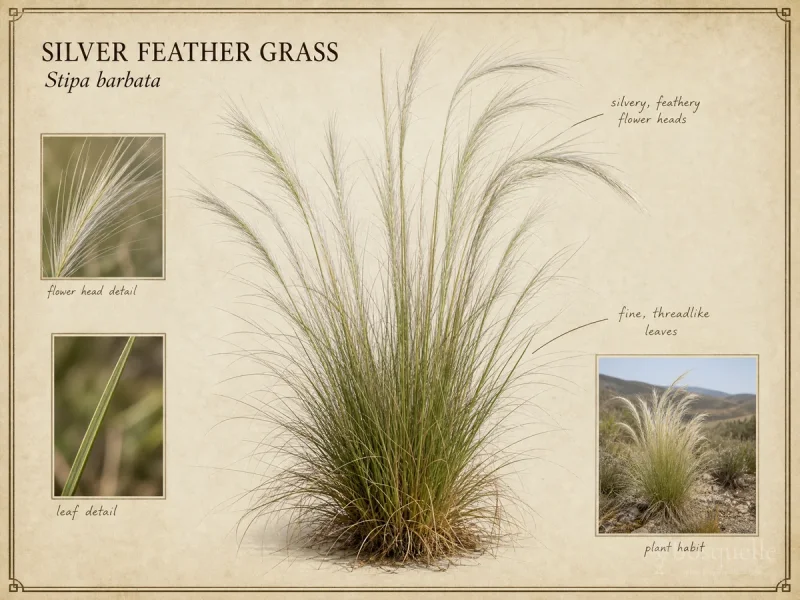
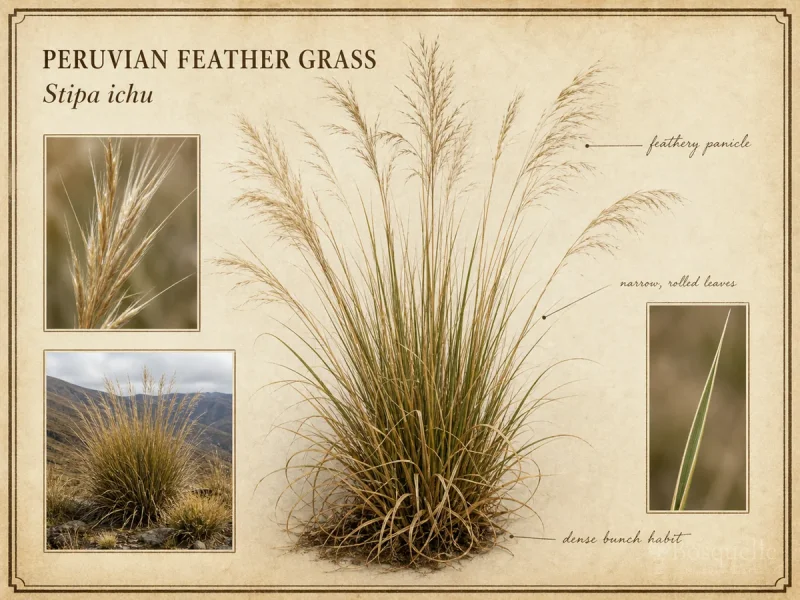
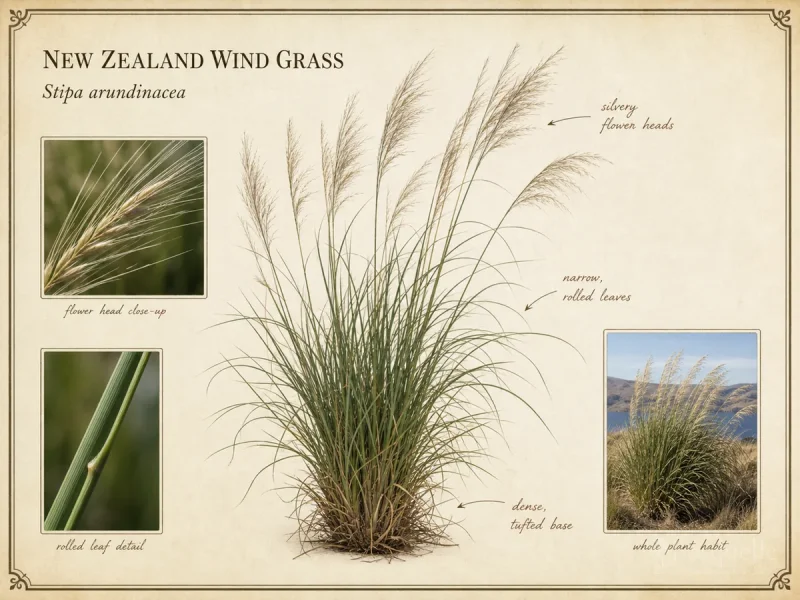
Fountain grass is a different genus with bottlebrush plumes. See How to Grow Fountain Grass. If a search for silver feather grass shows a tall maiden grass, that is Miscanthus, not silver feather grass. Peruvian feather grass and New Zealand wind grass still want sun and drain; wind grass will take a little more shade.
Is this Karl Foerster feather reed grass?
No. Feather reed grass is Calamagrostis, a 5–6 ft upright clump you cut to 6 inches. Feather grass is a fine, moving fountain you comb, not shear.
Is this fountain grass?
No. Fountain grass has fuzzy bottlebrush plumes. Mexican feather grass has hair-fine leaves and silky awns. If the tag says Pennisetum, it is fountain grass.
If last winter left more straw than green, comb first, then cut only what is dead.
FAQ
Is giant oats the same plant?
No. Golden oats is a low evergreen mound with 6–8 ft oat stems. Mexican feather grass is a 1–2 ft hair-fine fountain that self-seeds. Both want sun and drain. Comb the oats; do not cut the mound to the ground.
What is ponytail grass?
Ponytail grass is a shop name for Mexican feather grass, often sold as Pony Tails. Same sun, drain, and comb. Same California do-not-plant warning. It is not a ponytail palm, which is a houseplant with a swollen trunk.
What should I plant instead in California?
Do not plant Mexican feather grass in California. Purple needle grass is the California native with a similar fine look. Ask a native-plant nursery for Nassella pulchra, not for Mexican feather grass.
Can I grow it from seed?
Mexican feather grass sets seed freely. Sow on the surface of draining mix and keep it barely moist until it sprouts. Do not sow it in California. Comb seed heads if you do not want seedlings in the bed. Division in spring is possible if the crown is crowded, but seed is the usual way.
Does it come back after winter?
In a mild winter the clump returns from the crown. Where a hard freeze kills the top, treat Mexican feather grass as an annual, or grow it in a pot you can move. Comb dead blades in late winter either way.
Recommended plants


References
- [1] NC State Extension Gardener -
https://plants.ces.ncsu.edu/plants/nassella-tenuissima/ - [2] California Invasive Plant Council -
https://www.cal-ipc.org/plants/profile/stipa-tenuissima-profile/ - [3] Lady Bird Johnson Wildflower Center -
https://www.wildflower.org/plants/result.php?id_plant=NATE3 - [4] University of Wisconsin–Madison Extension -
https://hort.extension.wisc.edu/articles/feather-reed-grass-calamagrostis-x-acutiflora-karl-foerster/
More first-season notes by plant are gathered in How to Grow Guides.
Updated: Reviewed by Bosquelle Editors