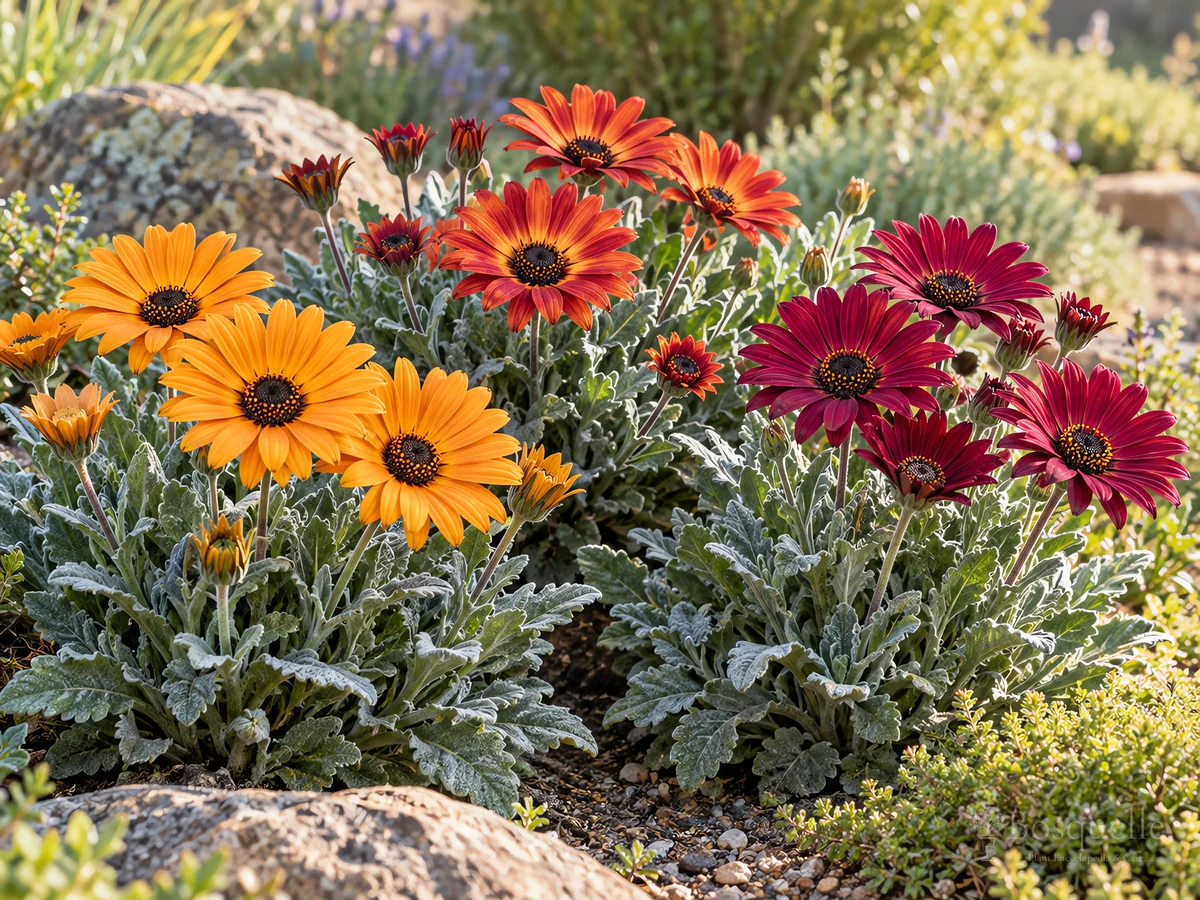
Grow Arctotis in full sun with soil that drains, and treat it as an annual where winters freeze. Shops often call it African daisy — check that the tag says Arctotis.
Full sun, soil that drains, and frost as an annual
| Factor | Recommended | Avoid |
|---|---|---|
| Light | Full sun, six or more hours | Shade that stretches the mound and keeps flowers shut |
| Soil | Sandy or rocky ground that drains | Wet clay around the crown |
| Frost | Tender perennial in mild winters; annual farther north | Expecting hardy return after a hard freeze |
| Flowers | Open in sun; close at night and on cloudy days | Buying for a night display that stays open |
Arctotis wants full sun and sandy or rocky soil that drains. Once roots settle it takes dry spells; wet ground brings rot. [1] Heads close in the evening and on cloudy days. That is normal, not a watering emergency. [2] North of mild winters, plant it as a warm-season annual, or keep a pot you can move before frost. [3]
Are Arctotis annuals or perennials?
Tender perennials where winters stay mild. Where hard frosts are routine, grow them as warm-season annuals.
How much sun does Arctotis need?
Full sun — six or more hours. Shade stretches plants and cuts bloom.
Why do the flowers close?
They close at night and on cloudy days. Give them sun the next clear morning; do not treat shut heads as disease.
Water to establish, then deadhead for more bloom
Water regularly until the mound holds moisture on its own. Then water in heat when the top of the soil is dry. Snip spent heads so the plant keeps making buds instead of seed. [4]
- Water deeply the first weeks until new growth holds.
- Then water when the top of the soil is dry. Do not keep the crown soggy.
- Deadhead spent blooms, or cut stems for the vase, to keep flowers coming.
- In hot, humid midsummer, bloom may pause while the silvery foliage stays. Keep deadheading for a later flush when nights cool.
Yellow collapse in wet clay is drainage, not a missing fertilizer. Sparse bloom is usually shade first, then skipped deadheading. Extreme desert heat can wipe a planting; in that climate treat it as a cool-season annual.
How often should I water Arctotis?
Water to establish on free-draining soil, then taper. Wet clay kills faster than a dry spell.
If bloom is thin, give it more sun and keep deadheading. If the crown stays wet, lift and reset on sharper drainage — do not answer rot with more water.
FAQ
Can I grow Arctotis in a pot?
Yes. Use a drained pot you can move before frost. Water when the top of the mix is dry.
What else can I plant nearby?
Other full-sun plants that hate wet feet — lean annuals and rock-garden neighbors that leave the daisy faces visible.
What pests hit Arctotis?
Aphids, spider mites, and leaf miners show up now and then — see the aphids and spider mites hubs. Powdery mildew is on powdery mildew. Rot follows a wet crown, not a missing spray.
Related guides


Recommended plants



References
- [1] NC State Extension Gardener -
https://plants.ces.ncsu.edu/plants/arctotis/ - [2] Harvest to Table -
https://harvesttotable.com/how-to-grow-arctotis-african-daisy-2/ - [3] Arizona State University -
https://www.public.asu.edu/~camartin/plants/Plant%20html%20files/arctotishybrida.html - [4] NC State Extension Gardener -
https://plants.ces.ncsu.edu/plants/arctotis-stoechadifolia/
This note is part of Arctotis Guides.
More first-season notes by plant are gathered in How to Grow Guides.
Updated: Reviewed by Bosquelle Editors