
Grow miterwort from seed by pressing fresh seed on the soil surface and never letting that seed dry out. Leave it through winter, or keep it moist and cold for a few months, then move it to warmth.

Sow the seed on the surface, and never let it dry
| Factor | Recommended | Avoid |
|---|---|---|
| Freshness | Sow as soon as the miter cups hold ripe black seed, and keep the seed moist | Do not let the seed dry out, because that is the usual reason it never comes up |
| Depth | Press the seed onto the surface; it needs light to germinate | Do not bury the seed |
| Cold then warm | Leave an outdoor sowing through winter, or refrigerate moist seed about 90 to 140 days, then move it to about 70 F | Do not sow dry stored seed onto warm soil and expect a full stand |
| Time to flower | Grow the seedlings on; they usually bloom in the third year | Do not throw the pot out after one quiet winter |
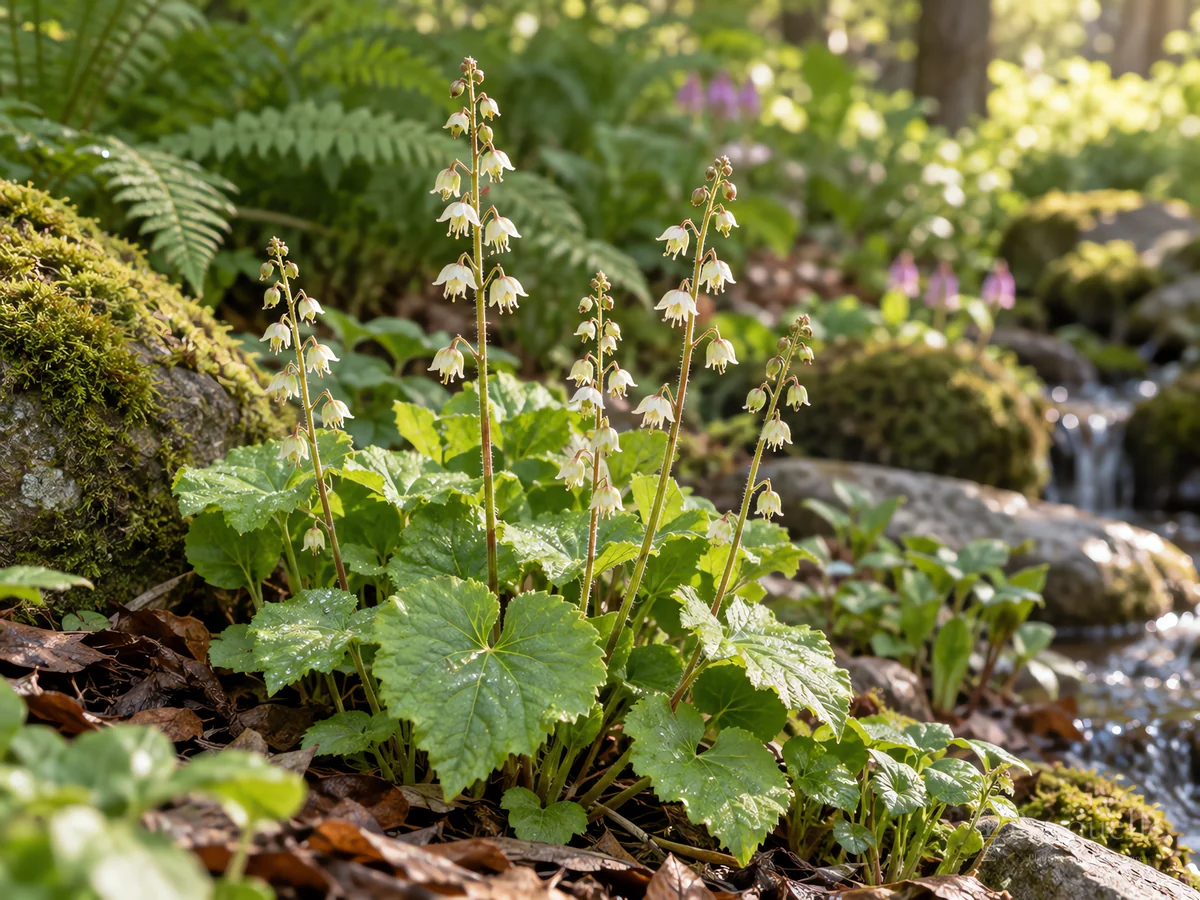
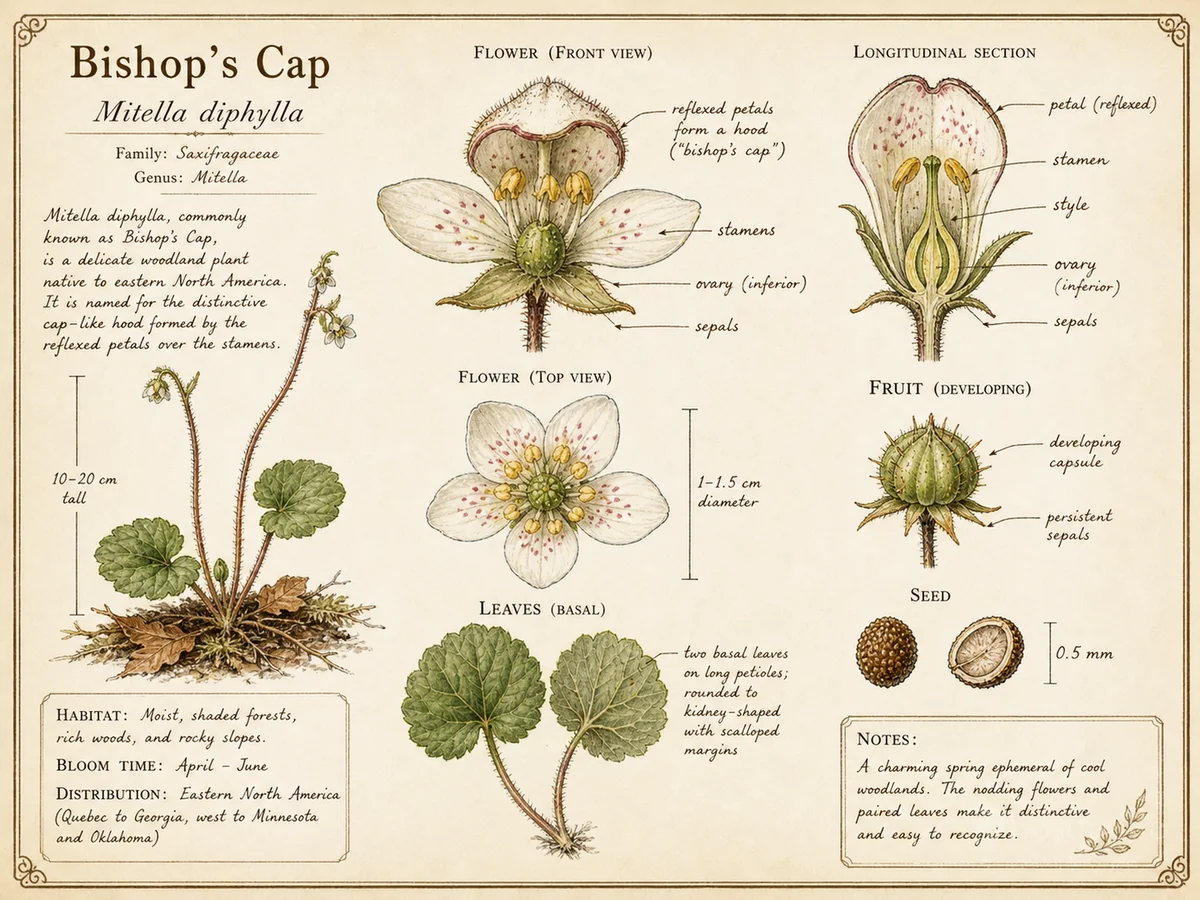
Miterwort is straightforward from seed if the seed stays moist. Watch the open cups after bloom. When they hold shiny black seed, collect it and sow it soon, pressed onto moist mix, not buried. [1] The seed needs light. Keep that surface just moist. The simplest route is to sow outdoors in summer or fall and leave the pot or bed through winter. Some growers give a warm, moist spell first, then the cold; outdoor sowing covers both. [2] To start in a refrigerator, mix the seed with damp sand or mix, keep it cold for about 90 to 140 days, then move it to a warm room, around 70 F. See How to Grow Miterwort for the grown plant. Do not collect seed from wild stands; use a garden plant or a nursery packet. [3]
- Collect ripe black seed from the open cups, and keep it moist until you sow.
- Press it onto the surface of moist, humus-rich mix, and do not bury it.
- Leave an outdoor sowing through winter, or refrigerate moist seed about 90 to 140 days, then move it to about 70 F.
- Keep the surface just moist until seedlings show, then grow them on; expect flowers around the third year.
How deep do I sow miterwort seed?
On the surface. Press fresh seed into moist mix and never let it dry. It needs light to germinate.
Divide a rooted rhizome in spring or fall
If you already have a large, established clump, you can split a rooted piece of rhizome in spring or fall instead of waiting on seed. This species does not run on stolons, so you are lifting a rooted crown, not a runner. Each piece needs roots and a growing point, and you must replant it the same day, at the old soil line, in moist shade. [4] A moved clump may sit still for a season. Do not divide a small plant, and do not dig miterwort from the woods.
- Wait until spring or fall, on a large clump that can spare a piece.
- Lift the clump and split it so each piece has roots and a growing point.
- Replant at once at the same depth, in a shady, moist, humus-rich bed.
- Water it in, mulch with leaves, and leave it alone while it settles.
When should I divide miterwort?
In spring or fall, on a large clump. Split only a rooted piece of rhizome, and replant it the same day.
If the seed never comes up, it probably dried out or was buried. Next time press fresh seed on the surface, keep it moist, and leave that pot through winter.
FAQ
Can I store miterwort seed?
Only briefly, and never bone dry. If you cannot sow soon, keep the seed slightly moist in a sealed bag of damp mix and sow it as soon as you can.
Why didn't the seed come up?
It probably dried out, or it was buried. Press the next batch on the surface, keep it moist, and leave the pot through a second winter before you give up.
Can I grow it from a stem cutting?
No. Miterwort grows from a rhizome. Raise it from fresh seed, or divide a rooted piece of an established clump.
Related guides
Recommended plants
References
- [1] Lady Bird Johnson Wildflower Center -
https://www.wildflower.org/plants/result.php?id_plant=midi3 - [2] Friends of Eloise Butler -
https://www.friendsofeloisebutler.org/pages/plants/miterwort.html - [3] North American Native Plant Society -
https://nanps.org/product/mitella-diphylla/ - [4] NC State Extension -
https://plants.ces.ncsu.edu/plants/mitella-diphylla/
This note is part of Mitella Guides.
More notes on making another plant live in Propagating Guides.
Updated: Reviewed by Bosquelle Editors