
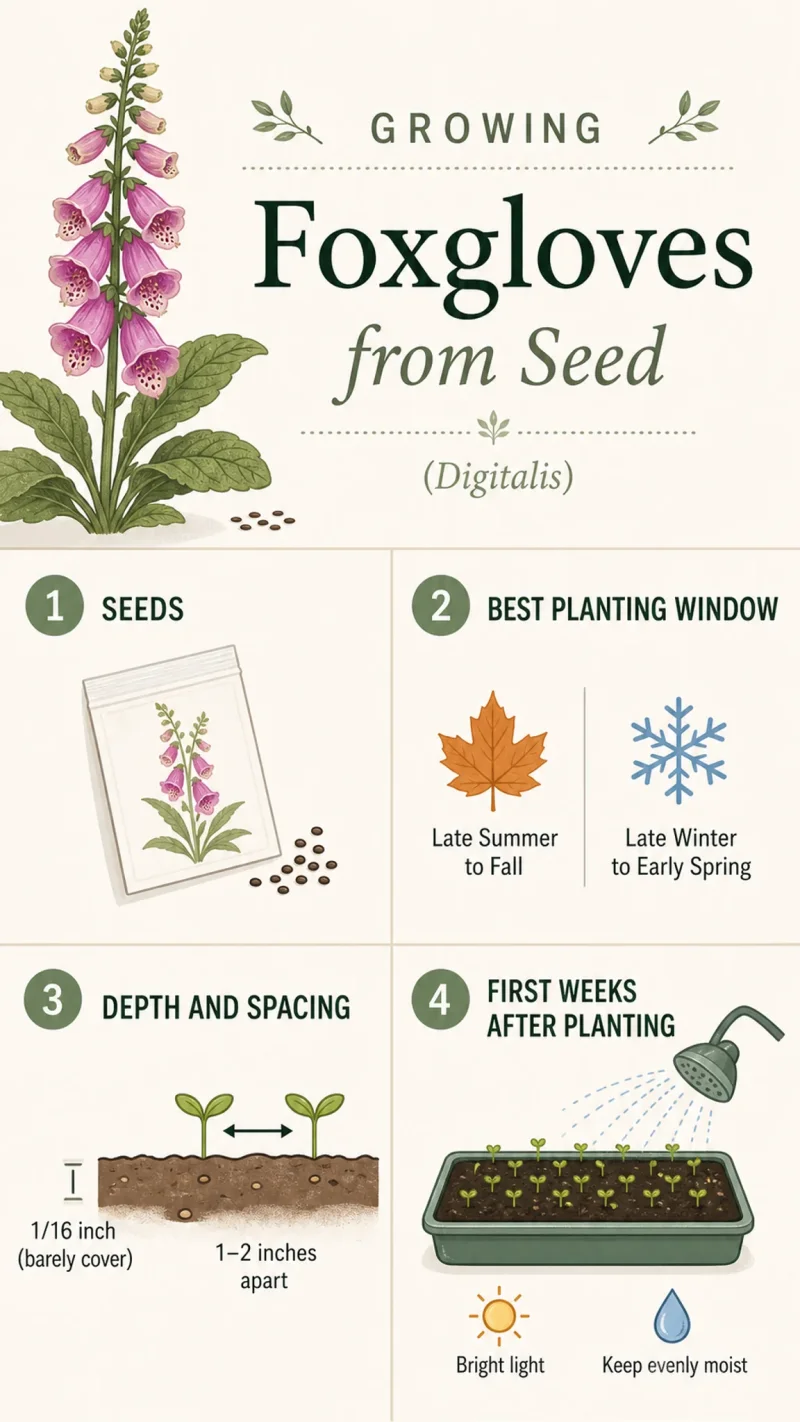
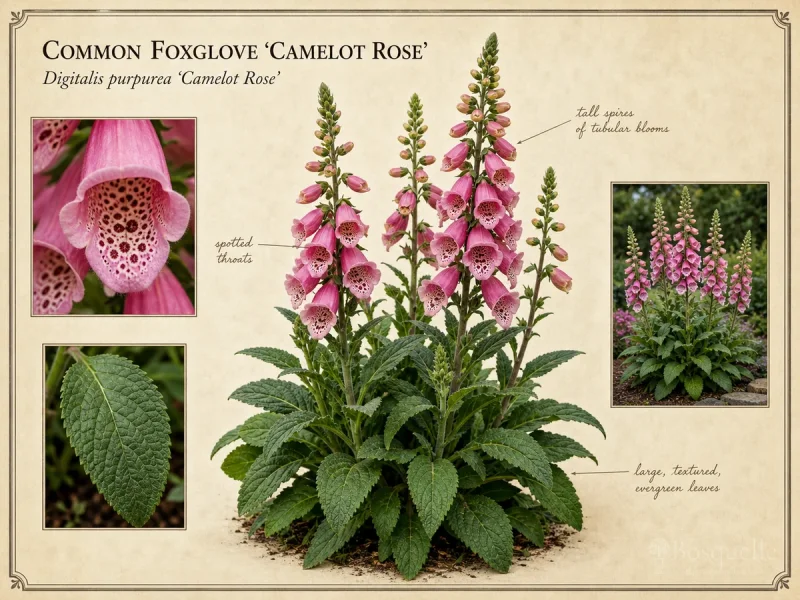
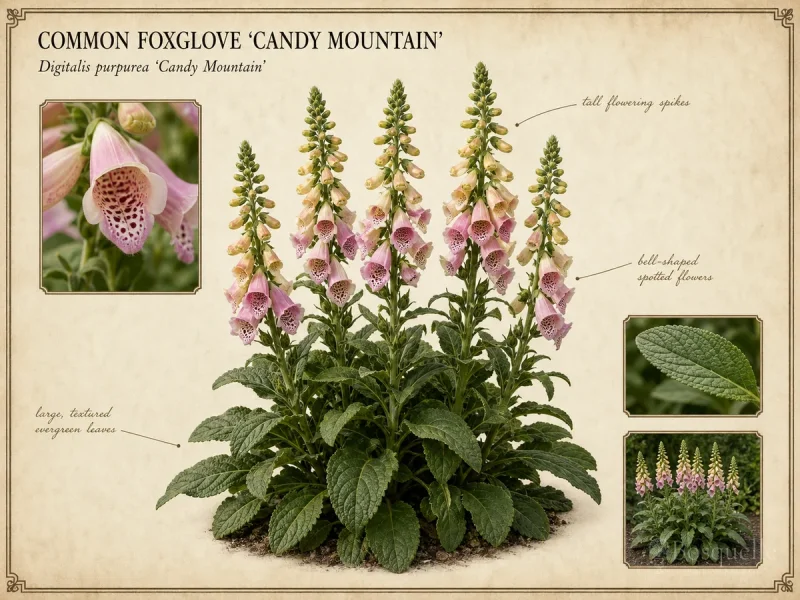
Foxglove seed is fine and needs light. Sow it on the surface. Do not bury it. Wear gloves. Common Digitalis purpurea and white Digitalis purpurea f. albiflora come reasonably true; named series such as Camelot Lavender often remix.
Moisture and the two-year calendar stay on How to Grow Foxgloves.
Surface sow — seed needs light
| Factor | Recommended | Avoid |
|---|---|---|
| Cover | Press seed onto the mix; do not bury | A quarter-inch of soil over the seed |
| Heat | Cool germination, about 50–60°F | A hot propagator that cooks fine seed |
| Calendar | Late spring to midsummer sow for next year’s spike | March sow as a same-summer biennial bloom |
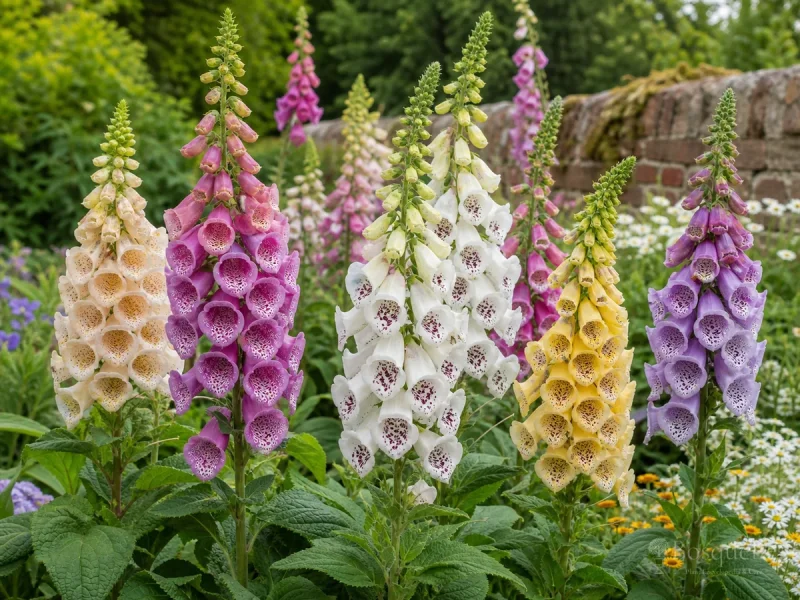
Species such as Digitalis purpurea, Digitalis purpurea f. albiflora, Digitalis grandiflora, and Digitalis ferruginea are the usual seed subjects. Trademarked series such as Dalmatian Peach are better as bought plants if you need that exact color.
Year-round growing rules live on How to Grow Foxgloves. This page is the tray, the outdoor sow, and the two-year wait.
High heat slows or kills germination. A north windowsill, a cool frame, or a shaded bench is better than a hot greenhouse in July. Keep the surface evenly moist with a mist or a bottom soak. Do not blast fine seed with a hard can.
Growing foxgloves from seed
- Wear gloves. Foxglove seed and seedlings are toxic if eaten.
- Fill a tray with fine, drained seed mix. Firm the surface.
- Sow thinly on top. Press for contact. Do not cover with soil.
- Mist, cover with glass or a dome, and keep cool and bright.
- Remove the cover when seedlings show, in about two to three weeks.
- Prick out when large enough to handle. Grow on, then plant in autumn or spring.
Direct sow in late spring or early summer where they will flower, on raked moist soil, still on the surface. Thin to about 12–18 inches. Keep moist until they take. Slugs find small plants overnight — check and protect.
A light vermiculite dust is optional for moisture. It is not a soil cover. If you cannot see the seed, you buried it.
Year one and year two
Spring-sown biennials make a rosette the first summer and spike the second. Autumn-planted sturdy seedlings overwinter and often bloom on that next summer’s schedule. January sow in warmth can push some hybrids toward first-year bloom — that is a specialist trick, not the cottage default.
Label the tray with species or series and sow date. Mixed colors in year two are normal from open-pollinated cottage seed. Isolate parents if you needed a clean line. Hybrids will still remix.
Do not feed seedlings hard. Soft growth flops and rots. Cool air and even moisture beat a soluble feed. Prick out the strongest; with hybrids, some growers keep a few weaker plants for odd colors — that is optional.
Harden off before the garden. A sudden move from a dim room into noon wind burns leaves. Plant at the same depth as in the pot. Do not bury the crown.
Self-sow, save seed, and handling
Leave a few spikes to ripen if you want volunteers. In spring, move overcrowded seedlings 12–14 inches apart, roots intact, with gloves. Pot extras if slugs are heavy in the bed.
Collect dry seed in paper, labeled, cool and dry. Do not store foxglove seed in a damp kitchen jar. Wear gloves. Keep packets away from children. This is not a culinary seed.
Form: Types of Foxgloves. Partners: Foxglove Companion Plants.
Unused bought seed stores cool and dry. Mystery envelopes are how next year’s row becomes a guess. If a packet is a named hybrid, treat the plants as a color experiment, not a clone of last year’s photo.
If germination fails, the usual causes are buried seed, heat, or a dry surface. Sow again on top of the mix, cooler, and keep the mist even. Do not bury the second attempt deeper.
Close when the surface sow, the cool bench, and the two-year wait are clear. Then let the woodland edge do the rest.
Work the mix finer than garden soil. Fine seed falls into cracks and dies in the dark. A sieve over the tray helps. Bottom-water so you do not wash the seed to one corner.
First spring in the garden, some rosettes sit still later than others. Do not dig to check a quiet plant in April. Wait. A late type and a cold spell both delay. Judge the spike the second year before you replace stock.
Do not divide a biennial the first summer. Let the rosette build. Crowding shows as smaller spikes, not as a reason to lift in June while leaves are still the whole plant. Species crowns can be split only when they actually thicken — that is uncommon in year one.
Mark groups with a stick or a photo. In July the bed looks empty of spikes and it is easy to hoe a rosette. A label that survives summer is part of sowing day. Water once to settle transplants, check for air pockets, and leave the labels facing the path you actually walk.
Trays that sat in a cold shop aisle need a bright porch day before the final hole. Shocked seedlings stall. Unused seed stores cool, dry, and labeled by type — not in a damp kitchen drawer. Mystery envelopes are how next year’s row becomes a guess. Sow again on the surface if the first tray failed.
FAQ
Do I cover foxglove seed?
No. Press it onto the mix. It needs light. A hard cover of soil is the usual miss.
When should I sow foxgloves?
Late spring to midsummer for next year’s bloom, or direct where they will flower. Cool germination helps.
Will named hybrids come true?
Often not. Species and cottage purpurea are the better seed bet. Buy named plants for exact series color.
How long to germinate?
About two to three weeks in cool, even moisture.
Can I sow direct outdoors?
Yes on raked moist soil, still on the surface. Thin and watch slugs.
Do I need gloves for seed?
Yes. Seed and seedlings are toxic if eaten.
Why only leaves the first year?
Biennials wait until year two. See How to Grow Foxgloves.
Is this the full care guide?
No. This is the seed path. Moisture and gloves live on How to Grow Foxgloves.
Related guides


Recommended plants




This note is part of Digitalis Guides.
More notes on making another plant live in Propagating Guides.
Updated: Reviewed by Bosquelle Editors