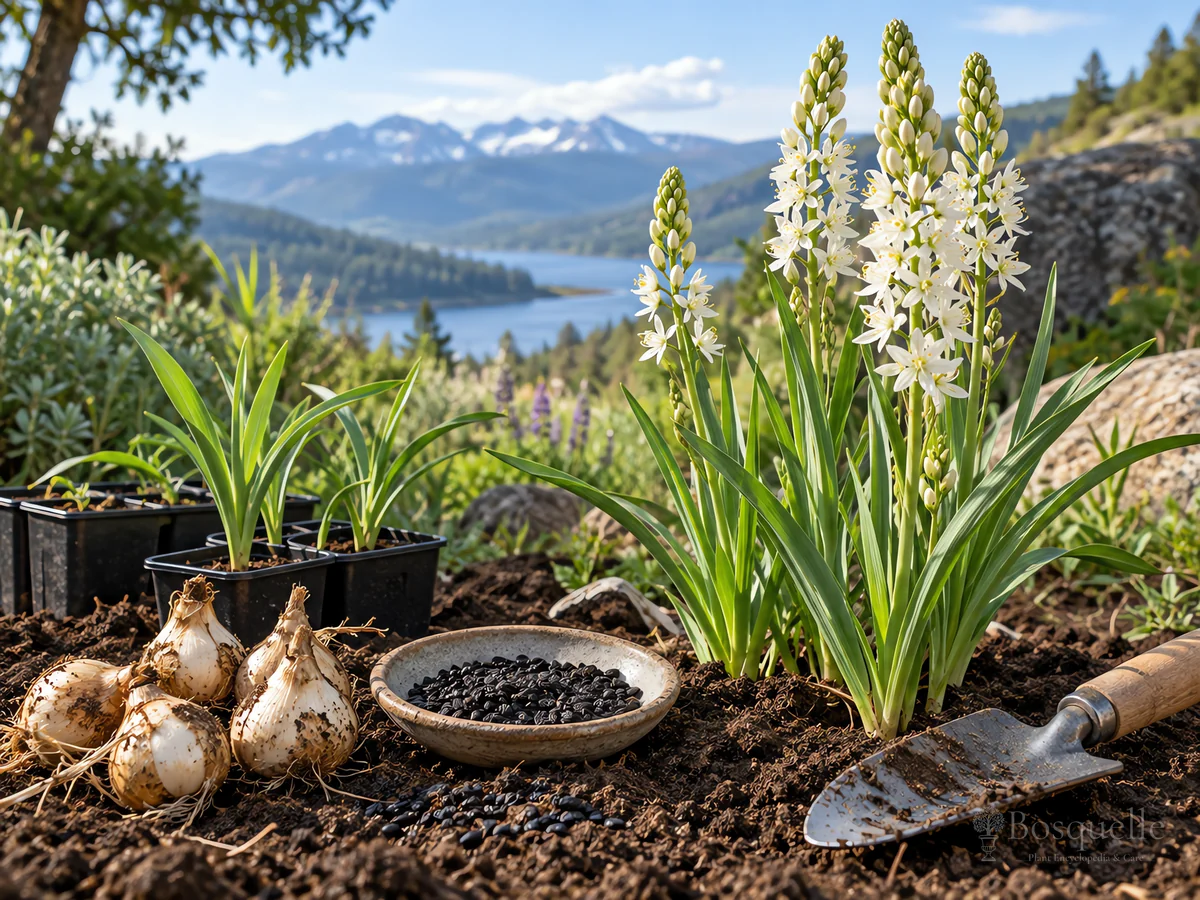
Grow death camas from seed by sowing it in fall, covering it about a half-inch deep, and leaving the seedlings dry through the following summer.
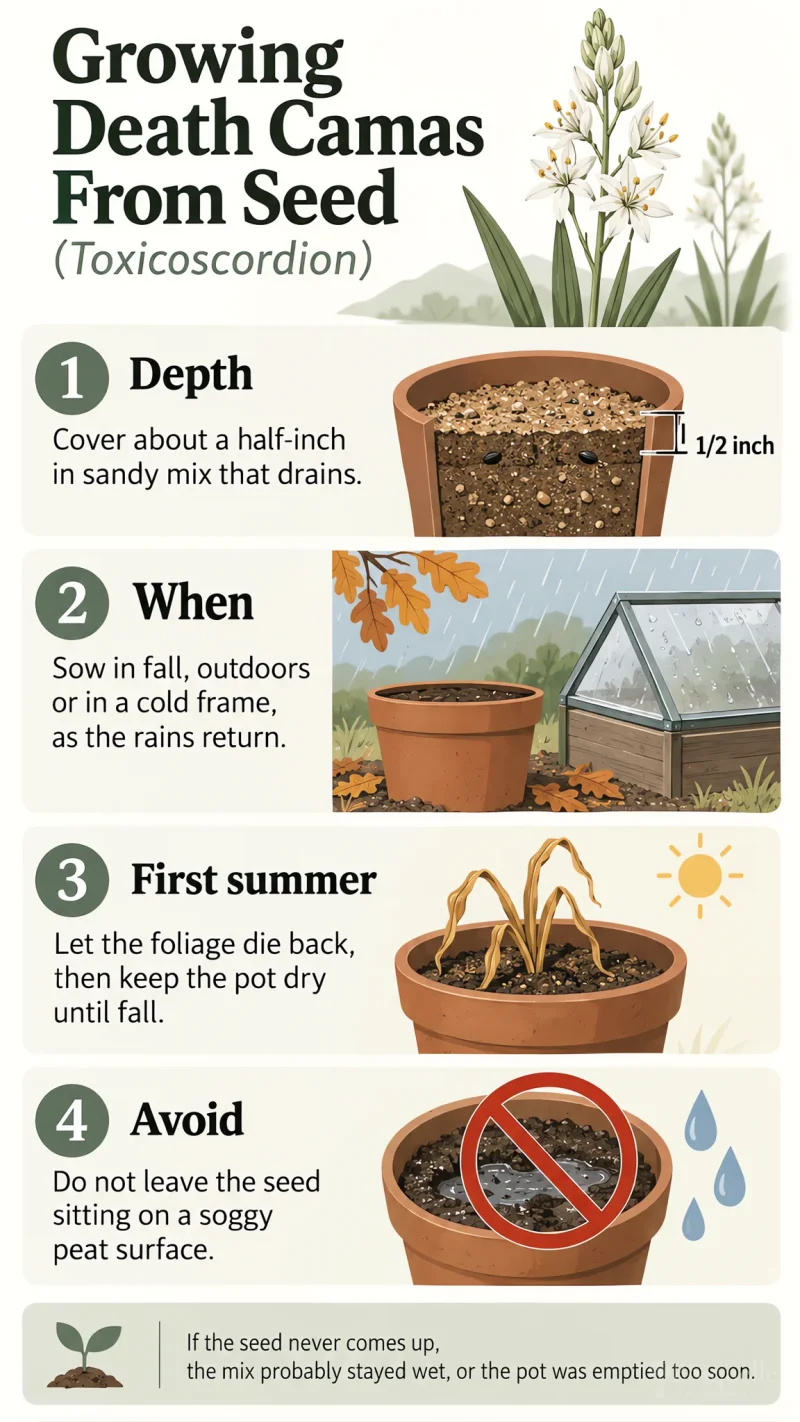
Sow in fall, about a half-inch deep, and leave the seedlings through one dry summer
| Factor | Recommended | Avoid |
|---|---|---|
| When | Sow in fall, outdoors or in a cold frame, as the rains return | Do not start it in a warm indoor tray and expect a quick garden plant |
| Depth | Cover about a half-inch in sandy mix that drains | Do not leave the seed sitting on a soggy peat surface |
| First summer | Let the foliage die back, then keep the pot dry until fall | Do not water the dormant bulbs in summer |
| Patience | Expect tiny first-year bulbs and two to four years to bloom | Do not throw the seedlings out after one quiet spring |
death camas is usually raised from seed, not from a stem cutting. Sow in fall into a mix that drains — sand, pumice, and bark, or a gritty native mix. Cover the seed about a half-inch. Leave the pot outdoors through winter cold; sprouts often show within a few weeks of the first rains. [1] A two- to three-month cold, moist chill can raise the germination rate, but it is not required if you sow in fall. [2] See How to Grow Death Camas for the grown plant. Leave the seedlings in that pot through one full year. When the leaves yellow, stop watering and store the dry pot until fall rains start again. [3] First-year bulbs are only a few millimeters across. Flowering often takes two to four years. [4] Wear gloves when you handle seed or seedlings, because the plant is poisonous.
- Sow in fall, about a half-inch deep, in mix that drains.
- Leave the pot outdoors through winter rain and cold.
- When the leaves yellow, stop watering and keep the pot dry until fall.
- Leave the tiny bulbs in place for at least one year before you move them.
How deep do I sow death camas seed?
About a half-inch. Press it into sandy mix that drains. Do not sow it on a wet peat surface and leave it there.
Does the seed need a cold treatment?
Fall sow outdoors is enough for most pots. A two- to three-month cold, moist chill can help, but it is not required if winter does that work.
Collect the seed when the capsules split
Fruit ripens in late spring into early summer. Wait until the three-part capsules turn brown and split, then shake the flattened seed into a paper bag. The seed will sit in open capsules for a week or more, so you do not have to catch the first crack. Keep the bag dry and cool, then sow that fall. Do not collect from a wild preserve if the plant is not yours.
- Wait until the capsules are brown and starting to split.
- Shake the seed into a dry paper bag.
- Store it cool and dry, then sow in fall about a half-inch deep.
When is the seed ready?
When the capsules turn brown and split, usually in late spring or early summer. Shake them then, and keep the seed dry until fall.
If the seed never comes up, the mix probably stayed wet, or the pot was emptied too soon. Next time sow in fall and leave that pot dry through summer.
FAQ
Why didn't the seed come up?
The pot may have stayed too wet, or you gave up before winter cold had done its work. Sow in fall, keep the mix draining, and leave it through one full season before you throw it out.
Can I grow it from a stem cutting?
No. Raise death camas from seed, or plant a nursery bulb. It is not a plant you divide or graft.
Can I store the seed for years?
Sow it the next fall. Keep it dry and cool in a paper bag. Do not leave it damp, or it molds.
Related guides

Recommended plants
References
- [1] Native Plant Network -
https://npn.rngr.net/renderNPNProtocolDetails?selectedProtocolIds=liliaceae-zigadenus-3168 - [2] Calscape / California Native Plant Society -
https://calscape.org/plant/3901/Toxicoscordion-fremontii-(Chaparral-Zygadene)-2 - [3] Pacific Bulb Society -
https://www.pacificbulbsociety.org/pbswiki/index.php/Toxicoscordion - [4] Theodore Payne Foundation -
https://www.theodorepayne.org/nativeplantdatabase/index.php?title=Zigadenus_fremontii
This note is part of Toxicoscordion Guides.
More notes on making another plant live in Propagating Guides.
Updated: Reviewed by Bosquelle Editors