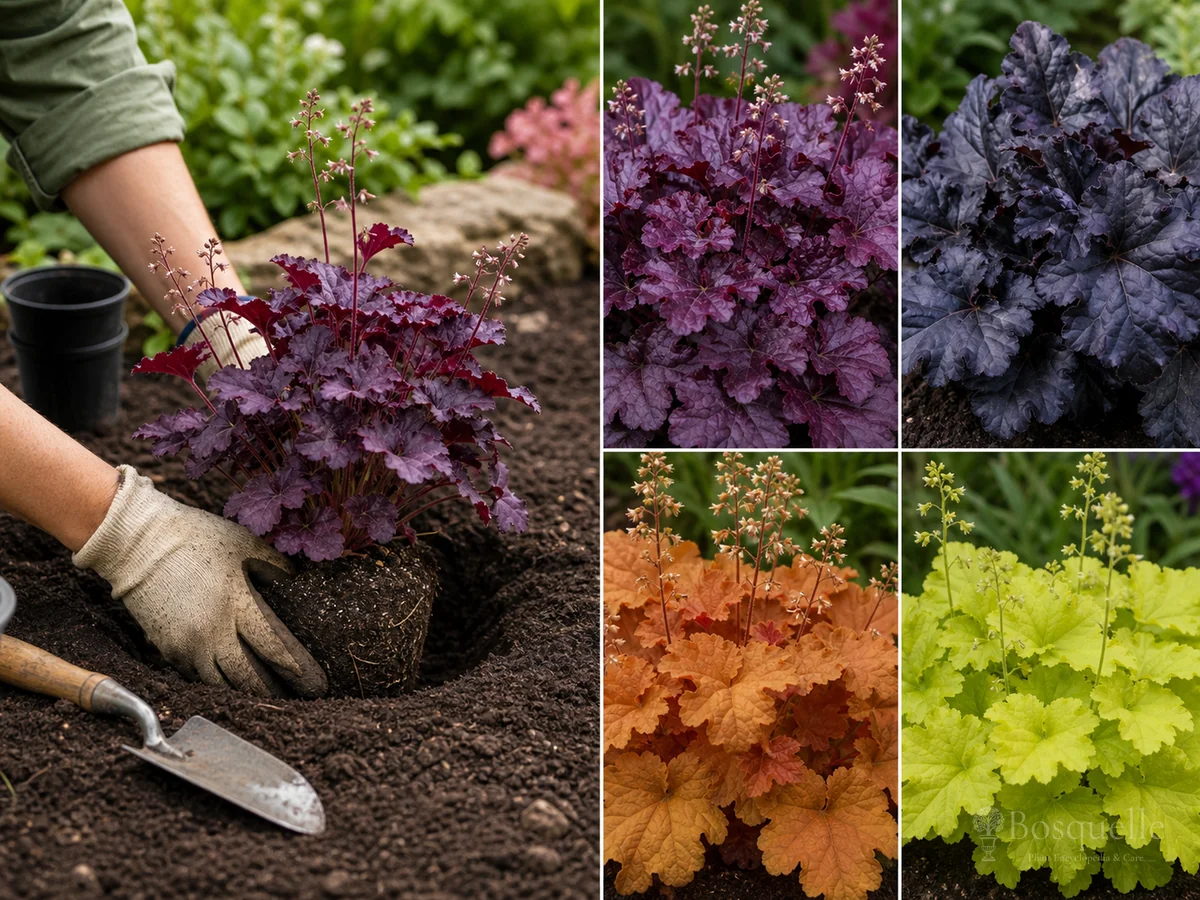
Divide coral bells when the center goes woody or thin, about every three to four years. Lift the clump, keep outer offsets with roots, throw out the dead middle, and replant with crowns above the soil. Spring or early fall is the window. This page is the split, not a second grow guide.

Site and water stay on How to Grow Coral Bells.
When to divide coral bells
| Factor | Recommended | Avoid |
|---|---|---|
| Timing | Every 3–4 years; spring or early fall | Peak summer heat; splitting a vigorous young clump |
| Cue | Woody, hollow, or thin center | A calendar that ignores the plant |
| Replant | Crown above soil the same day | Leaving divisions in a wet bucket overnight |
Divide when clumps of Palace Purple, Obsidian, and Caramel look woody in the center, thin, or lose vigor. Prefer spring as growth starts, or early fall so pieces root before hard frost. Shared growing rules live on How to Grow Coral Bells. This page is not a second full care essay.
Dig and split the woody crown
- Water the clump the day before so it lifts in one piece.
- Dig a wide ring and lift the woody crown with a fork.
- Pull or cut outer offsets that each have roots and a growing point.
- Discard the soft, hollow, or dead woody center.
- Keep at least two growing points on each piece when you can.
- Label pieces before they look alike in the shade.
Lime Rickey and Black Pearl split the same way. Larger-leaf Southern Comfort and Georgia Peach recover more slowly, so keep divisions generous. Forever Purple follows the same split. Crowns sit near the surface, so you can often tease offsets by hand.
Replant with crowns above the soil
Replant the same day in part shade with drained soil. Set crowns of Palace Purple and Obsidian above the soil line with buds up and roots spread. Space pieces so air can move. Water to settle. Then keep even moisture without a soggy collar.
Do not bury the wood under a mulch volcano. A visible crown is the test. Pot clumps use the same high crown on Coral Bells in Containers.
Aftercare until new roots take
Keep weeds off the pieces and the crown visible. Water in dry spells. Expect a lighter first season after a hard split. Full leaf color returns as clumps settle.
Year-round site rules stay on How to Grow Coral Bells. Foliage color shopping stays on Colorful Garden Coral Bells.
If a piece wilts hard at noon, shade it for a week with a basket, then return to morning sun. Do not flood. Collapse after a split is often transplant shock, not a fertilizer gap.
Firm any piece that heaves the first winter. New divisions lift easier than old clumps. Mulch after frost, off the crown, the same as the grow page.
Do not display every piece in hot afternoon sun to “toughen” it. Lime divisions scorch first. Match light to leaf color.
Throw out any piece that smells sour or feels hollow. Replanting rot spreads through the new hole.
Write the divide date on a label. Next spring you will know which clumps are year-one recoveries. Guessing from size alone is how you split too soon again.
A first-year division that sits still is normal. New roots come before a big leaf flush. Patience beats a weekly feed.
If you only need two plants, still discard the dead center. Leaving the hollow wood in the hole is how the next clump fails.
Share extras with a neighbor the same day. A dry garage shelf is not a holding bed.
Wash the fork between clumps if you cut through rot. You do not need a lab protocol. Clean soil and a wipe beat moving mush into a healthy hole.
If the outer offsets are tiny, pot them in a drained mix for a season instead of lining them out in a bake. Small pieces need shade and even moisture, then they go in the border the next spring.
Do not divide in a heat wave because the center looks ugly in July. Wait for a cool spell or fall. A split in 95°F weather is how every piece cooks.
Count the growing points before you cut. One lonely bud on a finger of wood is a gamble. Two or three on a wedge is a plant.
If the clump has heaved into a tilted pancake, divide is the reset as well as the refresh. Replant the good wedges high. Do not press the whole pancake back and hope the hollow center reroots.
Shade cloth for three days after a fall divide is optional. A dry wind on bare roots is not. Keep a bucket of water beside you while you work so pieces do not sit on the path in sun.
Replant at the same spacing you would use for a nursery pot, about 12–18 inches. Crowding new wedges recreates the woody center in two years. Give them air.
If only one side of the clump is alive, keep that crescent and discard the rest. Do not feel you must save every brown stub. Rot in the hole is worse than a smaller planting.
Water in, then wait. Daily sprinkles on a new divide keep the crown wet and the roots lazy. Even moisture below, dry wood on top, is the same rule as the grow page.
FAQ
When should I divide coral bells?
When clumps crowd or centers go woody, typically every three to four years. Prefer spring or early fall.
How do I divide heuchera?
Lift the clump, pull or cut outer offsets with roots, discard the dead woody center, and replant crowns above the soil in drained part shade.
Can I propagate coral bells by division?
Yes. Division is the practical propagate path for garden clumps. Seed will not match a named leaf.
Where is full coral bells care?
How to Grow Coral Bells. This guide is dividing only.
Related guides



Recommended plants


This note is part of Coral Bells Guides.
More notes on making another plant live in Propagating Guides.
Updated: Reviewed by Bosquelle Editors