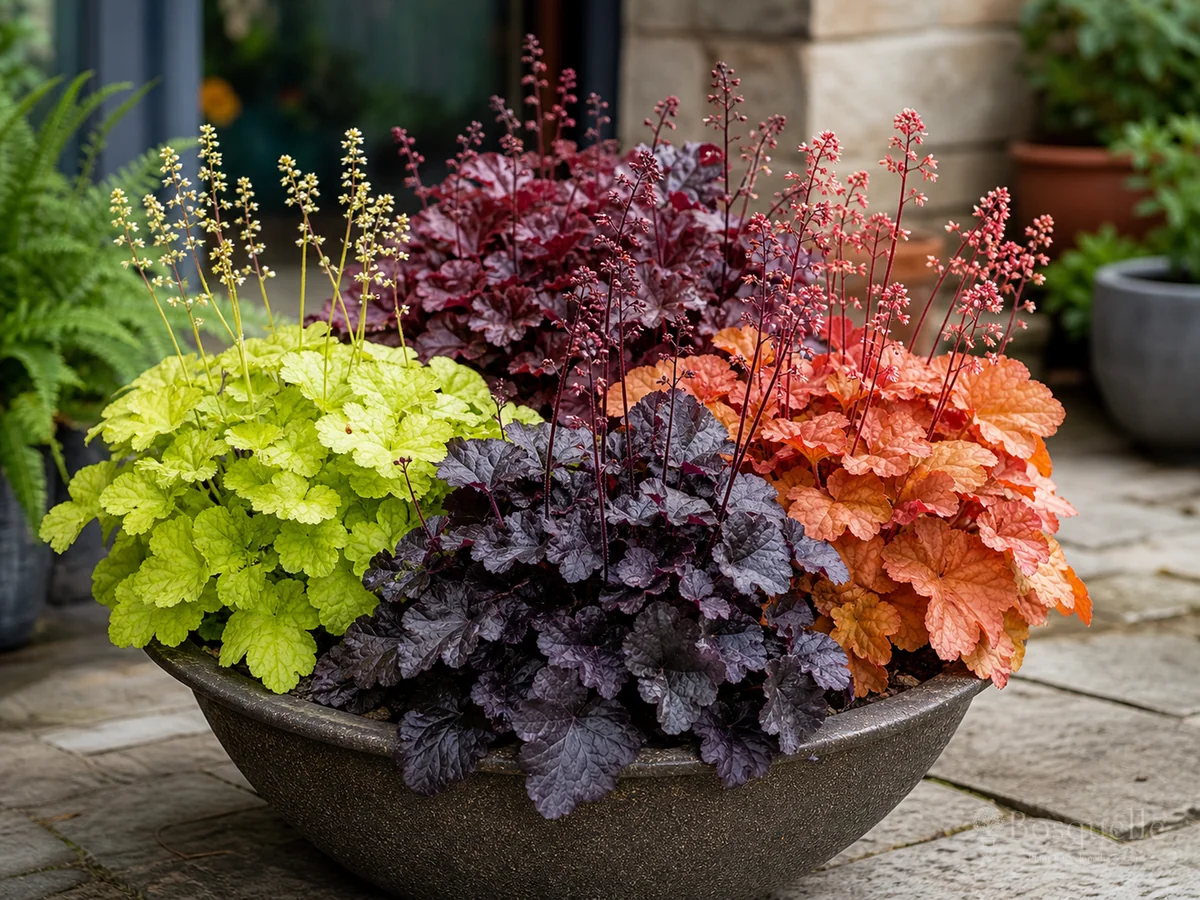
Coral bells make a foliage show in a pot if the container drains, the mix stays moist but not soggy, and the woody crown sits above the soil. This page is the pot, not a second grow guide.
Part shade and heave stay on How to Grow Coral Bells.
Which coral bells suit containers?
| Factor | Recommended | Avoid |
|---|---|---|
| Habit | Compact foliage types in a wide, drained pot | A tiny cup that dries twice a day |
| Crown | Above the mix, same as in the ground | Burying the woody base |
| Winter | Insulate the pot or sink the clump in the bed | A saucer of ice water at the crown |
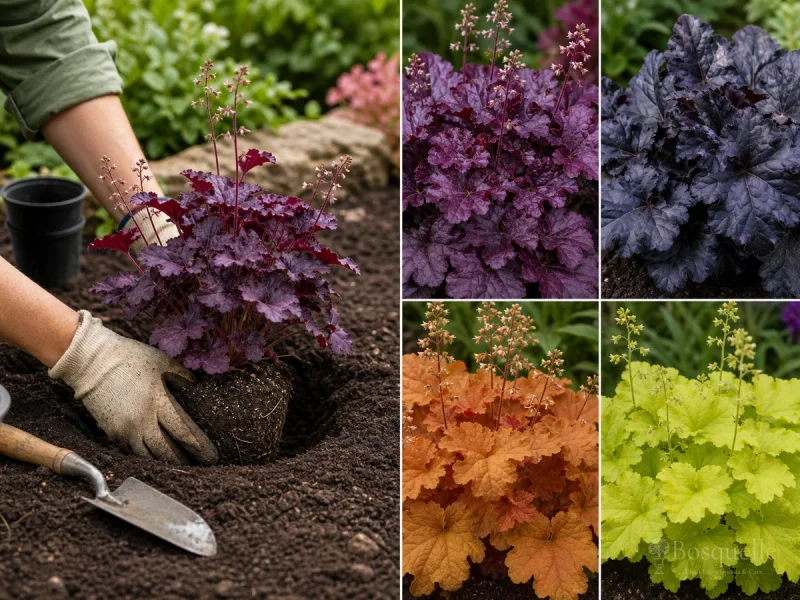
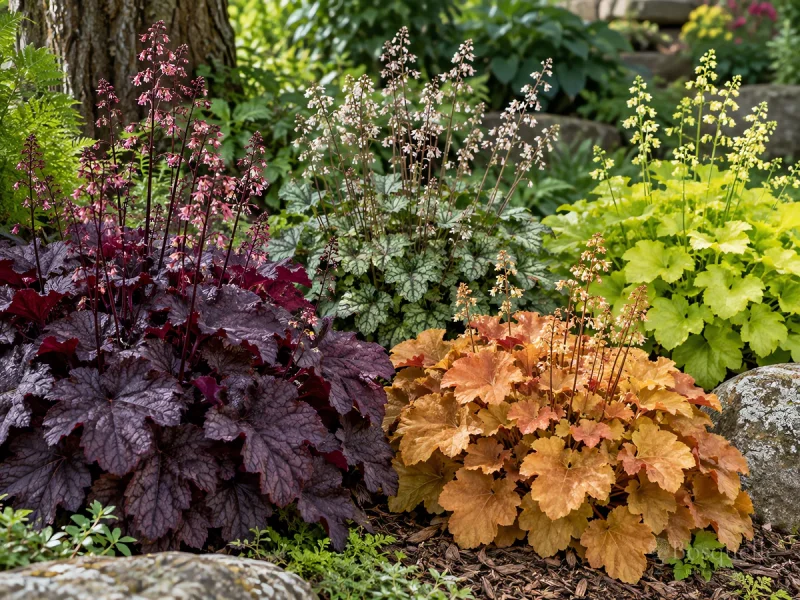
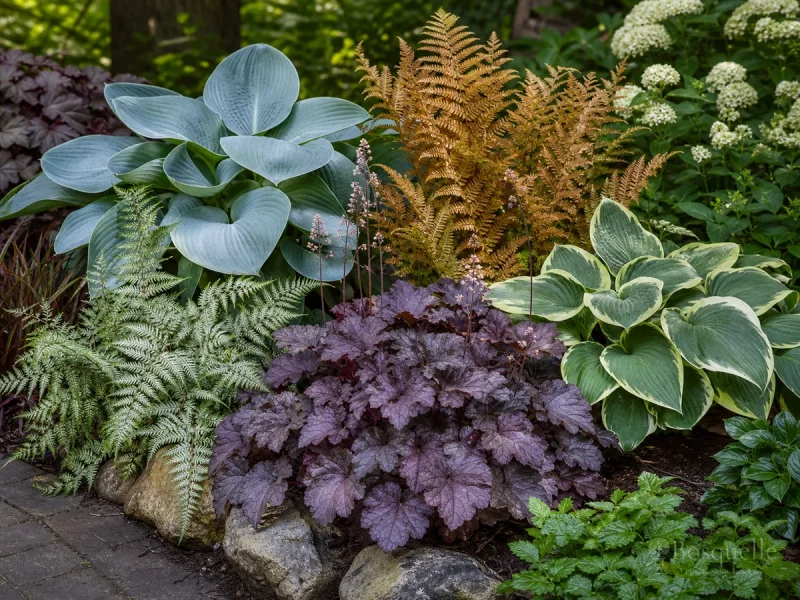
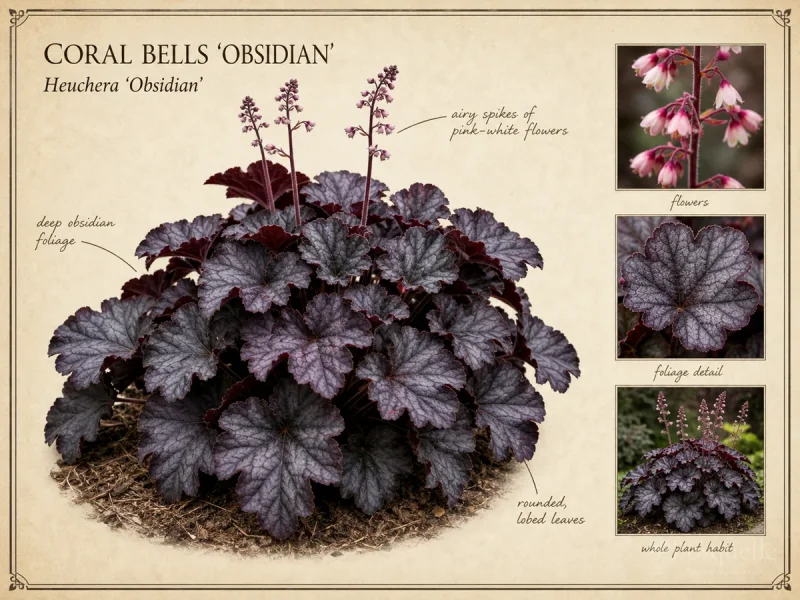
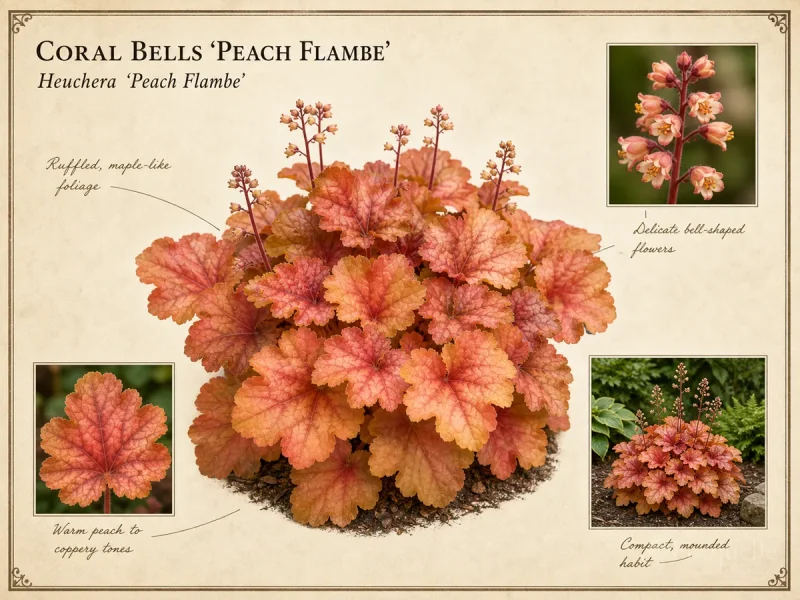
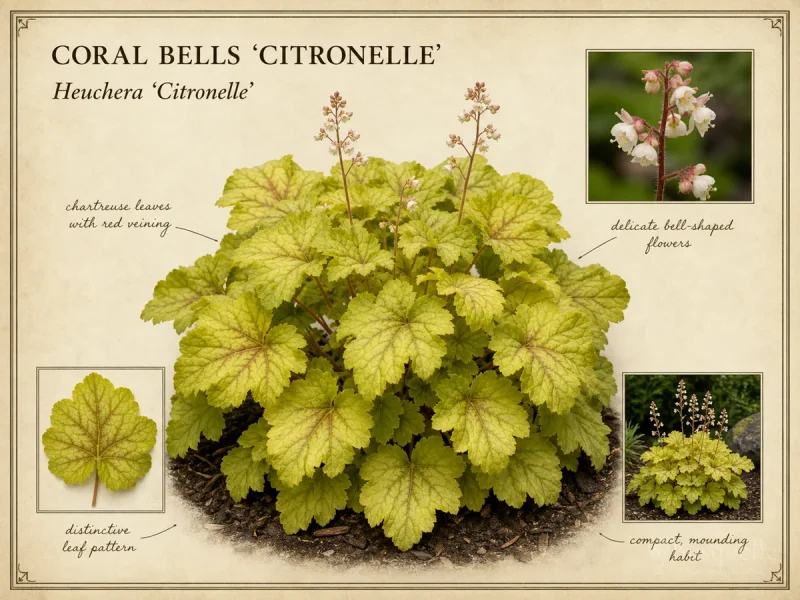
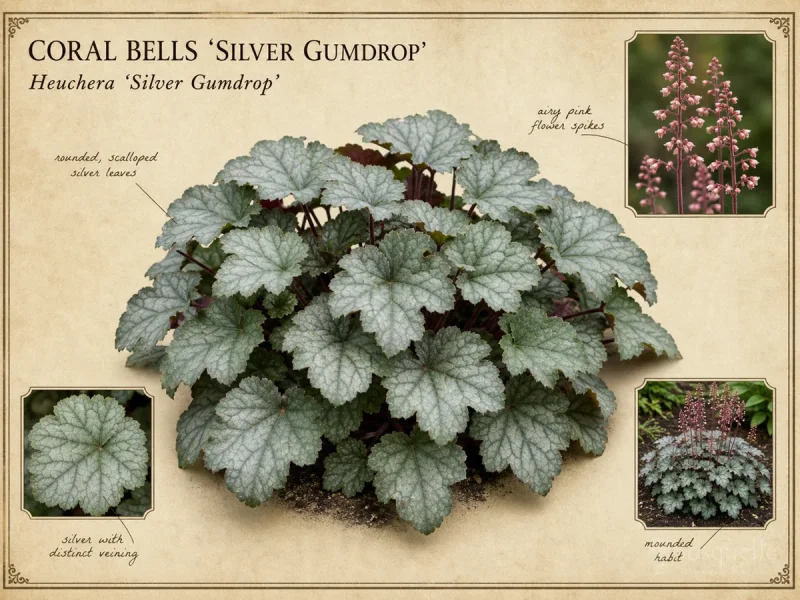
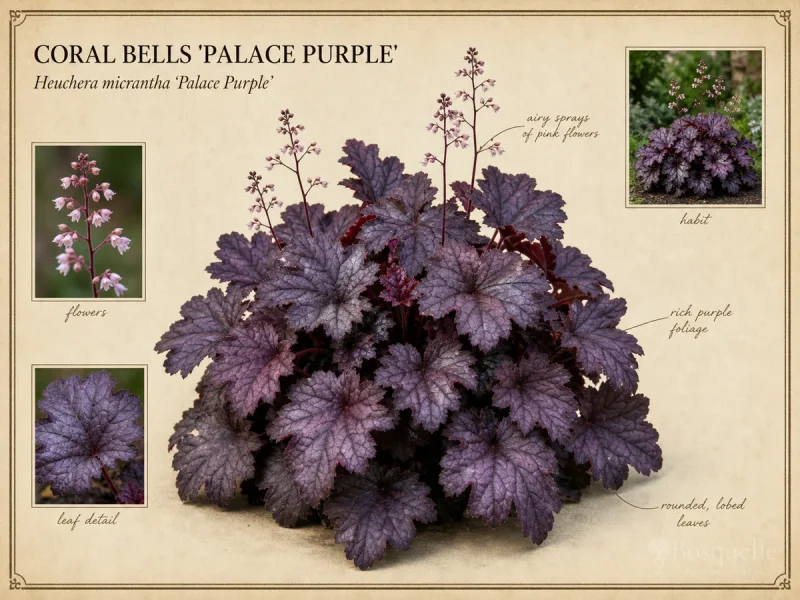
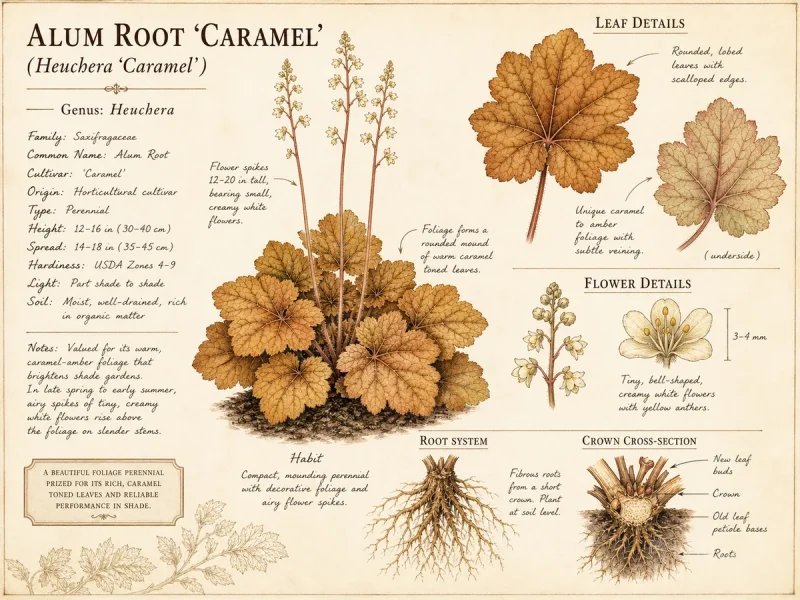
Compact colorful types are the easy patio picks: Lime Rickey, Obsidian, Black Pearl, Peach Flambe, Citronelle, and Silver Gumdrop. Classic Palace Purple and warm Caramel still work in a wide pot with the crown proud of the mix.
Leaf color still matches light. Lime wants more shade on a hot patio. Dark leaves take morning sun. Color lists live on Colorful Garden Coral Bells.
Pot size, drainage, and planting the crown high
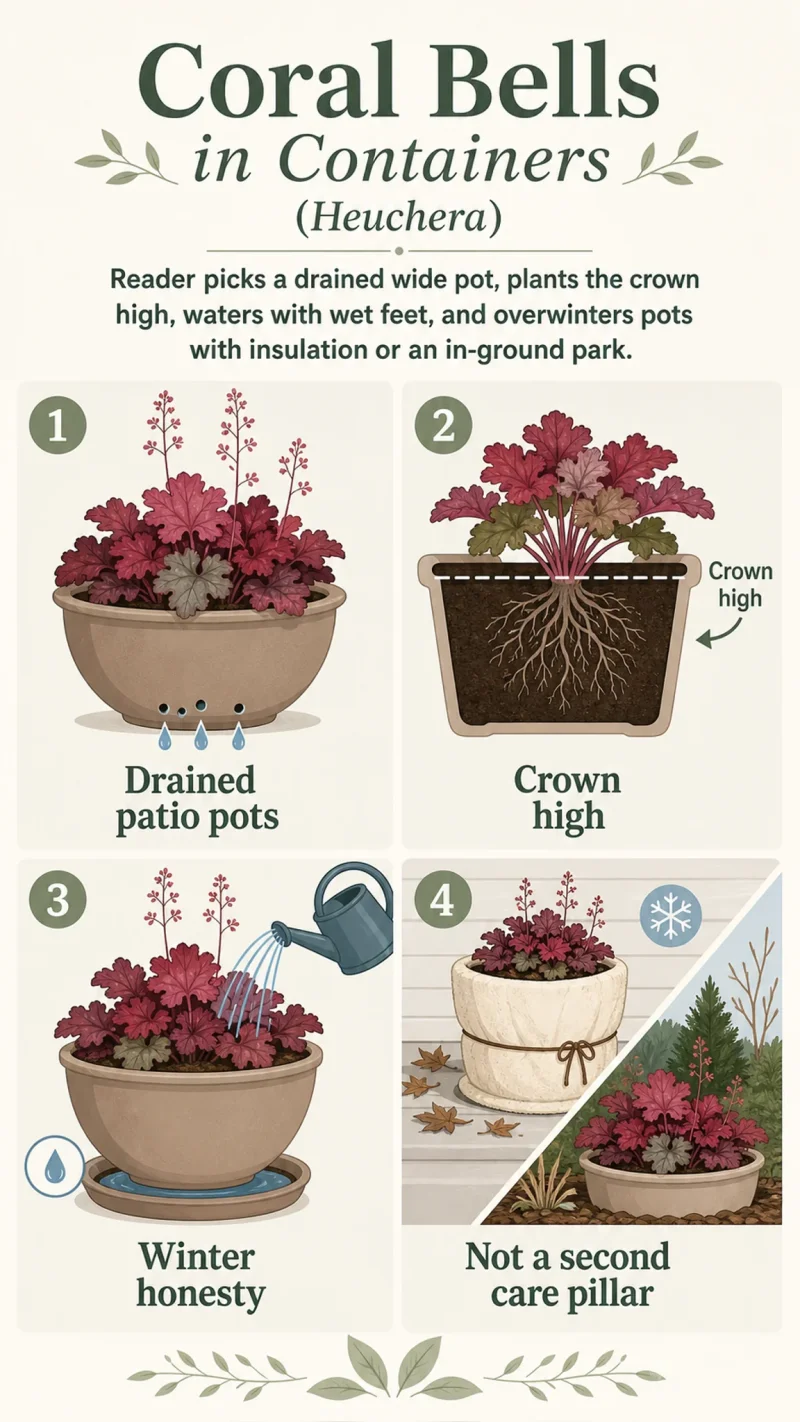
- Choose a pot at least 10–12 inches deep with a wide rim and an open drain hole.
- Set the empty pot where it will live; a planted pot is heavy when wet.
- Cover the hole with mesh; fill with potting mix plus grit, not garden clay.
- Set the woody crown above the mix; firm, then water to settle.
- Mulch lightly without covering the crown center.
- Empty any saucer after rain so the crown never sits in stale water.
Palace Purple, Caramel, and Silver Gumdrop use the same high crown. A pretty cachepot without a hole is a rot box unless you lift the inner pot to drain.
Watering, feeding, and aftercare in pots
Pots dry fast in wind. Water when the top inch of mix is dry. Peach Flambe and Citronelle stall without summer moisture, but wet feet still rot the crown. Feed lightly once in spring. When the center goes woody, split on Dividing Coral Bells.
Outdoor pots insulate roots less than a bed. Wrap or cluster pots for cold spells, or plant the clump in the ground for winter and repot in spring. Empty saucers after rain so crowns never sit in ice water.
Afternoon shade still matters on the patio for Obsidian and Black Pearl. Morning sun is enough for Peach Flambe and Caramel if the mix stays moist without soggy feet.
Shared part shade, drainage, and heave live on How to Grow Coral Bells. This page is not a second full care essay.
Mix a trailer at the rim only if it does not smother the crown. Heucherella as a spiller is a different genus. Confirm the tag.
Move pots into morning light in spring, then into afternoon shade when heat arrives. A west wall in July is a scorch test, not a foliage show.
Do not use a weekly fertilizer schedule. Pale new leaves in a dim porch are a light problem. Feed will not fix a dark corner.
If the mix stays wet for days after rain, add grit next repot or drill a second hole. Pretty glaze without drainage is the usual pot fail.
Label the cultivar on the rim. Next April a green flush will not tell you lime versus black.
A first-year pot can look full. Year two, divide rather than stepping up to a barrel that stays wet in the core.
Bring a prized pot to a sheltered wall before a hard freeze if you cannot sink it. Dry cold wind desiccates leaves. A soggy pot in a thaw then freeze splits roots.
Partners in the same pot must share the water. A thirsty annual in the same bowl is how you rot the Heuchera to keep the petunia alive.
A terracotta pot dries faster than plastic. Check the mix with a finger, not a calendar. Wind on a balcony can dry a small pot twice in one hot day. Group pots to cut that wind, then still drain after rain.
If winter is severe, an unglazed pot can crack. A plastic nursery pot dropped inside a cachepot is easier to lift into a garage for the coldest nights. Do not leave the crown in meltwater in that cachepot.
Feed is a spring pinch, not a bloom booster every two weeks. You are growing leaves. Soft, overfed foliage rots at the crown in a wet August.
When you repot, tease circling roots and reset the crown high. A plant that has sunk in the mix is already on the path to rot. Lift it before you add a bigger pot of wet peat.
A mixed pot with a fern and a Heuchera works if both like even moisture. A succulent in the same mix does not. Split recipes by water, not by how the photo looked on a catalog page.
In a heat wave, move the pot to morning sun only. Do not add a daily soak on a west deck and hope. Wet mix plus hot plastic cooks roots. Shade first, then water when the top inch is dry.
Knock the pot after a storm. If water sits in the saucer overnight, empty it. Ice in that saucer in January is how the crown rots while the leaves still look fine.
Use a potting mix, not garden soil, in the container. Garden clay seals and then heaves in a freeze the same way a wet bed does.
FAQ
Can coral bells grow in pots?
Yes. Use a large drained container, keep the crown above the mix, and water when the top inch is dry.
How often do pot coral bells need water?
When the top mix dries in active growth. Pots dry much faster than beds, especially in wind.
How do I overwinter coral bells in pots?
Insulate or cluster outdoor pots, or sink the clump in the ground for winter and repot in spring. Empty saucers after rain.
Where is full coral bells care?
How to Grow Coral Bells. This page is containers only.
Related guides


Recommended plants


This note is part of Coral Bells Guides.
More container notes by plant live in Container Growing Guides.
Updated: Reviewed by Bosquelle Editors