
Growing Brugmansia in a pot is the standard approach for most US gardeners — it is the only way to keep the plant alive through winter in zones colder than Zone 10. The container also lets you move the plant to the best summer spot and bring it back indoors before the first frost.

Choose a large pot, a rich mix, and water daily in summer heat
| Factor | Recommended | Avoid |
|---|---|---|
| Pot size | At least 60 cm (24 in) wide; larger is better — Brugmansia is a big plant and roots fill a pot quickly | Small pots — the root ball dries out daily before the plant can bloom |
| Pot material | Any material with drainage holes; heavy ceramic or terracotta holds moisture longer in heat | Pots without drainage — standing water causes root rot within days |
| Potting mix | Rich, moisture-retentive mix — John Innes No. 3 or a quality potting compost with added slow-release fertiliser | Garden soil — it compacts in a container and drains poorly |
| Summer watering | Daily deep watering in peak heat; let the top inch dry slightly between waterings in cooler spells | Irregular watering — the plant wilts fast and stops flowering when the root ball dries out |
| Summer feeding | Balanced liquid feed monthly in spring; high-potassium weekly in summer to push flowers | High-nitrogen feed in summer — drives leaf growth at the cost of bloom |
Plant into the pot in late winter or early spring indoors and move it outside after your last frost date, once night temperatures are reliably above 45°F. [1] Use the largest pot you can still move — or plan to use a sack trolley when it is time to bring it back indoors. A 60 cm pot filled with moist compost and a mature plant can weigh 40 kg or more.
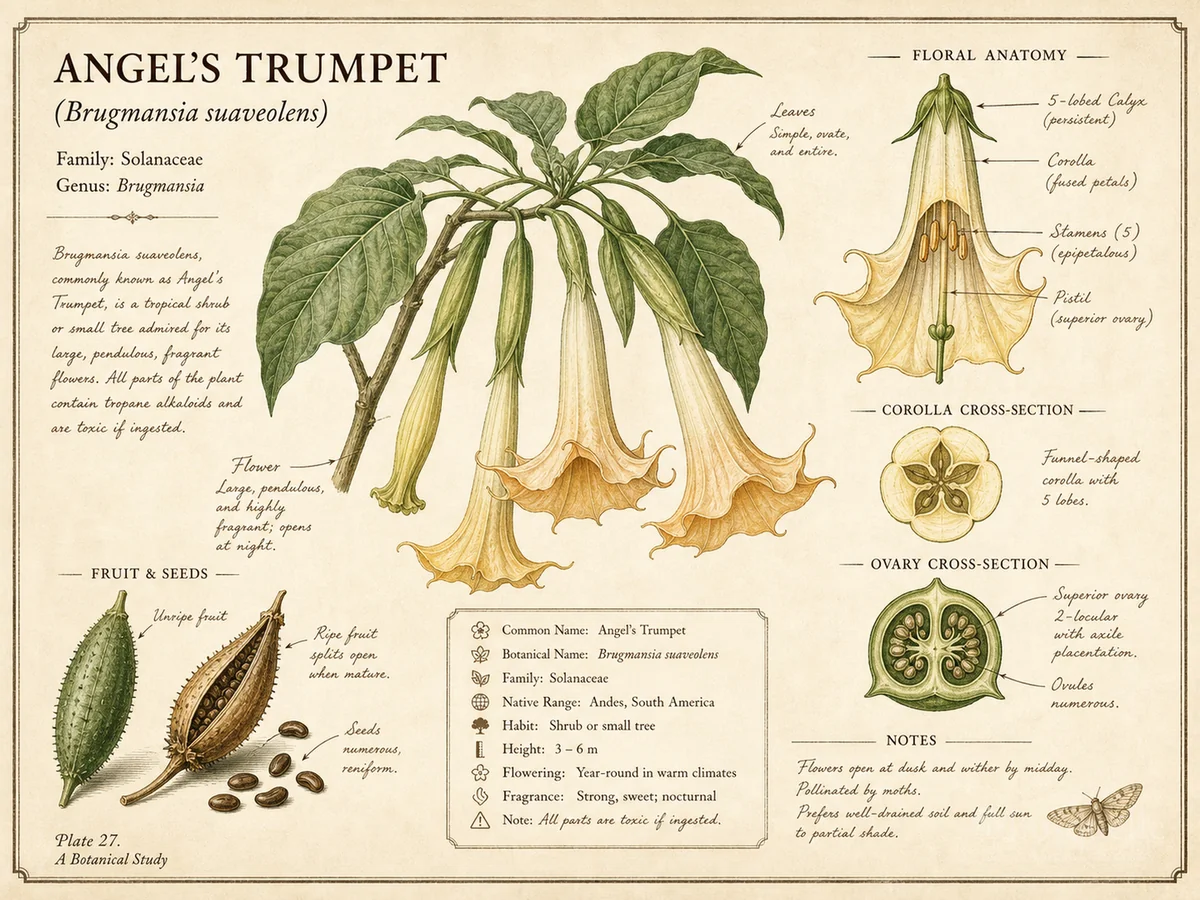
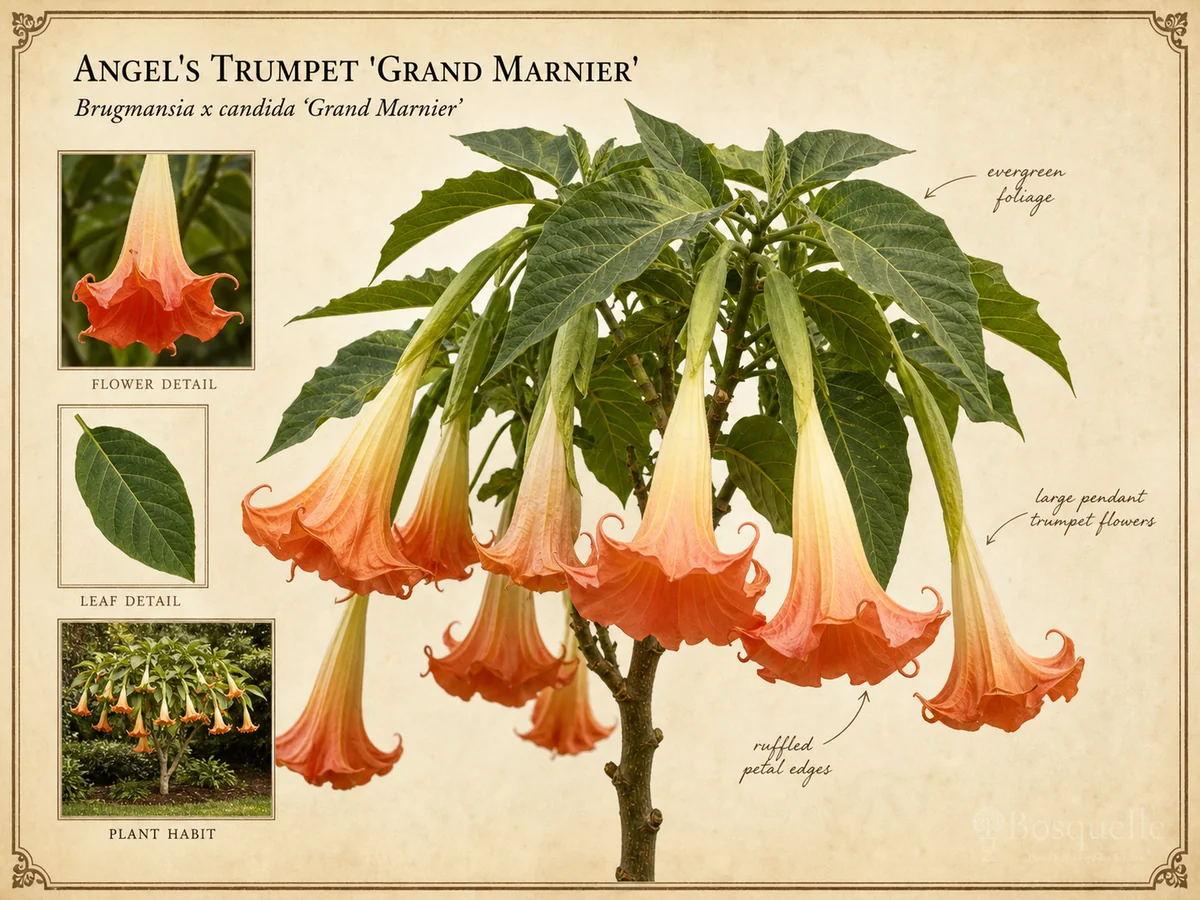
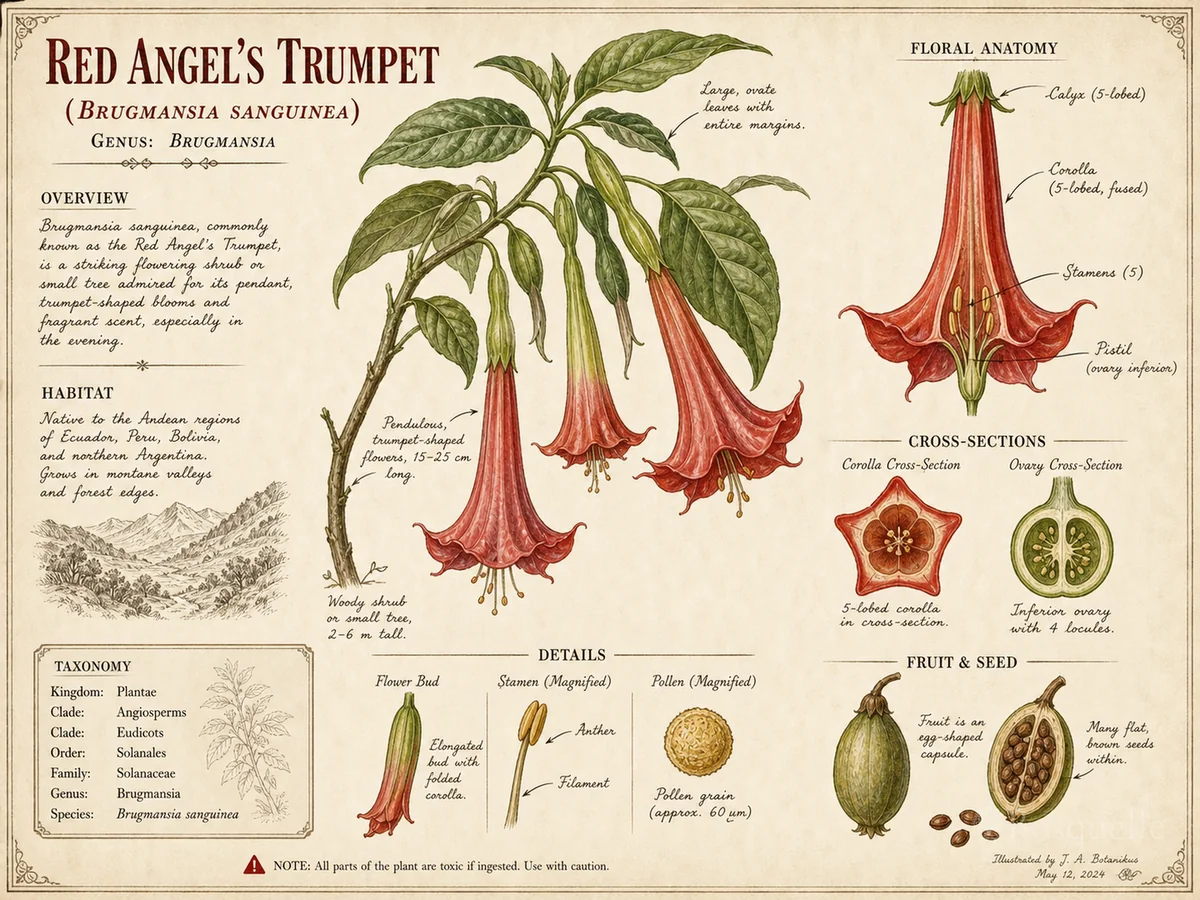
B. suaveolens is the most widely grown container angel's trumpet. Grand Marnier stays compact enough for most patios. B. sanguinea from the cold group tolerates slightly cooler conditions but still needs frost protection. [2]
How often should I water angel's trumpet in a pot?
In peak summer heat, water daily — large plants in big pots can drink the entire root ball dry in 24 hours. Check by pressing a finger into the mix: if the top inch is dry, water deeply until it runs from the drainage hole. In autumn as temperatures fall, reduce to every few days. In winter dormancy, water only enough to keep the root ball barely moist — roughly once a month.
Move the pot indoors before temperatures drop below 45°F
Brugmansia is not frost-hardy. Warm-group species are damaged by any frost; cold-group B. sanguinea tolerates slightly lower temperatures but should still come indoors before a hard freeze. [3] Watch the forecast: once overnight lows approach 45°F, bring the pot in.
- Stop fertilising in late summer and reduce watering as nights cool. This signals the plant to slow growth before dormancy.
- Prune the plant back before moving it in — cut above the Y-fork, leaving 6–10 nodes per branch. This reduces the size and makes indoor storage easier. (The Y-fork rule is explained in full on How to Grow Angel's Trumpet.)
- Move the pot indoors when night temperatures approach 45°F. Do not wait for a forecast frost — cold damage happens at 40–42°F even without frost.
- Choose one of two winter approaches: houseplant or dormant storage.
- Houseplant: Place in a south-facing window or under grow lights. Water when the top inch dries out. The plant may hold some leaves and even bloom lightly.
- Dormant storage: Move to a cool (40–50°F), dark location — basement, garage, or large closet. Water only once a month, just enough to keep the root ball from completely drying out. Leaf drop is normal; the plant is not dead.
- In both cases, keep the temperature above 32°F. The root ball is more sensitive than the canes — freezing roots kills the plant.
- In late winter, scratch a cane with a fingernail to check for green tissue under the bark. Green means the cane is alive. Dry, brown tissue from tip to base means that cane is dead — cut it off above the next living bud.
Can I overwinter angel's trumpet in a garage?
Yes, if the garage stays above 32°F — ideally 40–50°F. Place the pot in the darkest corner. The plant will lose its leaves and look dead, but a green trunk means it is dormant, not dead. Water once a month, just enough to keep the root ball barely moist. Do not fertilise until you see new growth in spring.
Wake it up in spring — repot, water up, and feed
Once night temperatures reliably stay above 45°F, move the pot back to a warm, bright spot and begin watering more frequently. [1] Growth resumes fast — within a week or two of warmth and regular water you will see new shoots.
- Move the pot to a warm, bright indoor spot or a sheltered outdoor position about four to six weeks before your last frost date. This gives the plant time to push new growth before going back outside.
- Begin watering regularly — every few days at first, building up to daily as growth speeds up.
- Repot every two to three years in spring, into a pot one size up, or remove the top 6 inches of old mix and replace with fresh compost if the pot is already very large. Work slow-release granular fertiliser into the new mix. [2]
- Once you see new leaves expanding, start a liquid feed at half the label rate. Build to full rate as the plant pushes new branches.
- Harden off the plant over one to two weeks before leaving it outdoors: set it outside in a sheltered spot for a few hours each day, gradually increasing exposure, before moving it to its full summer position.
When should I repot my angel's trumpet?
Repot in spring before new growth begins, every two to three years or when roots fill the current pot and push through drainage holes. If the plant is too large to move to a bigger pot, remove as much old mix as possible from the top and sides and replace with fresh potting compost mixed with slow-release fertiliser.
A container-grown angel's trumpet takes a little planning around the frost calendar, but the reward — a 6-foot patio plant covered in hanging, fragrant trumpets through summer — makes the autumn move worthwhile. Match the pot size to the plant, water daily in heat, and bring it in before 45°F. The plant will store reliably for years in a cool basement. For site, pruning, and Y-fork detail, see How to Grow Angel's Trumpet.
FAQ
What size pot does angel's trumpet need?
Start in a pot at least 60 cm (24 inches) wide. Larger is better — a bigger root zone holds more water, which reduces the risk of the plant wilting daily in summer heat. Upgrade to a larger pot every two to three years or when roots crowd the drainage holes.
Can I leave angel's trumpet outside in winter?
Only in USDA Zones 10–12 where frost does not occur. In Zones 6–9, bring it indoors before night temperatures reach 45°F. In Zone 9, a light frost-cloth covering may protect canes from brief cold snaps, but a hard freeze will kill the root ball in a pot, which has no soil insulation.
Does angel's trumpet in a pot need a lot of fertiliser?
Yes — it is a heavy feeder. In spring, use a balanced liquid fertiliser monthly. In summer, switch to a high-potassium feed (tomato fertiliser works well) applied weekly. Stop fertilising in early autumn when you prepare the plant for storage.
My angel's trumpet dropped all its leaves — is it dead?
Probably not. Leaf drop in autumn when stored in a cool, dark place is normal dormancy behaviour. Scratch a cane gently with a fingernail: green tissue under the bark means the stem is alive. If the trunk and main branches are still green, the plant will push new growth in spring when you return it to warmth and resume watering.
Related guides

Recommended plants


References
- [1] Gardening Know How -
https://www.gardeningknowhow.com/ornamental/trees/brugmansia/growing-brugmansias-in-containers.htm - [2] Gardening Know How -
https://www.gardeningknowhow.com/ornamental/trees/brugmansia/brugmansia-winter-care-wintering-brugmansia-in-your-home.htm - [3] Royal Horticultural Society -
https://www.rhs.org.uk/plants/brugmansia/growing-guide
This note is part of Brugmansia Guides.
More container notes by plant live in Container Growing Guides.
Updated: Reviewed by Bosquelle Editors