
There is no spray for Hypoxylon canker. If a dusty tan or silver crust is only on a dead limb and most of the oak still has leaves, cut that limb eight to twelve inches below the crust and get the wood off the yard, because the fungus is already rotting that sapwood, then water the rest of the tree in a dry stretch so drought is not still opening the door. When the same crust is on the trunk, or more than about fifteen percent of the canopy is dead, take the oak down, because the wood is already a white rot and it will break.
People still say Hypoxylon. Then the oak fungus is Biscogniauxia atropunctata, sometimes B. mediterranea, the names that used to sit in Hypoxylon. It lives quietly in the inner bark of many healthy oaks, then runs through the sapwood after drought, fill dirt, compacted roots, or a construction cut, so the outer bark sloughs and the crust shows. Quaking aspen in the North gets a different fungus, Entoleuca mammata, with yellow-orange sunken cankers that take years. That is not this oak crust. A propiconazole shot meant for oak wilt will not rewind either one.
Cut the dead limb below the crust, or take the oak down when the trunk shows it
The finish is a saw, not a bottle, because nothing you spray on the leaves reaches a fungus that is already eating the sapwood. Walk the trunk and the big limbs. If the dusty crust is only on wood you can spare, and the rest of the canopy is still leafing, cut eight to twelve inches below the lowest slough, into wood that still looks cream, then burn, haul, or bag the pieces. Do not chip them for mulch under the remaining oaks, because the fungus stays active on dead wood. Wipe the blades with seventy percent rubbing alcohol, or a ten percent bleach mix, between cuts, then rinse and oil if you used bleach so the steel does not rust.
Water the root zone in a hot, dry stretch so the wood is not still drying out from the last drought, and keep about two inches of mulch over that soil, pulled back from the flare, because a volcano of mulch against the bark rots the flare and does not help the sapwood. Fertilize only when a soil test shows a shortage. Extra nitrogen on a stressed oak makes more leaf than the roots can wet. Keep fill dirt, compaction, and new paving off the roots, because that is how a healthy-looking water oak or southern red oak turns this fungus on a year later. When the crust is already on the trunk, or more than about fifteen percent of the crown is dead, stop pruning for a save. Take the tree down. The wood is brittle, so do not send a climber into it. Use a lift.
- Confirm. Bark has fallen in patches or strips, and a dusty tan, olive, or silver-gray crust sits on the wood. The inner bark under that crust is already dead.
- Prune if the crust is only on limbs and most of the canopy is still alive. Cut eight to twelve inches below the slough, disinfect the blades, and get the wood off the yard the same day. Do not chip it for mulch.
- Water the rest of the tree in drought, mulch off the trunk, and keep construction and fill off the roots, so you are not feeding the next outbreak on a tree that is still sound.
- Take the oak down when the crust is on the trunk, when more than about fifteen percent of the canopy is dead, or when dead wood hangs over a roof, a street, or a play area. Do not climb it.
How do I treat Hypoxylon canker?
There is no spray. If the dusty crust is only on a limb and most of the oak still has leaves, cut eight to twelve inches below the slough, get the wood off the yard, and water the rest of the tree in drought. When the crust is on the trunk, or more than about fifteen percent of the canopy is dead, take the tree down.
Can Hypoxylon canker be cured?
No. The fungus is already in the sapwood by the time the bark sheets off. Watering and keeping fill off the roots can keep a still-sound oak from sliding, and a limb prune can take off wood that is already dead. Nothing you buy in a bottle kills the crust.
Once the crust is on the trunk, the oak is usually gone
By the time the bark sheets off and the dusty mat shows, that cambium is already dead, and on many southern oaks the rest of the tree follows in weeks to a couple of years, because the fungus decays the sapwood fast and the canopy cannot wet itself. A few dead limbs after a drought, with no crust on the trunk, can still be a prune-and-water job. A silver-gray patch like thick paint on the bole is not. Some writers say that once you see the crust the tree is already dead. That is close enough for a trunk infection. It is too harsh for a single limb you can still take off.
If the oak cannot fall on a house, a car, or a walk, and the trunk is not yet painted with crust, you can wait until late spring to see whether it pushes new leaves or root sprouts before you pay for removal, and a little water in that window does not hurt. Taking one infected oak down does not protect the neighbors, because the spores are already in the air and the fungus already sits latent in many healthy trunks. It does not move through grafted roots the way oak wilt does, so one blackjack with a crust is not a reason to trench the whole grove. Remove it because it will break, not because you are sanitizing the block.
Will Hypoxylon canker kill my oak?
Often yes once the crust is on the trunk, because that cambium is already dead and the sapwood rots fast. A few dead limbs with no trunk crust can still be pruned. Take the tree down when it is a hazard, not because you think you will save the neighbor oaks by removing this one.
Bark falling off in sheets, with a dusty crust underneath, is the tell
The crown often thins first. Leaves come out small, yellow, or scorched, and a few limbs die, which looks like any drought, so you cannot call this fungus on the foliage alone. Then outer bark loosens in patches or long strips and collects at the base of the tree. Under that bark is a cushion of spores: tan, olive, or reddish-brown and powdery at first, then hard and tar-black in a few weeks, then silver-gray like a coat of paint months later. Old mats can be fully black. Black zone lines run through the decaying sapwood. Rub the fresh powder and it dusts your fingers. That crust, not a yellow leaf edge, is how you know you are looking at Hypoxylon canker on an oak.
Water oak, southern red oak, blackjack, post oak, live oak, and pin oak show it most in the South after a dry year or after fill and compaction over the roots. White oaks take it too, usually a little slower. Pecan, hickory, maple, sycamore, and elm can wear the same mats. The fungus was already in many of those trees while they still looked fine, which is why a neighbor oak without a crust is not proof you escaped it. It is proof that tree has not been pushed yet.
| Where you see it | What it is | Try this |
|---|---|---|
| Bark sloughs in patches or strips; dusty tan, olive, then tar-black or silver-gray crust on the wood | Hypoxylon canker on oak | Prune a limb eight to twelve inches below, or take the tree down if the trunk is crusted |
| Live oak or red oak wilts and drops leaves fast; neighbors go too; no bark crust as the first sign | Oak wilt | Get a lab the same week; this is not a crust you prune |
| Yellow or red band on the same limbs every August; tree still leafs out in spring | Bacterial leaf scorch | See bacterial leaf scorch — water and wait years, not this bark job |
| One rose or azalea cane dead after drought, sunken dark canker, rest of the shrub green | Botryosphaeria dieback | See Botryosphaeria canker and dieback — not oak bark sheets |
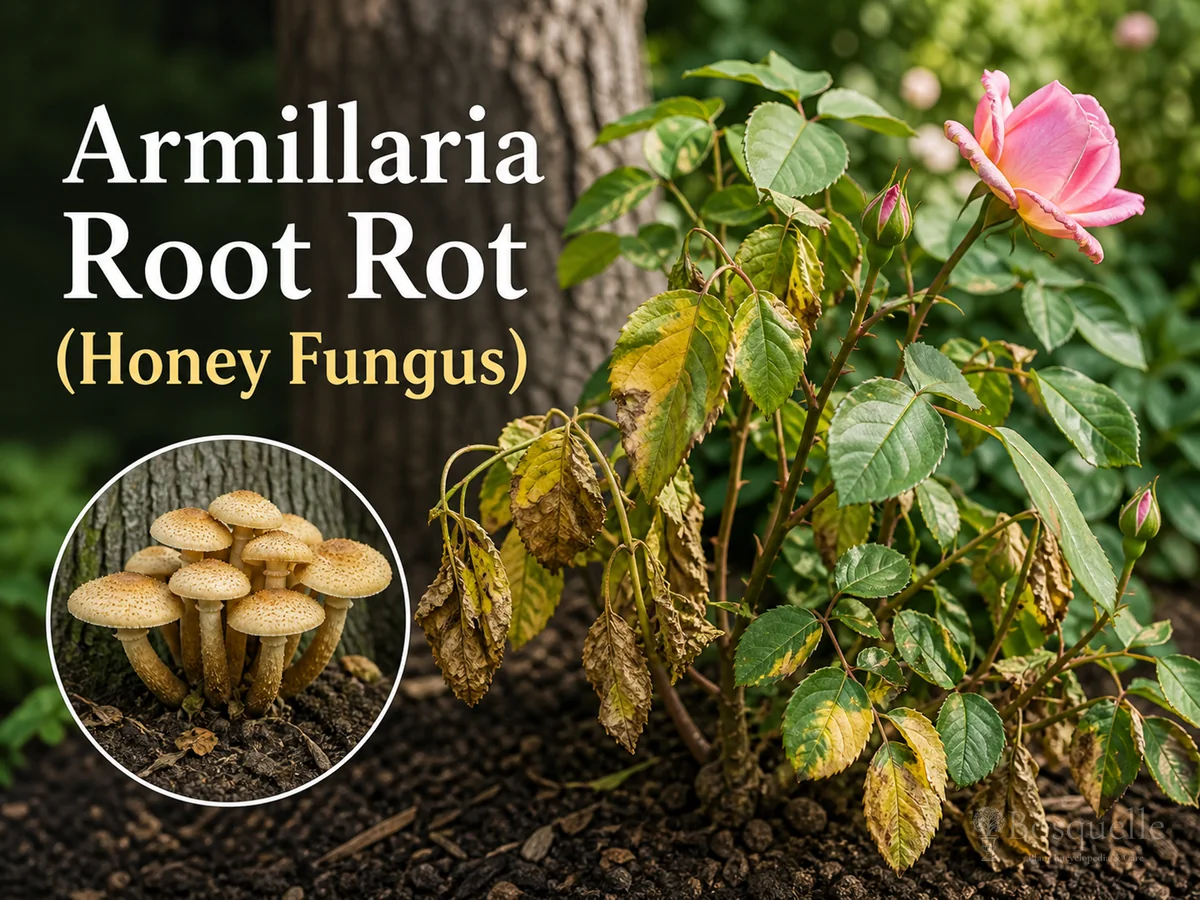
| Mushrooms or a white fan at the root flare; the tree fails from the roots up | Armillaria | See Armillaria root rot — not this trunk crust |
| Yellow-orange oblong canker on quaking aspen or poplar, years not weeks | Aspen Hypoxylon (Entoleuca) | Prune before it hits that trunk; it is not this oak crust |
| Thin crown after heat or construction, bark still tight, no dusty mat | Drought or root injury without this fungus showing | Water and keep fill off the roots; watch for a crust later |
How do I identify Hypoxylon canker?
Look for bark falling in patches or long strips, with a dusty tan, olive, or silver-gray crust on the wood underneath. Fresh powder rubs off on your fingers. A thin crown without that crust is still just drought until the mat shows.
Oak wilt starts in the leaves. An aspen canker is a different fungus
Oak wilt is the scare that needs a different call, because it can infect a healthy oak, move through grafted roots into the next live oak, and ride sap beetles to a fresh wound, so a red oak can wilt and drop in weeks and a grove can follow. Hypoxylon canker waits for stress, then shows as bark sheets and a dusty crust, and it does not walk the roots to the neighbor. If the first thing you saw was sudden leaf collapse with no sloughing bark, treat it as oak wilt until a lab says otherwise, and do not spend the week on a Hypoxylon prune. There is no oak-wilt injection for this fungus, and propiconazole will not slow a crust that is already on the wood.
A yellow band on the same oak limbs every August, with the tree still leafing out in spring, is bacterial leaf scorch. That bacterium plugs the xylem for years. Do not paste that water-and-wait calendar onto a trunk that has already shed its bark. One dry rose or azalea cane after drought is Botryosphaeria canker and dieback. Cut that cane on the shrub; it is not this oak job. Mushrooms at the flare are Armillaria root rot, a root kill, not a spore mat under oak bark. Blistered oak leaves in a cool wet spring are oak leaf blister, a leaf fungus. A generic canker search is a different umbrella, not this crust. On quaking aspen, yellow-orange wavy cankers that take three to eight years are Entoleuca mammata. Prune those limbs before they hit the aspen trunk, on a dry day, and do not run the oak eight-to-twelve inch sheet-bark plan as if it were the same fungus.
Is this oak wilt?
Oak wilt starts in the leaves. A red oak can wilt and drop fast, and live oaks can die through grafted roots. Hypoxylon canker shows as sloughing bark and a dusty crust, and it does not walk the roots to the next tree. If the first sign was sudden wilt with the bark still tight, treat it as oak wilt until a lab says otherwise.
Related reading
- Bacterial leaf scorch — a yellow band on the same limbs every August, not bark falling in sheets.
- Botryosphaeria canker and dieback — one dry cane after drought, not an oak crust.
- Armillaria root rot (honey fungus) — mushrooms at the flare, a root job, not this trunk mat.
- Oak leaf blister — puckered oak leaves in a cool spring, not sloughing bark.
FAQ
Will a fungicide or an oak wilt injection stop it?
No. Nothing is registered for this fungus on hardwoods, and a propiconazole injection used against oak wilt does not reach a crust that is already killing oak sapwood. Skip the bottle and decide whether you are pruning a limb or taking the tree down.
Does Hypoxylon canker spread to my neighbor's oaks?
The spores are already in the air, and many healthy oaks already carry the fungus asleep in the bark, so taking your tree down does not protect the block. It does not move through grafted roots the way oak wilt does. Keep the neighbor oaks watered in drought and keep fill off their roots.
Can I burn the firewood or chip it for mulch?
Burn it locally if the town allows, or haul it. Do not chip it for mulch under the remaining trees, because the fungus stays active on that dead wood. Moving firewood far is a bad idea for other pests, even though this fungus is not the usual reason a pile infects a grove.
Is aspen Hypoxylon the same disease?
No. Quaking aspen and poplar get a different fungus, Entoleuca mammata, with yellow-orange sunken cankers that often take three to eight years. Prune those limbs before they hit the aspen trunk. The oak job is the dusty crust under sloughing bark, usually after drought.
Is it safe to climb a tree with Hypoxylon canker?
No. The fungus rots the sapwood fast, so the wood may not hold a climber. Use a lift, and take a trunk-crusted oak down before it drops a limb on a roof or a walk.
Related diseases




Related pests



Updated: Reviewed by Bosquelle Editors