
Choose an indoor shamrock, a lucky four-leaf, or a hardy alpine first.

Choose an indoor shamrock, a lucky four-leaf, or a hardy alpine first
| Factor | Recommended | Avoid |
|---|---|---|
| A windowsill houseplant | Indoor false shamrock | Do not buy a lawn weed, or a hardy alpine, as the grocery pot |
| Four leaflets with a dark cross | Iron Cross | Do not call it clover |
| A grit trough or rock garden | Silver shamrock | Do not treat it as the indoor purple shamrock |
| Cool woodland shade | Redwood or violet wood sorrel | Do not use a dry indoor windowsill as the main site |
| Sun bedding color | Volcanic sorrel | Do not expect alpine hardiness |
Know your USDA hardiness zone before you pick a type of oxalis that will take your winter. Type your ZIP below.
2023 USDA ZIP listings (PRISM / USDA-ARS). Find Your USDA Hardiness Zone · Official USDA map.
Read the Latin on the tag, then pick the habit that matches the job, not the St. Patrick's tag. [1] [2] Indoor false shamrock is the usual grocery plant. Iron Cross is the four-leaflet lucky class. Silver shamrock is the hardy alpine. [3] Native woodland kinds and volcanic bedding are different jobs again. [4] Light and the dry rest stay on How to Grow Oxalis. To set corms in a pot or a bed, see Planting Oxalis.
Which oxalis should I buy?
Pick habit first: indoor false shamrock for a windowsill, Iron Cross for four leaflets, or silver shamrock for a grit alpine bed.
Is Iron Cross a clover?
No. Iron Cross is Oxalis tetraphylla. Clover is Trifolium. Four leaflets with a maroon cross are still oxalis.
Browse by kind
Indoor false shamrock
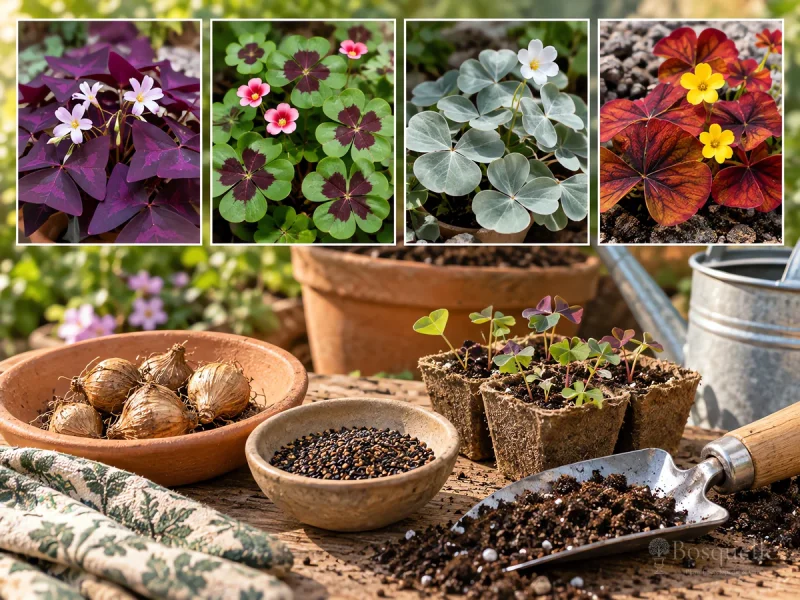
Fanny and Charmed Wine are the indoor false-shamrock class. false shamrock is the species form. Atropurpurea is the dark-leaf strain. Buy these for a windowsill, not for a lawn.
Lucky four-leaf
Iron Cross has four leaflets with a maroon cross. It is the lucky four-leaf oxalis, not clover, and not the three-leaflet indoor shamrock.
Hardy alpine silver
silver shamrock is a hardy alpine with a pleated silver fan. It wants a grit bed or trough, not a warm indoor rest cycle as the main job.
Native woodland
redwood sorrel is a Pacific woodland groundcover in cool shade. violet wood sorrel is the native violet wood sorrel. Neither is the grocery houseplant.
Volcanic bedding
Molten Lava and Zinfandel are volcanic sorrel for sun bedding and mixed pots. Color deepens in more light. They are not hardy alpines.
Other garden bulbs
candy cane sorrel is grown for the red-edged flowers. Cottage Pink is pink wood sorrel. Ken Aslet is a Cape oxalis. Treat them as small garden bulbs, not as indoor false shamrock.
Pick the group, then the cultivar. Extra shop names are not extra kinds. Ebony, Mijke, and Francis are indoor false-shamrock cultivars not in this catalog; treat them as indoor shamrock if you grow one.
If you want a windowsill plant, buy indoor false shamrock — silver shamrock is the alpine, not the grocery pot.
FAQ
Is oca this plant?
No. Oca is Oxalis tuberosa, an Andean food crop. This catalog is ornamental oxalis. Do not grow oca from a grocery shamrock tag.
Do we list Ebony or Mijke?
No. Those are indoor false-shamrock cultivars we do not hold. If you have one, treat it as indoor shamrock.
Is creeping wood sorrel the houseplant?
No. Creeping wood sorrel and yellow wood sorrel are lawn weeds. The houseplant is usually false shamrock.
Related guides


References
- [1] Garden Design -
https://www.gardendesign.com/plants/oxalis.html - [2] NC State Extension Gardener -
https://plants.ces.ncsu.edu/plants/oxalis/ - [3] NC State Extension Gardener -
https://plants.ces.ncsu.edu/plants/oxalis-triangularis/ - [4] Wisconsin Horticulture -
https://hort.extension.wisc.edu/articles/shamrocks-oxalis-spp/
This note is part of Oxalis Guides.
More type comparisons by plant are gathered in Types of Plants Guides.
Updated: Reviewed by Bosquelle Editors