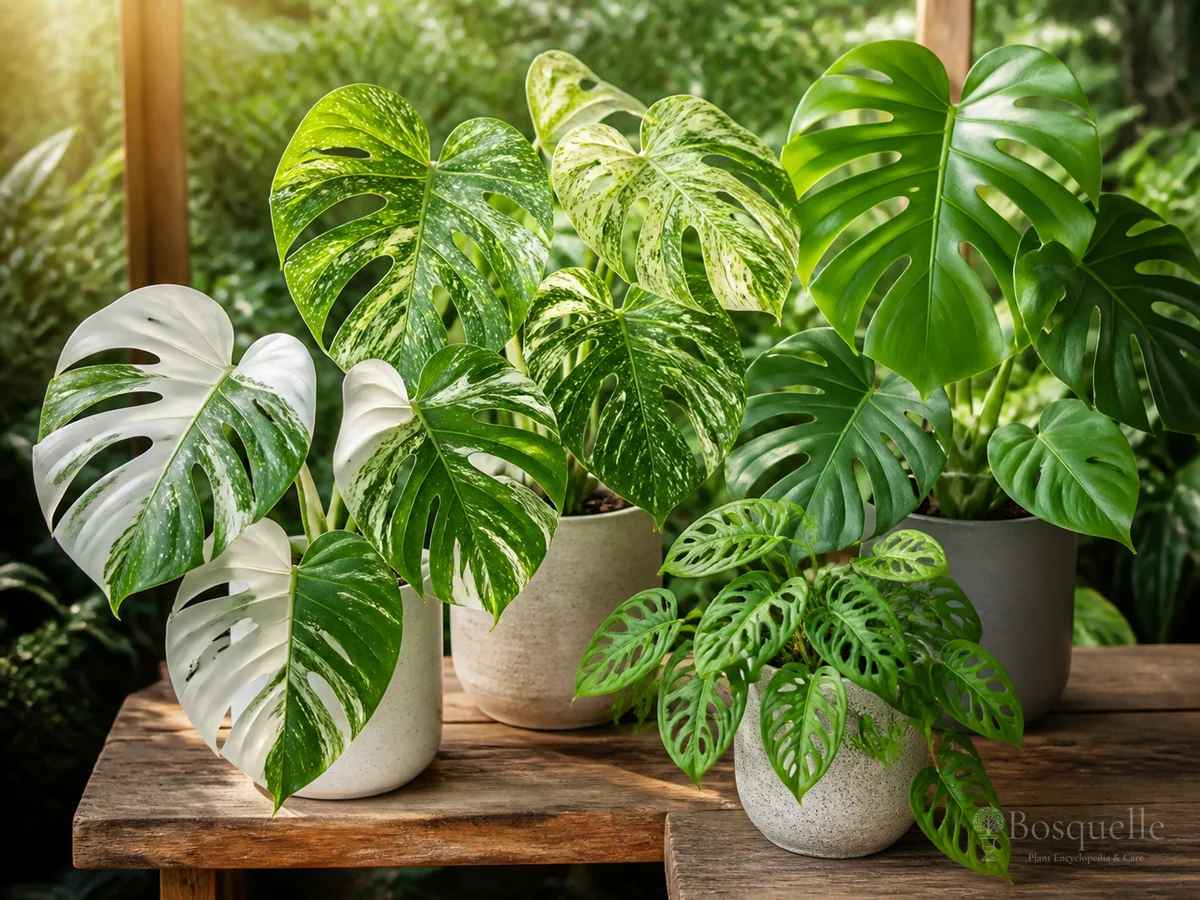
Grow Monstera in bright indirect light, in a chunky mix that dries between waterings, and give the vine something sturdy to climb. Shops call it swiss cheese plant.
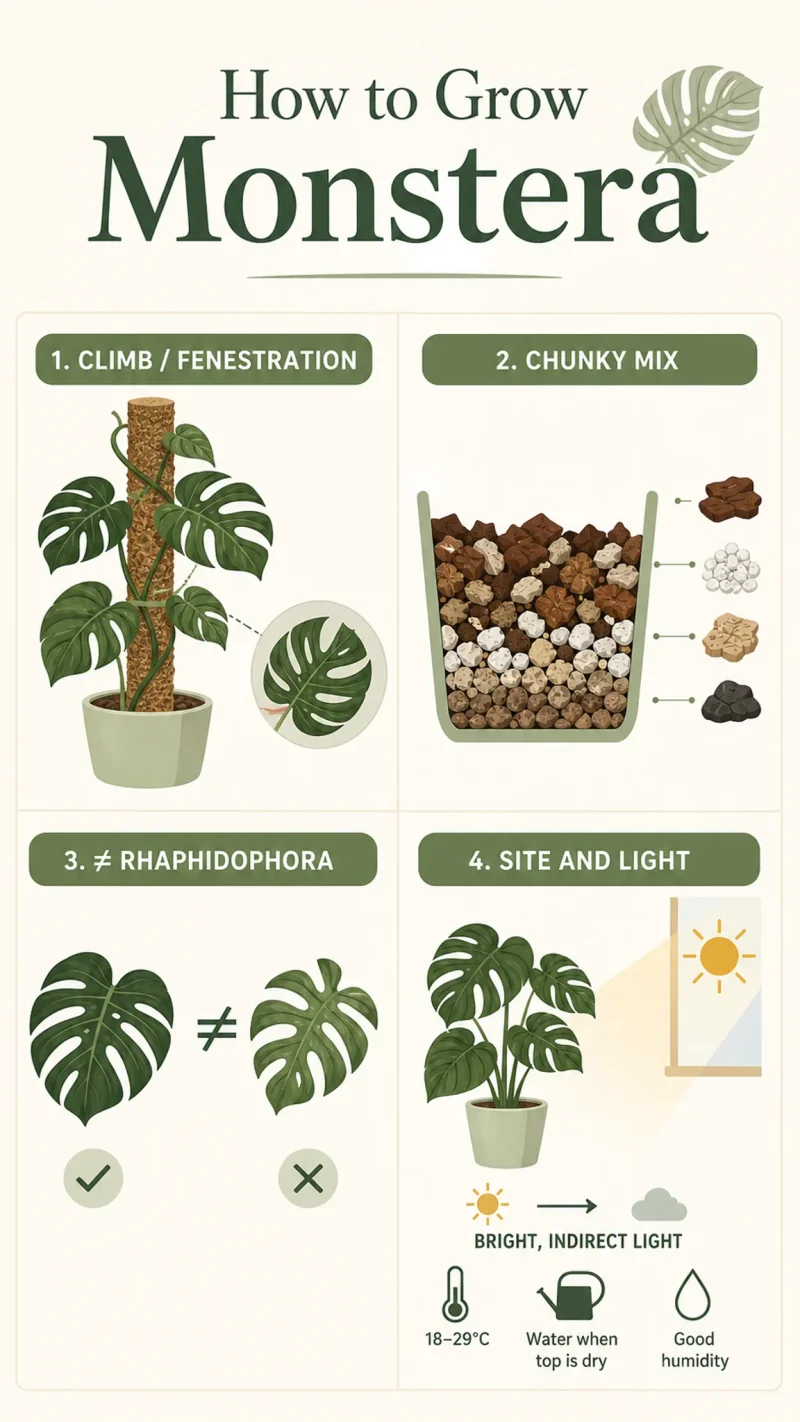
Bright indirect light, chunky mix, and water when the top is dry
| Factor | Recommended | Avoid |
|---|---|---|
| Light | Bright indirect — an east window, or a few feet back from south or west glass | Hot midday sun through glass, or a dim corner that keeps new leaves small and solid |
| Mix | Chunky aroid mix (bark, perlite or pumice, and some peat or coco) in a pot with a drain hole | Fine soil that stays soggy, or a cachepot with no hole |
| Water | Water thoroughly when the top 1–2 inches are dry, then empty the saucer | Weekly watering while the mix is still wet |
| Room | About 60–85°F; humidity around 50% helps edges stay soft | Cold drafts, rooms below about 50°F, and heater blast on the leaves |
Bright filtered light and a mix that dries between waterings keep roots alive. The plant will sit in a dimmer room, but internodes stretch and new leaves stay heart-shaped with no splits. [1] All parts contain calcium oxalate — keep foliage where pets and children cannot chew it.
- Set the pot in bright, filtered light. Turn it so the next leaf does not press the glass. Variegated kinds need a brighter filtered spot than all-green plants, still without noon scorch. [2]
- Use a draining pot and a chunky mix. Empty the saucer after you water.
- Water thoroughly when the top inch or two feels dry. Soft droop on dry mix usually means water now; yellow leaves on wet mix usually means you watered too soon.
- Feed a balanced houseplant fertilizer in spring and summer. Ease off in dull winter light. Wipe dust off the leaves so they can take light.
How much light does Monstera need?
Bright, indirect light. Low light keeps leaves small and solid. Harsh midday sun can scorch. Variegated Albo and Thai Constellation usually need a brighter filtered spot than green deliciosa.
How often should I water Monstera?
When the top 1–2 inches of mix are dry — then water thoroughly and drain. Water less in cool, dim weeks. Do not leave the pot sitting in a wet saucer.
What soil is best for Monstera?
A chunky aroid mix with bark and perlite or pumice so roots get air. Fine mix that stays soggy invites rot.
Is Monstera toxic to cats and dogs?
Yes. All parts contain calcium oxalate crystals that irritate the mouth and gut. Keep leaves out of chew reach.
Climb a moss pole for larger leaves and holes
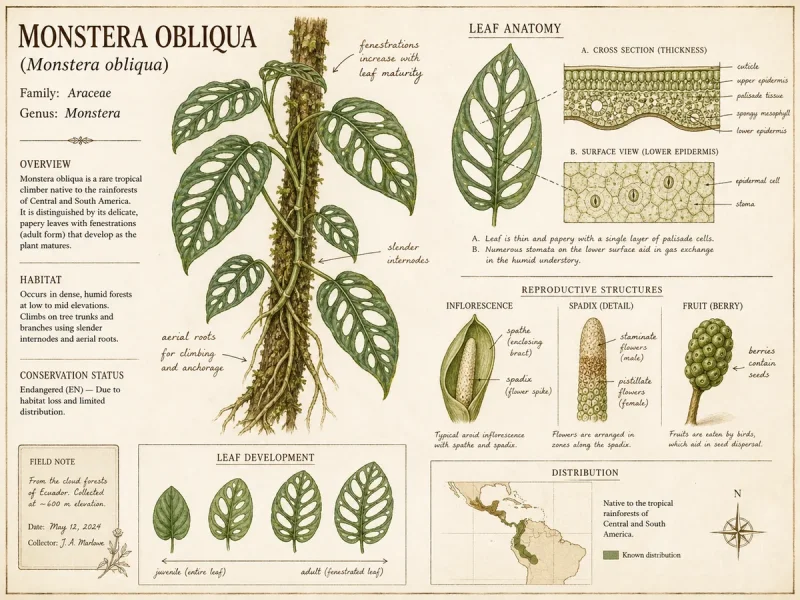
Monstera is a climber. A moss pole, coir pole, plank, or sturdy trellis keeps stems from snapping and helps new leaves size up and open holes (fenestrations). Juvenile leaves are often solid; holes come with age, bright indirect light, and a climb — not with extra fertilizer alone. [3]
- Seat a moss pole, coir pole, or plank at the back of the pot, next to the thickest stem. Tie the stem loosely as internodes lengthen.
- Guide aerial roots toward the moist support. Water the moss when you water the pot so those roots can take it up. A dry pole still holds the stem; a damp one matches how the vine climbs in nature.
- If you just moved a shop plant from dim light, wait two or three new leaves in a brighter spot before you decide the kind cannot split.
Do I need a moss pole?
Climbing stems benefit from a moss pole, coir pole, or plank. Support plus bright indirect light is what produces larger leaves and better holes indoors.
How do I get fenestrations (holes and splits)?
Age, bright indirect light, and a climb. A moss pole plus seasons of growth matter more than heavy fertilizer.
Yellow leaves and a wet pot
Soft yellow on wet mix is usually overwatering or poor drainage. Let the mix dry, confirm holes in the pot, and look for mushy roots if collapse is fast. Leaves that bead water (“sweat”) often mean the mix is still too wet — skip the next watering. [4] Yellow on bone-dry mix can mean underwatering. Crispy bleach is sun scorch, not a reason to water more. One oldest leaf yellowing while the crown is firm is often normal shed. Patterned kinds that fade toward green need more bright filtered light, not a wetter pot.
Why are my Monstera leaves yellow?
Most often overwatering or poor drainage. Let the mix dry, check for mushy roots, and use a freer-draining mix if needed. Also check low light, underwatering on bone-dry mix, or sun scorch.
Bright indirect light, water when the top is dry, chunky mix, and a pole. Match the kind on Types of Monstera.
FAQ
Is mini monstera the same plant?
Usually no. Shop “mini monstera” is often Rhaphidophora tetrasperma. Confirm Monstera on the Latin. Full ID is on Types of Monstera.
What are aerial roots for?
Climbing and moisture-seeking roots. Guide them to a pole or leave them. They are not a reason to repot in a hurry.
Is Monstera a philodendron?
No. Both are aroids, but Monstera is a different genus. “Split-leaf philodendron” is a nickname. Types of Monstera owns the lookalikes.
Can Monstera go outdoors in summer?
Yes, in bright shade after you harden it off. Direct sun after indoor light will burn. Bring the pot in before nights near 50°F.
Should I fertilize in winter?
Usually no. Feed in spring and summer growth. Extra fertilizer in a cool, wet pot sits unused.
Do I need to water the moss pole?
Keep moss or coir lightly moist so aerial roots can attach. A dry pole still supports the stem.
Related guides

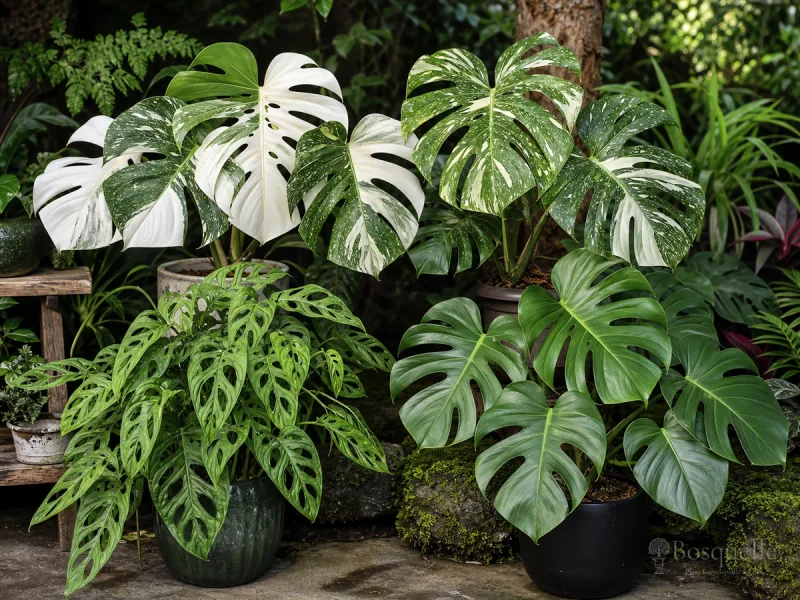

Recommended plants


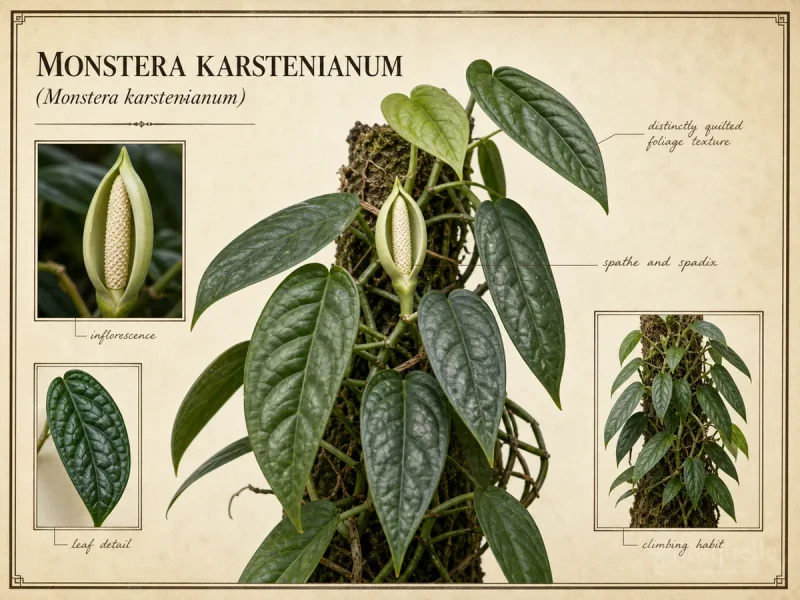
References
- [1] Penn State Extension -
https://extension.psu.edu/monstera-as-a-houseplant - [2] NC State Extension -
https://plants.ces.ncsu.edu/plants/monstera-deliciosa/ - [3] Clemson HGIC -
https://hgic.clemson.edu/factsheet/philodendron-pothos-monstera/ - [4] Wisconsin Horticulture -
https://hort.extension.wisc.edu/articles/monstera-deliciosa/
This note is part of Monstera Guides.
More first-season notes by plant are gathered in How to Grow Guides.
Updated: Reviewed by Bosquelle Editors