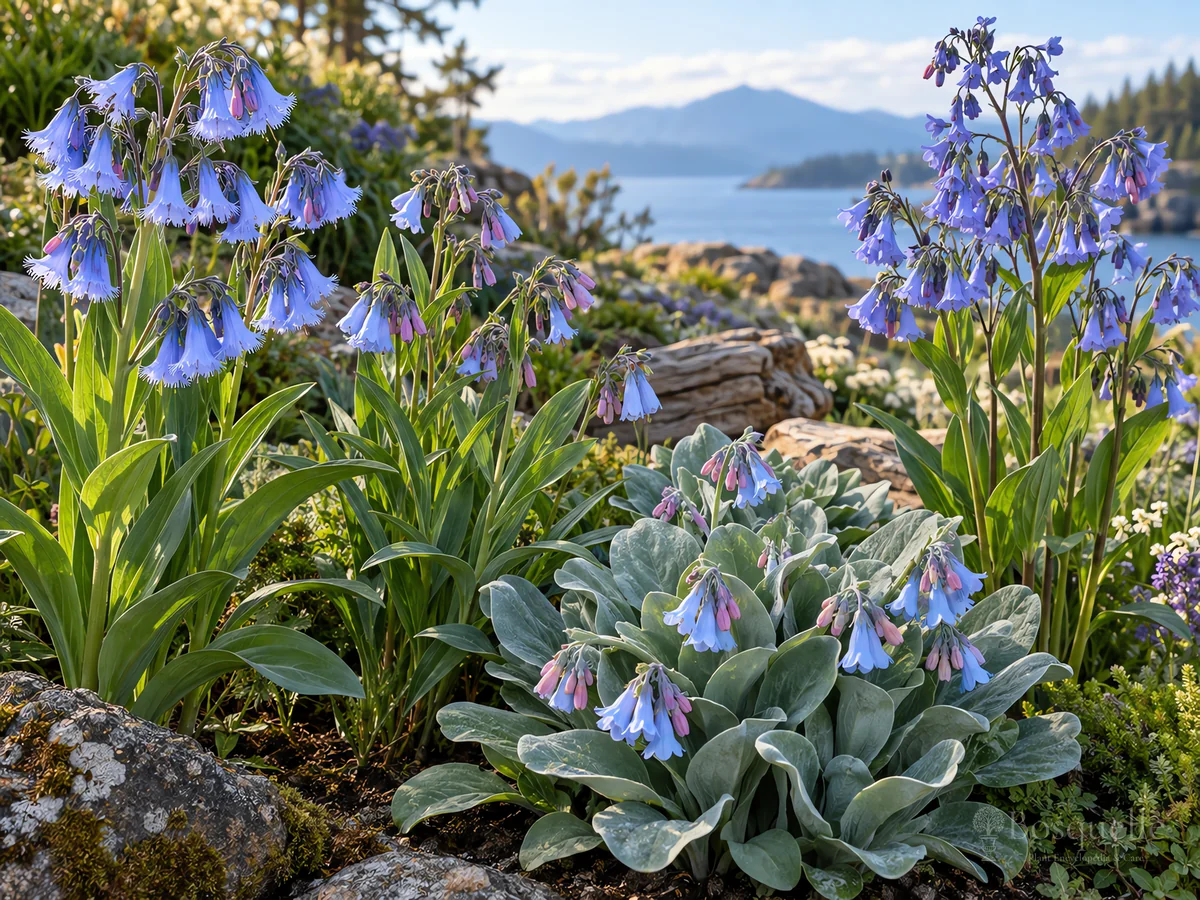
Choose Virginia bluebells by job: a woodland clump, a prairie edge, a stream-edge tall kind, or coastal oysterleaf. Those are the four kinds here.
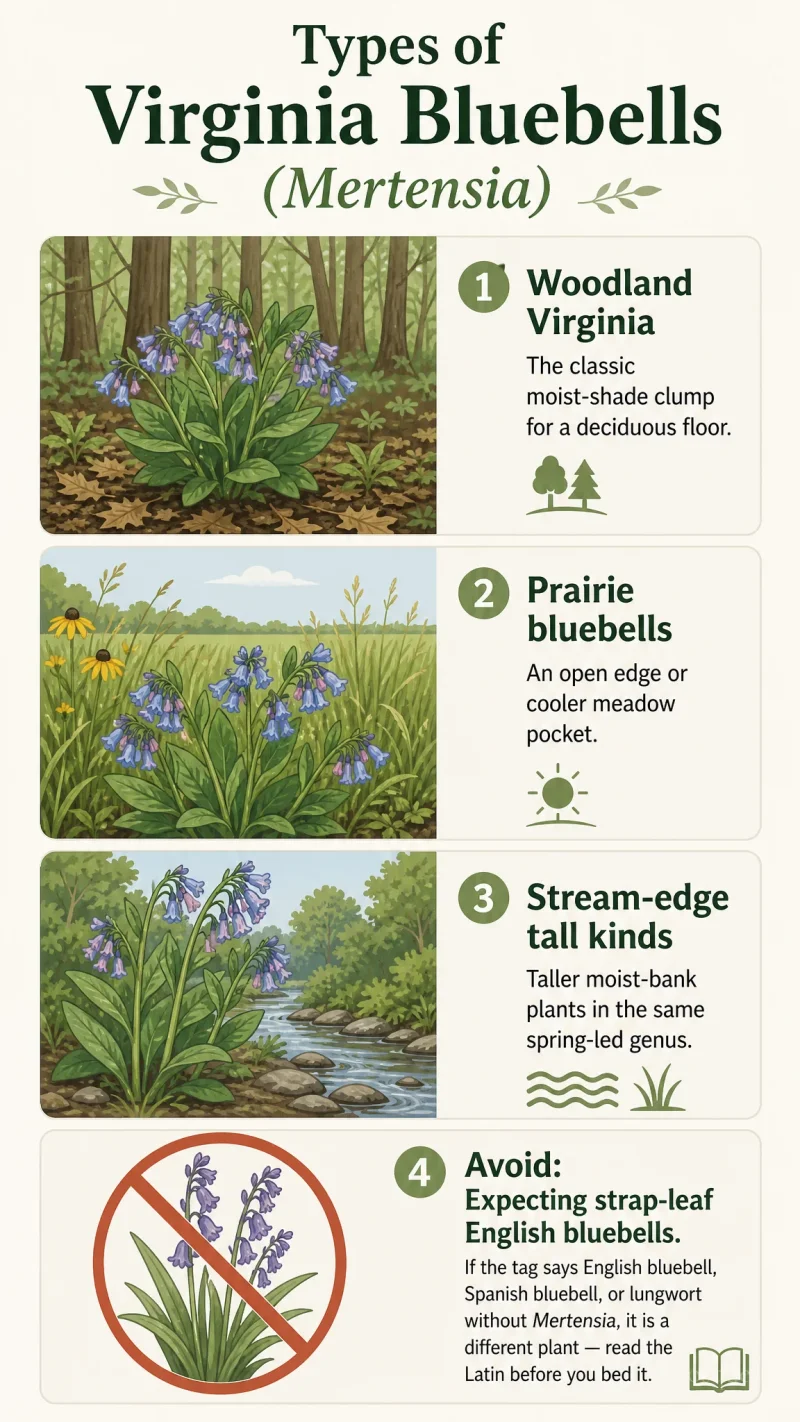
Choose woodland, prairie, stream-edge, or coastal oysterleaf
| Factor | Recommended | Avoid |
|---|---|---|
| Woodland Virginia | The classic moist-shade clump for a deciduous floor | Expecting strap-leaf English bluebells |
| Prairie bluebells | An open edge or cooler meadow pocket | Treating every Mertensia tag as deep forest |
| Stream-edge tall kinds | Taller moist-bank plants in the same spring-led genus | A hot dry bank with no spring water |
| Coastal oysterleaf | Grit, sand, and salt air | Wet woodland mulch against the neck |
Know your USDA hardiness zone before you pick a type of mertensia that will take your winter. Type your ZIP below.
2023 USDA ZIP listings (PRISM / USDA-ARS). Find Your USDA Hardiness Zone · Official USDA map.
Site is the shop split. Wisconsin treats Virginia bluebells as one woodland species in a much larger genus. [1] The eastern floodplain plant is the woodland clump most U.S. gardens mean. [2] Oysterleaf lives on sandy, gravelly beaches — a different pocket from leaf-mould shade. [3]
Does oysterleaf grow in woodland shade?
Poorly. Oysterleaf wants grit, sand, and coastal or gravel exposure, not wet leaf-mould shade.
Is prairie bluebell the same plant as Virginia bluebell?
Same genus, different species and site. Virginia bluebells are the classic woodland clump. Prairie bluebells lean a cooler open edge.
Browse by kind
Woodland Virginia
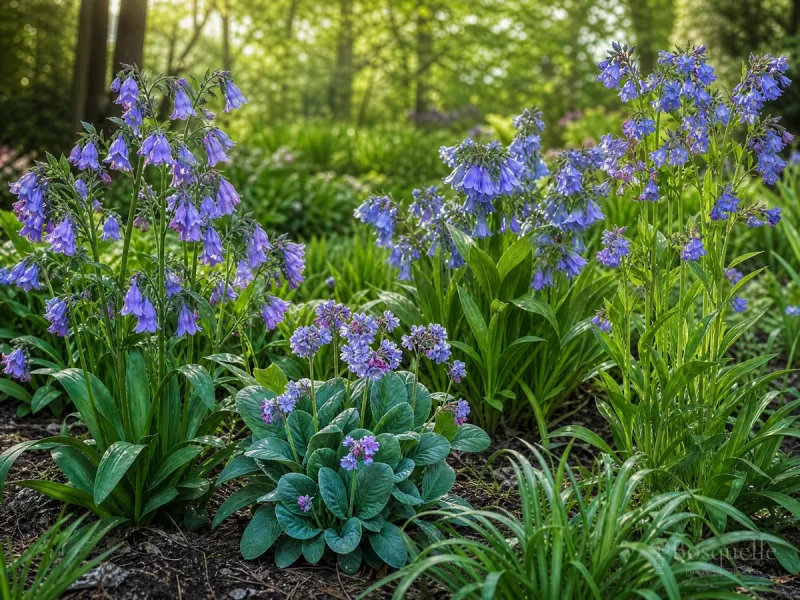
M. virginica is the classic eastern woodland clump — pink buds, hanging blue bells, then a clean fade.
Prairie bluebells
M. lanceolata is prairie bluebells — a cooler, more open chart than deep forest Virginia.
Stream-edge tall kinds
M. ciliata and M. paniculata are the taller stream-edge kinds. Same spring-led genus, more height on a moist bank.
Coastal oysterleaf
M. maritima is oysterleaf — low fleshy leaves on grit and salt air, not wet woodland mulch.
Not English or Spanish bluebells, and not lungwort
English and Spanish bluebells are Hyacinthoides — a different genus with strap leaves and a true bulb, and toxic if eaten. [4] Smooth lungwort and lungwort oysterleaf are nicknames on some Virginia bluebell tags. They are not the spotted European lungwort shops sell as Pulmonaria. Confirm Mertensia on the tag before you bed either lookalike as this plant.
Are Virginia bluebells the same as English bluebells?
No. English and Spanish bluebells are Hyacinthoides. Mertensia is a different genus with a spring-ephemeral woodland story.
Is this the same as lungwort?
No. Shop lungwort is Pulmonaria. Some Virginia bluebell tags reuse lungwort as a nickname. Read Mertensia on the label.
If the tag says English bluebell, Spanish bluebell, or lungwort without Mertensia, it is a different plant — read the Latin before you bed it.
FAQ
Do you list other Mertensia species?
The four jobs here are woodland Virginia, prairie, stream-edge tall kinds, and coastal oysterleaf. Extra species other shops sell are not extra cards on this page.
Is Texas bluebell the same plant?
No. Texas bluebell is Eustoma, a different genus. Confirm Mertensia if you want Virginia bluebells.
Related guides


References
- [1] Wisconsin Horticulture -
https://hort.extension.wisc.edu/articles/virginia-bluebells-mertensia-virginica/ - [2] NC State Extension Gardener -
https://plants.ces.ncsu.edu/plants/mertensia-virginica/ - [3] Grand Valley State University -
https://www.gvsu.edu/itex-aon/oysterleaf-38.htm - [4] NC State Extension Gardener -
https://plants.ces.ncsu.edu/plants/hyacinthoides-hispanica/
This note is part of Mertensia Guides.
More type comparisons by plant are gathered in Types of Plants Guides.
Updated: Reviewed by Bosquelle Editors