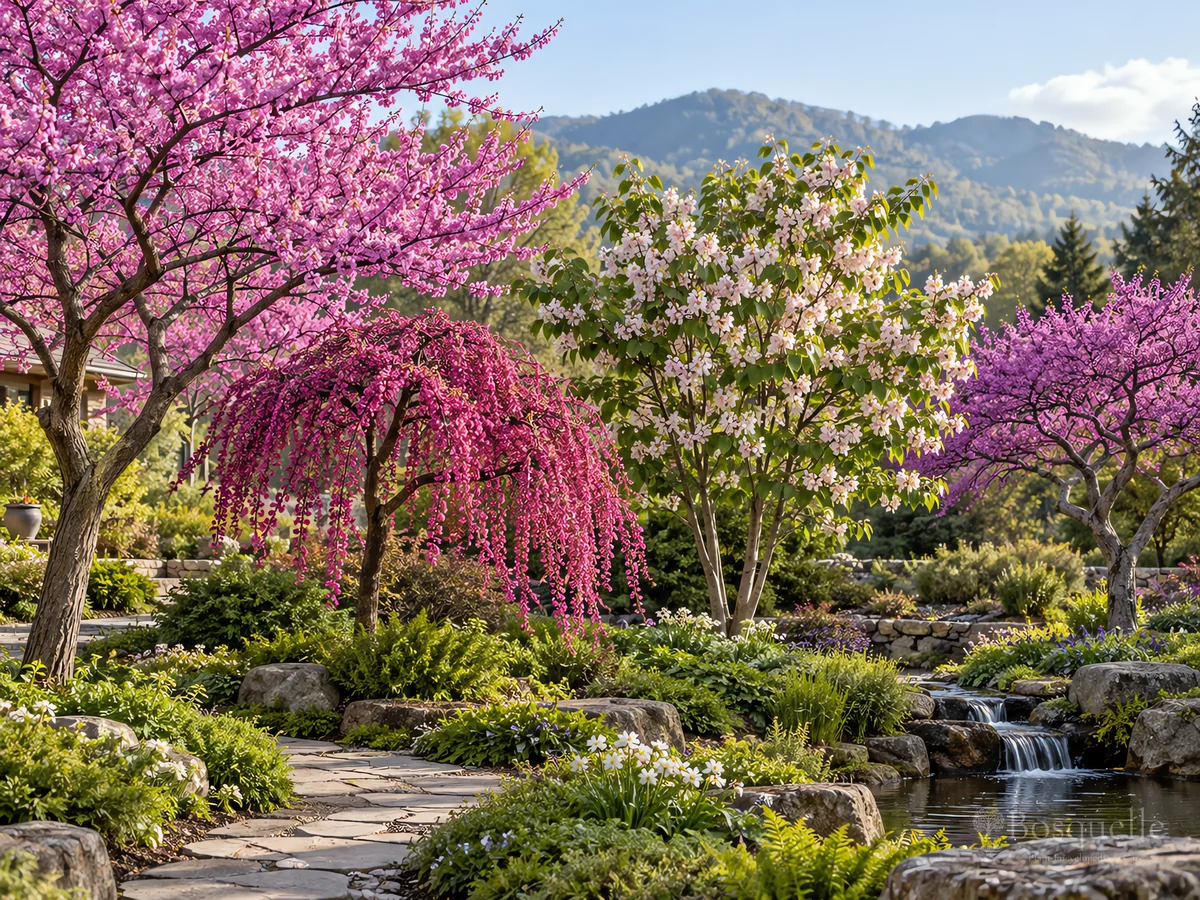
Choose redbud by habit: an eastern tree, a weeping form, or a Chinese shrub.
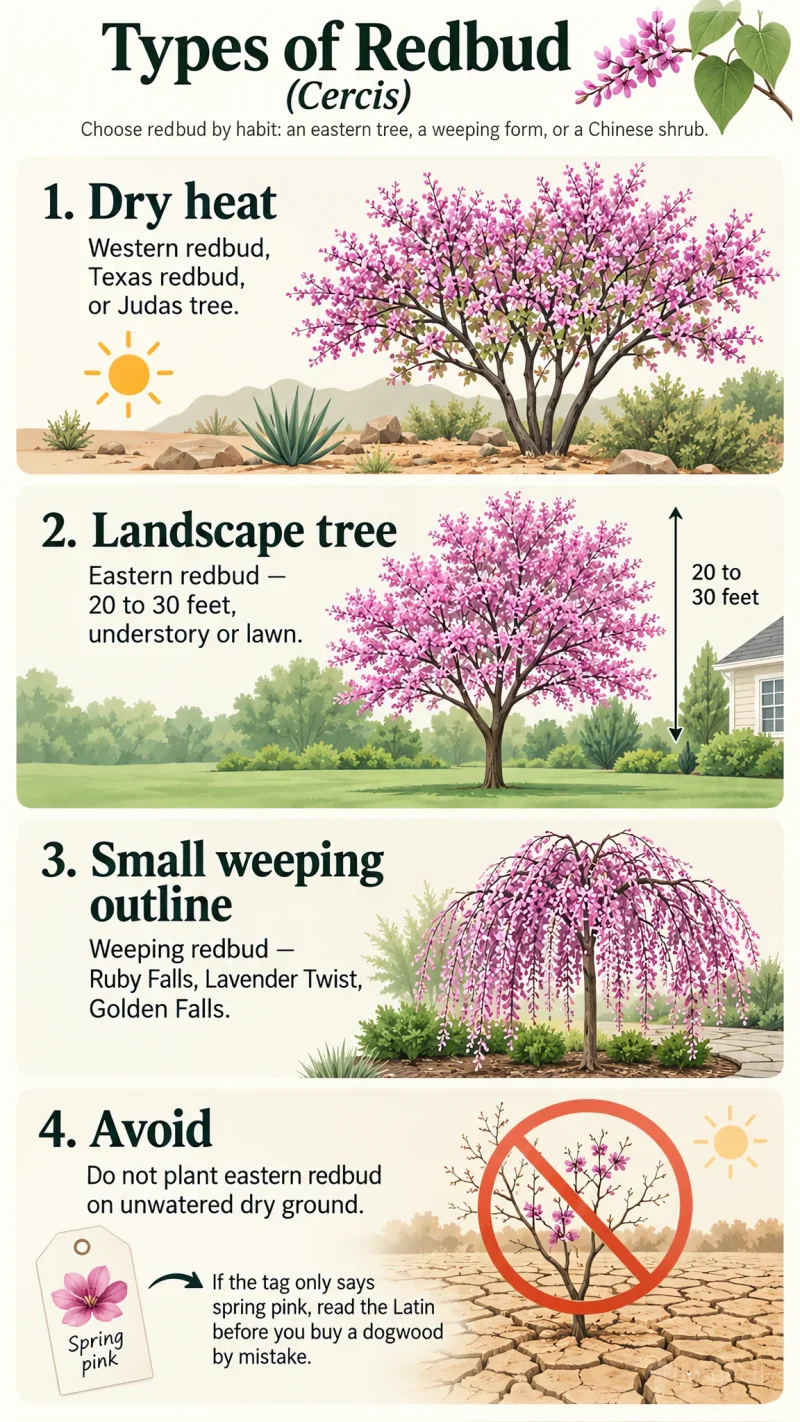
Choose an eastern tree, a weeping form, or a Chinese shrub
| Factor | Recommended | Avoid |
|---|---|---|
| Landscape tree | Eastern redbud — 20 to 30 feet, understory or lawn | Do not buy it for a 6-foot patio pot |
| Small weeping outline | Weeping redbud — Ruby Falls, Lavender Twist, Golden Falls | Do not expect a 30-foot canopy |
| Shrub | Chinese redbud — multi-stem, about 8 to 15 feet | Do not treat it as a 30-foot eastern tree |
| Dry heat | Western redbud, Texas redbud, or Judas tree | Do not plant eastern redbud on unwatered dry ground |
Know your USDA hardiness zone before you pick a type of cercis that will take your winter. Type your ZIP below.
2023 USDA ZIP listings (PRISM / USDA-ARS). Find Your USDA Hardiness Zone · Official USDA map.
The first choice is habit, then climate. Eastern redbud is the 20-to-30-foot native tree. [1] Weeping kinds stay short. Chinese redbud is a multi-stem shrub. Western and Texas kinds take drier heat. [2] Read the tag for the habit that changes the job, then pick that kind. Care for the tree you already have on How to Grow Redbud.
Eastern vs weeping vs Chinese?
Buy an eastern tree for a woodland edge, a weeping form for a small outline, or Chinese redbud for a shrub. Western and Texas kinds take drier heat.
Browse by kind
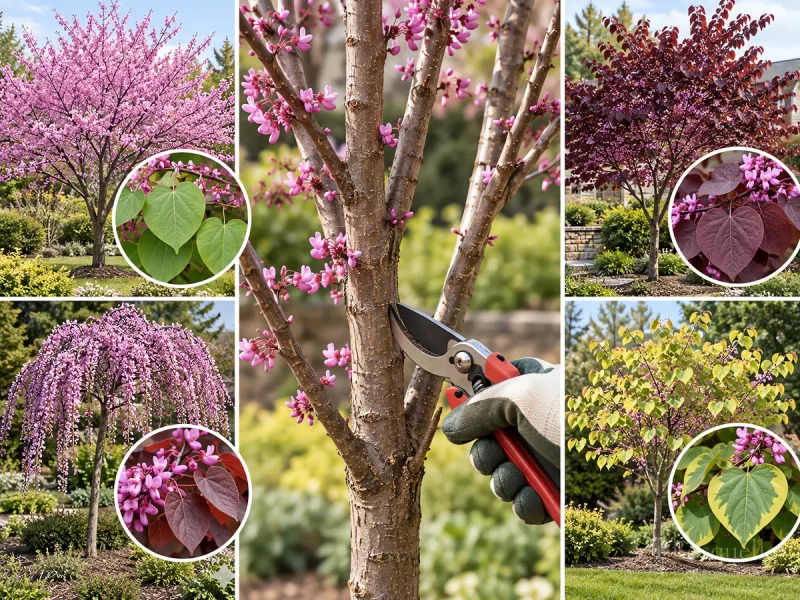
Match the outline and the climate, then pick that kind. [3] [4]
Eastern redbud
eastern redbud is the native understory tree, about 20 to 30 feet. Ace of Hearts stays about 10 to 12 feet. White-flowered forms sit here too.
Purple and gold leaf
Forest Pansy is purple-leaf eastern redbud. Hearts of Gold opens gold and settles to chartreuse. These still want the same moist drain as the green-leaf tree.
Weeping redbud
Ruby Falls weeps with purple leaves. Lavender Twist weeps with green leaves. Neither becomes a 30-foot canopy.
Chinese redbud
Chinese redbud is a multi-stem shrub with glossier leaves. Avondale is the usual garden form, about 6 to 12 feet, not a landscape tree.
Western, Texas, and Judas tree
western redbud and Texas redbud take drier heat than eastern redbud. Judas tree is the Mediterranean kind, still Cercis, not a second genus.
Not dogwood — Forest Pansy is still a redbud
Redbud flowers are pea-shaped and sit on bare wood, often on the trunk. Flowering dogwood holds flat flower heads or bracts, and it is Cornus, not Cercis. Forest Pansy is purple-leaf eastern redbud, not a garden pansy. If the tag only says spring pink, read the Latin before you buy.
How do I tell redbud from dogwood?
Redbud has pea flowers on the wood. Dogwood has flat flower heads or bracts. Forest Pansy is still a redbud.
If the tag only says spring pink, read the Latin before you buy a dogwood by mistake.
FAQ
Is Forest Pansy a pansy?
No. Forest Pansy is Cercis canadensis with purple leaves. Garden pansy is Viola.
Is a Judas tree a different genus?
No. Judas tree is Cercis siliquastrum. It is a dry-climate redbud, not a separate genus.
Do you list Oklahoma or Traveler?
Not in this catalog. Choose by eastern, weeping, Chinese, or dry-climate habit from the kinds listed here.
Related guides


References
- [1] NC State Extension Gardener -
https://plants.ces.ncsu.edu/plants/cercis-canadensis/ - [2] Clemson Cooperative Extension -
https://hgic.clemson.edu/factsheet/redbud/ - [3] NC State Extension Gardener -
https://plants.ces.ncsu.edu/plants/cercis-canadensis-forest-pansy/ - [4] NC State Extension Gardener -
https://plants.ces.ncsu.edu/plants/cercis-chinensis/
This note is part of Cercis Guides.
More type comparisons by plant are gathered in Types of Plants Guides.
Updated: Reviewed by Bosquelle Editors