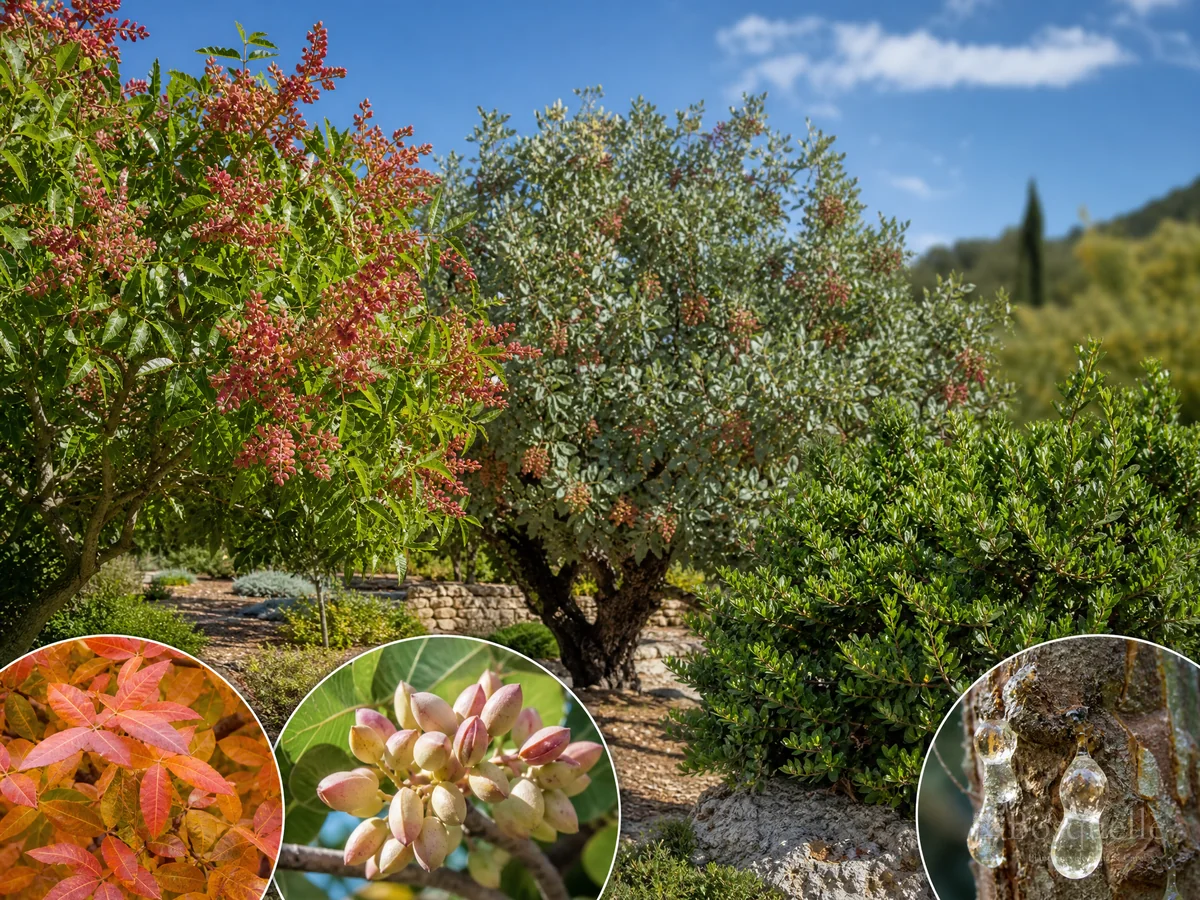
Choose Chinese pistache, grocery pistachio, or mastic first. One is a shade tree. One is a nut crop. One stays evergreen.

Choose Chinese pistache, grocery pistachio, or mastic first
| Factor | Recommended | Avoid |
|---|---|---|
| Landscape shade and fall color | Chinese pistache — deciduous, inedible fruit | Do not buy it expecting a grocery nut |
| Grocery kernel | Pistachio — Pistacia vera; needs a male nearby | Do not plant it for a long, humid, wet summer |
| Evergreen screen | Chios mastic — leathery leaflets year-round | Do not treat it as the deciduous fall-color tree |
Know your USDA hardiness zone before you pick a type of pistacia that will take your winter. Type your ZIP below.
2023 USDA ZIP listings (PRISM / USDA-ARS). Find Your USDA Hardiness Zone · Official USDA map.
The first choice is the job you want. Chinese pistache is the medium shade tree with orange-red fall color, ten to twelve narrow leaflets, and inedible pea-size fruit. [1] Grocery pistachio is the edible nut on a separate species. It wants a dry climate, not a long humid summer, and it is not the landscape pistache. [2] Related as they are, Chinese pistache still does not make a grocery kernel. [3] Chios mastic is the evergreen screen with leathery leaflets that stay on through winter. [4] If the tag only says pistachio, read the species line for chinensis, vera, or lentiscus. All three are still Pistacia.
Which pistachio should I plant?
Buy Chinese pistache for shade and fall color, grocery pistachio for an edible nut, or Chios mastic for an evergreen screen.
Is Chinese pistache the same as a grocery pistachio?
No. Chinese pistache is Pistacia chinensis, a landscape tree. The grocery nut is Pistacia vera.
Browse by kind
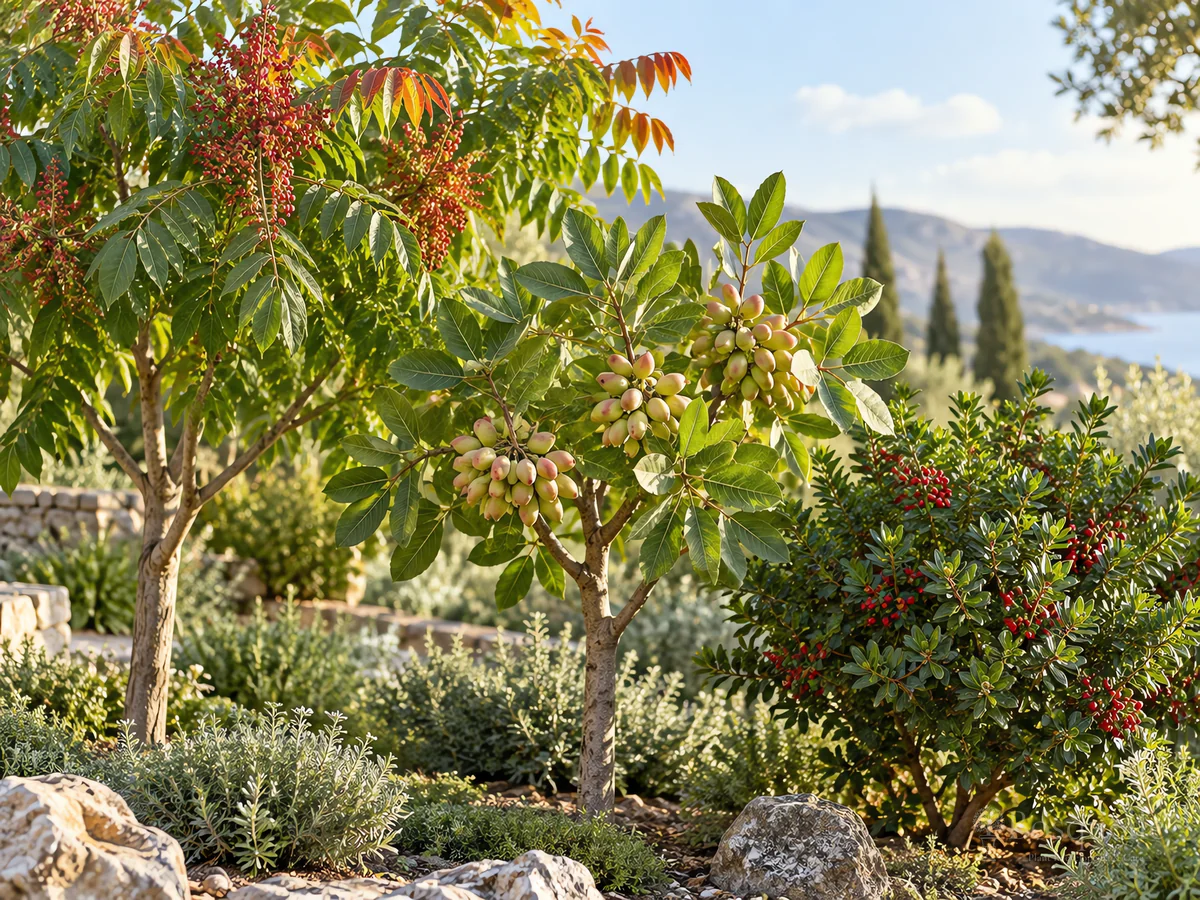
Match the job you want, then pick that kind. A deciduous shade tree with fall color is Chinese pistache. An edible nut is grocery pistachio. An evergreen screen is mastic. Care for the grocery tree on How to Grow Pistachio. Care for the landscape tree on How to Grow Chinese Pistache.
Chinese pistache
Chinese pistache is the landscape shade tree: thirty to thirty-five feet, ten to twelve leaflets, peeling bark that shows a salmon inner layer, and fiery fall color. Buy it for a street or lawn when you want that color, not a grocery nut. The pea-size fruit is inedible.
Grocery pistachio
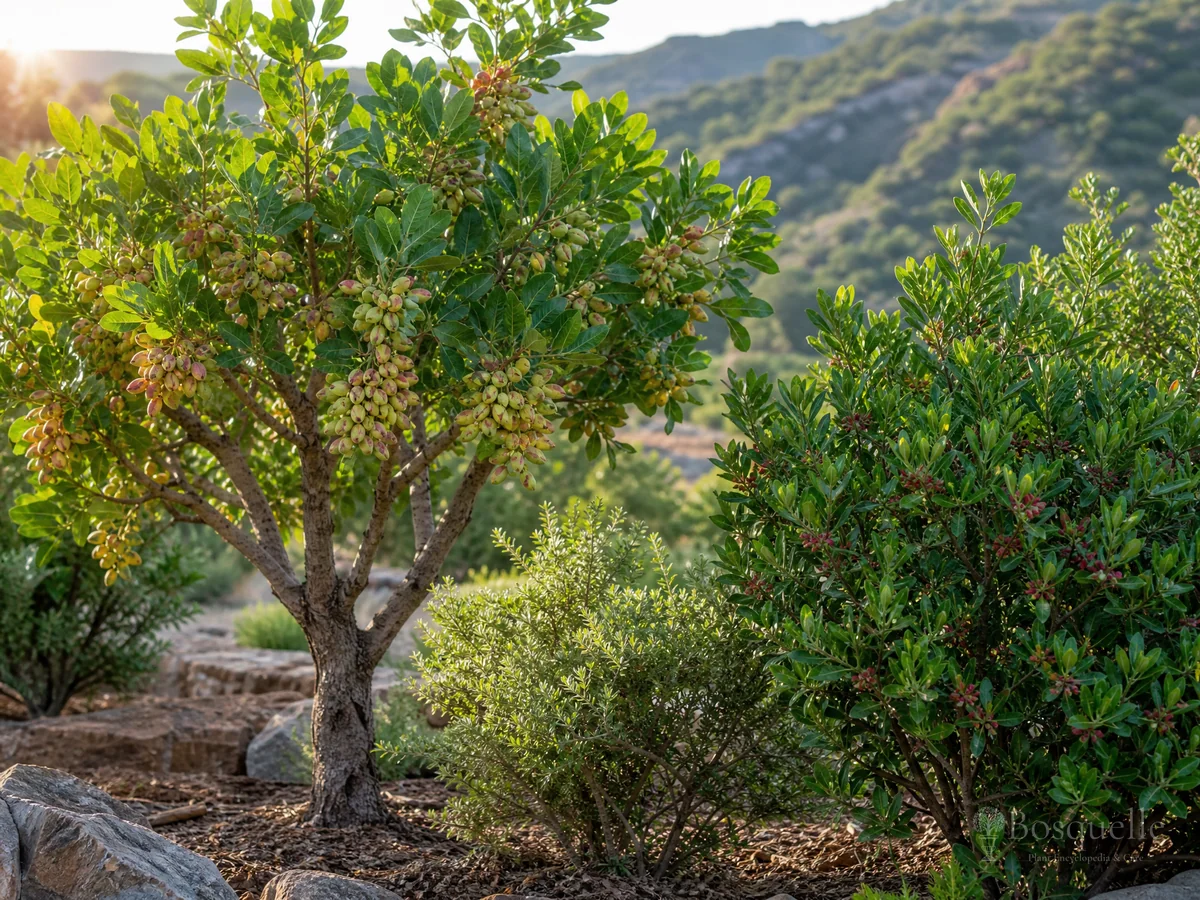
pistachio is the grocery nut. Male and female flowers sit on separate trees, so you need a male nearby if you want a crop. It wants a hot, dry summer, not a long humid one. The first nuts take several years.
Chios mastic
Chios mastic is the evergreen: fifteen to twenty-five feet, leathery leaflets, and a screen or small tree if you train a trunk. Buy it for winter foliage, not fall color and not a grocery nut. It stays green where Chinese pistache is bare.
If you want a grocery nut, buy pistachio — Chinese pistache is a shade tree, not the same crop.
FAQ
Do you list Keith Davey or Kerman?
No. Keith Davey is a male Chinese pistache strain we do not list as a separate plant. Kerman is a grocery-pistachio strain. If you own one, treat it as Chinese pistache or grocery pistachio, not as a fourth kind.
Is Green Almond a different plant?
No. Green almond is a catalog name for grocery pistachio, and also the immature fruit. If the tag says vera, it is still pistachio, not a fourth species.
Is mastic the same as Chinese pistache?
No. Mastic is Pistacia lentiscus, the evergreen. Chinese pistache drops its leaves and turns orange-red in fall.
Can I tap mastic for resin at home?
Home tapping is not a landscape job. Buy Chios mastic for an evergreen screen, not for a resin crop.
Related guides



References
- [1] NC State Extension Gardener -
https://plants.ces.ncsu.edu/plants/pistacia-chinensis/ - [2] University of Arkansas Extension -
https://www.uaex.uada.edu/yard-garden/resource-library/plant-week/chinese-pistache-11-30-07.aspx - [3] Gardening Know How -
https://www.gardeningknowhow.com/ornamental/trees/chinese-pistache/growing-chinese-pistache-tree.htm - [4] Mountain States Wholesale Nursery -
https://mswn.com/wp-content/uploads/2021/07/Pistacia-lentiscus.pdf
This note is part of Pistacia Guides.
More type comparisons by plant are gathered in Types of Plants Guides.
Updated: Reviewed by Bosquelle Editors