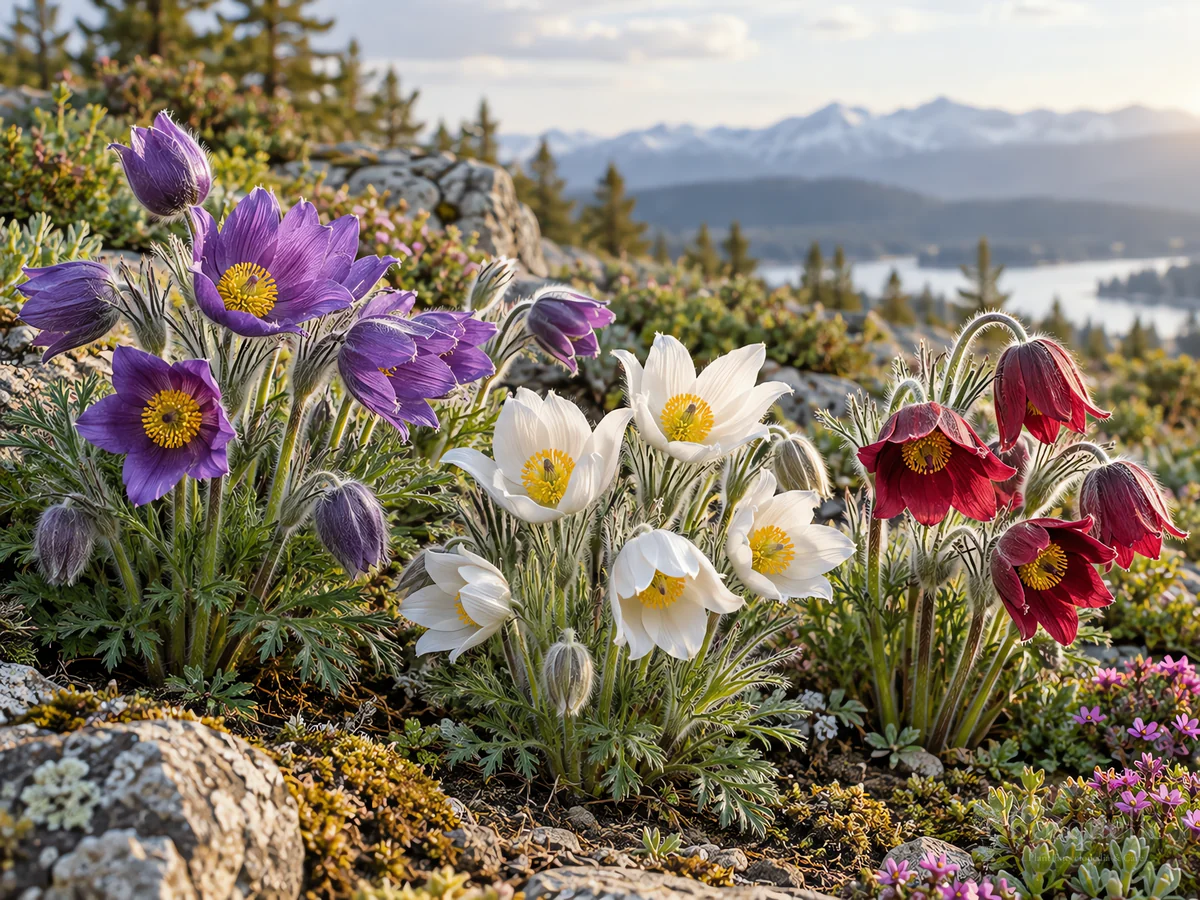
Choose pasque flower by habit: European garden, prairie, or alpine.

Choose European garden, prairie, or alpine pasque flower first
| Factor | Recommended | Avoid |
|---|---|---|
| Garden | European vulgaris class for a rock garden or border front | Do not buy by flower color alone without checking habit |
| Prairie | Eastern / prairie patens for a dry native edge | Do not treat it as a florist Easter mix |
| Alpine | Alpina, vernalis, or halleri for a trough or scree | Do not expect a tall border front from a tiny alpine mat |
Know your USDA hardiness zone before you pick a type of pulsatilla that will take your winter. Type your ZIP below.
2023 USDA ZIP listings (PRISM / USDA-ARS). Find Your USDA Hardiness Zone · Official USDA map.
Pick the habit first, then the color. [1] A garden border front, a prairie edge, and a trough mat are three different beds even when the flower looks similar in a photo. Sun and grit stay the same on How to Grow Pasque Flower. Pick the kind that matches the bed you have. [2]
What is the difference between European and prairie pasque flower?
European garden pasque is usually Pulsatilla vulgaris and its color forms. Prairie / eastern pasque is Pulsatilla patens, a dry native class. Both want sun and grit; the choose job is habit.
Browse by kind
European garden pasque flower
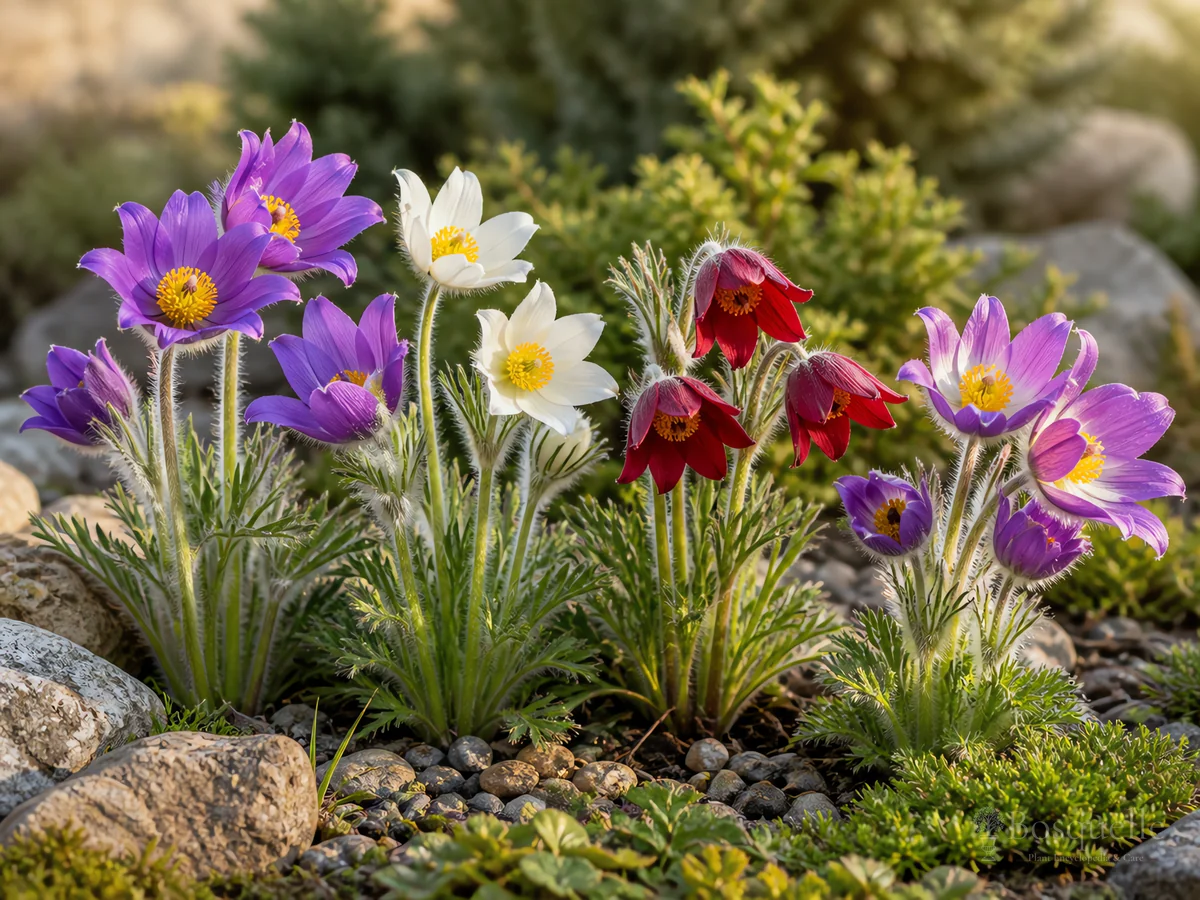
pasque flower is the usual European garden pasque — silky spring bells and plume seedheads for a rock garden or border front. Alba is white in that class. Rote Glocke is a deep red garden form. greater pasque flower and Pulsatilla rubra stay in the garden group. They are not a prairie native edge and not a tiny alpine mat.
Prairie and eastern pasque flower
eastern pasque flower is the prairie / eastern pasque flower, also sold as American pasque flower or prairie crocus. Use it for a dry native edge where you want an early lilac spring bloom on grit. It is the choose job for habit, not a second watering rule.
Alpine and spring pasque flower
alpine pasque flower is the alpine class for a trough or scree. Lady of the Snows is the spring white often sold as Lady of the Snows. Slovak pasque flower and Crimean pasque flower are halleri forms in the same compact group. Expect a low mat, not a tall border front.
Shop names change. Read the Latin on the tag. [3] A red garden form is still the garden class, not a new care rule. [4] If the tag says Anemone patens or Anemone pulsatilla, confirm you still want Pulsatilla before you plant.
Match European garden, prairie, or alpine pasque flower before you plant. A border front and a trough mat are not the same bed.
FAQ
Is Rote Glocke a different species?
No. Rote Glocke is a red garden form of Pulsatilla vulgaris. Treat it as European garden pasque flower.
Is prairie crocus the same plant?
Prairie crocus is a common name for eastern / prairie pasque flower (Pulsatilla patens). It is still this genus, not a true crocus.
Do you list Papageno?
Papageno is another garden shop name. Treat it as European garden pasque flower.
Does alpine pasque flower need different care?
Sun and grit stay the same. The choose job is scale: a trough or scree mat, not a tall border front.
Related guides

References
- [1] Wisconsin Horticulture -
https://hort.extension.wisc.edu/articles/pasque-flower-pulsatilla-vulgaris/ - [2] Garden Gate -
https://www.gardengatemagazine.com/articles/flowers-plants/plant-guide/eastern-pasque-flower-a-native-perennial-for-early-spring-color/ - [3] Johnson's Nursery -
https://kb.jniplants.com/american-pasque-flower-anemone-patens - [4] High Country Gardens -
https://www.highcountrygardens.com/blogs/perennials/plant-profile-pulsatilla-pasque-flowers
This note is part of Pulsatilla Guides.
More type comparisons by plant are gathered in Types of Plants Guides.
Updated: Reviewed by Bosquelle Editors