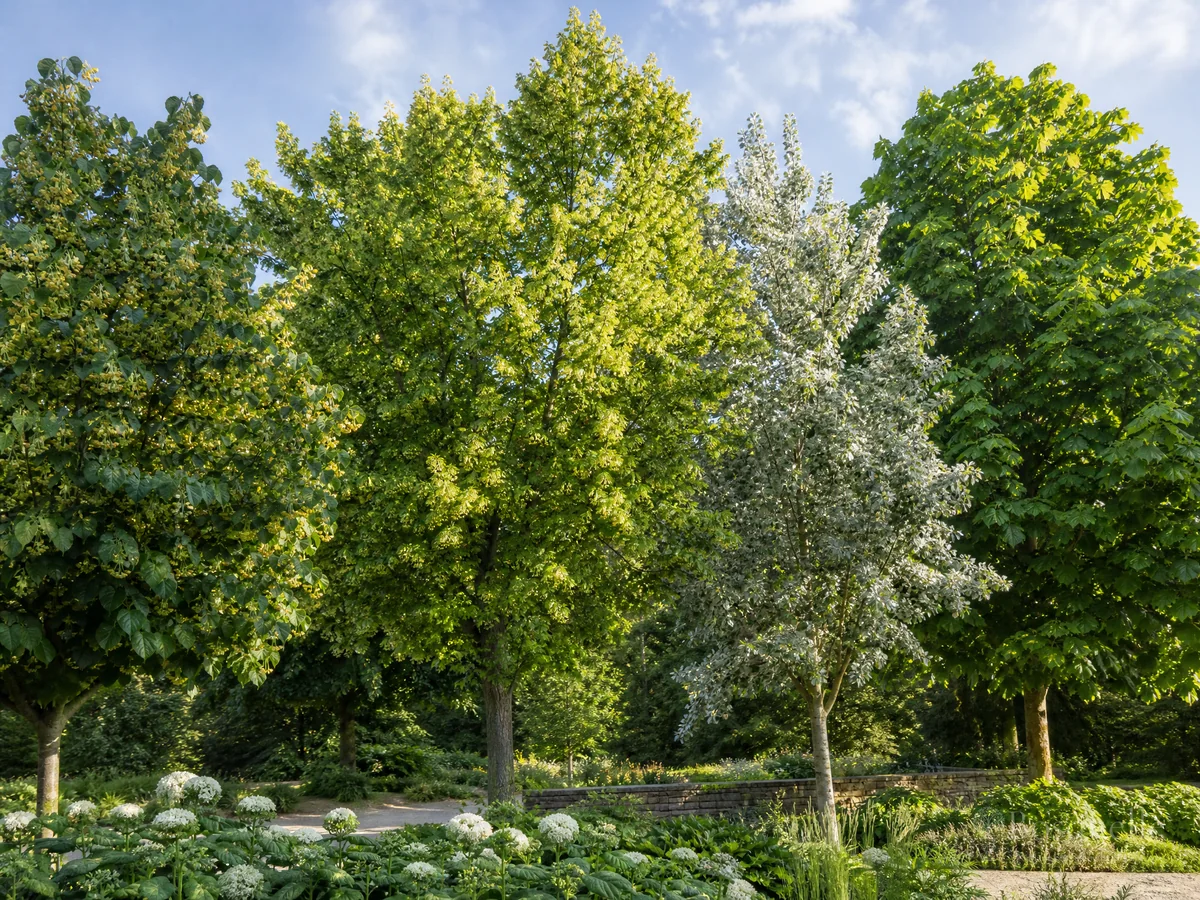
Choose linden by the job first: a littleleaf street or lawn tree, a native basswood for a large opening, or a silver linden for heat. All are Tilia with heart-shaped leaves and fragrant early-summer flowers.

Choose a littleleaf street tree, a native basswood, or a silver linden
| Kind | Best for | Not for |
|---|---|---|
| Littleleaf | Formal lawn or a wide parkway; dense pyramid, 50–70 ft | A parking stall or patio under the canopy — honeydew drips |
| Native basswood | Parks and large openings; American linden is the eastern native | Compacted street soil and reflected pavement heat |
| Silver | Hotter, drier streets; woolly undersides; fewer Japanese beetles | A tiny courtyard — it still reaches 50–70 ft |
Know your USDA hardiness zone before you pick a type of tilia that will take your winter. Type your ZIP below.
2023 USDA ZIP listings (PRISM / USDA-ARS). Find Your USDA Hardiness Zone · Official USDA map.
littleleaf linden is the usual nursery street form, with 2–3 in leaves and a tight pyramid. [1] American linden is the large native, 60–80 ft, better in a park than in a paved strip. [2] silver linden is the one to pick when summers are hot and dry, or when you need a cleaner canopy over a drive. [3] Site and watering stay on How to Grow Linden.
Littleleaf vs basswood vs silver?
Littleleaf is the dense European street form. Basswood is the native American linden for large openings. Silver linden has woolly silver undersides and takes heat and drought better.
Which linden for a hot, dry street?
Silver linden. It takes heat, drought, and road salt better than littleleaf, and Japanese beetles chew it less. It still needs room to reach 50–70 ft.
Browse by kind
Littleleaf street and lawn trees
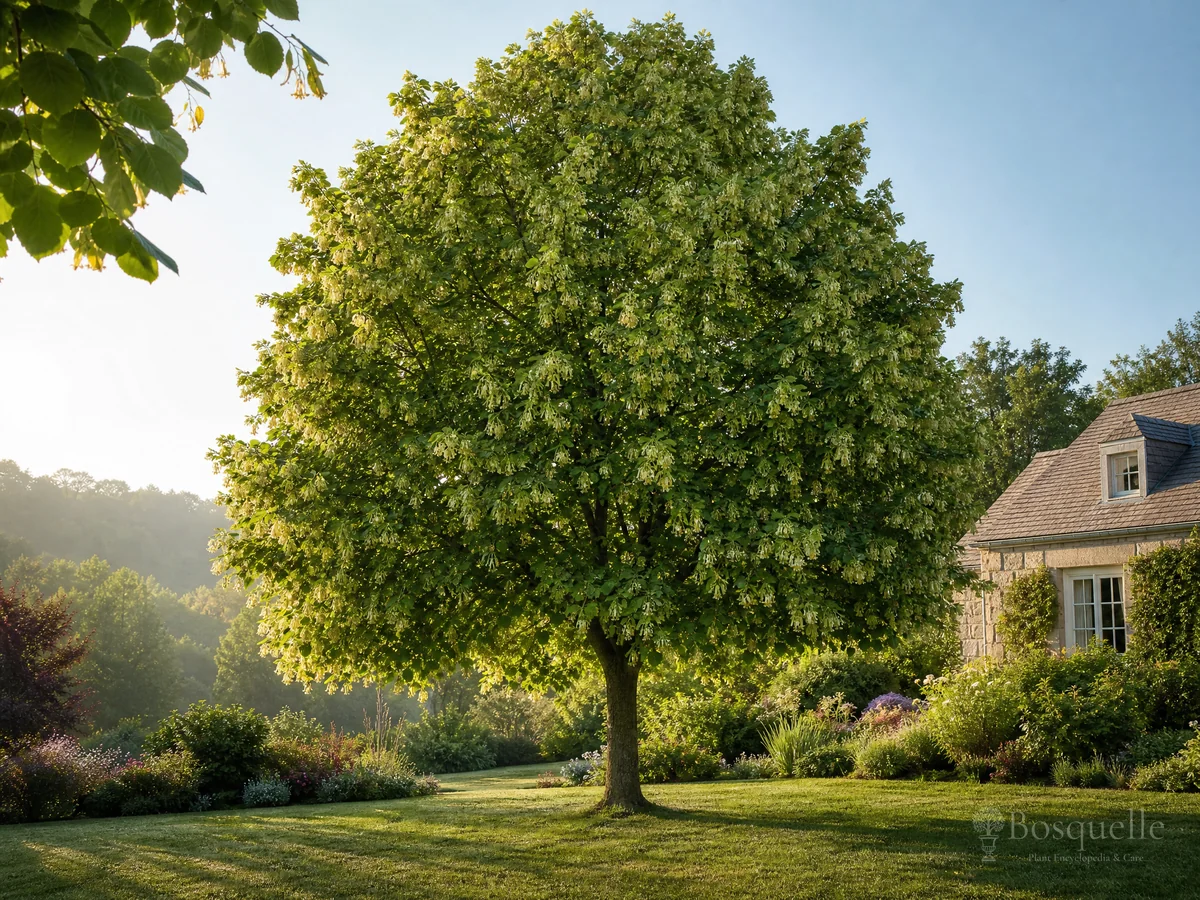
Littleleaf linden. Dense pyramidal canopy, 2–3 in leaves, the usual nursery street form.
Native basswood
American linden. A large eastern native for parks and open lawns, not a tight paved strip.
Silver linden
Silver linden. Dark green leaves with woolly silver undersides; better in heat and drought.
Large-leaved kinds and hybrids
Large-leaved linden, Henry's Lime, Caucasian linden, and European linden. Same moist sun; choose by leaf and bloom time.
Large-leaved linden, Henry's Lime, Caucasian linden, and European linden share the same moist sun as the three main groups. [4] Henry's Lime is still Tilia — the shop word Lime is not citrus. Extra named street forms such as Greenspire sit inside littleleaf; they are not a separate kind. [5]
Read the species name on the tag before you buy — a native basswood and a littleleaf street tree have very different mature sizes and heat tolerance.
FAQ
Do you list Greenspire or Sterling?
Those are named selections of littleleaf and silver linden, not extra species. Read the tag for Tilia cordata or Tilia tomentosa, then pick the habit that matches your space.
Is Henry's Lime a citrus?
No. Henry's Lime is Tilia henryana, a linden. If the tag says Tilia, it is a shade tree, not a citrus lime.
Is European linden the same as littleleaf?
No. European linden is Tilia × europaea, a hybrid of littleleaf and large-leaved linden. It is a street tree and often suckers from the base.
Related guides

References
- [1] North Carolina Extension Gardener Plant Toolbox -
https://plants.ces.ncsu.edu/plants/tilia-cordata/ - [2] North Carolina Extension Gardener Plant Toolbox -
https://plants.ces.ncsu.edu/plants/tilia-americana/ - [3] North Carolina Extension Gardener Plant Toolbox -
https://plants.ces.ncsu.edu/plants/tilia-tomentosa/ - [4] North Carolina Extension Gardener Plant Toolbox -
https://plants.ces.ncsu.edu/plants/tilia-platyphyllos/ - [5] The Morton Arboretum -
https://mortonarb.org/plant-and-protect/trees-and-plants/silver-linden/
This note is part of Tilia Guides.
More type comparisons by plant are gathered in Types of Plants Guides.
Updated: Reviewed by Bosquelle Editors