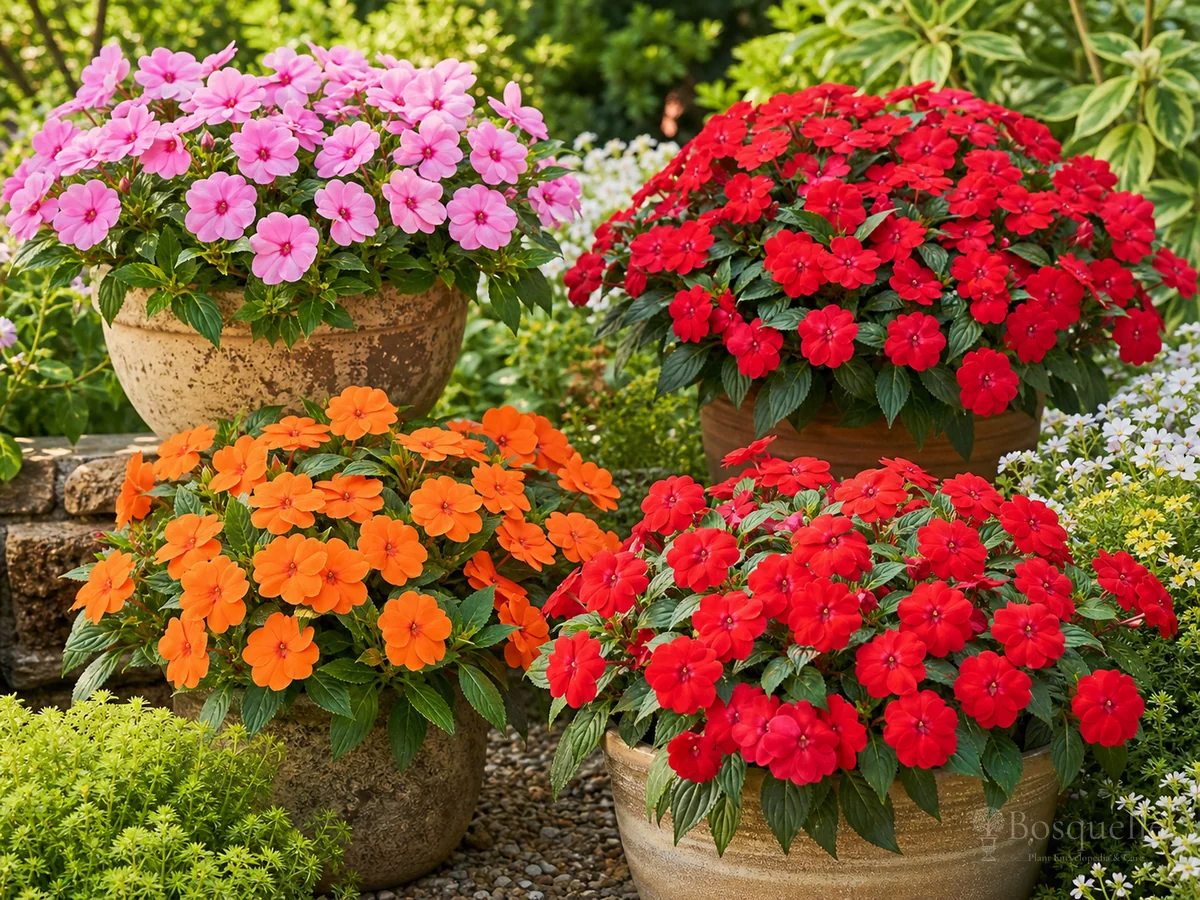
Nursery tags often say “impatiens” and a color. That hides the real buy: shade busy lizzie, partial-shade New Guinea, sunnier SunPatiens, or a specialty species. Light and water first; petal color last. This catalog lists 57 Impatiens.
Shade, moisture, and mildew stay on How to Grow Impatiens. Pots and baskets stay on Impatiens in Containers.
Choose impatiens by class
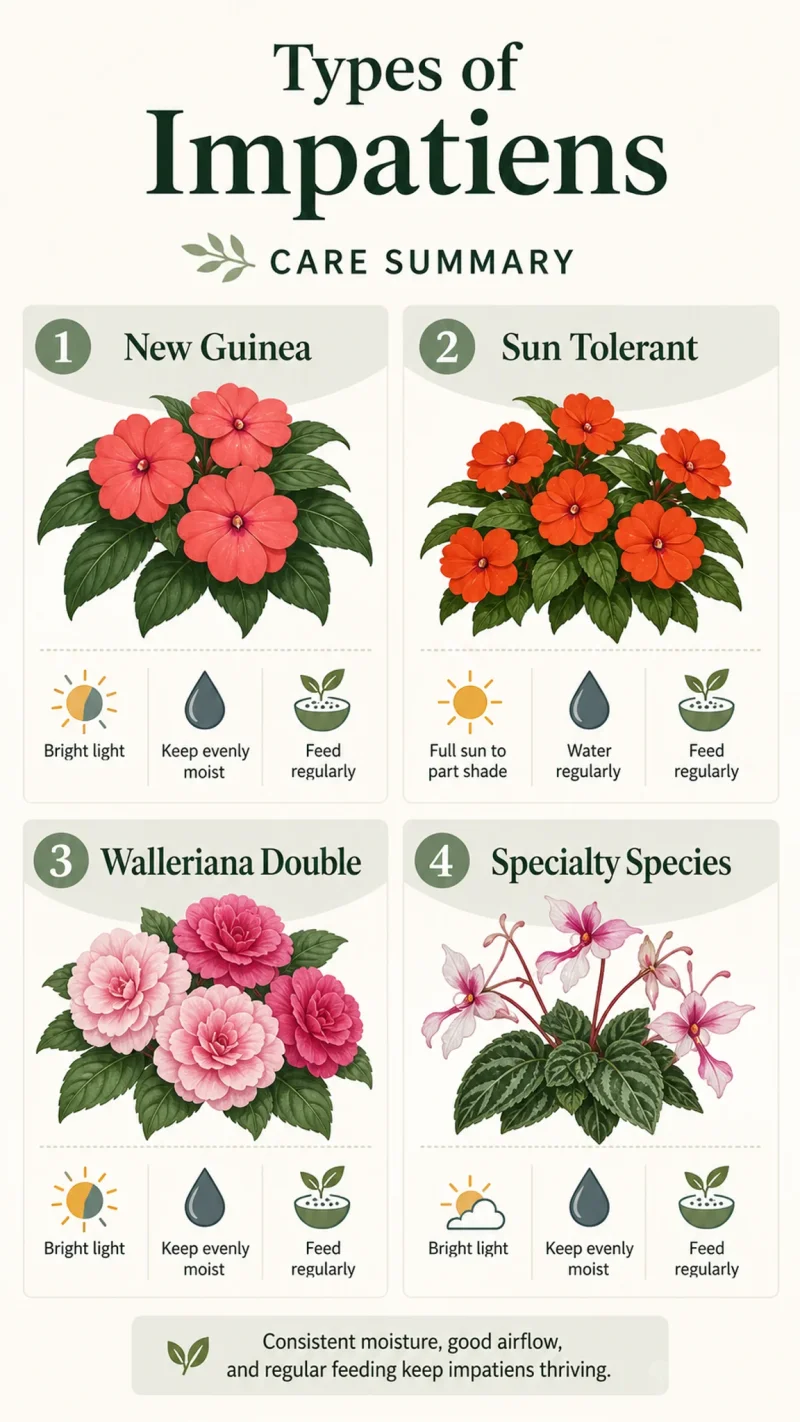
Ask two questions before you match a red tag: how much sun the spot actually gets, and whether you can keep the mix evenly moist. A red New Guinea and a red SunPatiens share paint — not a sun budget. Calling every impatiens “busy lizzie” is the usual miss.
- Busy lizzie / walleriana — shade or bright shade. Doubles such as Rockapulco Red and Rockapulco Appleblossom. Historic downy-mildew risk; need air.
- New Guinea — partial shade, larger leaves. Divine and Infinity series such as Divine Pink and Infinity Red.
- SunPatiens — more sun, still even water. Compact Sunpatiens Compact Fire Red; spreading Sunpatiens Spreading Scarlet Red. Not a synonym for busy lizzie.
- Specialty / species — garden balsam, jewelweed, Bounce, and collector forms. Confirm habit before a bedding row.
Wrong impatiens buys that look like a types page
- SunPatiens in a dark north bed — they bloom less without light, and you paid for sun tolerance you will not use.
- Busy lizzie on a hot west patio — leaves crisp even when the pot stays wet.
- New Guinea chosen for full-sun concrete when SunPatiens was the class that matches the site.
- Calling SunPatiens “busy lizzie” on the same watering calendar.
- Specialty species in a six-pack bedding program without a habit check.
What each class offers
| Your site | Prefer | Avoid as default |
|---|---|---|
| Deep shade bed or porch | Walleriana / busy lizzie | SunPatiens starved of light |
| Partial shade pot | New Guinea (Divine / Infinity) | All-day west-wall sun |
| Sunny patio + even water | SunPatiens Compact or Spreading | Classic busy lizzie in afternoon blast |
| Collector accent | Specialty species (confirm habit) | Treating balsam or jewelweed as a six-pack |
Know your USDA hardiness zone before you pick a type of impatiens that will take your winter. Type your ZIP below.
2023 USDA ZIP listings (PRISM / USDA-ARS). Find Your USDA Hardiness Zone · Official USDA map.
Rockapulco Red owns the shade porch. Divine Pink owns partial shade with bigger leaves. Sunpatiens Compact Fire Red and Sunpatiens Spreading Scarlet Red own the sunnier pot only while water stays even. Balsam Impatiens, Bounce Pink Flame, Jewelweed, and Impatiens omeiana are accents — not mass replacements for a New Guinea row.
Full catalog by class (57)
Browse all impatiens by group. Groups follow class, not paint chips. Open Care or Containers for method.
New Guinea hybrids (15)
Larger flowers; partial shade with even moisture.
SunPatiens (22)
Most sun-tolerant class — still needs steady water.
Busy lizzie / walleriana (13)
Classic shade bedding — downy mildew is a real risk.
Specialty / species accents (7)
Balsam, jewelweed, and non-bedding forms — profile-led.
Choose class before color: shade busy lizzie, partial-shade New Guinea, sunnier SunPatiens, or a specialty accent. Browse the matching group, then open Care or Containers.
FAQ
SunPatiens or New Guinea for a sunny patio?
Choose SunPatiens when the pot gets real sun and you keep even moisture. New Guinea stay in partial shade — see Impatiens in Containers.
Is busy lizzie the same as SunPatiens?
No. Busy lizzie means walleriana. SunPatiens is a sun-tolerant hybrid with its own water need.
Where do specialty species sit?
As accents only — confirm balsam, jewelweed, or omeiana habit before treating them as bedding New Guinea.
Are New Guinea and SunPatiens mildew-proof?
They are highly resistant to impatiens downy mildew, unlike classic walleriana. They still fail in a wet, airless pot.
What does a Divine or Infinity tag mean?
Those series are New Guinea / hawkeri types — partial shade, larger leaves. They are not SunPatiens.
What does Rockapulco mean?
A double-flowered walleriana series for shade. Flower form does not give it SunPatiens sun tolerance.
Is garden balsam a type of busy lizzie?
No. Impatiens balsamina is a different species — taller, often grown from seed, not a Rockapulco double.
Where do I learn watering after I pick a class?
How to Grow Impatiens for shade, moisture, and mildew. Containers for pot and basket setup.
Related guides


This note is part of Impatiens Guides.
More type comparisons by plant are gathered in Types of Plants Guides.
Updated: Reviewed by Bosquelle Editors