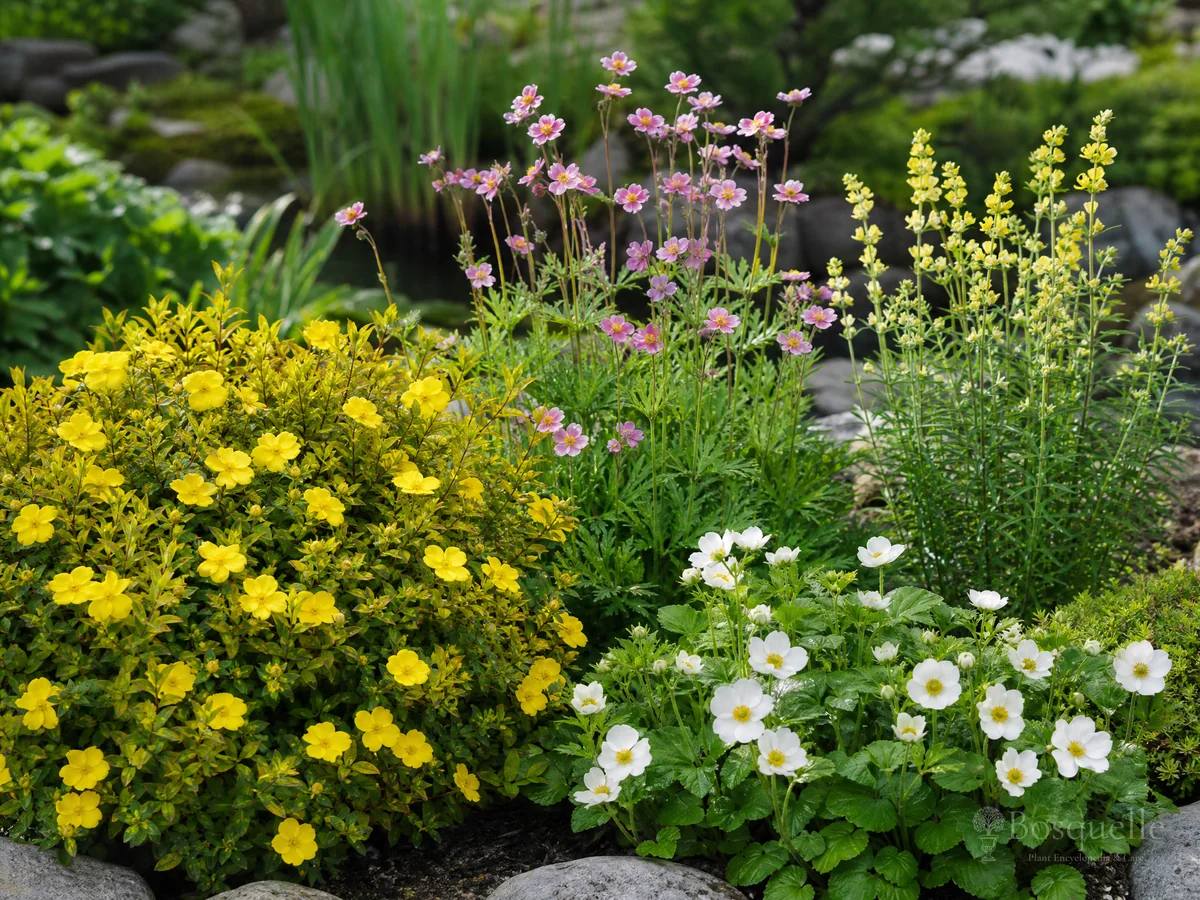
Choose cinquefoil by habit: a woody shrub, a border perennial, or a wet-ground kind.
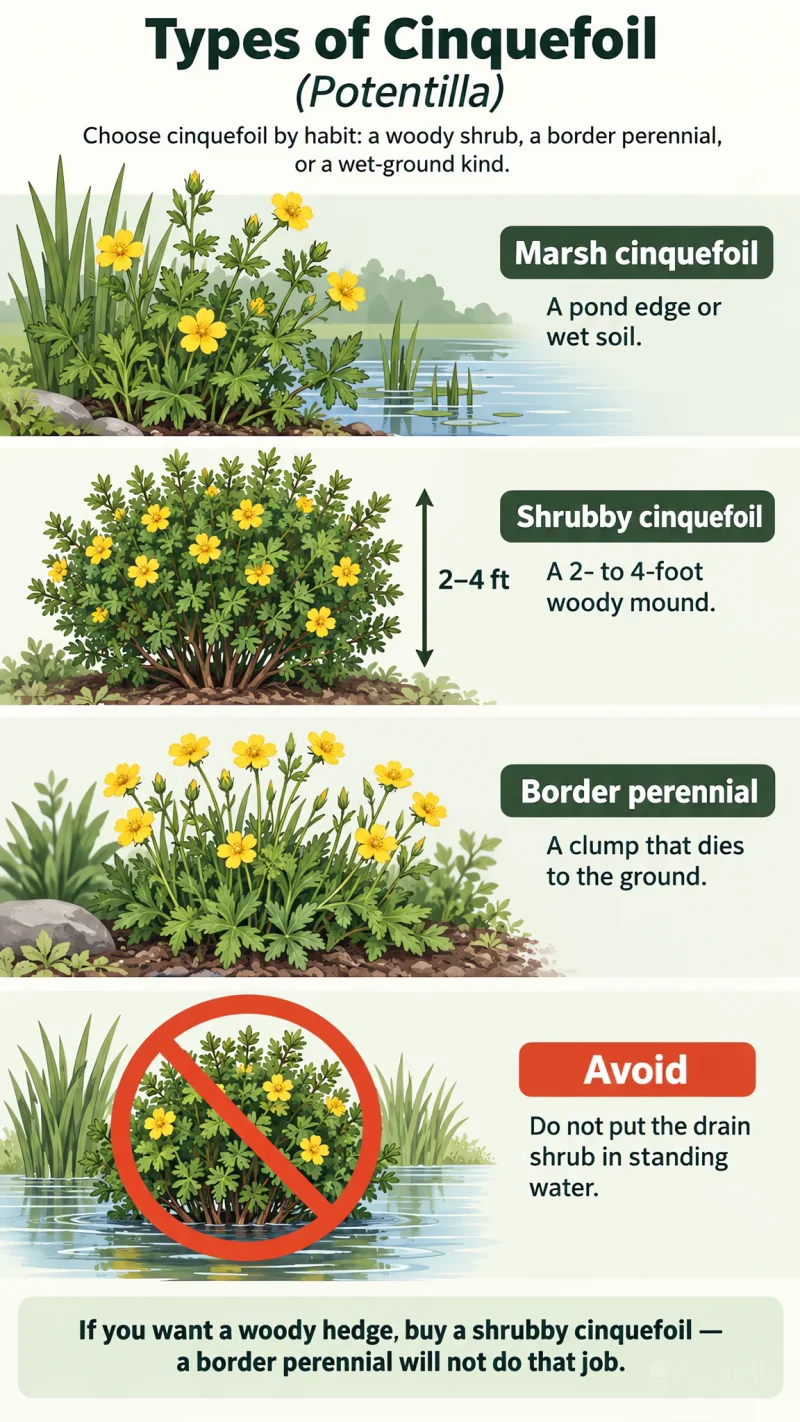
Choose a shrubby cinquefoil, a border perennial, or a wet-ground kind
| Factor | Recommended | Avoid |
|---|---|---|
| A 2- to 4-foot woody mound | A shrubby cinquefoil | Do not buy a border perennial and expect a hedge |
| A clump that dies to the ground | A border perennial | Do not squeeze a Goldfinger shrub into a tight perennial strip |
| A pond edge or wet soil | Marsh cinquefoil | Do not put the drain shrub in standing water |
| A weedy pale-yellow herb | Skip it — that is sulfur cinquefoil | Do not plant it as a hedge |
Know your USDA hardiness zone before you pick a type of potentilla that will take your winter. Type your ZIP below.
2023 USDA ZIP listings (PRISM / USDA-ARS). Find Your USDA Hardiness Zone · Official USDA map.
Read the Latin. Habit is the choose, not the nursery pot size. [1] Garden cinquefoils split into shrubby kinds and perennial clumps. Marsh cinquefoil is the wet one for a pond or bog. [2] A Himalayan cinquefoil is a border perennial, not a woody mound. [3] Sun and drain stay on How to Grow Cinquefoil.
Which cinquefoil should I plant?
Pick habit first: a woody shrub, a border perennial, or a wet-ground kind. Skip sulfur cinquefoil and mock strawberry.
Is sulfur cinquefoil invasive?
Potentilla recta is a weedy herb in much of the United States. Do not plant it as a hedge. Choose a landscape shrub or a border perennial instead.
Browse by kind
Shrubby cinquefoil
Goldfinger is the classic 2- to 4-foot woody mound. Abbotswood, Pink Beauty, Red Ace, and the Happy Face kinds sit here too. Shops still say Potentilla fruticosa; botanists often call the shrub Dasiphora.
Border perennials
Nepalese cinquefoil and Flamenco die to the ground each winter. Himalayan and scarlet cinquefoil sit here too. They are border perennials, not a hedge.
Wet-ground and silverweed
marsh cinquefoil wants wet ground or a pond edge — not the drain bed the shrubs use. silverweed creeps by runners on damp ground.
Weedy and medicinal herbs
Warrenii is sulfur cinquefoil, a weedy herb with pale yellow flowers. Tormentil is the medicinal herb, not a hedge, and not bloodroot.
Tall cinquefoil
tall cinquefoil is Drymocallis arguta, a sticky prairie herb. Shops still sell it as cinquefoil. It is not a Potentilla shrub.
Pick the group, then the cultivar. Extra shop names are not extra kinds. Mango Tango and McKay's White are common shrub selections not in this catalog; treat them as shrubby cinquefoil if you grow one.
Not mock strawberry, sulfur cinquefoil, or tall cinquefoil
Mock strawberry is Potentilla indica, with three leaflets and dry red fruit. It is a lawn weed, not a hedge. Garden strawberry is Fragaria — see How to Grow Strawberry. Sulfur cinquefoil is the weedy herb above. Tall cinquefoil on this list is Drymocallis, a prairie herb with sticky stems, not a 2- to 4-foot shrub. [4]
Is mock strawberry a type of cinquefoil?
It is now named Potentilla indica, but it is a three-leaflet lawn weed with fruit. It is not the garden shrub.
If you want a woody hedge, buy a shrubby cinquefoil — a border perennial will not do that job.
FAQ
Is Mango Tango in this list?
No. That orange shrub is not a card here. Treat it as shrubby cinquefoil if you grow one.
Is Dasiphora a different plant?
Shrubby cinquefoil is the same garden plant. Botanists often use Dasiphora fruticosa; shops still say Potentilla fruticosa.
Is silverweed a strawberry?
No. Silverweed is a creeping cinquefoil with runners. Garden strawberry is Fragaria.
Related guides


References
- [1] PlantNative.org -
https://plantnative.org/shrubby-cinquefoil-potentilla-fruticosa.htm - [2] BBC Gardeners' World -
https://www.gardenersworld.com/how-to/grow-plants/potentilla/ - [3] Chicago Botanic Garden -
https://www.chicagobotanic.org/plant-information/plant-finder/potentilla-atrosanguinea-red-himalayan-cinquefoil - [4] Lady Bird Johnson Wildflower Center -
https://www.wildflower.org/plants/result.php?id_plant=POAR7
This note is part of Potentilla Guides.
More type comparisons by plant are gathered in Types of Plants Guides.
Updated: Reviewed by Bosquelle Editors