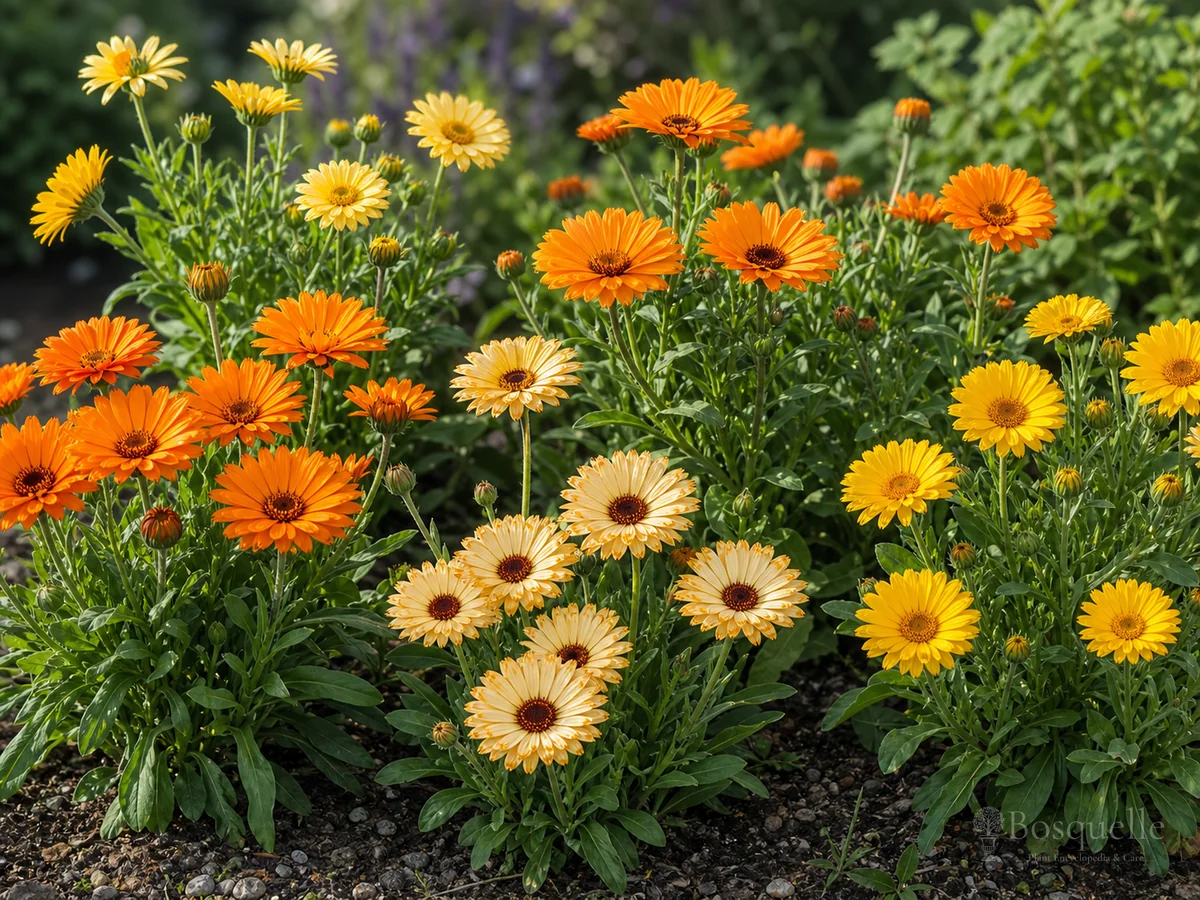
Buy calendula by flower color or mix packet, not by a shared “marigold” photo. Orange, yellow, pastel, and mix series share cool soil and even moisture. They do not share one color job. Tagetes on the tag is a different plant. Sort all 21 Calendula here. Care stays on How to Grow Calendula. Sow stays on Growing Calendula from Seed. Partners stay on Calendula Companion Plants.
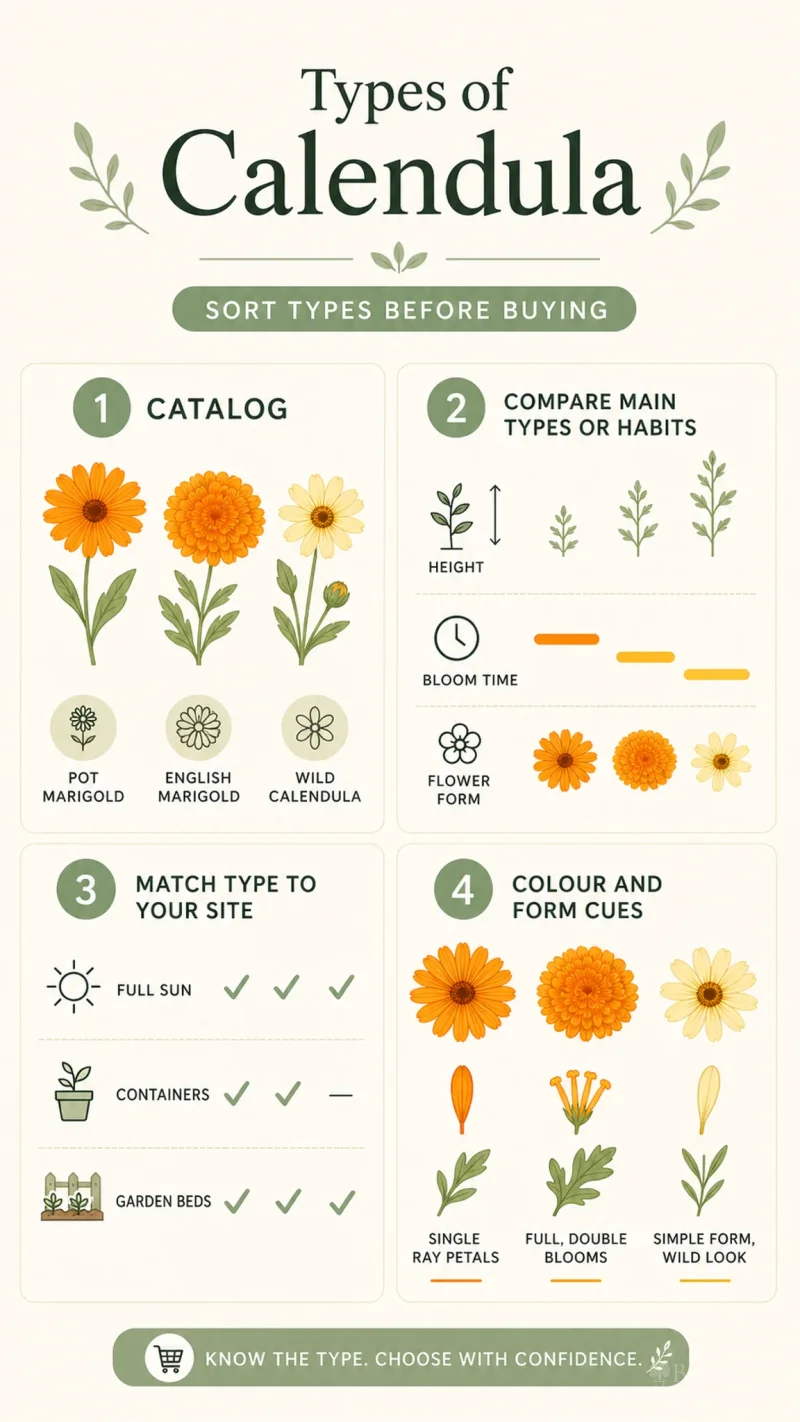
Choose by flower color or mix packet
| Factor | Recommended | Avoid |
|---|---|---|
| A classic orange cottage block | Orange pot marigold types | Assuming orange petals mean Tagetes |
| A yellow cool-season edge | Yellow pot marigold types | A heat-only summer bedding calendar |
| Ivory, pink, peach, or buff | Pastel pot marigold types | Treating pastel as a different genus |
| A mixed packet without shopping each color | Mix series | Expecting volunteers to match the packet |
Know your USDA hardiness zone before you pick a type of calendula that will take your winter. Type your ZIP below.
2023 USDA ZIP listings (PRISM / USDA-ARS). Find Your USDA Hardiness Zone · Official USDA map.
Indian Prince and Neon are orange jobs. Yellow Porcupine is yellow. Ivory Princess and Pink Surprise are pastel. Fiesta Gitana is a mix packet. Cool soil and deadheading stay on the grow page. Color job is the first filter. Mix vs named seed is the second. A series name is only a size or petal-shape note. Do not buy from a photo of a Tagetes six-pack. Height notes on compact series do not change the cool-season contract.
Wrong calendula buys that look like a types page
- Tagetes as the same marigold — French or African marigold wants summer heat. Pot marigold does not. Read the genus on the packet. Orange petals prove nothing by themselves.
- A mix as a named color — Fiesta Gitana and Kinglet Mix will not stay one shade in volunteers. Buy Indian Prince seed when you need that orange next year. A packet photo is a range, not a clone.
- Pastel as a different care system — Ivory Princess still wants cool sun and even moisture. Compact Pygmy Buff still stalls in heat.
- Sprayed display plants for the kitchen — edible petals need an unsprayed patch. Color does not make a treated plant food-safe.
- Buying for midsummer continuous bloom — Lady Godiva Orange is compact, not heat-proof. Expect a stall, then fall flush or a second sowing.
What each class offers
Orange. The usual cottage pot marigold. Indian Prince and Neon are the checkout names. Candyman Orange and Crown Orange sit in the same band. Orange Porcupine is a quilled petal, not a different season. Lady Godiva Orange is compact. Bull’s Eye and Orange Flash stay orange. They still want cool sun. They still stall in heat. Orange is not proof of Tagetes. Do not buy them as a lantana substitute for a hot parking strip. Amber Arctic in the Winter Wonders series is still an orange cool-season plant, not a winter hardy shrub.
Yellow. Cool-season yellow blocks. Yellow Porcupine is the quilled yellow in this catalog. Lady Godiva Yellow is compact. Oopsy Daisy and Golden Glaze stay in the yellow band. Same cover-the-seed rule. Same deadheading. Yellow does not buy drought. A yellow photo under trees is not a shade rating. Give yellow the same full sun you give orange in cool weather. Compact yellow types still deadhead and still stall when nights stay hot.
Pastel. Ivory, pink, peach, and buff. Ivory Princess and Pink Surprise are the usual soft types. Pygmy Buff is compact. Sherbet Fizz and Peach Polar stay in this band. They are still Calendula officinalis. A cream photo is not a shade rating. Give them the same cool sun you give orange. Pastel petals follow the same unsprayed rule if you eat them. Compact is height, not a different winter. A pink surprise on the rack is still pot marigold, not a different genus.
Mix series. Packets that sell a range, plus the open species plant. Fiesta Gitana is the usual mix. Kinglet Mix sits with it. Volunteers will not match last year’s photo. Buy fresh named seed when a precise color matters. Mix is a packet job, not a different winter plant. Open-pollinated species plants belong here too — they are a color lottery, not a Tagetes stand-in. If you saved seed from a mixed row, expect a cottage scramble next spring, not a catalog match.
If two labels disagree, trust the genus on the packet. Calendula officinalis is pot marigold. Tagetes is the summer bedding marigold. Series names change height and petal shape. They do not change cool-season soil. Quilled ‘porcupine’ petals are still calendula. Compact patio types are still calendula. A mix packet is still calendula. Care after you choose stays on How to Grow Calendula. Sow stays on Growing Calendula from Seed. Partners stay on Calendula Companion Plants. Confirm sun and spray history on the grow page before you copy a neighbor’s west wall. Read the packet genus first.
Browse all calendula by group (21)
Browse all calendula by group. Groups follow flower color and mix packets. Skip groups that miss your bed, then open two or three profiles. Cards shortlist after the class; they are not a second water calendar. Confirm the genus on the tag before you copy a neighbor’s Tagetes row. A mix packet photo is not a named-color promise. A compact series is not a heat-proof plant. Quilled petals are still this genus.
Orange calendula (9)
Classic orange pot marigold for cool beds and cottage edges. Same cool-season calendar as the rest of the genus — not a Tagetes heat annual. Deadhead for a longer flush.
Yellow calendula (4)
Yellow and gold pot marigold for cool sun. Cover the seed; deadhead for a longer flush. Compact yellow types still stall in heat.
Pastel calendula (5)
Ivory, pink, peach, and buff types. Still Calendula officinalis — still cool-season, still unsprayed if you eat petals. Compact is height, not a different plant.
Mix series (3)
Mix packets and open-pollinated species plants. Color will drift in volunteers. Buy fresh seed when you need a named color. A packet photo is a range, not a clone.
Cool-season care lives on How to Grow Calendula. Sow lives on Growing Calendula from Seed.
FAQ
What is the difference between calendula and marigold?
Calendula is pot marigold. Summer garden marigold is usually Tagetes. Read the genus on the packet.
Which calendula is orange?
Orange types such as Indian Prince and Neon. Orange petals alone do not make it Tagetes.
Is Fiesta Gitana one color?
No. It is a mix packet. Volunteers will drift. Buy named seed when you need one color.
Are pastel calendulas a different plant?
No. Ivory and pink types are still Calendula officinalis. Same cool sun and even moisture.
Which calendula is compact?
Lady Godiva types and Pygmy Buff are compact. They still stall in heat.
Can I eat any calendula color?
Petals from an unsprayed patch, any color. Spray history matters more than orange vs ivory.
Where do I sow calendula?
On Growing Calendula from Seed.
Where is grow information?
On How to Grow Calendula.
Related guides


This note is part of Calendula Guides.
More type comparisons by plant are gathered in Types of Plants Guides.
Updated: Reviewed by Bosquelle Editors