
Choose a tall prairie turkey-foot, a wet bushy clump, or golden broomsedge first.
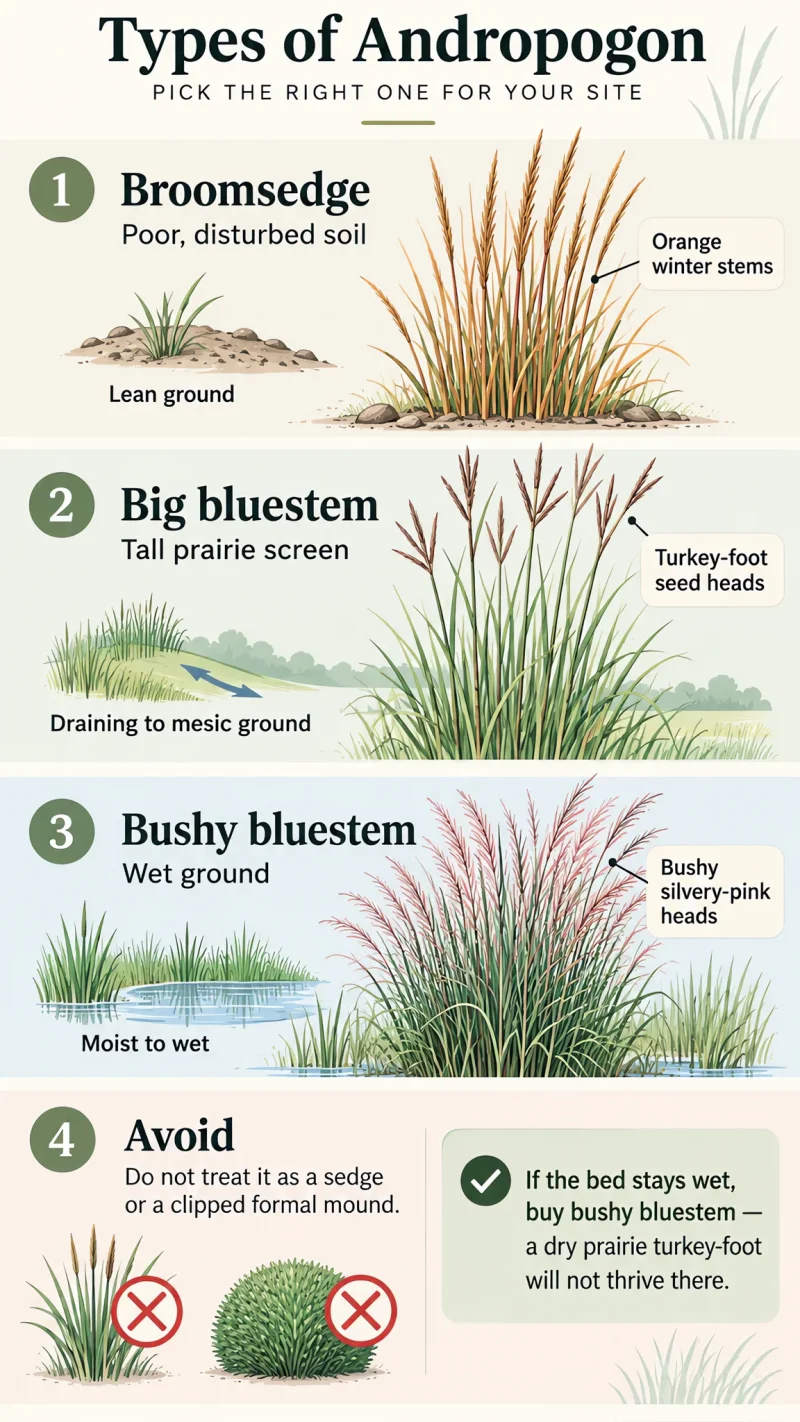
Choose big bluestem, bushy bluestem, or broomsedge first
| Factor | Recommended | Avoid |
|---|---|---|
| Tall prairie screen | Big bluestem — turkey-foot seed heads, draining to mesic ground | Do not buy it for a pond edge that stays wet |
| Wet ground | Bushy bluestem — moist to wet, bushy silvery-pink heads | Do not plant it on a dry ridge |
| Shorter dry clump | Splitbeard bluestem — sandy drain and silver seed heads | Do not keep the roots wet |
| Poor, disturbed soil | Broomsedge — lean ground and orange winter stems | Do not treat it as a sedge or a clipped formal mound |
Know your USDA hardiness zone before you pick a type of andropogon that will take your winter. Type your ZIP below.
2023 USDA ZIP listings (PRISM / USDA-ARS). Find Your USDA Hardiness Zone · Official USDA map.
The first choice is moisture, then height. Prairie big bluestem is the tall screen on ground that drains. Bushy bluestem wants wet ground and will not take drought. Splitbeard is the shorter dry clump with silver seed heads. Broomsedge takes poor soil and an informal meadow. [1] [2]
Which Andropogon should I plant?
Buy big bluestem for a tall draining prairie bed, bushy bluestem for a wet edge, splitbeard for sandy drain, or broomsedge for poor soil.
Can bushy bluestem take dry soil?
No. Bushy bluestem wants moist to wet ground and is not drought-tolerant. Use big bluestem or splitbeard on a dry ridge.
Browse by kind
Match the seed head and the ground, then pick that kind. Care for the clump you already have on How to Grow Big Bluestem. [3] [4]
Prairie big bluestem
big bluestem is the tall prairie clump, about four to eight feet, with a three-pronged turkey-foot seed head. Blackhawks and Indian Warrior are the same species with darker foliage, not a second genus. Buy this group for a draining border or meadow screen, not a pond edge.
Bushy bluestem
bushy bluestem grows about two to six feet and wants moist to wet ground. The seed head is bushy and silvery-pink, then copper after frost. Do not plant it on a dry ridge and expect it to take drought.
Splitbeard bluestem
splitbeard bluestem stays about two to four feet, shorter than big bluestem. It wants sandy soil that drains, and the seed heads turn silver. Wet ground around the roots is the usual cause of rot.
Broomsedge
broomsedge takes poor, barren soil and turns orange in late fall. It is a grass, even though the common name says sedge. Use it in an informal meadow. Skip it for a clipped formal border.
If the bed stays wet, buy bushy bluestem — a dry prairie turkey-foot will not thrive there.
FAQ
Is broomsedge a sedge?
No. Broomsedge is a grass. The common name comes from old broom straw, not from the sedge family.
Is Blackhawks a different species?
No. Blackhawks is Andropogon gerardii with dark foliage. Treat it as prairie big bluestem, not as bushy bluestem.
Did some of these plants change genus?
Garden tags still say Andropogon. Some lists now use Anatherum for bushy bluestem, splitbeard, and broomsedge. They are the same plants in this catalog.
Is Red October in this catalog?
No. Red October is a big bluestem we do not list. If you own one, treat it as the same prairie class as the species.
Related guides

References
- [1] NC State Extension Gardener -
https://plants.ces.ncsu.edu/plants/andropogon-gerardi/ - [2] NC State Extension Gardener -
https://plants.ces.ncsu.edu/plants/anatherum-glomeratum/ - [3] NC State Extension Gardener -
https://plants.ces.ncsu.edu/plants/anatherum-ternarium/ - [4] NC State Extension Gardener -
https://plants.ces.ncsu.edu/plants/anatherum-virginicum/
This note is part of Andropogon Guides.
More type comparisons by plant are gathered in Types of Plants Guides.
Updated: Reviewed by Bosquelle Editors